Europe · Politics · Poland · Profile
Eighteen months ago Karol Nawrocki was a historian running Poland’s Institute of National Remembrance, known to specialists and to readers of books about communist-era crime gangs. On Friday night he was the president of Poland, turning his aircraft around on a flight to Senegal because his country’s constitutional court had acquired two rival leaderships and a police cordon. Who is Karol Nawrocki — the scholar of memory politics, the political novice backed by Law and Justice, the winner of the 2025 presidential election, and now the co-ruler of a state whose other half he is fighting over the courts?
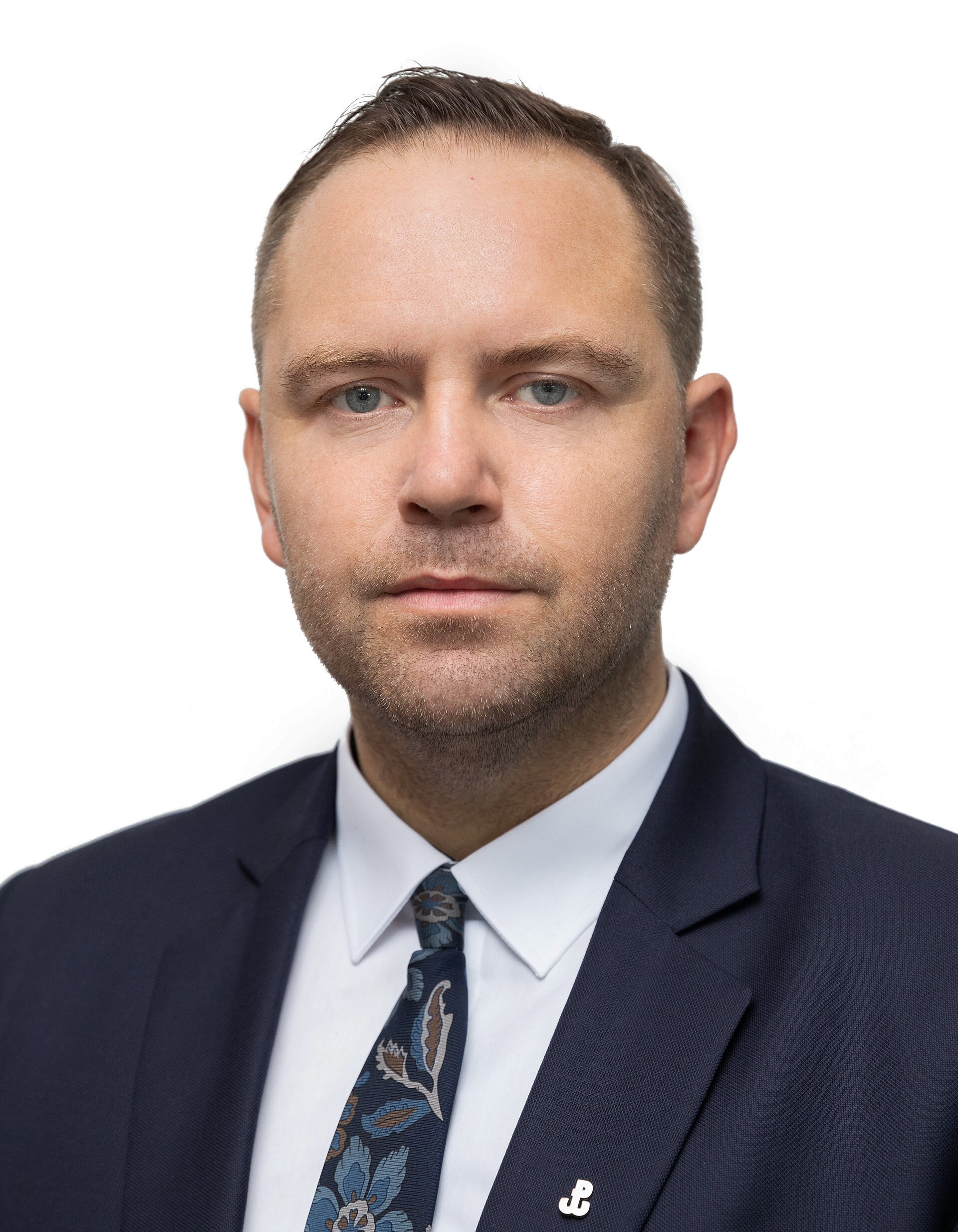
WARSAW — The question “who is Karol Nawrocki” has been asked in Poland in three distinct waves. Voters asked it in the winter of 2024–25, when Law and Justice (PiS) presented a 41-year-old institute director as its candidate for the presidency and much of the country reached for a search engine. Europe asked it in June 2025, when he won. And everyone asked it again on Friday night, when Nawrocki interrupted a flight to Senegal — “In such a moment, the President must be in Poland. I am interrupting my flight to Senegal. I am returning.” — and flew home into the middle of the Constitutional Tribunal crisis described in our main report. The answer, assembled from the record, is a biography that explains the crisis: Nawrocki is a professional historian of Poland’s struggles over memory, promoted through the institutions PiS built to wage them, who now holds the office those struggles were always ultimately about — the presidency, with its oath, its veto and its claim to embody the state.
A historian from Gdańsk
Nawrocki was born in Gdańsk in 1983, in the shipyard city where the Solidarity movement had been founded three years earlier — a biographical fact he has never treated as incidental. He studied history at the University of Gdańsk, completing a doctorate in 2013, and built his scholarly career inside the Institute of National Remembrance (IPN), the state body charged with investigating and commemorating the crimes of Poland’s Nazi and communist regimes, which he joined in 2009. His research sat at the vivid end of the IPN’s range: the anti-communist underground, and the organised-crime underworld of the communist period — he wrote on Nikodem Skotarczak, the Tricity gangster known as “Nikoś,” a subject closer to true crime than to the seminar room. In his youth he boxed as an amateur, an element of the biography his campaign would later use without embarrassment: the historian as fighter, the scholar who can take a punch.
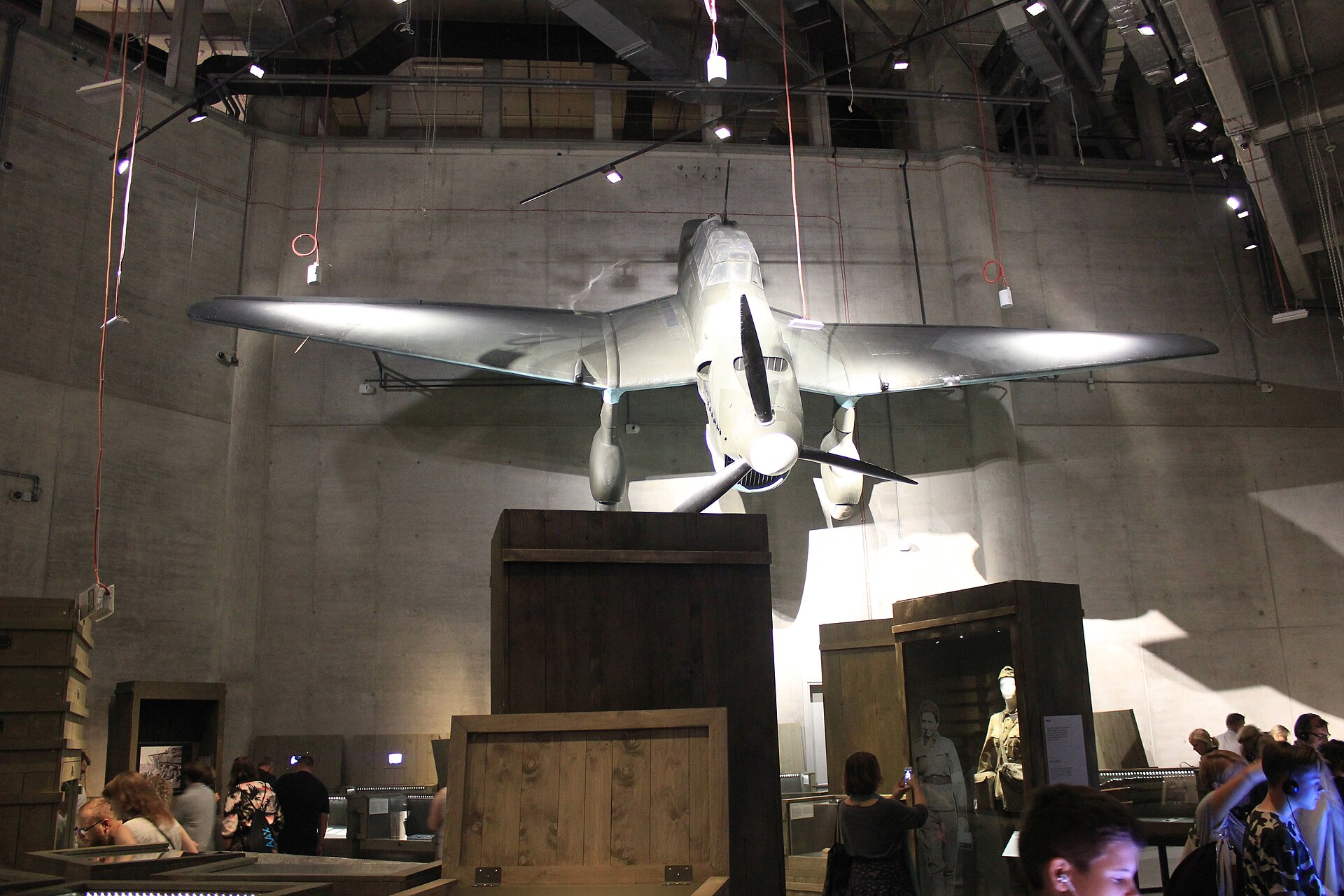
Two directorships made him. In 2017 he became director of the Museum of the Second World War in Gdańsk, the landmark institution whose founding director the PiS government had removed in a bitter fight over the museum’s narrative — whether Poland’s war should be told primarily as national heroism or as universal tragedy. Nawrocki’s tenure aligned the museum with the former reading, and the episode taught everyone watching that he was not a neutral custodian but a combatant in the memory wars, willing to be the face of a contested takeover of a cultural institution. In 2021 the PiS majority elected him president of the IPN itself. He now ran the archive of the nation’s grievances — its lustration files, its prosecutions of communist-era crimes, its vast commemorative machine. When PiS lost parliament in 2023, Nawrocki stayed: the IPN presidency, like a Tribunal seat, has a term elections cannot shorten, and the new Tusk government found the memory institute in the hands of a man it had not chosen and could not remove. He was, in miniature, the same constitutional problem as the Tribunal — which is one reason PiS, looking for a presidential candidate, saw in him a proven survivor of cohabitation.
The candidate nobody knew
In November 2024, PiS leader Jarosław Kaczyński presented Nawrocki as the party’s backed candidate — formally an independent civic candidate, in practice the camp’s chosen man. The gamble was deliberate: a fresh face unburdened by the party’s ministerial record, a historian who could speak the language of patriotism natively, and a biography — Gdańsk, boxing, the IPN — that read as an argument. The campaign was not smooth. Reporting about his past associations and a contested episode from his earlier life followed him through the spring; his opponents cast him as an extremist in a suit, his supporters as a patriot being smeared by a hostile media machine, and both characterisations remain, attributed here to the camps that make them, part of how Poland argues about him. What is not contested is the result. In the runoff of June 1, 2025, Nawrocki defeated Warsaw mayor Rafał Trzaskowski, the governing coalition’s candidate, by roughly 51 to 49 percent — close enough to confirm a country split down the middle, decisive enough to hand the presidency to the opposition. He was inaugurated on August 6, 2025, and Poland’s cohabitation — a government of one camp, a president of the other — became total.
The veto presidency
Nawrocki has used the presidency’s powers the way his campaign implied he would: as a blocking office with a doctrine. A Polish president can veto legislation, and the Sejm needs a three-fifths majority to override — a threshold Tusk’s coalition does not have. Nawrocki has vetoed a succession of the government’s bills, signed others selectively, referred contested measures toward the very Tribunal now in crisis, and presented the pattern, in his own framing, as the presidency doing its constitutional work against a government that treats legality as an obstacle. The government’s framing is the mirror image: a president functioning as the parliamentary opposition’s second chamber, nullifying an election he was not part of. Both framings are set out in depth in our companion analysis, Tusk vs Nawrocki: Poland’s two power centers collide. What matters for the profile is the method: Nawrocki governs by refusal, and he is good at it, because refusal is what the office, in the hands of a disciplined historian of institutions, most reliably supplies.
The refusal that led directly to Friday night was the oath. When the Sejm majority elected six new magistrates to the Constitutional Tribunal in 2026, Nawrocki declined to swear in three of them. His camp’s reading treats the presidential oath as a substantive constitutional act — the president swears in judges he judges lawfully elected. The government’s reading treats it as a duty without discretion, making the refusal an unconstitutional veto over the court’s composition. Either way, the act placed Nawrocki personally inside the Tribunal’s membership question: the court whose president was suspended on Friday is a court whose benches the president had already declined to complete. When Korwin-Piotrowska’s order came, it was not landing on a president watching from a distance. It was landing on a party to the dispute.
The historian abroad
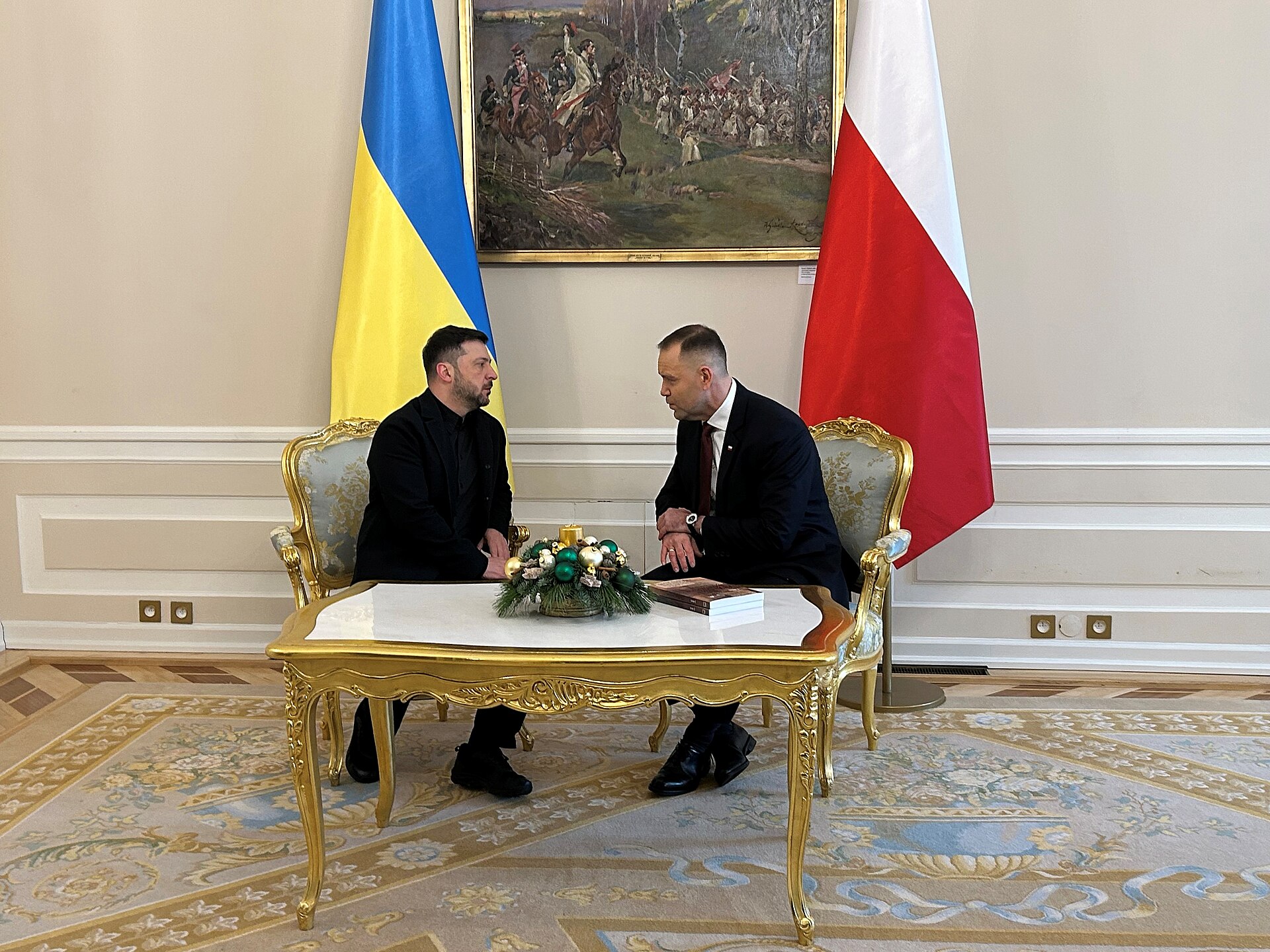
Abroad, Nawrocki has run the same play in a different register. He is firmly Atlanticist — an early and warm relationship with the Trump White House, strong support for NATO’s eastern flank and for high Polish defence spending — while toward Ukraine he combines continued support for its defence with harder pressure on the historical files that are his professional home ground, above all the Volhynia massacres of Poles by Ukrainian nationalists in the 1940s, whose exhumations and commemoration he has made a condition of warmth. To his supporters this is coherence: a president for whom history is not decoration but policy. To his critics it is the instrumentalisation of grief. Both readings were available long before Friday; what Friday added is a demonstration of the man’s instinct under pressure. Confronted with a constitutional crisis at home and a state visit abroad, he chose the image and the fact of return — the president physically present in his capital while his court is ringed by police. It was the act of a politician who understands, as historians do, that who stands where in a crisis is what the record keeps.
Why this matters
Nawrocki matters because he is the human form of Poland’s structural problem: an office designed as a safeguard, held by a man whose mandate comes from the camp that lost the parliament, exercising powers — the veto, the oath, the pardon, the referral — that are each defensible in isolation and paralysing in combination. His biography is not background to the Tribunal crisis; it is one of its causes. A president formed by the memory wars, who survived cohabitation inside the IPN while his party was out of power, who watched institutions he ran be fought over narrative by narrative, does not experience a fight over a court’s composition as an abstraction. He experiences it as the central question of Polish politics, the one he has spent his career on: who gets to say what Poland is. The government’s camp, with equal sincerity, experiences his resistance as the refusal of a defeated order to leave. Both experiences will be on the table on Monday morning, when the suspended and suspending judges return to the same building. The plane has landed. What Nawrocki does next — mediation, escalation, or a long public silence from the Presidential Palace — will tell Poland which of its two power centres intends to own the crisis, and which intends to outlast it.
Related coverage
- Police Cordon Poland’s Constitutional Tribunal as President Races Home and Both Sides Cry Coup
- Tusk vs Nawrocki: Poland’s Two Power Centers Collide Over the Courts
- How Poland’s Top Court Became a Battlefield: The Tribunal Crisis Explained
Sources
- Reuters and PAP — reporting on Nawrocki’s biography, the 2025 presidential election and inauguration, and his October 30, 2026 return from the Senegal trip.
- Institute of National Remembrance (IPN) and the Museum of the Second World War in Gdańsk — institutional records of Nawrocki’s directorships (museum 2017–2021; IPN president from 2021).
- Chancellery of the President of Poland — statements, October 30, 2026, including the announcement interrupting the Senegal flight.
- National Electoral Commission of Poland — results of the June 1, 2025 presidential runoff.
- Photos: Chancellery of the Prime Minister of Poland (CC BY 3.0 PL), Andrzej Otrębski (CC BY-SA 4.0) and W2k2 (CC BY 4.0), via Wikimedia Commons, as credited in the captions. All are file photographs, not photographs of the October 30, 2026 events.
This profile is based on the public biographical record: Nawrocki’s institutional histories at the IPN and the Museum of the Second World War, official election results, and Reuters and PAP reporting of the 2025 election and the October 30, 2026 crisis. Characterisations of Nawrocki — by his supporters and his critics — are attributed to the camps that make them. Analysis is by Signal Post News.