The species and the evidence
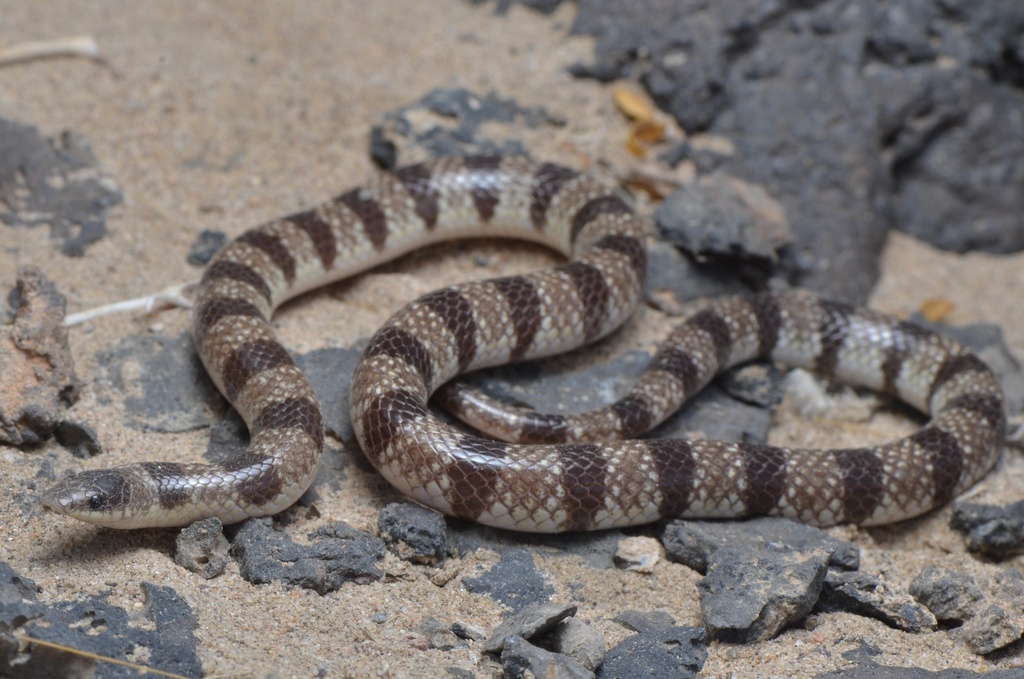
Arthur Tiutenko, Thomas L. Heller and Michael F. Bates formally described Dasypeltis albigularis in 2026. The Harenna Forest snake lives around 1,500–1,700 metres and is marked by a white throat and belly, with pale or bluish skin visible between scales. Females reach up to 92 centimetres.
Why This Matters
A species description is not merely a new name. It changes conservation accounting: a narrowly distributed animal can disappear while hidden inside records of a more widespread relative.
Seven years, three lines of evidence
The work combined morphology, mitochondrial and nuclear DNA, and breeding observations. Egg-eaters are difficult to separate visually, so no single photograph or color pattern was enough. Their specialized vertebrae crack bird eggs after swallowing, an adaptation that makes the genus biologically remarkable.
Winners, risks and what comes next
Taxonomy gains a clearer evolutionary map and Harenna Forest gains another argument for protection. Habitat loss is the obvious loser. Researchers now need distribution surveys, population estimates and ecological data. The discovery shows why local collaborators and long observation matter: novelty became knowledge only after years of testing.
Sources: Original study, Pensoft, Phys.org. Facts and figures are a fixed September 20, 2026 reporting snapshot and do not update live.