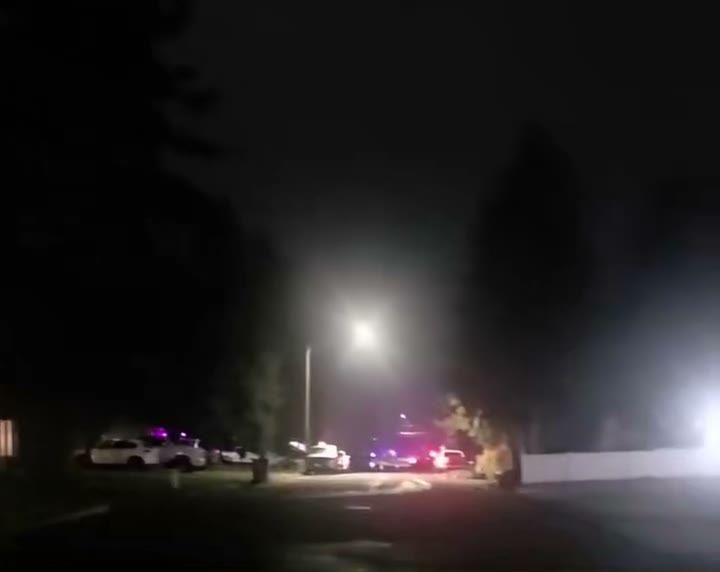
COEUR D'ALENE, Idaho, November 16, 2026 — An unexploded bomb discovered near the intersection of Belmont and Appaloosa in Coeur d'Alene on Monday evening forced police to evacuate nearby homes door to door, close roads around the neighborhood and call in the bomb squad, according to the Kootenai County Sheriff's Office.
The device was found around 6 p.m., the sheriff's office said. Coeur d'Alene Police officers went from house to house in the surrounding residential streets, asking residents to leave while specialists dealt with the device. Fire and emergency medical units staged at Arrowhead and Belmont, close enough to respond immediately but outside the immediate work area, and roads around Belmont were closed to traffic.
As of Monday night, officials had not said what type of device it is, and no time had been given for residents to return to their homes. No injuries have been reported. The situation remains a developing story.
What happened Monday evening
The discovery was reported around 6 p.m., early in the evening on a residential street in Coeur d'Alene, the county seat of Kootenai County in Idaho's northern panhandle. The Kootenai County Sheriff's Office said the object was identified as an unexploded bomb, and the response escalated quickly: Coeur d'Alene Police began evacuating the homes closest to the scene, going door to door rather than relying on a general announcement, so that officers could be sure each household had actually been reached.
Roads around Belmont were closed while the work continued. Fire and EMS units staged at Arrowhead and Belmont — the standard pattern in an incident of this kind, keeping medical help close at hand while keeping non-essential vehicles out of the inner area. The bomb squad was called in to examine the device.
Scanner traffic from the response, monitored by CrimeRadar, tracked the same sequence: the evacuation effort, the road closures and the staging of fire and medical units as the operation settled in for the evening.
What officials have not said
Just as important as what authorities have confirmed is what they have not. Officials have not identified the type of device, its size, or its condition beyond describing it as unexploded. They have not said how it came to be there, and this report does not speculate: nothing reliable has been released about the device's origin, and investigators typically do not discuss such questions while a scene is still active.
Officials also have not given residents a time to return home. Evacuations in device incidents end when the specialists finish their work and declare the area safe — not on a schedule announced in advance — so the absence of a return time on Monday night was expected rather than unusual.
Online, some social-media commenters speculated about what the device might be. None of that speculation has been confirmed by any official source, and it should be treated as exactly what it is: unverified comment, not reporting. The only description that carries official weight so far is the sheriff's office's own: an unexploded bomb, type not yet identified.
How a bomb-squad response works
Although every incident is different, responses to a suspected explosive device follow a well-established logic, and Monday night's operation in Coeur d'Alene matched it step for step.
The first priority is distance. An unidentified device is treated as dangerous until specialists prove otherwise, so officers establish a perimeter and move people out of the immediate area. Door-to-door evacuation, rather than a loudspeaker announcement alone, is the careful version of that step: it confirms that homes are actually empty, including households that might not hear or might not understand a general alert.
The second step is examination by the bomb squad — technicians trained and equipped to identify a device before anyone handles it. Their work is deliberately slow. Where possible, the device is assessed from a distance first. Only then do technicians decide the safest course: rendering the device safe where it lies, or removing it under controlled conditions for disposal elsewhere.
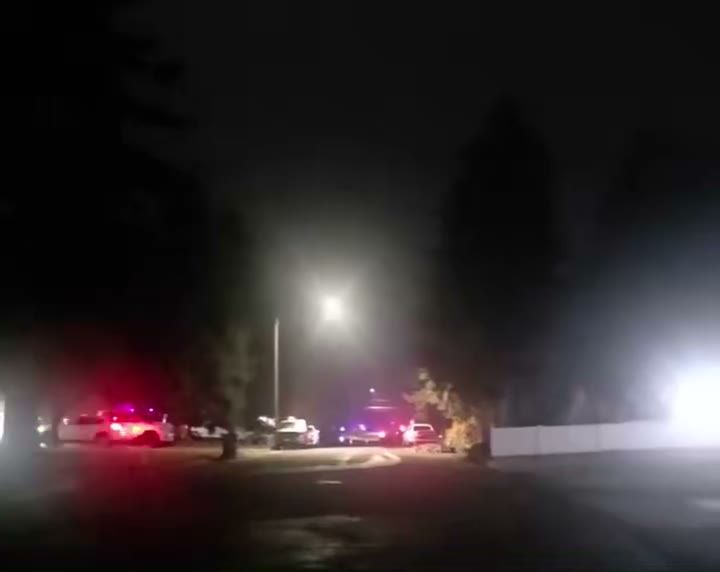
The third element is the support ring visible on Monday night: roads closed to keep traffic out, and fire and medical units staged nearby — close enough to matter in an emergency, far enough to stay out of the technicians' way. None of this is theatre. It is the routine architecture of an incident in which the central fact is an object nobody has yet identified.
A quiet street, an unfamiliar Monday night
Coeur d'Alene is a city of roughly 56,000 people, known far more for its lake and its quiet residential neighborhoods than for emergency operations. Belmont and Appaloosa are ordinary neighborhood streets — the kind of place where a Monday evening normally means dinner, homework and early nights before a school and work day.
That ordinariness is precisely why an unexploded device, whatever it turns out to be, lands so hard on the families involved. The knock on the door, the instruction to leave now and take only what you can carry, the wait in a car or at a neighbor's home outside the closure while red and blue lights wash over your street — for the households evacuated on Monday, the incident is not an abstraction, and it will not end for them until an official tells them the street is theirs again.
Why this matters
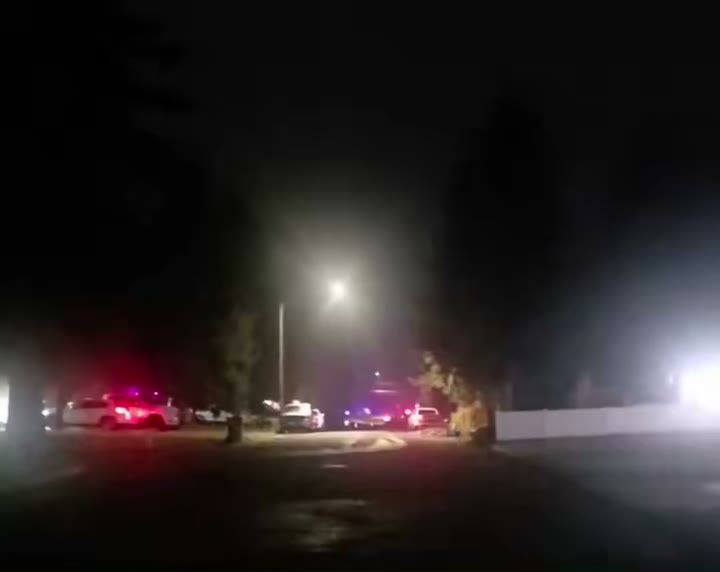
Incidents like this one test the least glamorous and most important part of public safety: the system that moves ordinary people out of harm's way on incomplete information. On Monday night, by every official account available, that system did what it is designed to do — a device was reported, a perimeter was set, homes were emptied in person, roads were closed, specialists were called, and medical help was staged nearby, all before anyone knew exactly what the device was.
The remaining questions are the ones investigators will now work through: what the device is, how it got there, and when the neighborhood can reopen. Those answers belong to the Kootenai County Sheriff's Office and the bomb squad, and Signal Post News will report them when officials release them — not before, and not from speculation.
What happens next
Residents should follow the Kootenai County Sheriff's Office and Coeur d'Alene Police for the all-clear and any instructions about returning home, and should not attempt to re-enter closed streets until officials reopen them. Anyone who was evacuated and needs assistance should contact the sheriff's office through its non-emergency channels rather than approaching the scene.
This is a developing story and will be updated as officials release more information.
Reporting based on the Kootenai County Sheriff's Office via KREM 2 News, with corroborating scanner traffic via CrimeRadar. The device type has not been officially identified; no injuries have been reported.
Sources
Sources: Kootenai County Sheriff's Office via KREM 2 News (discovery around 6 p.m., evacuations, road closures, bomb squad response, staging at Arrowhead and Belmont, no device type released, no return time); scanner traffic via CrimeRadar (corroborating response details).