Technology / London — UK £600 million AI security funding will be set out in the Budget, led by a world-first biosecurity laboratory intended to detect biological threats before they spread.

The UK £600 million AI security funding package to be set out by Chancellor John Healey in his debut Budget on Wednesday, October 28, is the British government's largest single statement yet that artificial intelligence is now a security problem as much as an economic opportunity. Reuters reported on October 24 that the package, worth about £600 million — roughly $800 million at the rate Reuters cited, $1 to £0.7472 — is led by £100 million for a new AI Biosecurity Lab that would use AI to detect biological threats, with a further £65 million for pathogen countermeasures. The rest is spread across AI safety research, cyber defence, chips, prizes and regional programmes.
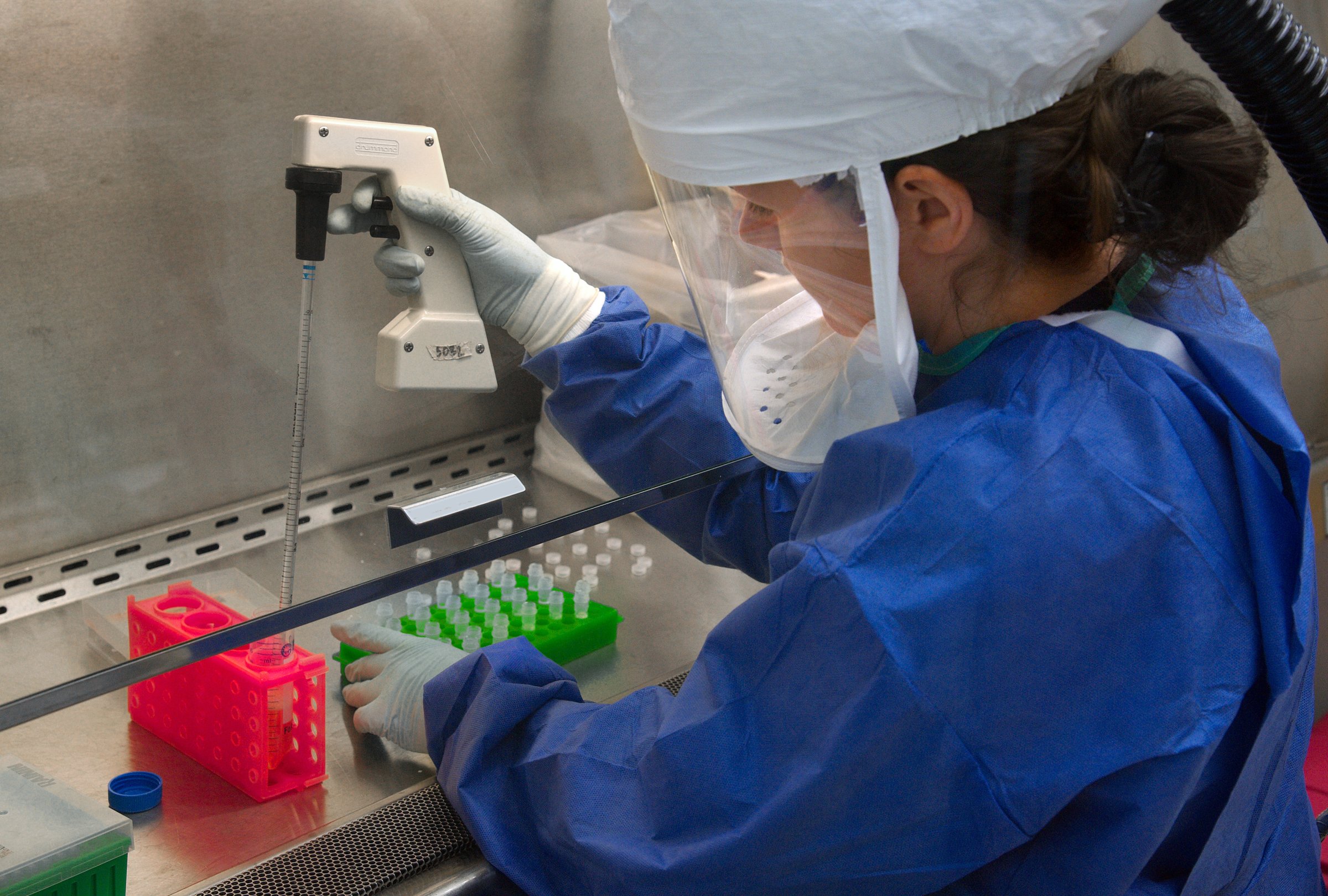
The biosecurity element is deliberately first in the announcement, and the government is presenting the lab as a world first. AI minister Kanishka Narayan said he wants the lab to become a major global institution “bringing together world-leading scientific expertise to protect people from emerging biological threats,” in remarks reported by Reuters. The pitch is that the same model capabilities that worry security officials — the ability to reason about biology at speed and at scale — can be turned towards defence: spotting unusual pathogen signals earlier, assessing which emerging threats deserve attention, and shortening the distance between detection and a countermeasure.
The private contribution attached to that effort is substantial on paper, and its structure matters. OpenAI and Anthropic are offering up to £200 million of model credits to the biosecurity initiative, Reuters reported, while Google DeepMind and London startup Basecamp Research are offering other assistance. Credits are not cash. They are access to computing and models, valuable to researchers who would otherwise pay for that access, but their real worth depends on how much is actually used, over what period, and on what terms. The headline partnership figure should therefore be read as committed capacity, not as £200 million arriving in a laboratory bank account.
Why this matters
This matters because biosecurity is where AI risk stops being abstract. Debates about model safety often turn on scenarios that are hard for the public to test. Disease surveillance is concrete: either a system helps identify a dangerous pathogen earlier than existing methods, or it does not, and the difference can be measured in days of warning and, in a serious outbreak, in lives. By putting biosecurity first, the government is choosing the application where defensive AI has the clearest public case — and also the area where dual-use concern is sharpest, because a model that understands pathogens well enough to detect them must be handled with great care. It is a related defensive turn to the restraint described in Moonshot's decision to curb its model's hacking skills before open release.
There is also an institutional ambition that outlasts any single Budget. A laboratory intended to become a “major global institution” is not a grant programme; it is an attempt to make Britain a place where other governments, laboratories and companies must come to work on biological threat detection. Britain has tried this model before in AI safety, building convening power that exceeds what its spending alone would buy. If the lab sets standards for how frontier models are evaluated for biological risk, hosts trusted international research, and publishes methods others adopt, its influence could be far larger than £100 million suggests. If it becomes a press-release institution with slow hiring and unclear powers, the same ambition will read as overclaim.
The package's breadth is both its strength and its warning sign. Alongside the lab, the AI Security Institute — the government's model evaluation body — gets an extra £120 million, a significant reinforcement of the state's ability to test frontier systems rather than simply trust developers' own results. That theme, independent evaluation, runs through recent AI safety moves internationally, including the containment choices examined in OpenAI's decision to cut live internet access from frontier training. States that can evaluate models themselves negotiate with laboratories from knowledge; states that cannot are left reading summaries written by the companies they oversee.
Where the money goes
The cyber element is the second-largest block. Reuters reported £130 million for cyber work, covering a National Cyber Shield and a National Exposure and Real-Time Vulnerability Centre, aimed at critical infrastructure and the wider economy. The logic is exposure management at national scale: knowing, continuously, which important systems are visible and vulnerable, rather than discovering it after an incident. Separately, the National Cyber Security Centre will receive an unspecified sum to expand in Manchester — a notable gap in an otherwise itemised package, and one Parliament and the security community will want filled in, because an unspecified sum cannot be scrutinised in the same way as a numbered commitment.
The industrial and research measures are smaller and more scattered. There is £60 million for a fund investing in British AI companies in robotics, autonomous systems and manufacturing, and another £60 million for AI research and procurement contracts — money that can pull private work towards public priorities if the contracts are well designed. A further £23 million goes to research on AI's economic impact, an unglamorous line that matters: governments are making large claims about AI's effect on jobs and productivity with thinner evidence than the claims require. There is £18 million for a chip design academy, aimed at the skills pipeline for semiconductor design rather than fabrication itself.
The remaining items reach for breadth. A £15 million prize will reward AI solutions to public-policy problems, with healthcare as its first focus, and £30 million goes to regional mayors for local AI work, spreading a programme that could otherwise concentrate entirely in London, Oxford and Cambridge.
Announcement is not capability
The central analytical caution is the distance between an announcement and an operating capability. A biosecurity lab needs senior scientists who could earn far more elsewhere, access to relevant data under strict governance, secure computing, relationships with public-health agencies, and legal clarity about what it may test. None of that is bought in a Budget line; it is built over years, and it can fail quietly through slow recruitment or turf disputes between departments. Britain's recent history contains both models worth copying — institutions that became genuinely world-leading — and programmes whose launch coverage proved to be their high point. The honest test of this package will come in 12 to 24 months: staff hired, evaluations published, detection methods validated against real surveillance data.
Comparison puts the sums in perspective. Reuters noted that Anthropic alone recorded more than $12 billion in operating expenses last year. Against spending at that scale by a single private laboratory, £600 million — about $800 million — across an entire national programme is modest, roughly one-fifteenth of one company's annual operating costs, spread over many purposes. That does not make the package pointless; governments do not need to outspend laboratories to evaluate them, set standards or fund public-good research the market will not fund. But it does mean Britain is buying leverage, not scale. Its return will depend on whether concentrated expertise and convening power can do what raw spending cannot.
The model-credits structure deserves the same clear-eyed treatment. Up to £200 million in credits from OpenAI and Anthropic could be genuinely valuable to a biosecurity programme that needs heavy model access for screening and analysis, and in-kind help from Google DeepMind and Basecamp Research brings expertise money cannot quickly hire. Yet credits also tie a public institution's work to private platforms, pricing and terms, and their headline value counts usage at commercial rates. A transparent accounting — how much credit was drawn, for what, and what it produced — would let the public judge whether the partnership delivered research value or mainly delivered a large number for launch day.

What happens next
The first formal step is the Budget itself on Wednesday, October 28, where Chancellor Healey — presenting his debut Budget — will set out the package and where the unspecified National Cyber Security Centre figure and the spending period for each line should become clearer. Watch for three details that will separate substance from presentation: the lab's governance and leadership, the timetable for the AI Security Institute's expanded evaluation work, and whether the cyber shield and vulnerability centre are new capabilities or existing work gathered under new names. Each is answerable, and each will be asked.
Beyond Westminster, the lab's international reception will decide whether the “global institution” ambition is real. Partnerships with allied governments, shared evaluation standards and researcher exchanges would signal that Britain is building a node in a wider defensive network. A mainly domestic launch, by contrast, would leave the lab competing for talent and relevance with far better-funded American efforts. The government has chosen the right problem to lead with — biological threats do not respect borders, and early detection benefits everyone. It has committed real, if modest, money and attracted serious partners. What it has not yet done, because no Budget can do it, is build the institution. That work starts the morning after the announcement, and it is on that work, not the £600 million headline, that this package will ultimately be judged.