World · Türkiye · Afyonkarahisar
On Thursday, November 5, 2026, a gunman armed with a pump-action shotgun killed eight people across three villages in Afyonkarahisar province, in west-central Türkiye, and critically wounded a woman driver in the provincial capital. A manhunt through a series of hijacked cars ended with his capture in neighbouring Eskişehir province, about 100 kilometres — 60 miles — north. By Friday he had been remanded in custody and six victims had been buried.
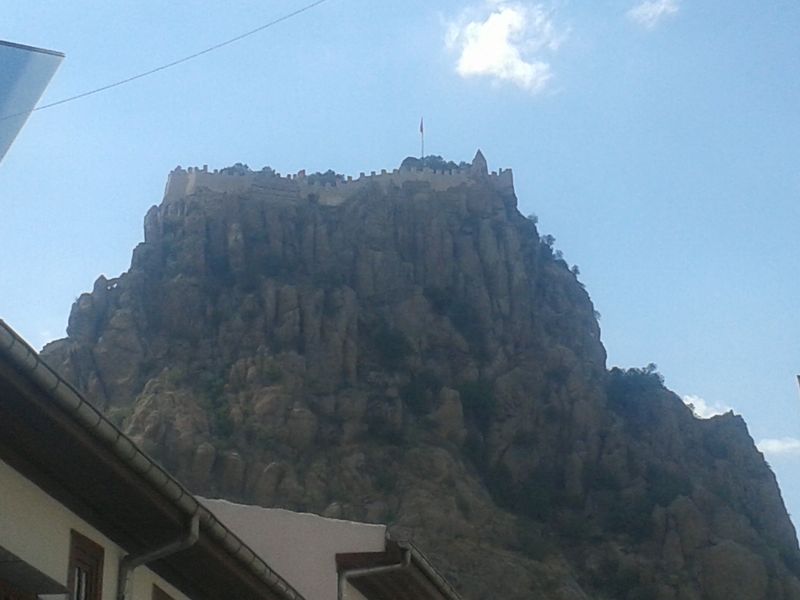
AFYONKARAHİSAR, November 6, 2026 — It began, investigators say, with an appointment to settle a debt. It ended, hours later and some 100 kilometres away, with gendarmerie and police shooting out the tyres of a hijacked car at a checkpoint outside Eskişehir. In between, on the afternoon and evening of Thursday, November 5, a single gunman moving from village to village across Afyonkarahisar province killed eight people — among them two teachers on their way in a car, an elderly couple, and the man he had arranged to meet — and left a ninth victim, a woman realtor shot in the provincial capital, fighting for her life in intensive care.
The Afyonkarahisar Governor’s Office set out the toll in a statement that has anchored official accounts of the day: “Unfortunately, eight of our citizens have lost their lives, and one has been seriously injured in armed attacks in our province.” Afyonkarahisar is a rural province midway between Ankara and İzmir, a farming region of plains and volcanic hills better known abroad for the Phrygian Valley and its rock-cut tombs than for violence of any kind. Nothing in its recent history prepared it for Thursday.
Ayazini: the meeting that was not a repayment
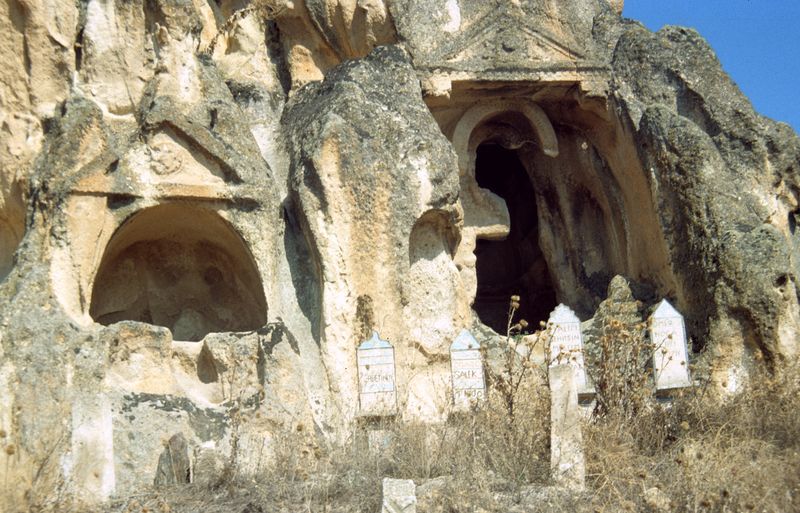
The first attack came at around 15:00 local time in Ayazini, a village in the İhsaniye district known for the ancient tombs carved into its cliffs. Three men were shot dead in a car: Ahmet Uzel, 57, Bekir Toprak, 50, and Noman Toprak, 56. Investigators say the suspect had lured Uzel to the meeting on the pretext of repaying a debt — that, according to the account emerging from the investigation, the appointment itself was the trap, arranged so that the man he blamed for his troubles would come to him.
What followed suggests a man who, having killed the person he came for, kept killing to keep moving. From Ayazini the attacks spread outward across the district, and the motive investigators describe shifts along the way — from a grievance years in the making to the cold logistics of escape: cars, roads, and anyone who stood between the gunman and the next vehicle.
Kıyır, the capital, and Yukarıtandır: the killing spreads
In Kıyır, three more people were killed: Seydi Ahmet Aydoğmuş, 73, Satı Aydoğmuş, 68, and İsmail Şen, 61. Reports say two of them were shot after refusing to hand over their car, and a third after threatening to call the police. The gunman also fired at a truck near Selimiye as he moved through the area, widening the circle of people who had crossed his path by chance alone.
In Afyonkarahisar city itself, in the Osman Gazi quarter, a woman driver — Sevgi Postalcı, a realtor — was shot and critically wounded after refusing to give up her car. She was taken to Afyonkarahisar State Hospital, where she remains in intensive care.
The last killings came in Yukarıtandır, where two teachers were shot in their car: Ayşe Sena Demir, 46, and Hilal Mete, 31, both teachers at İhsaniye Yukarıtandır Secondary School. One died at the scene; the other died in hospital. A third occupant of the car had got out and survived unharmed. The provincial education directorate named both teachers publicly and offered its condolences. Schools are the connective tissue of villages like Yukarıtandır; the women killed on Thursday taught the children of the same communities now burying their neighbours.
The manhunt: hijacked cars, a checkpoint, and an arrest
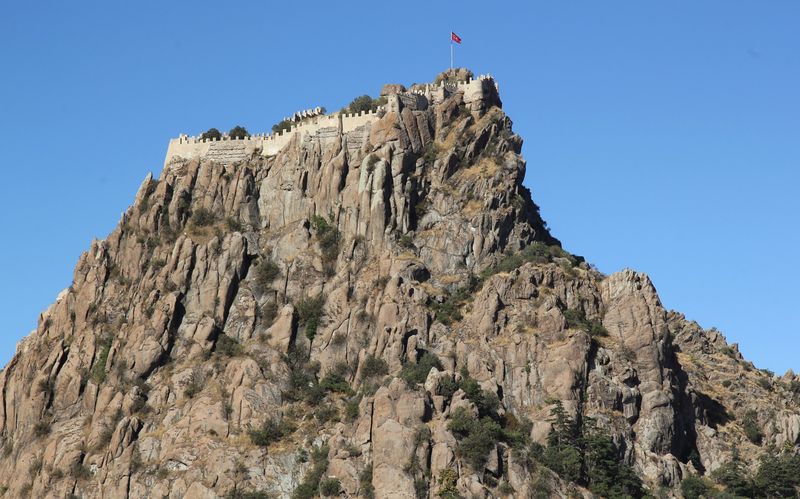
By then, a full-scale manhunt was under way. The suspect fled in a series of hijacked cars. His own vehicle — a red Fiat Doblò — was caught on CCTV, giving investigators an early thread to follow. At one point, according to reports, he posed as an employee of the intelligence service, MİT, to take a car from its driver. One of the vehicles he took got stuck in mud outside Eskişehir; he abandoned it and hijacked a milkman’s car instead. A large quantity of shotgun shells was later found in one of the abandoned vehicles — a measure, investigators believe, of how much longer the day might have run.
It ended at a checkpoint. Gendarmerie and police shot out the tyres of the car he was driving; in a brief exchange of fire that followed, a gendarmerie sergeant was lightly wounded, suffering an injury to his ear, before the suspect was subdued and arrested. He was taken back to Afyonkarahisar to face the investigation that had, by then, already begun assembling the day’s timeline from CCTV, survivors and the trail of abandoned cars.
The suspect and the alleged motive: a harvester, a fire, and a debt
Authorities have identified the suspect as Arif Sefa Özdemir, 30, a farmer and combine-harvester operator from Bozüyük, in the İhsaniye district. The account of why a working farmer would murder eight people comes, at this stage, largely from his own reported statement to police — and investigators themselves caution that it is exactly that: the suspect’s account, not an established finding of fact.
According to that statement, Özdemir had bought a combine harvester from Ahmet Uzel — the first victim — for €40,000. The machine later burned. A dispute followed over the balance still owed: Uzel, he said, demanded €11,000 a week before the attacks, while Özdemir insisted he owed €4,000. The row, by his account, escalated into insults and threats. Authorities say they are treating revenge over the debt as the primary motive for the Ayazini killings, and carjacking — the need for vehicles to keep fleeing — as the secondary motive for the killings that followed. Prosecutors are also examining an earlier episode the investigation has brought into view: an attack in March 2026 on the suspect’s own car, and whether it connects to the feud that ended on Thursday.
The alleged motive, even if accurate, explains the first deaths and almost nothing else. It does not explain an elderly couple in Kıyır, two teachers in Yukarıtandır, or a realtor in the provincial capital — people with no connection, on the accounts available, to a burned harvester. That is why investigators distinguish so sharply between the grievance that starts such a day and the decisions that prolong it. The grievance belongs to the suspect’s statement; the decisions belong to the court file now being built.
The aftermath: prosecutors, a publication ban, and six funerals
The Afyonkarahisar Chief Public Prosecutor’s Office has opened what it describes as a multifaceted investigation, assigning a deputy chief prosecutor and three prosecutors to the case. Türkiye’s broadcast regulator, RTÜK, issued a publication ban intended to protect the investigation — a step that limits what Turkish media can report of the evidence while doing nothing to slow the grief moving through the province’s villages. The suspect’s father was detained and later released. On Friday, November 6, the suspect was remanded in custody by the criminal judgeship of peace on a charge of intentional homicide of more than one person, Anadolu Agency reported — the first formal step in a judicial process that will test, in public, the account he has so far given only to police.
And the funerals have begun. By November 6, six of the eight victims had been buried after funeral prayers, in villages where the dead were employers, neighbours, grandparents and teachers. For the families, the questions dominating the national debate — about firearms, warning signs, and how a dispute reached this end — are not abstract. They are the questions asked at gravesides.
Why this matters
A rarity that shocks precisely because it is rare
Spree killings of this scale are rare in Türkiye, and that rarity is the first fact of the national reaction. Unlike the United States, Türkiye rarely sees multi-victim public shootings; when one happens, it dominates national news for days and presses itself on lawmakers. Thursday’s rampage — eight dead across three villages, killed by one man with a pump-action shotgun in a single afternoon — fits no familiar Turkish category, and the country is responding accordingly: with disbelief first, and argument close behind.
A dispute that escalated in plain sight
The second question is harder, because it implicates no law that can simply be rewritten. On the investigators’ account, the suspect and his first victim had a documented, escalating dispute — money claimed, money denied, insults and threats exchanged, a final demand made a week before the killings. Nothing intervened. Rural disputes over land, water and machinery are the ordinary friction of agricultural life; almost all end in courts, mediation, or silence. Understanding Thursday means finding the point at which this one stopped being ordinary — and whether anyone who saw it crossing that line had a way to act. Threat reporting, and what gendarmerie and prosecutors can realistically do with a reported threat before a crime, will be central to the argument that follows.
The shotgun question
The third argument is the oldest in Turkish gun politics. Pump-action shotguns circulate widely in rural areas, and the line between a licensed farm gun and an unregistered weapon is one Türkiye has debated for years without settling. Gun-control advocates will say Thursday is the price of that: a weapon kept without effective scrutiny, turned on neighbours. Defenders of rural gun culture will answer that millions of farmers keep shotguns without harming anyone, and that the failure lay in an unacted-upon feud, not the tool. Both arguments will now be made at length — in a parliament and press that rarely have to make them about an event like this.
Context: a farming province, and Türkiye’s other recent shock
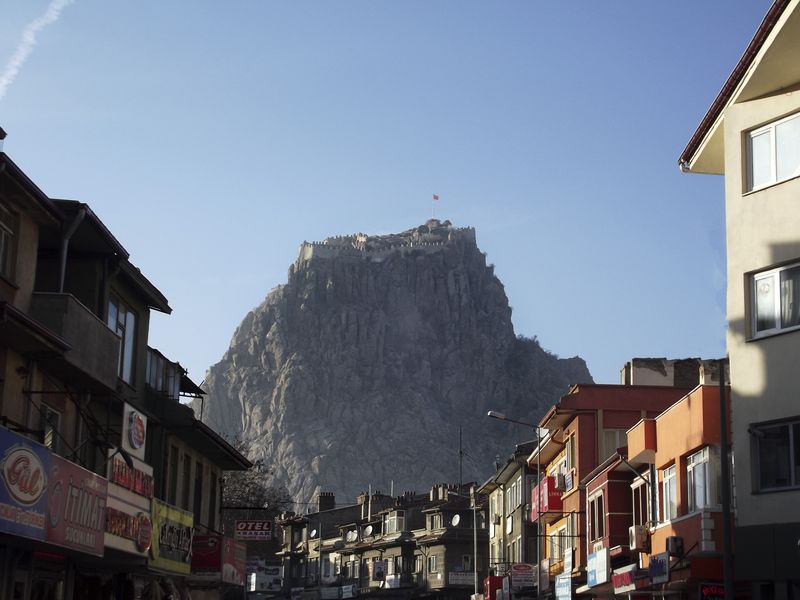
Afyonkarahisar province is farming country — known for its plains agriculture, its thermal springs and, around Ayazini, the Phrygian Valley’s rock-cut churches and tombs, carved more than two thousand years ago. Ayazini’s graves are ancient; this week’s village burials were of people whose pupils, customers and grandchildren are alive to mourn them.
For many Turks, Thursday’s news also landed against a recent memory. In September 2026, a school shooting in Turgutlu, in neighbouring Manisa province, shocked the country and reopened the same arguments about weapons and warning signs — Signal Post News covered that attack in full: the Turgutlu school shooting in Manisa. Two such shocks in a single autumn do not make a pattern, and investigators have connected nothing between them. But they explain the speed with which Thursday’s village killings became a national argument rather than a provincial tragedy. Türkiye’s place in the region’s wider security debates — the same week its parliament’s mandate decisions drew attention abroad, as in Ankara’s October mandate vote — forms the backdrop, not the cause: the questions raised in Afyonkarahisar are domestic ones, about debt, threats and guns, and they will be answered, if they are answered, at home.
What happens next
The first watch is a hospital ward: Sevgi Postalcı’s condition in intensive care at Afyonkarahisar State Hospital, and the gendarmerie sergeant’s recovery from the wound he took at the checkpoint. The second is judicial. Remand is the beginning, not the end, of the process: prosecutors must now convert a chaotic afternoon — three villages, a city quarter, a 100-kilometre flight — into a single coherent indictment, deciding how the March 2026 attack on the suspect’s own car, which investigators are examining, fits the story he has told them, and testing his account of the debt against records, witnesses and the burned harvester at its centre. The publication ban will shape how much of that work the public can follow in real time — a restriction Turkish journalists chafe under, and one that places a heavier duty on official statements to be complete and accurate.
The third watch is communal: the remaining funerals, and the memorial life of a secondary school that has lost two of its teachers at once. That is where Thursday’s story ends — in villages that will measure the state’s response not by its statements, but by whether the next escalating dispute meets something standing in its way.
Sources
Associated Press reporting, carried internationally, November 5–6, 2026 — the toll of eight killed and one seriously injured, the sequence of attacks across Ayazini, Kıyır and Yukarıtandır, and the suspect’s capture in Eskişehir province. Anadolu Agency, November 5–6, 2026 — the investigation, the suspect’s remand in custody on November 6 on a charge of intentional homicide of more than one person, and the funeral arrangements. NTV, November 5–6, 2026 — the manhunt, the hijacked vehicles, the checkpoint arrest and the suspect’s reported statement on the harvester debt. BBC Türkçe, November 5–6, 2026 — the victims’ identities and the provincial education directorate’s naming of the two teachers. Afyonkarahisar Governor’s Office statement, November 5, 2026 — the official toll quoted in this article.