Roger Clemens Medal of Freedom
The president announced the nation's highest civilian honor from a San Antonio campaign stage, offering Clemens a White House imprimatur that Cooperstown's voters withheld for a decade.
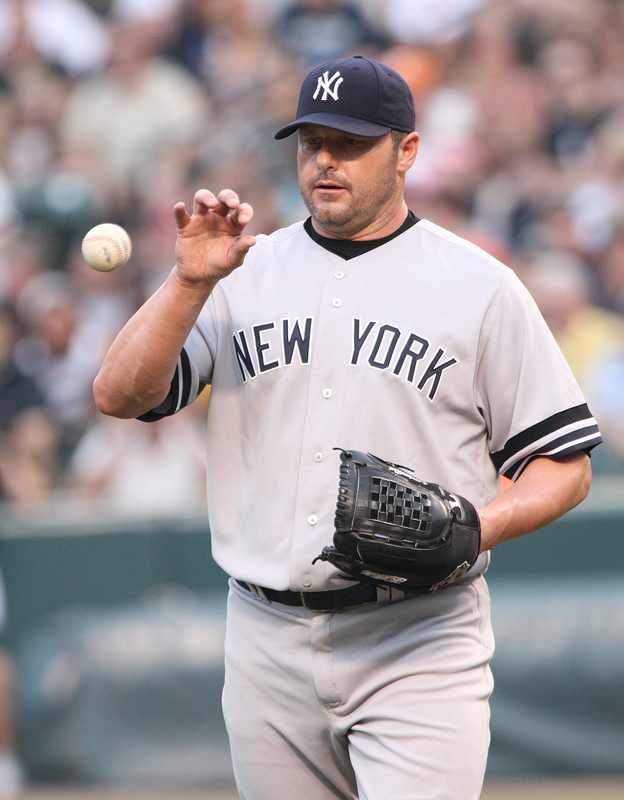
President Donald Trump said Wednesday evening, October 7, 2026, that he will award Roger Clemens the Medal of Freedom, using a midterm rally in San Antonio, Texas, to promise the nation's highest civilian honor to one of baseball's most accomplished and most contested figures. Clemens had introduced Trump at the rally for Republican Texas Senate nominee Ken Paxton. Trump then called the seven-time Cy Young winner back onstage, questioned why he remains outside the Baseball Hall of Fame and said the medal would “compensate” for that exclusion.
Clemens said he was “stunned.” If he were going to receive the award, he said, he would want it from Trump. He joked that the president knew his numbers so well he “could be my agent,” then reduced a monumental résumé to two words: “Twenty-four years.” Trump called Clemens “one of the greatest athletes and maybe the greatest pitcher of all time” and predicted that he will “be in the Hall of Fame someday.” The White House has not announced when a ceremony will take place.
Why this matters
This is more than a famous athlete receiving a ceremonial honor. A president is using the Presidential Medal of Freedom to enter baseball's bitterest moral argument: whether statistical greatness can be separated from unresolved suspicions tied to the sport's steroid era. The medal does not put Clemens in Cooperstown, erase a ballot or adjudicate what happened. It does allow Trump to place the prestige of the presidency on one side of a cultural dispute baseball has never fully resolved.
That is consistent with how Trump uses honors. He often treats them not merely as retrospective recognition but as instruments of rehabilitation, loyalty and public argument. Clemens's case gives him a ready-made contrast: sportswriters closed one door after ten ballot appearances; the president can open another. The gesture speaks simultaneously to baseball fans who believe Clemens has been punished without a conviction, and to voters who respond to Trump's promise to reverse decisions made by elite institutions.
Presidents have broad discretion over the medal, and there is no formal nomination process that binds the White House. That latitude is part of the office. It is also why each choice inevitably communicates values. Supporters will see overdue recognition of a historic career and a man acquitted in court. Critics will see a presidential honor used to bypass the judgment of anti-doping advocates and Hall voters. Both readings are grounded in the same act.
How we got here
The Trump Clemens San Antonio rally becomes an honors stage
The announcement came at a Ken Paxton rally in San Antonio, less than a month before the Tuesday, November 3, 2026, midterms. Trump campaigned with Senator Ted Cruz and attacked Paxton's Democratic opponent, James Talarico. Clemens's introduction made him part of that political stage before Trump transformed the appearance into a surprise honors announcement.
The setting matters. Presidential medals are usually associated with a White House ceremony, carefully framed as national recognition. This promise originated in campaign choreography in Texas, where Clemens was raised in Houston, played college baseball and later pitched for the Houston Astros. The blend of baseball celebrity, state identity and partisan mobilization is not incidental; it is the point of the rally format.
For more on the political setting, read Signal Post News's reports on the Trump–Paxton San Antonio midterm rally and Trump's Texas red-state rally tour.
The Roger Clemens steroids Mitchell Report dispute
Clemens was named in the Mitchell Report, released in December 2007 after an investigation into performance-enhancing drugs in Major League Baseball. His former trainer, Brian McNamee, testified that he injected Clemens with steroids and human growth hormone. Those Clemens trainer McNamee allegations became the foundation of the public case against the pitcher and remain central to why many Hall of Fame voters refused to support him.
Clemens has consistently denied ever using performance-enhancing drugs. He challenged the allegations publicly and repeated those denials before Congress in 2008. The dispute has never had a universally accepted factual resolution: McNamee's testimony and the Mitchell Report remain part of the record, while Clemens's denials and later acquittal are equally essential facts. Any honest account must hold both at once rather than convert suspicion into a conviction or an acquittal into proof that every allegation was false.
Roger Clemens acquitted of perjury in 2012 — what the verdict did and did not settle
A federal grand jury indicted Clemens on six counts arising from his 2008 congressional testimony: two counts of perjury, three of making false statements and one of obstruction of Congress. His first trial ended in a mistrial after prosecutors introduced evidence the judge had ruled inadmissible. In June 2012, a jury acquitted Clemens on all six counts.
That verdict carries real legal weight. Clemens was not convicted, and descriptions that imply otherwise are wrong. It also did not require Hall voters to conclude that no performance-enhancing drugs were used; criminal guilt must be proved beyond a reasonable doubt, while a private sports honor applies no comparable legal standard. The divergence between courtroom proof and institutional judgment explains why the argument survived the trial.
The Clemens Hall of Fame snub lasted all ten ballots
Clemens appeared on the Baseball Writers' Association of America ballot ten times, the maximum then allowed, and never reached the 75 percent threshold. His candidacy became a proxy for how voters treated the steroid era. Some writers regarded his extraordinary pre-allegation record as sufficient and objected to using suspicion as a lifetime bar. Others believed the evidence associated with the Mitchell Report made induction inappropriate, even without a criminal conviction.
That division is why “snub” means different things to different readers. To supporters, it describes a punishment untethered to an adverse verdict. To critics, it describes a legitimate exercise of the character and integrity criteria in Hall voting. The Presidential Medal of Freedom does not settle that disagreement; it changes the institution delivering the judgment.
The Trump Pete Rose Hall of Fame campaign set the pattern
Trump has already pushed baseball to reconsider Pete Rose, who died in September 2024 and remains Major League Baseball's career hits leader with 4,256. The Trump Pete Rose Hall of Fame campaign used a similar argument: unmatched achievement should not be permanently erased by an institutional judgment. Rose's gambling ban and Clemens's PED controversy are distinct cases, but Trump's political framing joins them as stories of greatness denied recognition.
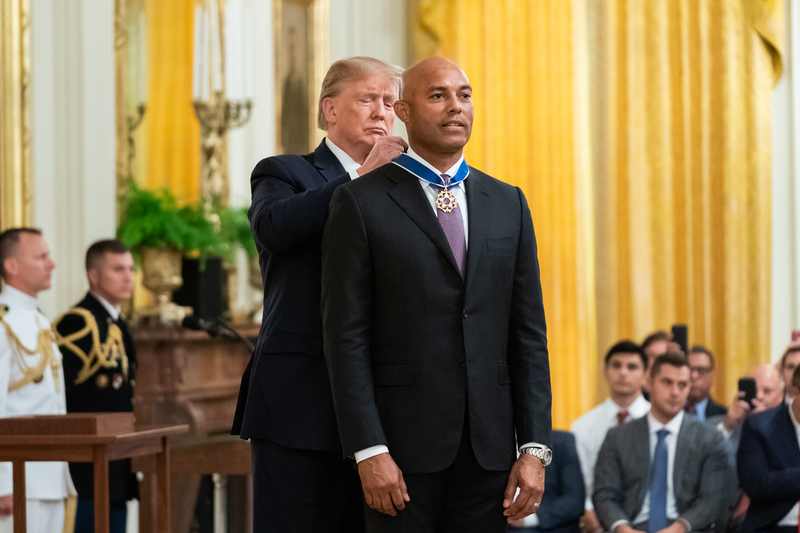
The athlete-recipient list shows that sports have long been part of Trump's medal politics. He awarded or announced honors for Mariano Rivera, Babe Ruth, Tiger Woods, Roger Staubach, Jerry West, Bob Cousy, Annika Sorenstam and Gary Player. Clemens would fit that pattern while adding a more explicit element of rehabilitation.
Who benefits — and who loses
What supporters say
Clemens gains the clearest benefit. The medal will attach the nation's highest civilian honor to a legacy that has been defined as much by exclusion as by achievement. Supporters can point to the 2012 acquittal, the lack of a positive test established in court and a career that stands among the best ever. They will argue that ten years of Hall voting became an indefinite penalty based on allegations Clemens denied and prosecutors could not turn into a conviction.
Trump benefits with sports fans and in Texas. Clemens is a Houston-raised icon whose career bridged the Boston Red Sox, Toronto Blue Jays, New York Yankees and Houston Astros. Announcing the honor at a campaign rally lets Trump present himself as the decision-maker willing to overturn an establishment verdict — while keeping the conversation on a beloved sport and a home-state star.
What critics say
Anti-doping advocates and writers who voted no lose some control over the public meaning of Clemens's legacy. Critics can reasonably argue that the medal substitutes presidential discretion for the deliberative standards of a sports institution, and that it risks minimizing the damage performance-enhancing drugs did to trust in baseball's records. They may also object to unveiling the award at a partisan rally rather than through a White House process presented as civic recognition.
The strongest criticism is not that Trump lacks authority; he plainly has it. It is that the timing and stage turn a national honor into political theater. The strongest defense is similarly institutional: because the president has always possessed wide discretion, using that discretion to recognize a legally acquitted athlete with historic accomplishments is not an abuse merely because Hall voters disagree.
The numbers behind the argument
Roger Clemens stats: 354 wins, 4,672 strikeouts
Clemens's record is the reason this debate refuses to fade. He won seven Cy Young Awards, the record for any pitcher. He finished with 354 victories, ninth on Major League Baseball's all-time list, and 4,672 strikeouts, third all-time. Across 24 seasons, he posted a 3.12 earned-run average and won two World Series titles. Those are not borderline Hall numbers; absent the PED controversy, they describe an automatic first-ballot selection.
The starkest comparison is seven Cy Youngs against ten failed Hall ballots. One number measures peak excellence as judged in real time; the other measures how the sport later processed suspicion, character and historical memory. Pete Rose's 4,256 hits supply the parallel: a record can be undisputed while the honor attached to it remains contested.
Before Wednesday, the institutional shorthand was simple: Cooperstown's door closed. After Trump's announcement, the White House door opened. That is a powerful before-and-after image, but it should not be mistaken for equivalence. The Hall of Fame inducts baseball immortals under its own rules. The president awards a civilian honor under constitutional and political discretion. One cannot formally reverse the other.
What happens next
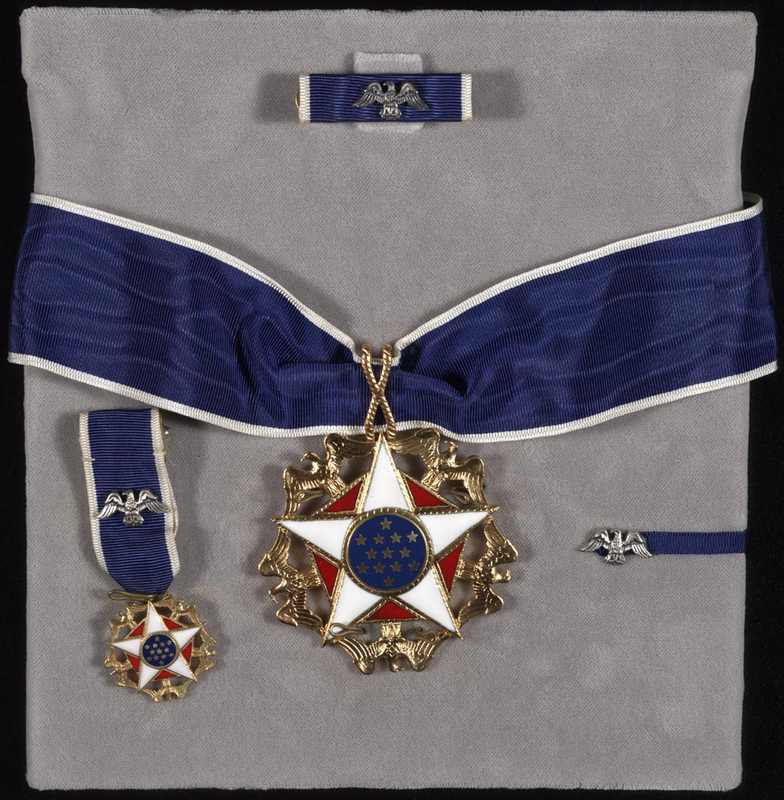
A Presidential Medal of Freedom 2026 ceremony has no announced date
Trump's promise begins the process but does not tell the public when the medal will be presented. The White House has not announced a ceremony date, a recipient class or whether Clemens will be honored alone. Until those details are released, the event's timing and format remain uncertain.
A formal White House ceremony would give Trump another opportunity to make the Hall of Fame argument, possibly with Clemens's statistics and acquittal at the center. A date closer to the November 3 election would intensify questions about midterm stagecraft. A later ceremony would separate the civic honor from the Ken Paxton rally in San Antonio where it was announced.
Could other steroid-era stars seek the same route?
Clemens's recognition may encourage supporters of Barry Bonds, Sammy Sosa and other disputed steroid-era candidates to press for comparable presidential honors. That does not mean medals will follow. Presidential selections are personal, and no public mechanism requires consistency across athletes. But once the honor is used to answer a Hall exclusion, comparisons become inevitable.
Clemens also retains a baseball-specific path through Hall of Fame era committees, which reconsider candidates after their writers' ballot eligibility ends. The medal could amplify his case by returning his record and acquittal to public debate. It could also harden opposition among voters who view presidential intervention as irrelevant to baseball's standards. Neither reaction is knowable yet.
The enduring question is whether this moment changes Clemens's legacy or simply gives each side a new symbol. Supporters will hold up the medal as recognition that Cooperstown denied. Critics will point back to the Mitchell Report and the trainer testimony. Trump has not resolved baseball's argument. He has nationalized it — from a Texas campaign stage, with the highest civilian honor in his hand.