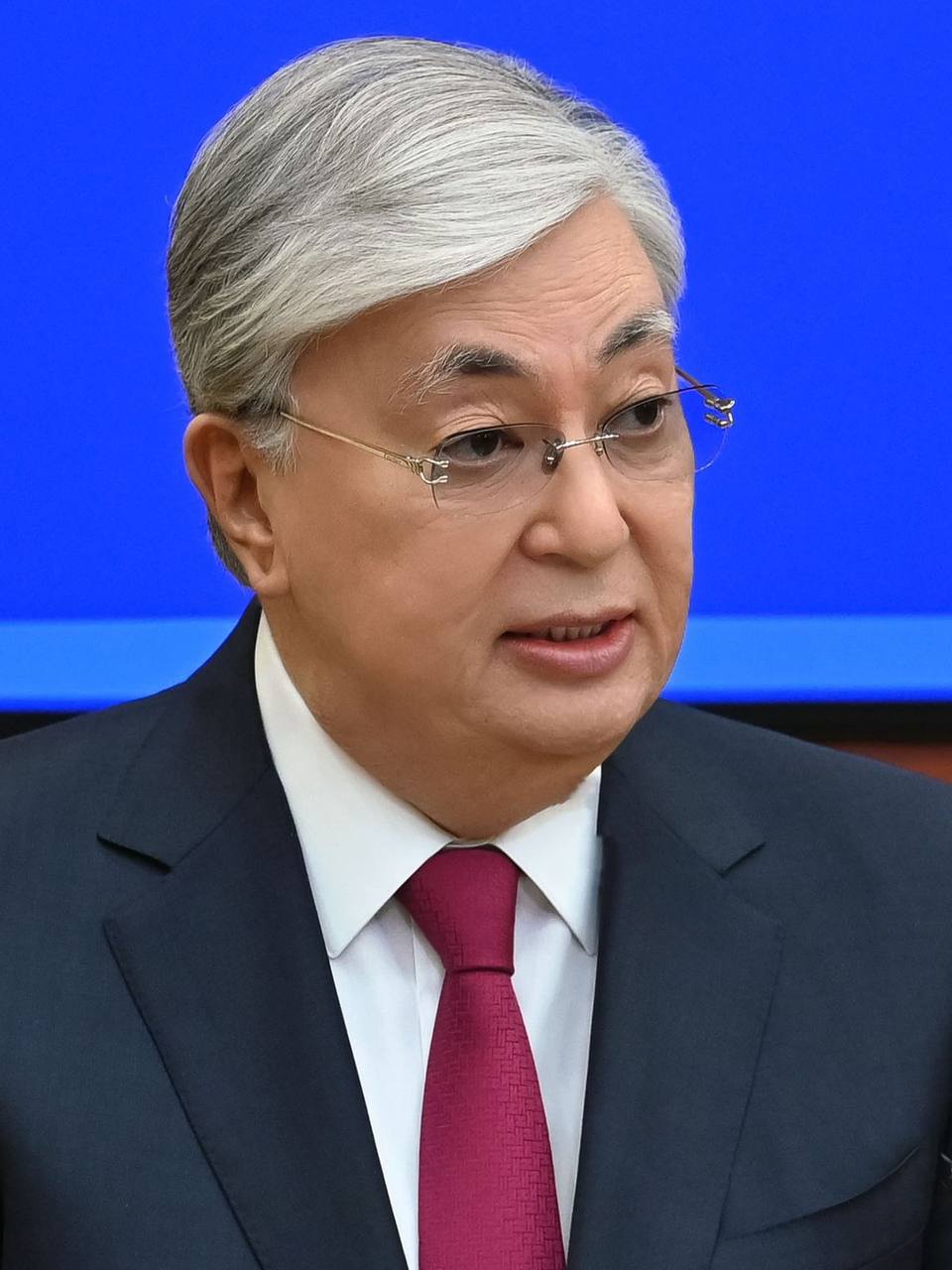
Kazakhstan's President Kassym-Jomart Tokayev has dismissed Defence Minister Dauren Kosanov, removing the country's top military official just days after 14 servicemen were swept out to sea and drowned during a naval training exercise on the Caspian Sea coast. In a concurrent decree issued on Sunday, Tokayev appointed Aidos Myrzakhmetov — previously commander of the special operations forces — as the new defence minister, Reuters reported, citing the presidential decrees.
What happened
On Thursday, military personnel disembarking from a patrol boat on the Caspian Sea coast in rough weather were swept into the open sea; 14 servicemen died and three others were rescued, according to Reuters. The drill was part of the “Khazar Qorgany 2026” naval exercises that began on September 22 in the Kazakh sector of the Caspian Sea, and was commanded by the navy's chief, Captain First Rank Kanat Niyazbekov, The Sun reported. Kazakh defence ministry accounts say the soldiers were disembarking in roughly one metre of water when strong winds and a sudden deterioration in weather swept them into open water; several died under the weight of their combat gear.
On Friday, Kazakhstan's Interior Ministry said authorities had arrested five Defence Ministry officials, including the first deputy commander-in-chief of the Naval Forces and chief of staff, the commanders of two military units, a marine company commander, and the patrol boat's commander. The Prosecutor-General's office said officials suspected of “negligent performance of their duties” had been identified — including those who failed to ensure proper control and the safety of personnel — adding that investigators had questioned more than 30 military personnel and seized documents and video footage.
Tokayev declared September 25 a national day of mourning, and attendees at the Kazakhstan-China Forum — including the president himself — observed a moment of silence for the fallen servicemen. Then, on Sunday, came the decrees: Kosanov relieved of his post, Myrzakhmetov appointed in his place. Signal Post News's earlier report details the fatal exercise, arrests and day of mourning.
Why this matters
In the post-Soviet space, defence ministers almost never lose their jobs over training accidents. Accountability for military disasters in Central Asia has historically stopped at the level of unit commanders — a colonel dismissed here, a captain reprimanded there — while the minister survives. Tokayev has now broken that pattern in the most public way possible, reaching past the five arrested officers straight to the very top of the defence establishment.
That is the real story here: not just a personnel change, but a signal about how this president governs. The speed is part of the message. Three days elapsed between the drownings and the minister's sacking — barely enough time for the national day of mourning to pass. Tokayev is telling two audiences something at once. To the public, and to the grieving families, he is saying that no rank is insulated when soldiers die needlessly. To the armed forces — the largest military in Central Asia, and a pillar of regime stability — he is saying that negligence will be treated as a political matter, not an internal disciplinary one.
There is a harder-edged reading too, and it deserves to be stated: sacking a minister is also the fastest way for a president to convert a national tragedy into a demonstration of control. Whether this becomes genuine reform or a ritual sacrifice depends entirely on what the investigation — and Myrzakhmetov — do next.
How we got here
Dauren Kosanov's tenure was strikingly brief. Appointed defence minister in 2025 and reappointed to the post in September, he is out within weeks of that reappointment, according to LatestLY's reporting on the decrees. His fall fits a recognisable Tokayev pattern. Since the violent unrest of January 2022 — when Tokayev declared a state of emergency, called in CSTO peacekeepers, and then systematically removed figures associated with his predecessor Nursultan Nazarbayev — the president has governed through decisive, top-down personnel moves, consolidating power by making examples of officials deemed to have failed.
The setting matters as well. The Caspian Sea is not just a coastline; it is the centre of Kazakhstan's oil and gas wealth and a shared, contested space with Russia, Iran, Azerbaijan, and Turkmenistan. A navy that cannot safely disembark its own marines in rough weather raises questions that go beyond one exercise — about training standards, equipment, and command culture in a force Tokayev has been trying to modernise.
Who benefits, who loses — and what the critics say
The winners are clear enough. Tokayev burnishes his credentials as a president who holds even his ministers to account — a useful image as he continues to define his presidency against the Nazarbayev era. The victims' families receive the strongest signal a state can send that the deaths are being taken seriously at the highest level. And Aidos Myrzakhmetov, elevated from special operations command to the defence ministry, gets the defining opportunity of his career.
The losers: Kosanov, whose ministerial career has ended in disgrace; the naval high command, now facing both criminal investigation and a new civilian master with a commando's instincts; and, in the short term, military morale, as every officer in the chain of command absorbs the lesson that failure travels upward.
Critics will make two arguments, and both have force. First, that removing one minister does not fix a safety culture — the deeper questions are why the exercise went ahead as weather deteriorated, why the rescue operation faltered, and whether risk assessments were falsified or simply never done. Second, that in Kazakhstan's highly centralised system, the line between accountability and scapegoating is thin: the five arrested officers now face negligence charges, and observers will watch whether the investigation climbs any higher or stops where it is politically convenient.
The numbers, in context
Fourteen dead makes this one of the worst peacetime military losses in Kazakhstan's independent history — a toll more commonly associated with combat than with training. Five arrested officials, including a first deputy navy commander, is an unusually senior haul for a negligence probe; Central Asian militaries have historically preferred to keep such investigations at arm's length from flag rank. Three rescued, against 14 lost, speaks to how badly the rescue operation went wrong — the very failure the Prosecutor-General's office cited. And one minister sacked within three days: by regional standards, that is lightning-fast political accountability, and it sets a precedent every Kazakh commander will now have to live with.
What happens next
Myrzakhmetov's résumé is the clearest hint of Tokayev's intent. A special-operations commander is not an administrator; his appointment suggests the president wants a security-first overhaul of the ministry rather than a caretaker. Regional analysts cited by Central Asian outlets expect the investigation to widen — new arrests and extensive inspections across the military leadership have been flagged as likely — and LatestLY reports the shake-up comes amid a comprehensive review of the ministry.
Three scenarios present themselves. In the first, Myrzakhmetov moves fast: a purge of the naval command, new safety protocols, and a public report that closes the matter with reforms attached. In the second, the investigation grinds on for months, more heads roll, and the episode becomes a rolling political liability. In the third — the one the families will fear — the mourning period passes, the decrees fade from the headlines, and the system quietly returns to its old habits.
What to watch: the Prosecutor-General's findings, whether parliament demands hearings, and whether Kazakhstan's Caspian naval posture visibly changes in the coming exercise cycle.
Sources and further reading
- Reuters — “Kazakhstan's Tokayev dismisses defence minister after 14 die during naval exercise” (September 27, 2026)
- The Sun — reporting on the Khazar Qorgany 2026 exercise, the arrests and the Prosecutor-General's investigation
- LatestLY — reporting on the presidential decrees, Kosanov's appointment and the ministry review
- Virgin Radio Dubai — Reuters report on the dismissal and appointment
- Qazinform — Prosecutors name suspects and describe the Caspian Coast investigation
Reporting basis: Fixed September 27, 2026 snapshot. Official statements from the Kazakh presidency, Interior Ministry and Prosecutor-General's office are cited as reported by the outlets above. Factual claims are source-based; interpretive passages are analysis.