Berlin Marathon 2026 results
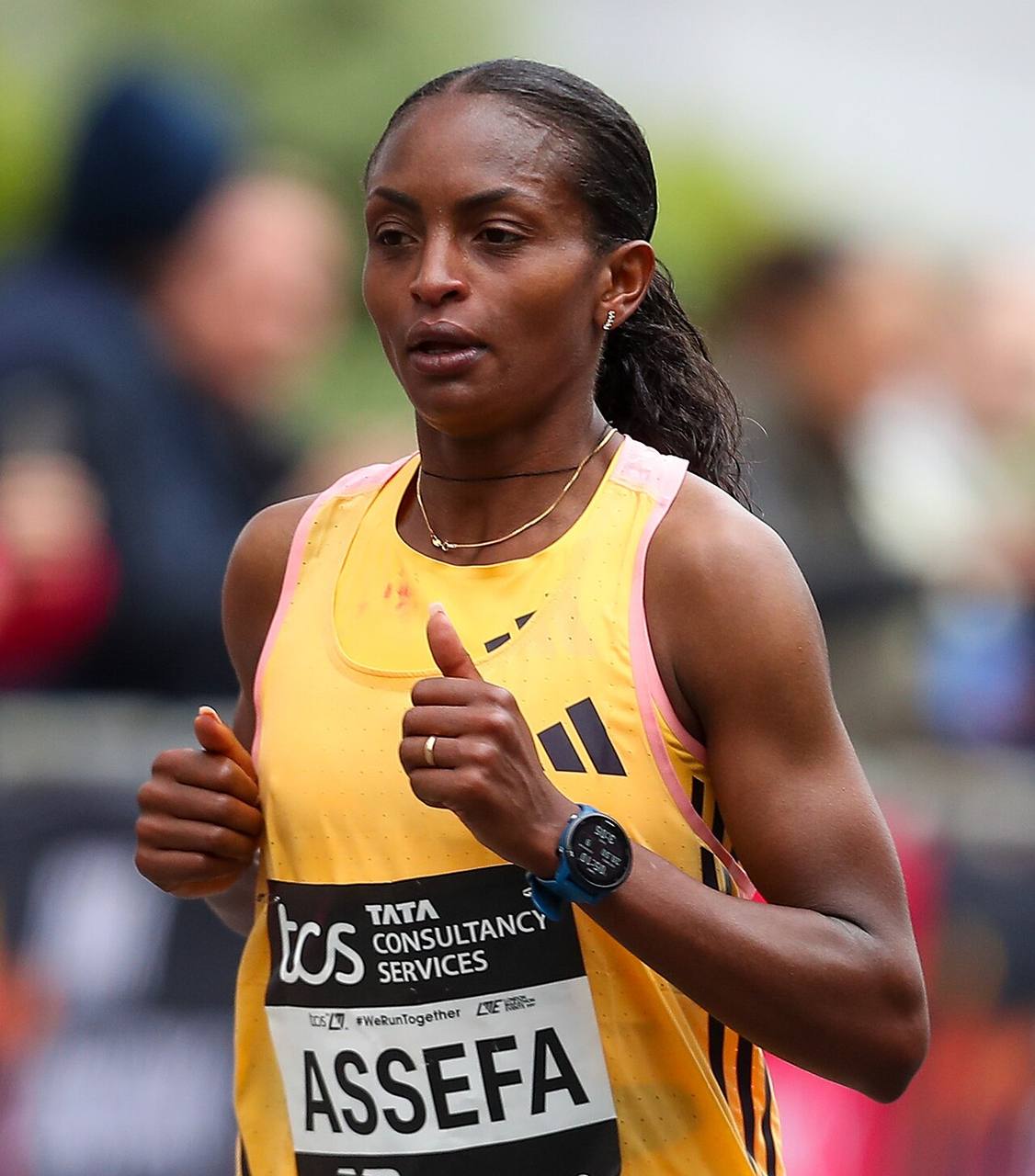
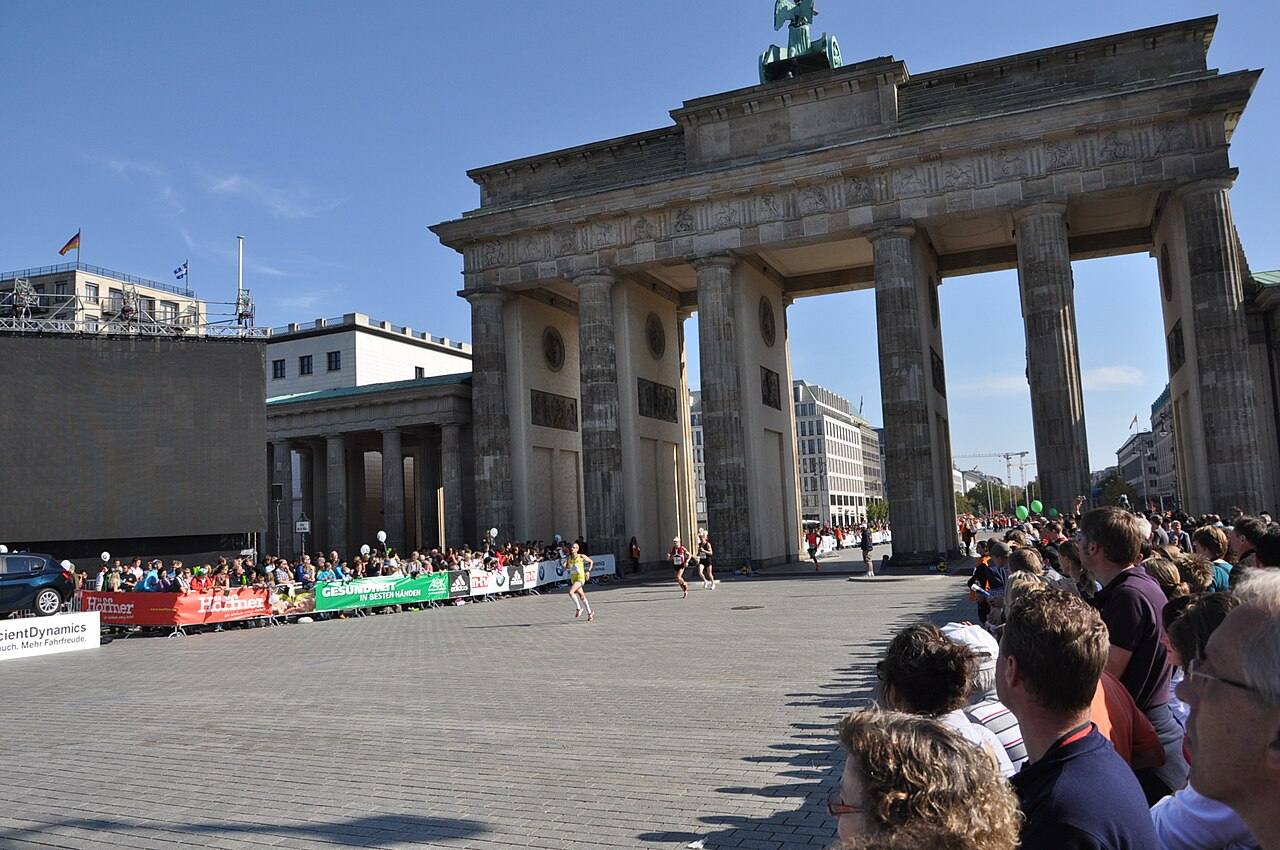
The Berlin Marathon 2026 results will show a winner's time of 2:11:04 and a third Berlin crown for Ethiopia's Tigst Assefa. They will not show how close she came to immortality — or how brutally the marathon took it away. On a sun-warmed Sunday morning in the German capital, Assefa ran alone at the front for nearly the entire 42.2 kilometers, ticking off splits that had Ruth Chepngetich's 2:09:56 world record squarely in her sights. With 40 kilometers gone she was still projected to smash it. Then, in the final two kilometers, her legs betrayed her: crippling cramps seized her stride, turned a metronomic rhythm into a limp, and carried a world record out of reach. She refused to stop, hobbled past the Brandenburg Gate, and collapsed at the line in disappointment — a champion who had just run the third-fastest women's marathon ever recorded, and knew exactly what she had lost.
How a world-record bid fell apart in the final 2km
The plan was audacious and it nearly worked. Assefa hit 5km in 15:30, already 25 seconds clear of defending champion Rosemary Wanjiru of Kenya, and stretched that lead to 1:05 by 10km. She passed halfway in 1:04:57, reached 25km in 1:17:00, and was still inside record pace at 30km (1:32:15). At 35km she was 20 seconds below world-record time, and at 40km — clocked in 2:03:00 — projections had her finishing around 2:09:44, more than ten seconds under the mark. Then came the cruelest 2.195 kilometers of her career: 8 minutes and 4 seconds, her pace disintegrating from roughly 3:04 per kilometer to nearly 3:41, her stride visibly breaking as she fought cramps and a worsening limp. She crossed in 2:11:04 — 68 seconds short of the record, nearly six minutes ahead of second place. Behind her, the race became an all-Ethiopian procession: Bedatu Hirpa second in 2:16:53, Dera Dida third in 2:16:55, Bekelech Gudeta fourth in 2:18:58 and Alemitu Tariku fifth in 2:19:01. Marathon legend Haile Gebrselassie, a four-time Berlin winner, helped Assefa away from the recovery area.
Why this matters: the record she chased may not be worth the name
Here is the uncomfortable context. The 2:09:56 Assefa was hunting belongs to Kenya's Ruth Chepngetich, set in Chicago in October 2024 — a mark now clouded by Chepngetich's three-year doping ban, handed down in 2025. That does not make Assefa's run any less real; if anything, it makes it more significant. Her 2:11:04 is arguably the fastest marathon ever run by a woman without an asterisk hovering over the record book. Berlin, where the world record has fallen 13 times — more than anywhere else — remains the one course where the line between human progress and course engineering can be honestly debated: flat, deliberately paced, with start times moved earlier this year after last year's heat. And the cramps themselves matter. Elite marathoners increasingly understand late-race cramping not as simple dehydration but as neuromuscular fatigue — the brain shutting down muscle fibers that have been asked to hold 3:04-per-kilometer pace for two hours in 19°C warmth. Assefa didn't fail a fitness test. She found the exact point where the fastest sustainable pace in history becomes unsustainable.
From 800 meters to the edge of history
Assefa's arc is one of the strangest in distance running. Born December 3, 1996, in Holeta Genet, Ethiopia, she was an 800-meter specialist who raced the heats at the 2016 Olympics. Her marathon debut came in Riyadh in March 2022. Six months later she won Berlin in 2:15:37. A year after that, she ran 2:11:53 in Berlin — the first woman in history under 2:12, and the world record at the time. Paris 2024 brought Olympic silver; 2025 brought the London Marathon title and the world championship. Before Sunday's race she had pledged to run "better than my best." She did — by roughly 50 seconds — and still finished in tears. That is the measure of where she has pushed the sport: a personal best by nearly a minute counts as heartbreak.
The men's race: Adola's quiet masterpiece
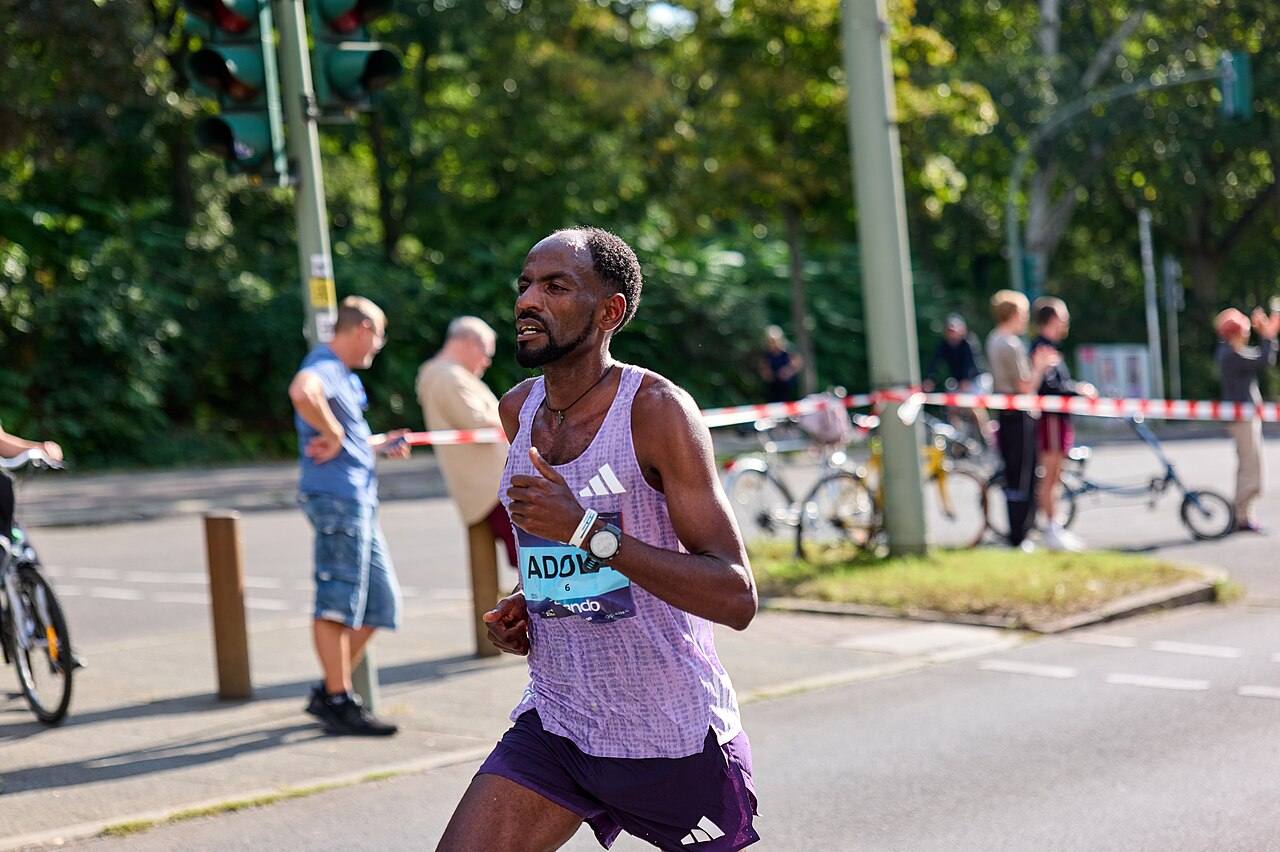
Overshadowed by the women's drama, Ethiopia's Guye Adola ran the race of his life. The 35-year-old won in 2:02:50, a personal best and his second Berlin crown after 2021 — the 13th-fastest time ever run on this course, though well off Eliud Kipchoge's 2:01:09 course record from 2022. Gemechu Dida finished second in 2:03:19, with Tanzania's Gabriel Geay third in 2:03:59. The men's field had been reshaped before the start: world record holder Sabastian Sawe, last year's Berlin winner and the first man to break the two-hour barrier earlier this year, withdrew with injury but attended as guest of honor. Each winner collected €40,000 (about $45,564) in prize money.
What the numbers actually mean
Strip out the emotion and the arithmetic is stark. Assefa's final 2.195km cost her roughly 37 seconds per kilometer against her earlier pace — the difference between immortality and a very fast consolation prize. Her 2:11:04 sits 68 seconds off the world record and about 50 seconds ahead of her own previous best. It is the third-fastest women's marathon ever, and she won by 5 minutes and 49 seconds despite barely being able to run the last stretch. For perspective: her margin of victory, earned while limping, would have won most major marathons outright. Adola's 2:02:50, meanwhile, confirms him as a generational late-peaker — winning a World Marathon Major at 35 with a personal best is almost unheard of in the men's game.
Who wins, who loses
Winners: Assefa, whose legacy no longer depends on the record — the course record, a third Berlin title, and the fastest "clean" mark in history is a career most runners would trade everything for. Ethiopian athletics, which swept both elite races and the entire women's top five, a depth no other nation can currently match. And Berlin itself, which once again delivered the fastest racing on earth. Losers: Rosemary Wanjiru, whose title defense dissolved almost from the gun. The legitimacy of the women's world record, which looks more fragile with every Assefa run. And the hundreds of thousands of fans lining the course, who came for a coronation and witnessed something rarer — a reminder that the marathon still punishes perfection.
What happens next
Assefa will be back, and the sub-2:10 barrier — once unthinkable, now visibly within reach — is the obvious target. Valencia in December is the other great record course; London next spring is the stage she conquered in 2025. The deeper question is whether the women's world record can survive its own shadow: until athletics resolves the credibility problem around the 2:09:56, every Assefa run will be measured against a mark half the sport no longer trusts. On the men's side, Sawe's sub-two-hour breakthrough earlier this year means the 2:02s are no longer the frontier — Adola, at 35, has announced himself as a contender in whatever comes next.
The record survived. The runner didn't need it.