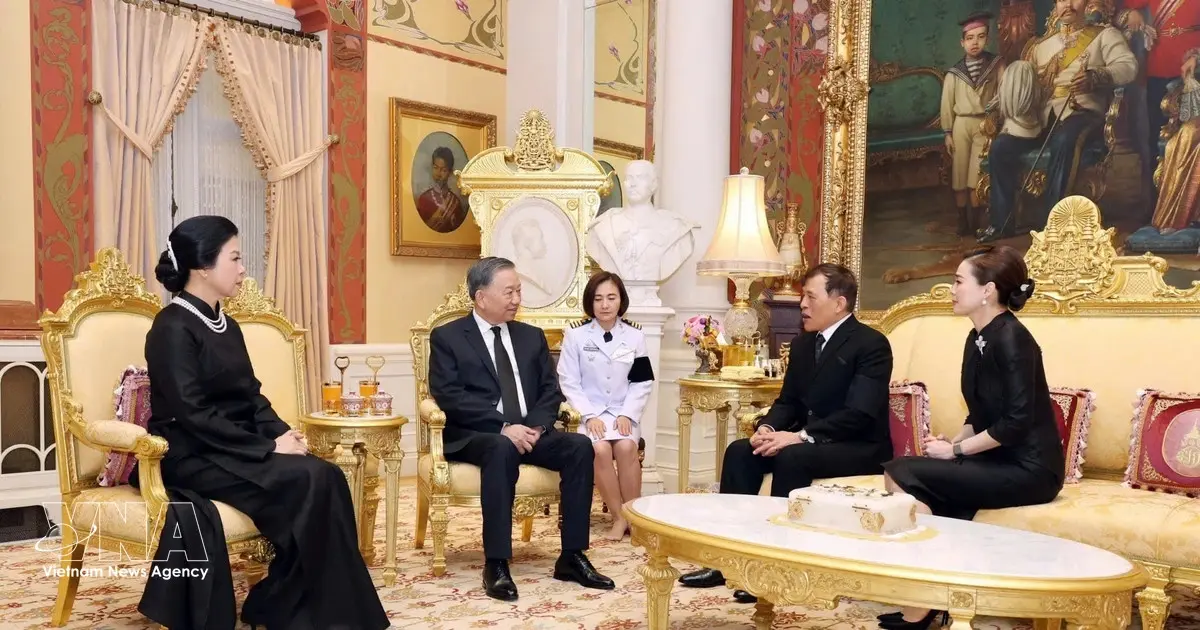
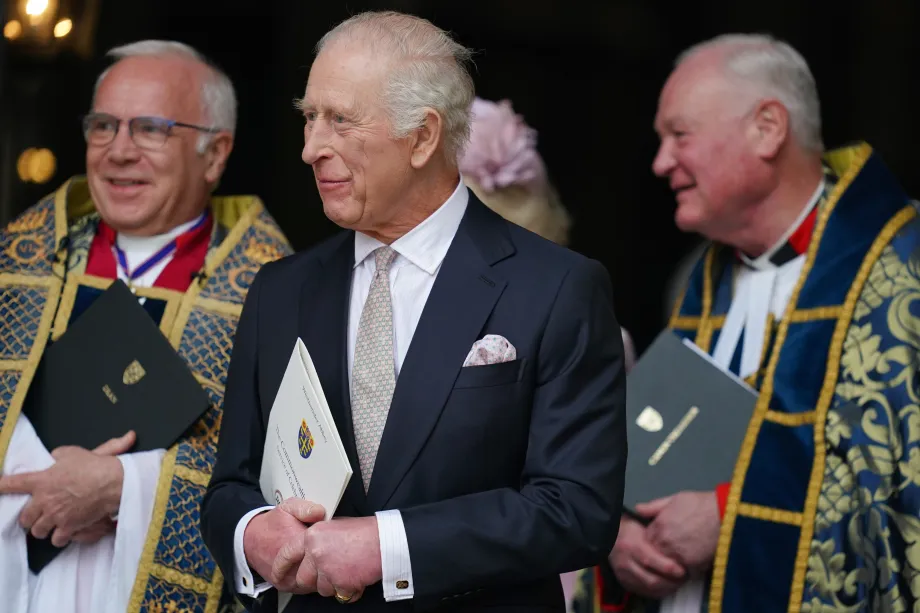
The royal couple arrived at Noi Bai International Airport on September 14 and received the formal welcome the following day at Hanoi’s National Assembly House. Vietnamese and Thai reports described a 21-gun salute, both national anthems and talks with General Secretary and President Tô Lâm.
The visit carried an unusually visual detail: Vietnamese media reported that the King, a qualified military and civilian pilot, flew the royal Boeing 737-800 into Hanoi, with Queen Suthida in the cockpit. That image traveled widely, but the diplomatic substance matters more than the novelty.
Fifty years, then a faster upgrade
Thailand and Vietnam established diplomatic relations in 1976. In May 2025 they elevated ties to a Comprehensive Strategic Partnership, and an action plan covering 2026–2031 followed in May this year. Vietnamese reporting put bilateral trade at $22.1 billion in 2025, up 9% year on year, and described Thailand as Vietnam’s largest trading partner within ASEAN.
The Hanoi program included wreath-laying at the Bac Son Martyrs’ Monument and Ho Chi Minh Mausoleum, meetings with senior Vietnamese leaders and a state banquet at Tonkin Palace. Those acts combine memory, protocol and practical diplomacy: they signal respect while giving political leaders room to discuss trade and regional cooperation.
What can—and cannot—be claimed
The visit itself, itinerary and anniversary are well documented by Vietnamese outlets and royal-office coverage. Specific new agreements from the talks were not published in the reviewed material, and no Reuters or Associated Press report was found. It would therefore be premature to describe the visit as producing a particular economic deal.
The headline is the visit’s historic first—not an agreement the public record does not yet show.
For the Thai monarchy, the trip also placed a regional relationship at the center of royal diplomacy. Vajiralongkorn had visited Vietnam as crown prince in 1992 and 1997, but this was his first official trip there as king. The distinction turns a familiar relationship into a formal state milestone.
Why this matters
The visit uses monarchy as diplomatic infrastructure. A royal presence can give a bilateral relationship symbolic weight beyond a ministerial meeting, while leaving elected governments to negotiate substance. In Southeast Asia, where protocol and continuity carry practical value, that soft power can prepare the ground for cooperation without itself constituting a deal.
How we got here
Thailand and Vietnam established relations in 1976, then elevated them to a Comprehensive Strategic Partnership in 2025. The 2026–2031 action plan makes the royal visit part of an accelerating institutional sequence rather than an isolated ceremony. Vajiralongkorn’s earlier visits as crown prince add personal continuity to a first state visit as king.
Winners, losers and the skeptical case
Exporters, tourism operators and diplomatic institutions benefit when high-level attention lowers political friction. Smaller businesses gain only if ceremonial warmth produces accessible trade rules, transport links or investment. Critics can dismiss royal diplomacy as theater; that skepticism is justified if no measurable follow-through appears, but theater can still signal priorities and create room for officials to work.
What the numbers actually imply
Reported bilateral trade of $22.1 billion in 2025, up 9% year over year, implies roughly $20.3 billion in the prior year. That is meaningful growth, though one year does not establish a trend and the figure does not show the balance between the countries. The 50-year diplomatic horizon matters because the current acceleration rests on a long base rather than a sudden alliance.
What happens next
The strongest scenario turns the action plan into named projects, clearer investment rules and repeatable official exchanges. A weaker one leaves the visit as a commemorative high point with little public evidence of implementation. Watch for jointly published agreements, sector targets and progress reporting; those will show whether symbolic capital is converted into policy.
Sources: Welcome and itinerary from Royal News Organisation; arrival and pilot detail from VietReader and Xe.today; earlier meeting photo via VietnamNet.