Steelers trade Joey Porter Jr Cowboys
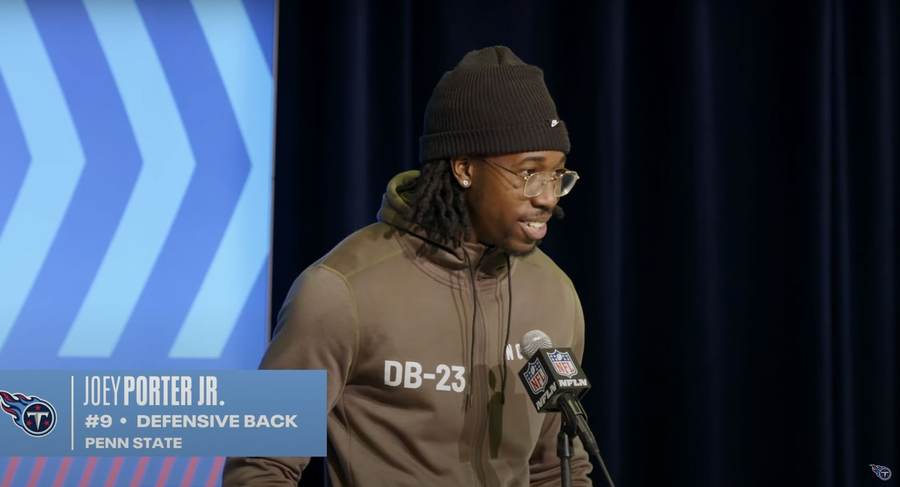
DALLAS — The Steelers trade Joey Porter Jr saga ended the way most contract standoffs end: not with a signature, but with a plane ticket. Late Wednesday night, Pittsburgh dealt the 26-year-old cornerback to the Dallas Cowboys, in a deal first reported by Tom Pelissero of The Ringer, confirmed on the Cowboys' official website and corroborated by the Associated Press through two people with knowledge of the agreement. The price: a second-round pick in 2028 and a sixth-round pick in 2027.
On paper it is a football transaction. In substance it is the closing chapter of a months-long fight over money, timing and leverage — a fight Pittsburgh was losing the moment Porter spent Week 1 in street clothes. And it makes Dallas and Pittsburgh the league's most persistent trade partners: three deals in sixteen months, all of them sending a Steeler to Texas.
Why this matters: Dallas was running out of cornerbacks
Start with the obvious. The Cowboys did not trade for a cornerback because they liked their depth chart; they traded for one because it was collapsing. Cobie Durant missed last week's game with a hamstring injury, sat out Wednesday's practice and is considered unlikely to play Sunday against Houston. Shavon Revel Jr., nursing knee and ankle problems, did not practice either. Earlier Wednesday, Dallas put safety Jalen Thompson — another hamstring casualty — on injured reserve with a designation to return, and signed three defensive backs to the practice squad. Safety P.J. Locke, dealing with a torn plantar fascia, was already on IR.
This is what the trade deadline is supposed to be for: a 1-2 team with a bleeding secondary buying a 26-year-old press corner with 41 career starts rather than waiting until November 10 and hoping the market still has one. Dallas also gets the leverage of the contract situation — Porter is in the final year of his rookie deal, and per NFL insider Jordan Schultz the Cowboys do not plan to extend him immediately. They can let him play, let the numbers settle, and keep the franchise tag in reserve for 2027. That is a tryout with a safety net.
For Pittsburgh, the meaning runs the other way. A 2-1 team does not usually sell its best young defensive back in Week 4. This was not a football decision in the purest sense; it was a capitulation to leverage. Porter had been inactive for all three games with a back issue and was already ruled out for Thursday night's game against Cleveland. The Steelers were spending a roster spot — and a starting corner's salary — on a player who was never going to take the field for them again. Trading him converts a sunk cost into a 2028 second-rounder.
How we got here: the summer of the standoff
The roots run back to the offseason. Porter, the 32nd overall pick of the 2023 draft out of Penn State, entered the final year of his four-year, $9.62 million rookie contract seeking an extension. Because he was not a first-round pick, his deal carried no fifth-year option — no contractual bridge to buy the Steelers time. The Steelers, per their long-standing policy, do not negotiate contracts once the season begins. That policy turned the calendar into the negotiation.
According to reporting by The 33rd Team's Ari Meirov, Pittsburgh never seriously pursued an extension during the offseason and only made a late push just before the season — one that went nowhere. One report indicated Porter turned down an offer worth just north of $27 million a year; earlier reporting put his ask at no less than $30 million annually. Porter later called the contract talk "old news" and denied requesting a trade, insisting the back injury that sidelined him for the first three games was legitimate. His practice status told a stranger story: a full participant on September 28 and 29 with a "NIR/conditioning" designation, then the back issue reemerging on the final injury report.
None of this happened in a vacuum. Last May, Pittsburgh traded wide receiver George Pickens to Dallas for draft picks — a deal that has aged beautifully for the Cowboys, as Pickens made the Pro Bowl in 2025 with career highs of 93 catches, 1,429 yards and nine touchdowns. Sports Illustrated notes this is the third Steelers-to-Cowboys trade since May 2025, with Broderick Jones previously sent to Dallas as well. The two front offices have each other's numbers on speed dial, and the league knows it.
Who wins, who loses — and who is fooling themselves
The winners are obvious. Dallas gets a 6-foot-2, 193-pound press corner in his prime for a pick two drafts away and a sixth-rounder — the going rate for a rental with upside. Detroit and the New York Giants both showed interest, per Schultz, and both lost; the Giants now face Porter twice a season inside the NFC East, assuming Dallas keeps him. That is the kind of detail that will sting in East Rutherford for years.
Pittsburgh's win is narrower but real: a second-round pick in 2028 for a player who had not taken a snap all season and whose relationship with the front office had curdled past repair is better than the alternative — a locker-room distraction through November and, at best, a compensatory pick down the road.
The loser is Pittsburgh's pass defense, at least in the short term. The Steelers now move forward with Jamel Dean, Asante Samuel Jr. and Daylen Everette on the boundary and Jalen Ramsey and Brandin Echols in the slot, per SI. That is a respectable group on paper, but it is a group without a 26-year-old homegrown No. 1 corner — and 2-1 teams do not usually subtract from their secondary in October.
The self-deception belongs to anyone who thinks this was only about a back. Backs are delicate; they are also convenient. The timeline — full practice participation, then a flare-up the moment the season's no-negotiation window slammed shut — is the kind of coincidence front offices do not believe and players' unions do not question.
What the numbers actually say
Strip away the narrative and evaluate the assets. Porter in three-plus seasons: 47 games, 41 starts, 165 tackles, 31 passes defensed, three interceptions, one sack. Last season: 14 starts, 52 tackles, 14 passes defensed, one interception. The 31 pass breakups are the headline number — they describe a corner offenses test and usually regret testing. For context, 14 passes defensed in a single season is the territory of top-15 NFL corners; the league's annual leaders typically sit in the 18-23 range.
The draft capital: a second-round pick two years out and a sixth next year. History says a 2028 second-rounder is worth roughly a 2026 third-rounder in present value — teams discount future picks by about a round per year. So Pittsburgh effectively sold a 26-year-old starting corner for a present-day third and a late pick. That is not a king's ransom; it is the market price for a player in the final year of his deal with one foot out the door. Dallas, meanwhile, paid a discount rate for a starter because the contract standoff did the negotiating for them.
The injury math is the other half of the ledger. Durant's hamstring, Revel's knee and ankle, Thompson on IR, Locke on IR: four defensive backs compromised before October. A trade market that includes a starting-caliber corner rarely offers one at this price. The Cowboys paid with time — a pick two drafts away — for help right now. When your season is 1-2 and your secondary is held together with practice-squad signings, time is the currency you can afford.
What the critics get right — and what they miss
The case against Pittsburgh is straightforward, and Meirov's reporting gives it teeth: the Steelers never seriously engaged on an extension during the offseason, then leaned on their no-in-season-negotiation policy as if it were a strategy rather than a straitjacket. When the late push failed, they had no leverage and no player. Critics call it arrogance — the belief that the policy would discipline the player rather than the team. There is something to that. Policies are for ordinary situations; a 26-year-old press corner entering his prime is not ordinary.
But the critics miss the other half. Porter reportedly turned down more than $27 million a year. Whatever the Steelers' process failures, that is not a team refusing to pay — it is a gap between what a player believes he is worth ($30 million-plus, top-of-market corner money) and what the team would commit to before seeing him play a snap in 2026. Pittsburgh's error was not the number; it was the calendar. By the time they got serious, the season had started, the policy had locked, and Porter's camp had every incentive to wait for free agency.
The case against Dallas is subtler: is a corner who has not played since January, with a balky back, the answer to a secondary crisis? The Cowboys are betting that the back is manageable and the contract situation was the real injury. It is a reasonable bet — backs heal, leverage disputes do not — but it is still a bet.
What happens next: the tag, the deadline and two seasons in one
Three clocks are now running. First, Porter's contract. Dallas has no plans to extend him immediately, per Schultz, which means the next ten games are an audition — for the Cowboys and for the 30 other teams watching. If he plays like the 2025 version, the franchise tag (a one-year tender at the average of the top five corner salaries) gives Dallas control through 2027 while talks continue. If the back lingers, Dallas walks away having spent a distant second-rounder. That is the cold logic of the deal.
Second, the trade deadline: Tuesday, November 10, at 4 p.m. ET. Pittsburgh now holds extra capital and a thinner secondary — the classic profile of a team that could re-enter the market as a buyer if the record holds, or a seller if it collapses. Dallas, having spent early, has less room to maneuver. Watch whether the Steelers flip that 2028 second-rounder's present value into a win-now corner; general managers love nothing more than spending the pick they just acquired.
Third, the reunion factor. Porter joins former Steelers Pickens and Jones in Dallas — and he will see the Giants twice a year, the team that wanted him and lost him to a division rival. The NFC East just got more interesting, and the Steelers' October just got harder. Pittsburgh plays Cleveland on Thursday night without him. That is the final verdict on the standoff: whatever the back was, the divorce is real, and both sides have already moved on.
Sources
- Reuters — trade terms, Pelissero's initial report, Cowboys' confirmation, contract and injury details.
- Associated Press via Sportsnet — two-source confirmation, draft-pick return, Porter's inactivity and the Pickens trade history.
- USA Today — ESPN's reporting on the pick years, Schultz on Lions/Giants interest and Dallas's extension stance.
Reporting checked October 1, 2026. Contract figures and pick valuations are drawn from the cited reporting; draft-pick present-value comparisons are Signal Post News analysis.
Sports Desk · NFL trades · Back to all stories