raw meat recall no federal inspection
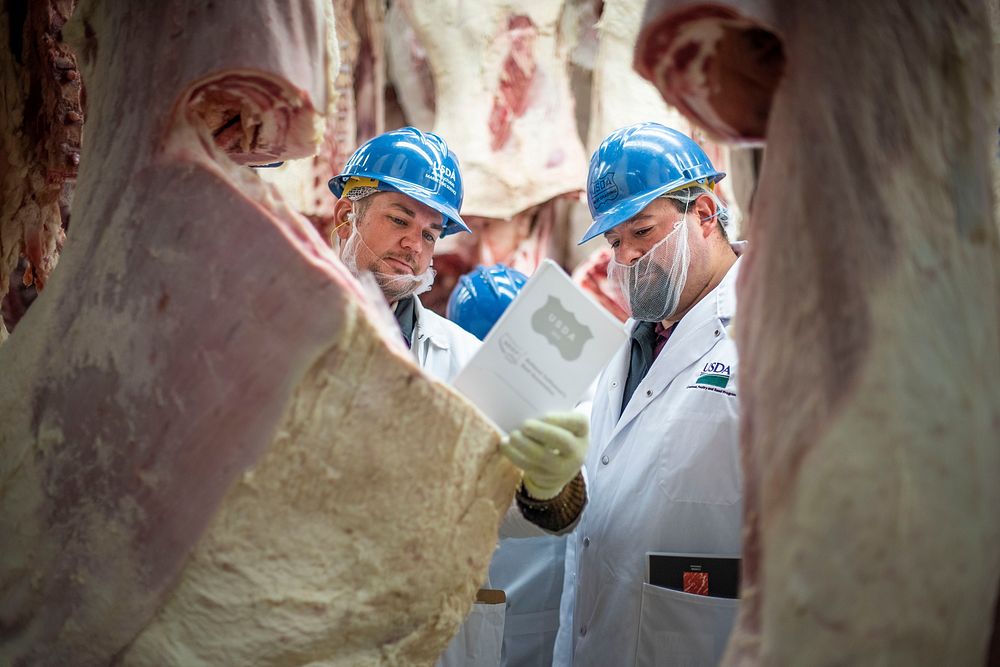
raw meat recall no federal inspection is the central development in this report. Star Meat Delivery recalled beef, pork and goat products shipped nationwide under A&D Foods labels after FSIS found a false EST. 1363 inspection mark. The event is important not only because of the immediate headline, but because it changes the choices facing institutions, companies and people who must act before the final outcome is known.
This analysis separates verified events from judgment. The facts below come from the reporting sources named at the end. Interpretive sections explain why those facts matter, who gains or loses leverage, what the headline numbers can and cannot establish, and which future signals would confirm or weaken the initial reading.
What happened
Verified point 1. Star Meat Delivery Inc. of Lucama, North Carolina, recalled approximately 167,639 pounds of raw pork, beef and goat products.
Verified point 2. The Food Safety and Inspection Service said the products were made without the benefit of federal inspection.
Verified point 3. Bulk vacuum-sealed products bore the A&D Foods label and a false establishment number, EST. 1363, which has no federal grant of inspection.
Verified point 4. The meat went to A&D Foods, a Georgia distributor, for further distribution to retail and restaurant locations nationwide.
Verified point 5. Affected products included ribeye, beef chuck, oxtail, short ribs, shanks, ground pork, pork chorizo, pork chops, pork feet, rib pieces, Boston cuts, menudo mix, pork hock and beef feet.
Verified point 6. FSIS found the problem through surveillance activity; the research report said no illnesses had been reported as of September 24.
Why it matters
This is not a recall triggered by one detected pathogen. It is a breakdown in the inspection chain. A false federal mark can cause distributors, restaurants and shoppers to assume oversight occurred when the agency says it did not.
The practical significance lies in changed incentives. A decision, announcement or result becomes consequential when another actor must alter a plan because of it. That may mean repricing risk, changing a timetable, revising a budget, protecting a supply chain or preparing for a response. The strongest interpretation is therefore not the most dramatic one; it is the one that best explains what participants are likely to do differently after the verified facts became known.
Readers should also distinguish immediate relief or pressure from structural resolution. A temporary extension, a single policy move, a casting announcement, a game result or one unusual observation can create real effects while leaving the larger system unchanged. This report treats the development as evidence in an unfolding process, not as proof that every related argument has been settled.
Context and the mechanism underneath the headline
Federal establishment numbers are supposed to connect a product with a plant operating under inspection. When a false number appears, ordinary label checks become less reliable. That is why the response focuses on removing product even without a named pathogen.
The mechanism matters because headlines often compress several stages into one. An announcement has to be implemented; a price signal has to transmit; a creative idea has to reach audiences or buyers; a scientific observation has to be repeated; and a sporting advantage has to survive the next contest. Tracking those stages prevents an early signal from being mistaken for a completed transformation.
History is useful here as a baseline rather than a script. The earlier pattern explains why the latest move drew attention, but it does not guarantee repetition. Institutions learn, competitors adapt and external conditions change. The relevant question is which parts of the old pattern remain binding and which have been altered by the new evidence.
What the numbers mean
167,639 pounds is roughly 84 tons across three proteins. The volume and nationwide distribution matter because bulk meat may be broken down and relabeled by stores or restaurants, so the original establishment mark may not remain visible on consumer packages.
Numbers provide scale, timing and comparison, but they do not interpret themselves. A large percentage can start from a small base; a modest rate change can matter because it alters direction; a count of two can be historic if the prior verified count was zero; and a market price can move on expectations before policy changes in practice. Each figure in this article is presented with its date and source context for that reason.
The disciplined test is to ask what would look different if the number were materially higher or lower. That counterfactual reveals whether the figure describes intensity, breadth, probability or merely attention. It also keeps a snapshot from being presented as a live value or a forecast. None of the dated figures on this page updates after publication.
Who wins and who loses
FSIS surveillance worked by finding the issue before a reported illness cluster. Consumers benefit from a broad notice. The losses fall on the producer, distributor, restaurants and retailers that must trace inventory, and on shoppers who may struggle to identify repackaged meat.
Benefits and costs are not always symmetrical or immediate. One side may gain time while another gains money; one institution may reduce uncertainty while households keep carrying the cost; a brand may win attention before learning whether products sell. Distribution therefore matters as much as the aggregate outcome. Asking who receives the first benefit and who bears the first risk is often more revealing than declaring the event simply positive or negative.
There are second-order effects as well. Competitors can change strategy, regulators can demand evidence, investors can revise assumptions and audiences can resist the intended framing. Those reactions are not side notes; they determine whether the initial winner keeps the advantage. The losers may also respond fastest, turning today's setback into tomorrow's pressure for a different policy or plan.
What remains uncertain
The absence of reported illness is not proof that every product was safe. Uninspected food may contain undeclared allergens, harmful bacteria or other contaminants, but the recall notice did not establish that a specific contaminant was present. The distribution list could expand.
Uncertainty is not a reason to ignore verified facts, but it changes how strongly conclusions should be stated. Claims by interested parties remain claims until independently established. Forecasts remain conditional. Early market or audience reactions can reverse. Where the research record does not settle a question, this article leaves it open rather than filling the gap with an invented answer.
The most useful distinction is between an unknown that time will answer and an unknowable claim unsupported by evidence. Publication schedules, next meetings, official reviews and observable results can resolve the first category. The second requires new documentation or corroboration. Readers should expect the story to change only when one of those evidentiary thresholds is crossed.
What happens next
1. Consumers and food businesses should identify A&D Foods products and EST. 1363, while recognizing that store-added labels may obscure the bulk package.
2. FSIS can update the distribution list as trace-back work continues.
3. The central accountability question is how the false mark entered commerce and whether enforcement or criminal referral follows.
Those checkpoints turn a broad narrative into a testable one. If the expected follow-through appears, confidence in the initial analysis should rise. If implementation stalls, the relevant numbers reverse or officials narrow their claims, the interpretation should change with the evidence. That is more useful than treating every new statement as a separate breaking-news cycle.
The broader test
The lasting importance of raw meat recall no federal inspection will be measured by consequence rather than attention. The story becomes durable if it changes rules, behavior, capital, safety, creative direction or competitive position after the first news cycle. If it produces only temporary visibility, the headline will have outrun the outcome.
For now, the verified record supports a clear but bounded conclusion: This is not a recall triggered by one detected pathogen. It is a breakdown in the inspection chain. A false federal mark can cause distributors, restaurants and shoppers to assume oversight occurred when the agency says it did not. The next phase is not about repeating the announcement. It is about observing whether institutions and people act in ways consistent with that interpretation, and whether the costs and benefits described above appear where the evidence says they should.
Related reporting: today’s wildlife report · today’s full report
Reporting basis: USDA Food Safety and Inspection Service information reported by Savannah Morning News and Fast Company on September 24. Analysis is Signal Post News's own. Facts and figures are fixed to the September 24, 2026 reporting cutoff and do not update at page open.