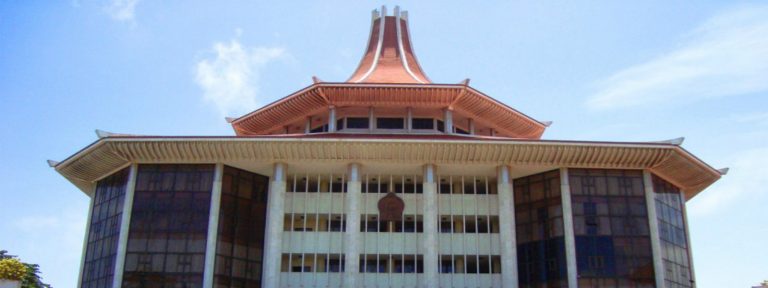
The Colombo High Court’s Permanent Trial-at-Bar convicted 15 men on Tuesday, September 22, 2026, for involvement in Sri Lanka’s 2019 Easter Sunday bombings, acquitted nine others and imposed terms ranging from 200 to 260 years of rigorous imprisonment. The judgment, delivered in Colombo after a trial lasting nearly five years, is the country’s largest criminal reckoning for the coordinated attacks that killed more than 260 people and wounded about 500.
The verdict closes one legal chapter in a national trauma, but not the argument over responsibility. Because none of the suicide bombers survived, the case focused on the network accused of enabling and supporting them. The Catholic Church welcomed the convictions as overdue accountability while maintaining that the people who ultimately planned the attacks remain unidentified. That wider-conspiracy allegation has not been supported by publicly presented evidence, and the Defence Ministry has denied claims of state-intelligence involvement.
What the court decided
The three-judge bench was led by Presiding Judge Navaratne Marasinghe, sitting with Justices Ramanathan Kannan and Sujeewa Nissanka. Fourteen defendants were found guilty on every count they faced; a fifteenth was convicted on some charges. Nine defendants were acquitted. Twenty-five people had originally been indicted, but one died in custody, leaving 24 to receive judgment.
The sentences were distributed across four levels: one defendant received 260 years, four received 240 years each, five received 220 years each and five received 200 years each. The court also ordered the confiscation of all movable and immovable property belonging to the convicted men. Sri Lanka has not carried out an execution since 1976, so the terms function in practice as imprisonment for life even though the judgment expresses the punishment as accumulated years rather than a conventional life sentence.
Among those convicted was Mohamed Ibrahim Mohamed Naufar, also known as Naufar Mawlavi. Prosecutors identified him as a central figure who supported the attackers. The judgment does not mean the court found that any of the 15 personally carried out the suicide bombings; the attackers themselves died in the explosions.
The scale of the prosecution was extraordinary. Reporting on the case describes 23,270 charges assembled in a nine-volume indictment running roughly 8,900 pages. More than 2,300 people gave prosecution evidence, and 2,076 exhibits were placed before the court. Those figures explain both the breadth of the state’s case and why proceedings begun almost five years ago reached judgment only in September 2026.
Why this matters
The Easter Sunday attacks were Sri Lanka’s deadliest act of violence since the civil war ended in 2009. They struck worshippers and hotel guests in places chosen for visibility, symbolism and international reach. A final verdict against 15 alleged facilitators is therefore more than a tally of convictions: it is the first major criminal judgment capable of connecting the attack’s dead perpetrators to a surviving support network.
That distinction matters for victims’ families. A suicide attack can leave a legal void because the people who detonated the bombs cannot be tried. Prosecuting those accused of recruitment, assistance, planning or logistical support is one of the few ways a court can establish responsibility beyond the final moments at each target. Tuesday’s decision provides a formal answer to part of that question after more than seven years of investigation, grief and political conflict.
The length of the sentences sends a second signal. Terms of 200 to 260 years are numerically symbolic—no human being can serve them in full—but legally emphatic. In a country where executions have not been carried out for half a century, the court used consecutive punishment to communicate that each set of offenses carried its own weight. The practical result is life behind bars, plus the loss of property.
Closure remains partial. Father Jude Fernando, speaking to AFP, called the verdict “long-awaited justice.” For survivors and relatives, recognition by a court can matter even when it cannot repair the loss. But the Church’s continuing demand to identify alleged masterminds shows why the judgment may settle the guilt of these defendants without settling the public history of the attack.
The road to this verdict
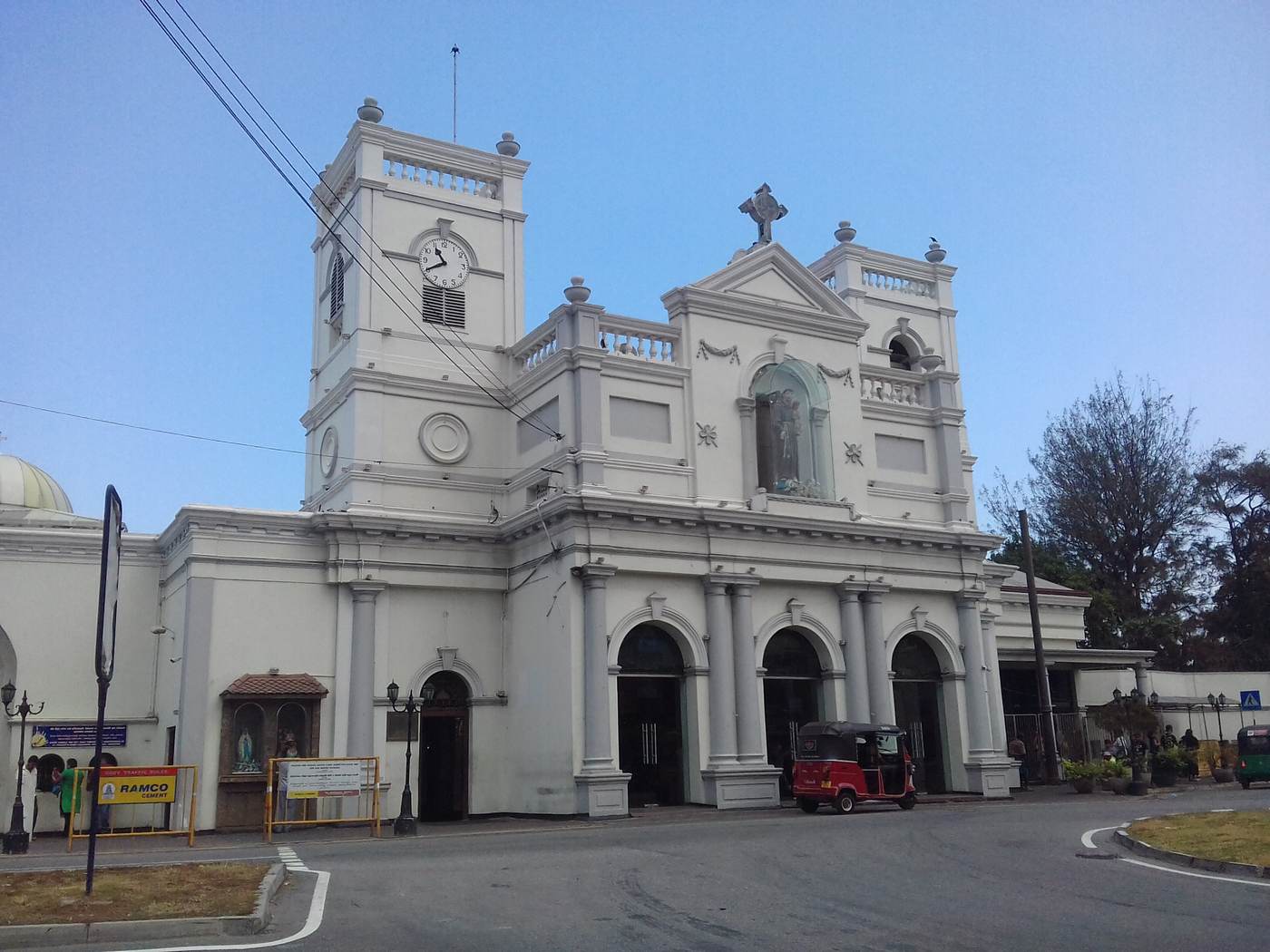
The first explosion was reported at about 8:25 a.m. on April 21, 2019, at St. Anthony’s Shrine in Kochchikade, Colombo. Bombers also attacked St. Sebastian’s Church in Negombo and Zion Church in Batticaloa as Easter services were under way. At roughly the same breakfast-time window, explosions hit the Shangri-La, Cinnamon Grand and Kingsbury hotels in Colombo. Later blasts occurred at the Tropical Inn in Dehiwala and at a housing complex in Dematagoda.
The attacks killed between about 260 and 270 people in the counts used by different authorities and reports, and injured roughly 500. The foreign death toll is variously reported as 42 or 45. The victims came from many countries and included 11 Indians, eight Britons and five Americans. Three children of Danish billionaire Anders Holch Povlsen were killed at the Shangri-La. The variation in totals reflects different official and media reconciliations after the attacks; it should not be resolved by presenting one disputed count as certain.
The legal aftermath quickly became inseparable from the warnings that preceded the bombings. Indian intelligence supplied Sri Lankan authorities with specific information as early as April 4, 2019, and again in the hours before the attacks. A police intelligence memo circulated about ten days beforehand. A parliamentary inquiry later found a major intelligence failure: information existed, but institutions did not convert it into effective protection.
In January 2023, Sri Lanka’s Supreme Court found that then-President Maithripala Sirisena and several senior security officials had violated fundamental rights by failing to act on the intelligence. That civil accountability ruling was separate from the mass criminal trial decided on Tuesday, but it established that institutional negligence was not merely a political accusation.
The accountability process widened again in 2026. In July, a former police chief and a former senior Defence Ministry official were sentenced to death for failing to act on intelligence warnings. In February, former intelligence chief and retired Major General Suresh Salley was arrested on allegations of prior knowledge and conspiracy. He remains in custody as that case proceeds. The Defence Ministry has denied state-intelligence involvement, and Salley’s arrest is not a conviction.
The Catholic Church has long argued that the prosecuted perpetrators were not the ultimate masterminds and has alleged a broader conspiracy. No evidence proving that allegation has been presented in the sources reviewed for this article. The Church’s position nevertheless matters politically because Catholic congregations bore a large share of the attack and because its leaders have sustained pressure for an inquiry that reaches beyond the operational network.
Who wins, who loses
Survivors, bereaved families and the Catholic community gain a measure of judicial closure. Fifteen convictions, confiscation orders and judgments tied to a vast evidentiary record give the attack a formal legal account. That is not the same as emotional closure, and it does not answer every question, but it moves responsibility from allegation to adjudication for these defendants.
The 15 convicted men lose their freedom and property. Their prison terms are designed to keep them incarcerated for the rest of their lives. Appeals are likely, so the legal process is not necessarily finished, but the presumption now shifts from defendants awaiting judgment to convicted prisoners challenging it.
The nine acquitted defendants walk free after years under prosecution. Their acquittals are as much a part of the rule-of-law outcome as the convictions. A case with 23,270 charges did not produce guilt for everyone placed in the dock; the bench differentiated among defendants rather than treating the group as a single unit.
The security establishment gets partial vindication but no clean bill of health. Investigators and prosecutors can point to 15 convictions in a case of exceptional complexity. Yet the prior Supreme Court ruling, the July negligence sentences and the continuing Salley prosecution keep institutional failure at the center of the story.
The government can claim that justice was delivered, but its credibility remains exposed. The verdict gives the state a concrete result after years of delay. Critics, including Church leaders and human-rights voices, will judge the government by whether it protects due process on appeal, pursues evidence wherever it leads and reforms the intelligence failures that allowed specific warnings to go unused.
What the numbers actually mean
The figure of 23,270 charges should not be read as 23,270 separate attacks. In a complex conspiracy case, prosecutors can apply multiple statutory counts across many victims, locations, defendants and alleged acts. The roughly 8,900-page indictment records that legal architecture. Its size indicates granularity and complexity; it does not by itself prove the strength of every allegation.
More than 2,300 prosecution witnesses and 2,076 exhibits created a record on a scale unusual for any national court. Spread over nearly five years, that volume helps explain the trial’s duration, but it also raises a fairness question that appeals courts may examine: whether each defendant could effectively confront the evidence assigned to him within such a massive case.
The 200-to-260-year terms are similarly easy to misunderstand. They do not predict literal release dates centuries from now. They aggregate punishment for many convictions and communicate that the offenses are cumulative. Because Sri Lanka has maintained a de facto moratorium on executions since 1976, the sentences amount to permanent imprisonment without using a single life-sentence label.
The death toll—reported between roughly 260 and 270—made the bombings the country’s worst attack since the civil war and placed them among the deadliest terrorist attacks worldwide in 2019. The international toll of 42 to 45 foreign victims shows why the event immediately became a global security story: churches and hotels brought together Sri Lankan worshippers, local workers and visitors from across Asia, Europe and North America.
Those numbers should clarify rather than overwhelm. Thousands of charges do not eclipse one individual loss; hundreds of witnesses do not make disputed claims automatically true; centuries of punishment do not answer who conceived the attack. The court’s work is large precisely because the human and institutional consequences were large.
What happens next
Appeals are the most immediate legal step. The convicted men can challenge findings of fact, legal interpretations, procedure and sentence. The acquittals may also be reviewed if prosecutors have a lawful basis to appeal. Until appellate courts act, Tuesday’s judgment is the controlling result but not necessarily the final word.
Separate proceedings will continue. The negligence convictions involving the former police chief and defence official will test how Sri Lanka treats senior officials who failed to act on warnings. The prosecution of Suresh Salley will test more serious allegations of prior knowledge and conspiracy; those allegations remain unproven unless and until a court finds otherwise.
The Catholic Church will keep pressing for an inquiry into the alleged wider conspiracy. The responsible test is evidence, not repetition. If new documents, communications or testimony support a broader case, prosecutors will face pressure to act. If they do not, officials will still need to explain clearly why the existing evidence does not sustain the allegation.
The wider policy question is whether Sri Lanka changes how intelligence is shared and acted upon. The warnings before April 21, 2019 exposed failures of coordination, escalation and accountability. Counter-terrorism reform must improve those systems without using the attacks to justify indefinite emergency powers or collective suspicion against communities. Security and rights are not opposing goals when institutions are precise, reviewable and accountable.
Tuesday’s verdict is therefore both an ending and a beginning. It closes the trial of 24 surviving defendants with 15 convictions and nine acquittals. It opens the appellate phase, leaves separate negligence and conspiracy cases in motion, and preserves the central question that has shadowed Sri Lanka for seven years: whether the courts have reached the full chain of responsibility, or only the part closest to the bombers.
Sources
- Associated Press via NPR/WEKU: convictions, acquittals, sentences, trial scale and Church response
- BBC Sinhala via Asha News: judgment details, defendants and court proceedings
- Sri Lanka Brief: bench, charge count, evidence, sentences and confiscation orders
- 2019 Sri Lanka Easter bombings: background chronology, targets, casualty reconciliation and international victims
Reporting cutoff: September 22, 2026 at 1:28 p.m. PDT. Court details and intelligence findings are attributed to the cited reporting and official proceedings described there. Foreign-victim totals vary between 42 and 45, and the overall death toll varies between roughly 260 and 270. The Catholic Church’s wider-conspiracy claim remains unsubstantiated; the Defence Ministry denies state-intelligence involvement. Analysis is Signal Post News’s synthesis.