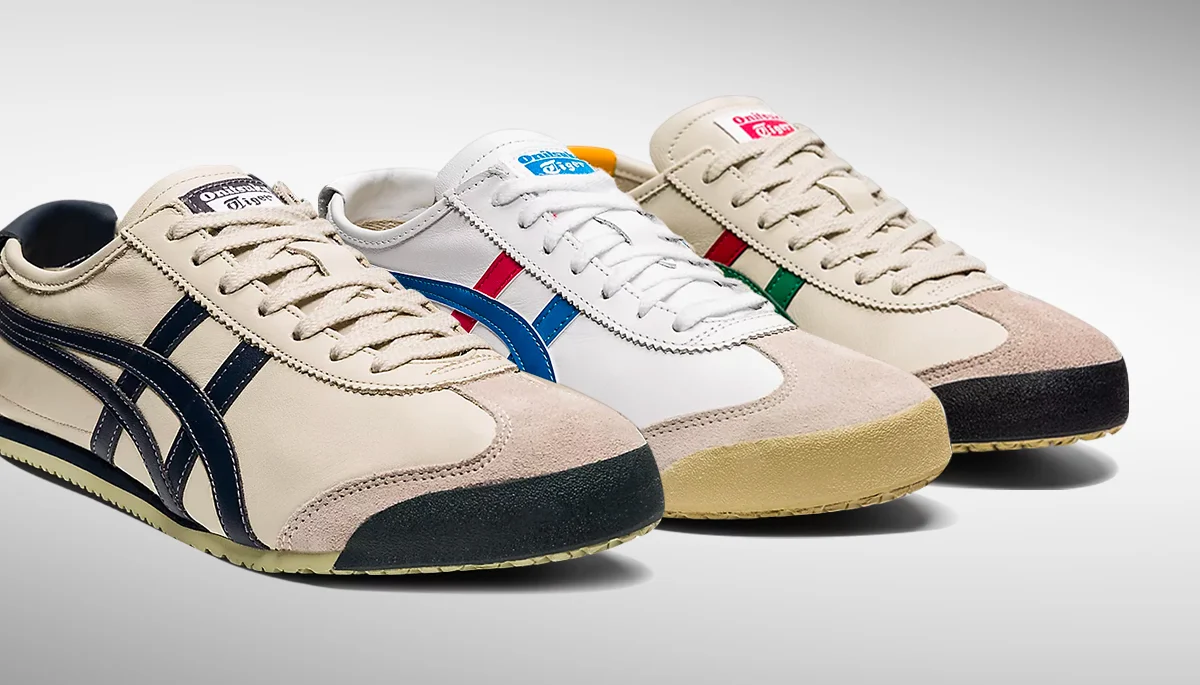

The Adidas Samba remains one of fashion’s defining terrace shoes: a leather upper, suede toe overlay and gum sole with enough visual structure to hold its own under relaxed trousers. The Onitsuka Tiger Mexico 66 is slimmer and more tapered, with signature crossed stripes and a silhouette that reads closer to a track shoe.
Shape, comfort and fit
Choose the Samba if you want a slightly more substantial upper and a familiar casual profile. It tends to feel firm rather than plush, and the narrow forefoot can be the deciding issue. The Mexico 66 is lighter and more flexible, but its thin sole offers less underfoot separation on long days. Neither is a modern running shoe, despite its athletic ancestry.
Fit varies across materials and versions, so do not rely only on your size in another brand. Try both late in the day with the socks you actually wear. Walk on a hard surface, check heel slip and make sure the widest part of your foot aligns with the widest part of the shoe. A fashionable shoe that creates pressure at the toes will not become more useful because it photographs well.
How each one styles
The Samba’s stronger contrast works with straight denim, pleated trousers, long skirts and simple dresses. It gives a neutral outfit a recognizable focal point. The Mexico 66 is more delicate. It suits cropped trousers, fluid skirts and monochrome looks where the shoe’s slim line can continue the shape of the leg.
For fall, try Sambas with dark straight-leg jeans, a white shirt and a textured coat; or use a brown pair under charcoal tailoring. Wear Mexico 66s with an ankle-length skirt and fine knit, or with wide trousers that break lightly over the shoe. In both cases, restraint helps: the retro shape is the detail.
Buy the Samba for structure and versatility; choose the Mexico 66 for lightness and a sharper, slimmer line.
The value decision
Prices and stock move by color and retailer, so compare the exact model rather than the franchise name. Check material, return policy and whether the listing is for a standard, vegan, platform or collaboration edition. Because both styles are widely imitated, buy from the brand or an established retailer when authenticity matters.
What the silhouettes communicate
The Samba has a rounded, slightly sturdier presence. Its gum sole and T-shaped toe overlay make it easy to recognize, which can be an advantage if you want the shoe to anchor an outfit. The Mexico 66 has a narrower, faster-looking profile. Its stripes and tapered toe read as graphic rather than bulky.
That visual difference changes proportion. Under very wide trousers, the slimmer Mexico 66 can nearly disappear; the Samba holds more weight. With narrow or cropped hems, the Mexico 66 creates a cleaner continuation of the leg. Neither rule is absolute, but it explains why the same outfit can look balanced with one and unfinished with the other.
Test comfort the professional way
Try shoes with the exact socks and insoles you expect to use. Check toe width while standing, then walk quickly and turn. The heel should not lift excessively, and the sides should not bow under pressure. If one foot is larger, fit that foot. Do not assume leather will stretch enough to fix a shape mismatch.
For all-day walking, consider what these heritage designs lack: thick cushioning, a broad platform and aggressive support. People who need those features may be happier using a modern walking shoe for travel and saving the retro pair for shorter days. The best retro sneakers in 2026 are still the pair that matches the job.
Materials, weather and maintenance
Suede and light leather show rain, salt and street grime quickly. Treat shoes only with a product recommended for the exact material, and test it in a hidden area. Use a soft brush after dry dirt accumulates. Stuff damp shoes with plain paper and let them air-dry away from direct heat, which can harden leather and weaken adhesives.
Rotate pairs rather than wearing one every day. Rest allows moisture to evaporate and materials to recover. A removable insole can improve hygiene, but extra thickness may change fit. Clean gum soles with mild soap and a cloth instead of harsh solvents that can discolor or dry the rubber.
How to verify the listing
Read the full product name, color code and seller identity. Marketplace pages can mix authentic stock, used pairs and unrelated models under similar photos. Compare the tongue label, stitching, stripe placement and sole pattern with official product images. A price that is dramatically below normal deserves more scrutiny, especially in a scarce size or collaboration.
Return terms matter because fit is the central decision. Check whether returns require unworn soles, original packaging or a fee. If possible, test indoors on carpet long enough to notice pressure. The cost of a shoe you cannot comfortably wear is not a bargain.
The final comparison
Choose the Adidas Samba for a stronger visual signature, slightly more structure and broad styling range. Choose the Onitsuka Tiger Mexico 66 for a lighter, slimmer shoe that works especially well with cropped and fluid silhouettes. If comfort is uncertain, try both before selecting a color.
Trend status should be the last criterion, not the first. Both designs have histories longer than the current cycle and can remain useful when bought in a color that fits an existing wardrobe. A shoe becomes a classic in practice only when it is worn repeatedly.
Why this matters
The Samba-versus-Mexico 66 choice illustrates how small design differences shape real use. Both shoes trade on retro credibility, yet one offers more structure and the other a slimmer, lighter line. A useful comparison replaces hype with foot shape, walking pattern and wardrobe compatibility.
How we got here
Terrace and archival running shoes returned as consumers moved away from oversized sneakers. Fashion repeatedly mines sport because performance history gives a simple silhouette cultural depth. The current cycle differs in speed: collaborations and social feeds can exhaust a shape before the physical shoe has worn out.
Who benefits, who loses and what critics say
Brands with deep archives benefit because old designs can be revived at lower conceptual risk. Resale sellers gain when limited colorways create scarcity, while buyers lose if they pay a premium for a shoe unsuited to long wear. Critics call the cycle derivative; supporters note that refinement and styling can make a familiar object newly relevant.
What the comparison implies
The better value is not the cheaper pair but the one worn more often and comfortably. A $120 shoe worn 120 times costs $1 per wear; a $90 shoe worn ten times costs $9 before maintenance. Fit cannot be inferred from trend status, so heel hold, toe space and sole flexibility deserve more weight than search popularity.
What happens next
Low-profile sneakers will likely remain while the market fragments into narrower substyles. The Samba may persist as a versatile baseline; the Mexico 66 may gain where sharper proportions suit current trousers. Buyers should expect colorways to rotate faster than the underlying designs and choose accordingly.
Further reading: The Samba’s continuing fall relevance was covered by USA Today, while Hypebeast traced the Samba’s design history and collaborations.