Sports / Rotterdam — Skye Blakely won two more medals at the world championships on Saturday, turning a breakthrough week into a four-medal worlds campaign.
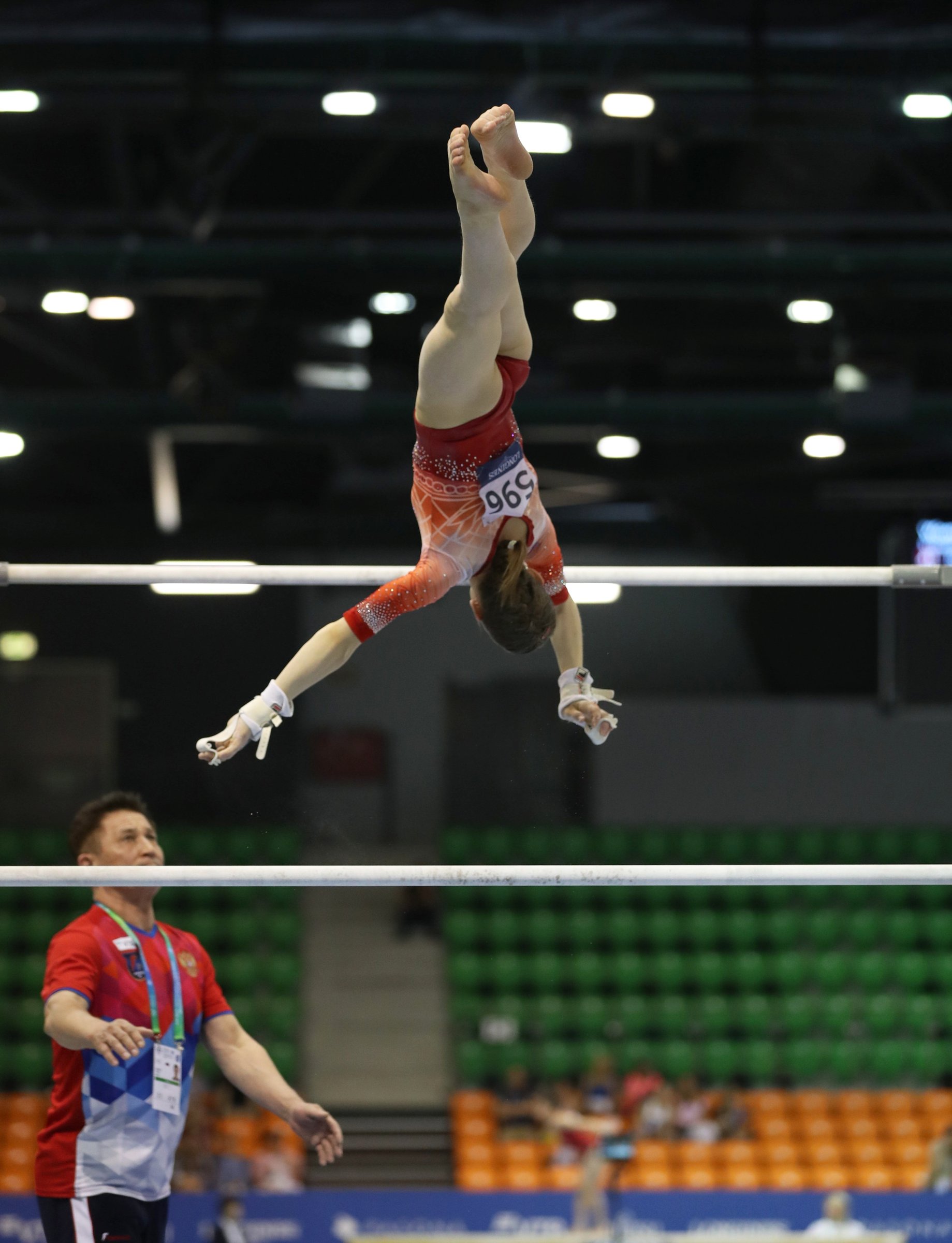
The shorthand travelling around Rotterdam on Saturday — Skye Blakely two more medals worlds — understated what was actually happening in the arena. Blakely, 21, won bronze in the vault final and bronze in the uneven bars final on the first day of apparatus finals, according to USA TODAY live coverage by Nancy Armour from Rotterdam on Saturday, October 24. Added to the all-around gold she won on Friday and the team silver earlier in the week, she leaves Rotterdam with four medals in total. Her last event, Sunday’s beam final, added no fifth: Kaylia Nemour of Algeria won gold with 14.566, tied on total with China’s Zhang Qingying, also 14.566, and winning on the execution tiebreak (8.266 to 8.066); Flavia Saraiva of Brazil took bronze, and Blakely finished sixth with 13.633 — small wobbles, no major error, her 14th routine of the championships without one.
That sequence matters because apparatus finals are a different test from the all-around. In the all-around, consistency across four pieces decides the title. In event finals, there is no cushion, no next rotation to repair a mistake, and no teammate score to absorb a wobble. A gymnast gets one routine, against the eight best specialists in the world on that apparatus, and the ranking can change with a single step on a landing. Blakely passed that test twice in one afternoon.
Her day also needs to be placed in its proper context. This article covers only Saturday's apparatus finals. Blakely's Friday all-around title — won with a total of 55.733, ahead of Russia's Liudmila Roschina on 55.199 and China's Ke Qinqin on 55.032 — is covered separately in our report on her world all-around gold in Rotterdam. The two stories are linked, but they are not the same achievement, and the distinction is precisely why Saturday deserves its own account.
Bronze on vault, with a teammate ahead of her
The vault final came first, and Blakely took bronze while her United States teammate Claire Pease took silver. For a programme that has spent much of this championship answering questions about depth and transition, having two Americans on the same apparatus podium was a statement in itself. Vault rewards power, clean execution in the air and control on landing, and finals fields are usually separated by fractions that disappear in a replay unless you watch the feet.
The wider team picture is in our coverage of the team finals in Rotterdam.
The uneven bars final turned on one routine after another
If vault was a test of power, the uneven bars final was a test of nerve, and its order made the tension unusually clear. Blakely went second in the rotation and scored 14.600. At that moment she sat second, behind Algeria's Kaylia Nemour, the outstanding bars worker in the field. Going early has one advantage — the routine is done, without watching rival after rival raise the standard — and one obvious disadvantage: everyone else knows exactly what score they need to beat you.
Germany's Helen Kevric did beat it, moving ahead of Blakely and pushing the American down to third. From there, Blakely could only watch. Bronze was hers to lose only in the sense that later gymnasts could take it from her, and the most obvious threat was France's Elena Colas, who came in with a higher start value. A higher start value gives a gymnast a higher ceiling, but it also usually means a more difficult routine, with more places for execution deductions to accumulate.
That is what happened. Colas made mistakes, including a big step on the dismount, and the errors were enough to keep her behind Blakely. The bronze held. The sequence is worth lingering on because it illustrates how apparatus finals actually work: Blakely did not win bronze because a rival failed, any more than she lost silver only because Kevric succeeded. She posted 14.600 early, a score high enough to demand near-perfection from everyone who followed, and then the final unfolded around that number. Setting a score and surviving the wait is a skill in itself.
Nemour's presence at the top also put the result in perspective. Bars has genuine global specialists whose standard all-arounders must meet rather than merely survive. A bronze behind that level of specialism, a day after an all-around final, speaks to both preparation and recovery.
A men's programme with its own headline
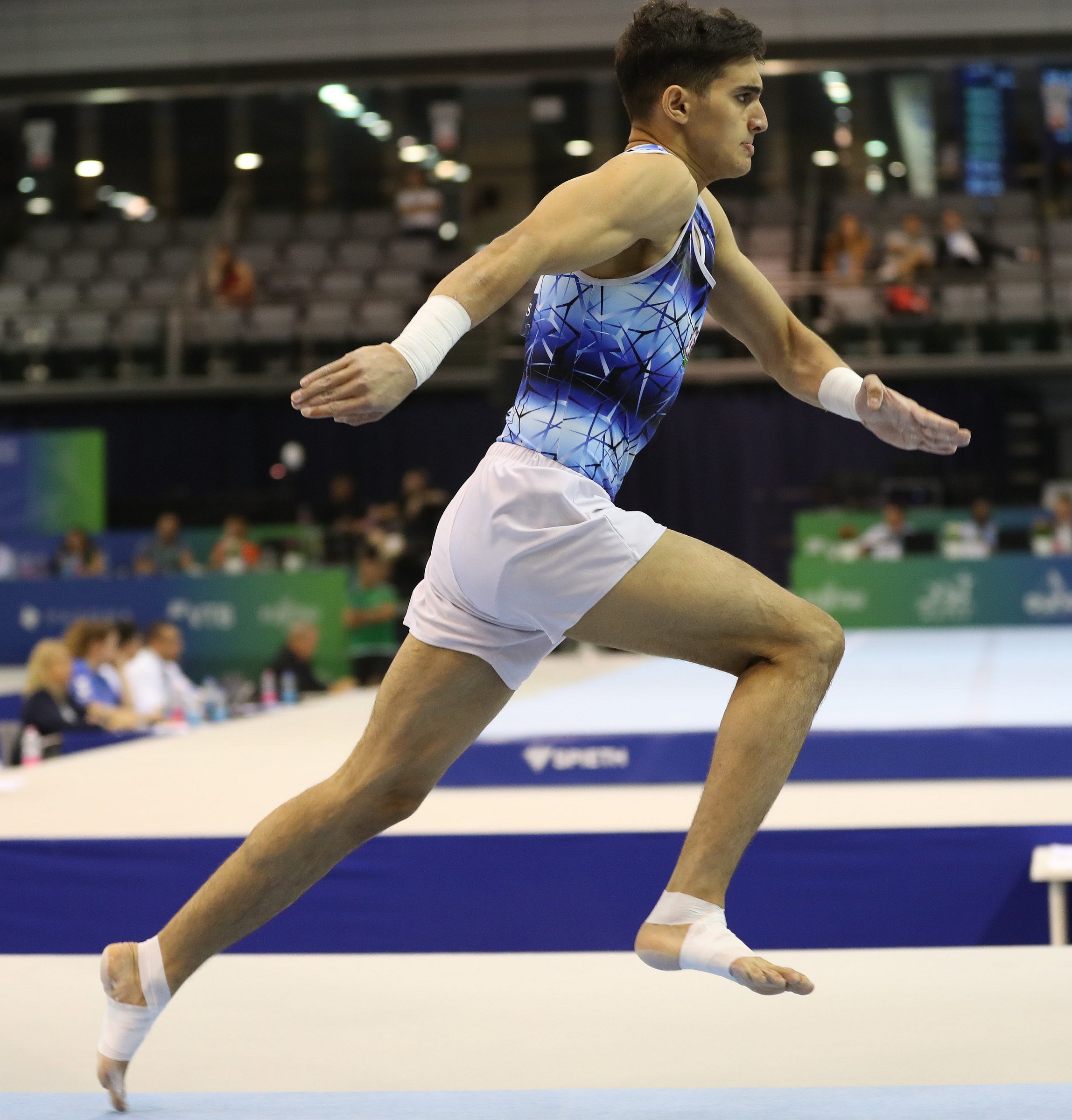
Saturday was not only about the women's finals. In the men's competition, American Fred Richard won gold on floor exercise, giving the United States a champion on an apparatus where amplitude, tumbling difficulty and stuck landings separate the field in tenths. Patrick Hoopes contested the pommel horse final, one of the most unforgiving events in gymnastics, where a single break in rhythm can end a routine's medal chances. No United States man competed in the still rings final, a reminder that American men's depth remains uneven across the six apparatus.
Simone Biles in the arena
The most talked-about spectator in Rotterdam was Simone Biles. Biles attended the finals and, in an in-arena interview reported by USA TODAY, said the atmosphere made her feel like competing herself. The remark was light, but it landed because of who said it. Biles has defined the modern era of the sport, and her presence at a championships where a new American all-around champion was collecting medals gave the afternoon a sense of generational connection rather than simple succession.
Why this matters
This matters because Blakely's career, until this week, was a story told largely through what injury took away. She tore her right Achilles in podium training the day before the 2024 United States Olympic trials, ending a bid for Paris at almost the last possible moment. Before that, an elbow injury had derailed her 2021 bid. Two Olympic cycles, two different injuries, and a reputation in danger of settling into a single word: unlucky.
Rotterdam rewrites that framing with results rather than sentiment. A comeback story usually ends when an athlete returns to competition. Blakely's did not end there; it continued through a team medal, an all-around world title and then, crucially, two apparatus finals on the following day, when fatigue and emotional letdown might reasonably have shown. Winning medals after the headline moment is often harder than winning the headline itself, because the body has spent its adrenaline and the field in an event final is fresher and more specialised.
There is also a structural significance that goes beyond one gymnast. Blakely is a junior with the Florida Gators, and she became the first gymnast to compete in NCAA gymnastics and win a world all-around title in the same calendar year. For years, elite and college gymnastics were treated as alternative paths, with college widely assumed to be where elite ambition softened. Blakely's season challenges that assumption in the most direct way possible: the same athlete, in the same year, at the top of both worlds. Coaches, recruits and national-team staff will all draw their own conclusions, but the fact itself is now part of the sport's argument about how careers can be built.
Four medals, and the numbers behind them
Four medals — all-around gold (55.733), team silver, vault bronze (14.166) and uneven bars bronze (14.600) — is the final accounting that will follow Blakely home, and it deserves to be tested rather than simply repeated. Team silver depended on a squad. All-around gold depended on four apparatus in one competition. Vault bronze and bars bronze depended on single routines judged against specialists. The four medals are therefore not four copies of the same achievement; they are four different kinds of evidence, gathered under four different pressures, in the space of one championships.
The bars score makes the point numerically. A 14.600 posted second in the order survived almost the entire final, beaten only by Nemour and Kevric. In practical terms, that means gymnasts with routines built to contend for a world medal looked at Blakely's number and could not pass it without errors they then made. Colas's higher start value is the clearest example: on paper, difficulty gave her a route past 14.600; in the arena, execution decided the medal.
What happens next
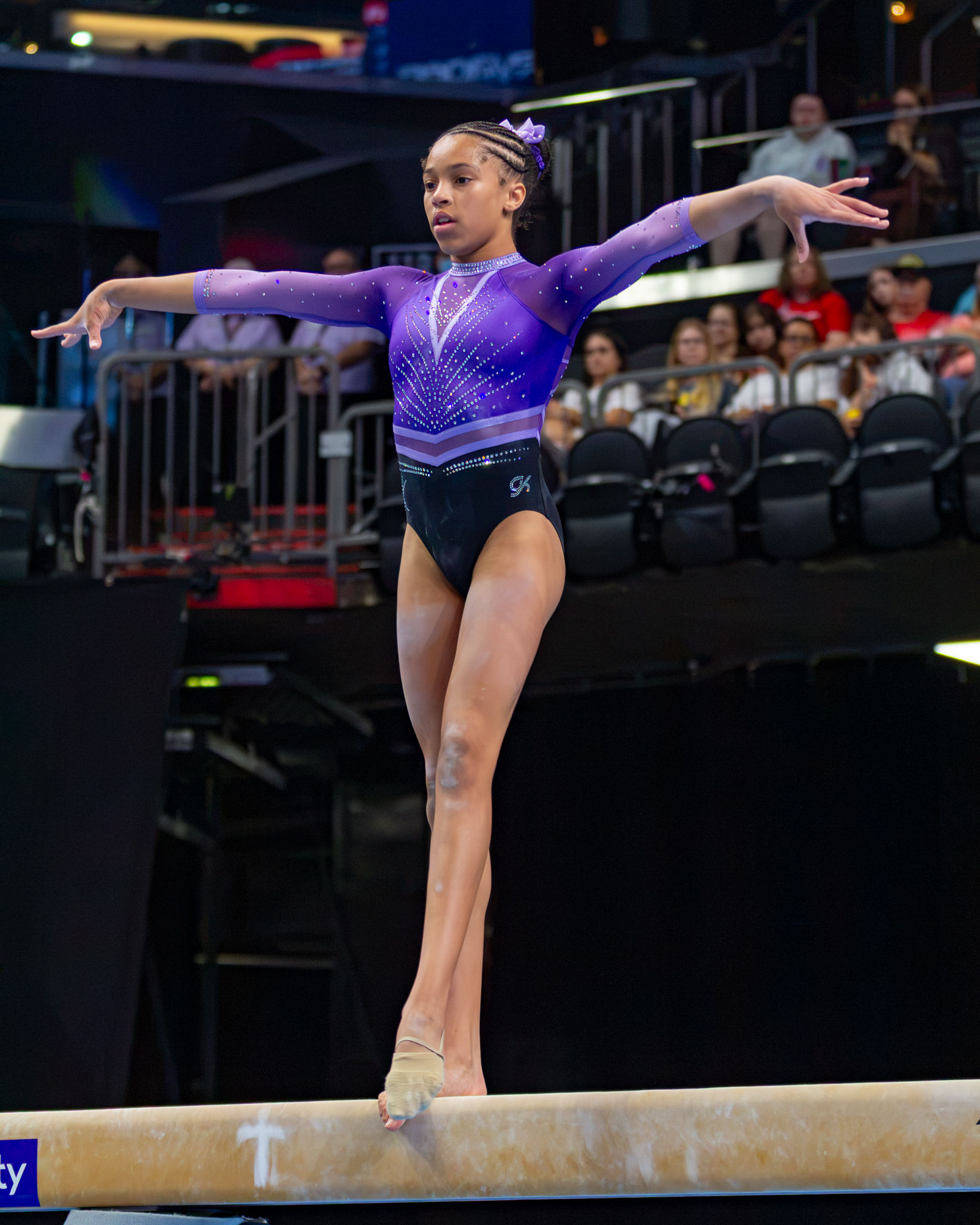
The balance beam final on Sunday, October 25 was Blakely’s last event, and it closed the championships without a fifth medal. Kaylia Nemour of Algeria won gold with 14.566, tied on total with China’s Zhang Qingying, also 14.566, winning on the execution tiebreak (8.266 to 8.066); Flavia Saraiva of Brazil took bronze. Blakely finished sixth with 13.633 — small wobbles, no major error, her 14th routine of the championships without one. Beam is the apparatus least forgiving of reputation: four inches wide, performed under the particular silence that falls over an arena when a gymnast mounts, it can turn a championships in ten seconds. Sixth place there changes nothing about the four medals already secured, but it completes how the week is summarised.
Either way, the questions after Rotterdam will be larger than one more final. How does Florida manage a season built around a world all-around champion? How does the national programme build a team around a gymnast who has now medalled on vault and bars as well as in the all-around? And how does Blakely herself, after injuries ended two Olympic bids, pace the long run toward the next Games without spending the body that Rotterdam has just showcased?
What Saturday established is already complete. On the first day of event finals, aired in the United States on Peacock and NBCSN, Blakely went out twice against the best specialists in the world and came back with a medal both times — the Saturday half of a four-medal championships, in a sport that measures careers in tenths.