The warning
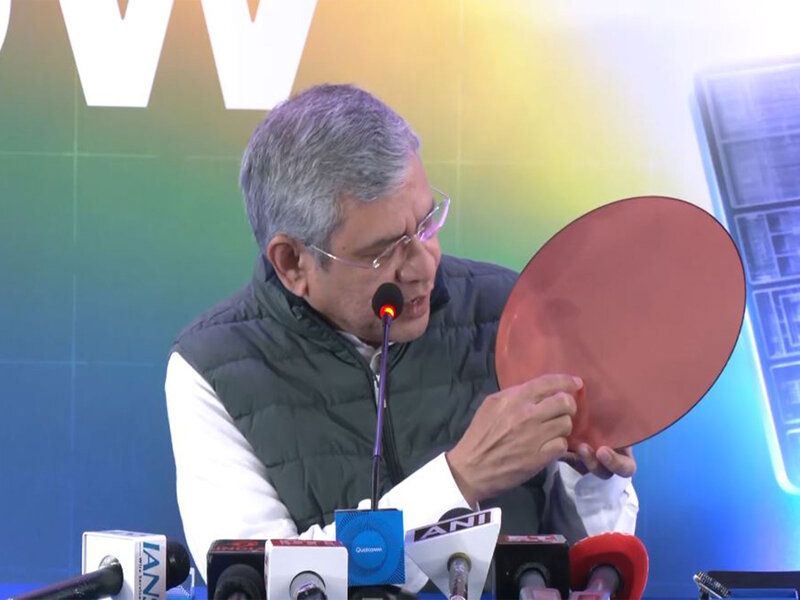
The most memorable moment of SEMICON India 2026 was not an investment announcement but a warning. Addressing industry leaders at the September 17–19 event at Yashobhoomi, New Delhi, Union Minister for Electronics and IT Ashwini Vaishnaw spoke with unusual frankness about the threats facing India's semiconductor ambitions.
"We should be cognizant of the risks and challenges which will come from other players," he said. "So I have very candidly told the entire industry that be prepared for cyber attacks, be prepared for any other kinds of threats and any other kinds of disruptions that might get created by the countries who don't like India to come up in the semiconductor value chain."
Vaishnaw said the industry is now alert to the danger "and they would certainly take the right measures" — a remarkable moment: a minister publicly telling a strategic industry to expect hostile action from rival states, framing cybersecurity as industrial policy rather than an IT afterthought.
What the three days produced
The substance matched the rhetoric. SEMICON India 2026 produced 11 major memorandum-of-understanding exchanges and five announcements spanning chip manufacturing, packaging, equipment, materials, design, and workforce development. The government said close to ₹1 lakh crore in investment commitments have been received, with the potential to create nearly 1 lakh jobs.
The event was the coming-out party for Semicon 2.0, approved by the Union Cabinet in July with an outlay of ₹1,27,500 crore. Where phase one chased large manufacturing projects, Semicon 2.0 builds the wider ecosystem — design, fabrication equipment, advanced packaging, research, technicians — alongside streamlined customs for critical equipment and upgraded chip-design curricula at 400-plus universities.
Two announcements captured the week. Applied Materials committed $5 billion over the next decade toward a 140-acre advanced semiconductor research park — one of the largest single ecosystem bets on India to date. And Aheesa Digital Innovations unveiled Vihaan-I, described as India's first indigenously designed broadband networking chip: taped out on Republic Day, January 26, 2026, with first-pass silicon success on Independence Day, August 15, built on RISC-V and the indigenous C-DAC VEGA processor, and targeted for commercialization in early 2027.
Why this matters
Semiconductors are the substrate of modern power — every smartphone, car, missile guidance system, and AI data center depends on them. For decades India was a consumer of chips designed and fabricated elsewhere, a dependency that became a strategic vulnerability during the pandemic-era shortages and amid U.S.-China tech decoupling. The Semicon India programme, launched in 2022, is the country's bid to change that: not merely to assemble chips, but to design, fabricate, package, and equip across the value chain.
The numbers suggest the bid is moving from blueprint to factory floor: 12 projects with investments above ₹1.64 lakh crore (roughly $20 billion) approved, five — including Micron, Kaynes, and CG Semi — already in commercial production. That transition from MOUs to actual silicon is the hardest part of industrial policy, and where most national chip programmes stall.
Vaishnaw's warning matters because it signals New Delhi understands what success looks like to adversaries: a fab is among the most attractive cyber targets on earth, and treating fabs as critical infrastructure from the outset — rather than discovering vulnerability after an incident — is a lesson that usually has to be learned the hard way.
How we got here
India's chip ambitions have a long history of false starts — decades in which semiconductor proposals died in bureaucratic thickets. The cautionary tale dates to 2005, when AMD explored a $3 billion fab investment to make India a manufacturing hub, only for the plan to collapse amid roadblocks.
The Semicon India programme of 2022 broke the pattern by pairing large incentives with execution discipline: clear policy, fast approvals, and marquee anchor tenants. Micron's assembly and test facility in Gujarat became the proof of concept; Kaynes and CG Semi followed. The July approval of Semicon 2.0 — with its ₹1,27,500 crore outlay — extended the bet from manufacturing to the full ecosystem: design, equipment, materials, advanced packaging, R&D, and talent.
The talent pipeline is the quiet engine: plans to scale specialized cleanroom and technical talent through institutions like Gati Shakti Vishwavidyalaya. Semiconductors are a human-capital industry as much as a capital one — Taiwan's dominance rests as much on its engineers as on its fabs.
India versus the incumbents
Context is essential, because the global chip map is brutally concentrated. Taiwan's TSMC fabricates the overwhelming majority of the world's most advanced logic chips; South Korea's Samsung dominates memory; the United States, through the CHIPS Act's $52 billion-plus in incentives, is reshoring leading-edge fabrication; and China is pouring state resources into catching up despite export controls. Against this lineup, India's $20 billion in approved investments and three producing units is a beginning, not an arrival.
But beginnings matter because capacity compounds. The realistic near-term prize is not displacing TSMC at the leading edge but capturing assembly, testing, packaging, and mature-node fabrication, then climbing into design and equipment. The Applied Materials park and Vihaan-I both point that way: ecosystem depth, not just factory shells.
The honest comparison also requires noting what India lacks: no domestic lithography capability, deep dependence on imported equipment and materials, and fabs that are still at mature nodes while the frontier races ahead. Semicon 2.0's emphasis on equipment, materials, and design is an explicit acknowledgment of these gaps.
The cyber reality
Vaishnaw's warning deserves analytical unpacking, because it was carefully phrased. He spoke of "countries who don't like India to come up in the semiconductor value chain" — a clear, if unnamed, reference to strategic rivals. The semiconductor industry has genuine precedent for state-linked interference: the sector's supply chains have been probed, its intellectual property targeted, and its equipment flows weaponized through export controls for years.
A fab's attack surface is enormous: thousands of software-controlled process steps, a global vendor ecosystem, growing connectivity for predictive maintenance. An attack need not destroy a fab — subtle process manipulation can crater yields for months before detection, while an idle multibillion-dollar fab bleeds money daily. And "other disruptions" spans supply-chain interdiction, talent poaching, IP theft, and market manipulation.
The framing has political convenience — external threats rally cohesion and justify security spending — but the technical claim is sound, and candid industry briefings plus proposed cyber crisis drills are the right response. Every country that dominates semiconductors treats fab security as national security; India is now doing the same, publicly.
What investors watch next
Three indicators will tell whether this was an inflection or just a good conference. First, conversion: how many of the 11 MOUs and ₹1 lakh crore in commitments become groundbreakings within 18 months — India's chip story has no shortage of announcements; its credibility rests on construction timelines.
Second, the ecosystem test: whether Semicon 2.0 produces Indian suppliers rather than Indian subsidiaries of foreign ones. Vihaan-I's commercialization in early 2027 is the first exam.
Third, the security test: whether the cyber preparedness Vaishnaw demanded materializes into hardened fabs, vetted supply chains, and exercised incident response — before anyone tests them for real. In semiconductors, as in so much else, the warning is only useful if it arrives before the attack.
Sources
The Hindu BusinessLine, "Vaishnaw cautions industry about cyberattacks, disruption that may target India's growing chip might," September 2026: Read the report
The420.in, "SEMICON India 2026 Seals 11 MoUs as ₹1 Lakh Crore Chip Investments Gather Pace," September 2026: Read the report
WebIndia123, "India has 12 semiconductor units with $20 billion investment, Semicon 2.0 to drive next phase: Vaishnaw," August 2026: Read the report
CXO Today, "Aheesa unveils Vihaan-I semiconductor chip in the presence of Union Minister Shri Ashwini Vaishnaw at Semicon India 2026," September 20, 2026: Read the report