Queens J train subway stabbing
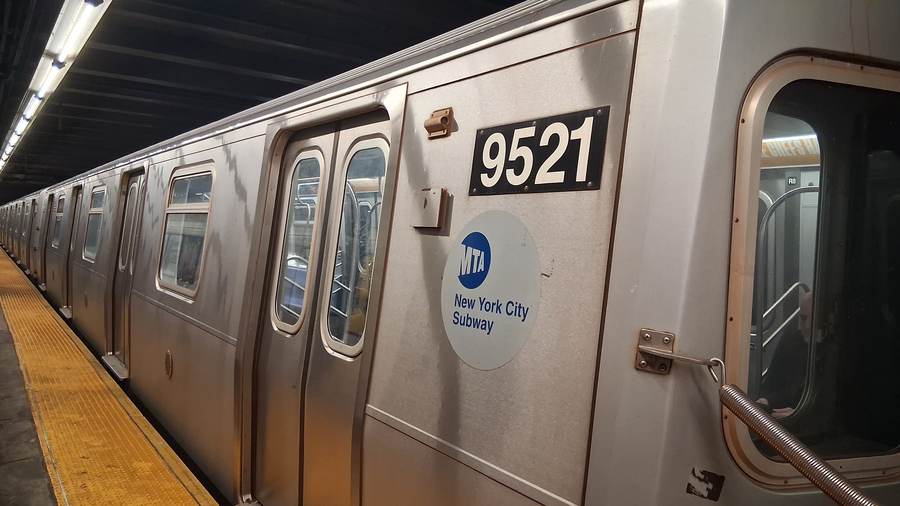
QUEENS — The Queens J train subway stabbing that killed a 59-year-old father of six on Wednesday evening has shaken New York City and reignited the city's most stubborn political argument: whether the subway system is actually safe. Mesias Lojano, an Ecuador native who lived in Ozone Park, was stabbed four times — three times in the torso and once in the neck — aboard a packed J train as it approached the Woodhaven Boulevard station in Queens at about 5:20 p.m., the heart of the evening rush. He was rushed to Jamaica Hospital Medical Center, where he was pronounced dead.
Police arrested 25-year-old Jyrell Thomas of the Bronx and charged him Thursday with murder and criminal possession of a weapon. The NYPD confirmed that the attack was unprovoked — Thomas and Lojano did not know each other, and initial police thinking that the stabbing followed an argument gave way to the bleaker conclusion that the victim was targeted at random. Thomas was being held, and police sources said he was undergoing a psychiatric evaluation; he was described as emotionally disturbed. He had a prior arrest in early September for petit larceny after a shoplifting incident at a Bronx Target.
The attack, as witnesses filmed it
What happened inside that subway car is preserved in witness video that has been described in detail by the New York Post and other outlets. The footage shows Thomas — barefoot — repeatedly stabbing Lojano near the car's doors as commuters scrambled to flee. In the video, Lojano raises a blood-covered hand in a futile effort to shield himself. Thomas then dragged the wounded man off the train by his hoodie, left him on the platform, and fled down the stairs behind a mother and a child. Several men — including the person who filmed the attack — chased Thomas through the streets until he climbed onto the roof of a garage, where police cornered and cuffed him.
The filming of the attack raises its own questions, and they are worth stating plainly. The footage gave police a near-instantaneous record of the crime and the suspect's escape route, and it may prove decisive at trial. But it also means one of the last moments of a dying man's life was captured on video while no one stepped between him and his attacker — a grim illustration of the bystander dilemma in an age when everyone carries a camera. That said, the same video shows the aftermath's other side: ordinary New Yorkers sprinting after an armed man through Queens streets, an act of civilian courage that likely made the difference between an arrest and an unsolved manhunt.
_04_-_BMT,_Flagstar_Bank_(93-22_Jamaica_Avenue).jpg)
Why this matters: the randomness is the story
Most subway crime, statistically speaking, has a shape to it: late-night incidents, fare disputes, thefts, altercations that escalate. What makes the Queens J train stabbing a political inflection point is its total randomness. A rush-hour train packed with commuters; a victim minding his own business; an attacker with no connection to him, no argument, no robbery motive. The NYPD's confirmation that the attack was unprovoked strips away every comforting narrative — that staying alert, avoiding conflict, or choosing a crowded car at a crowded hour keeps you safe. Lojano did everything right and died anyway.
That is precisely why this case lands differently from other transit crimes, and why it will be cited in every subway-safety debate for months. When violence is random, the fear it generates is not random at all: it spreads evenly across the entire ridership. A commuter on the 7 at 5 p.m. watches this story and thinks, reasonably, "that could have been my train." Perception, in transit politics, is policy. Ridership recovers when people feel safe and stalls when they don't, and no amount of crime statistics can fully argue against a video of a man bleeding out on a platform.
Background: a city arguing with itself about its subways
The killing lands in the middle of a long-running, unresolved argument over New York City transit safety. City and transit officials have spent years cycling through responses — surge policing, National Guard deployments in stations, fare-evasion crackdowns framed as public-safety measures, periodic MTA safety reviews — each announced after a high-profile incident and each quietly debated once the headlines fade. The federal government has also weighed in: a federal probe into subway violence has added Washington's scrutiny to the MTA's books, raising the stakes of every new incident beyond local politics.
The pattern is familiar because the underlying problem is structural. A subway system that runs 24 hours a day and moves millions of people will always concentrate the city's mental-health and homelessness crises in its cars and stations. The transit system has become, by default, the city's largest unstaffed shelter, and its riders are the ones who absorb the consequences. Wednesday's killing is the sharpest possible expression of that reality: a disturbed 25-year-old with a knife and a September shoplifting record was free to walk into a rush-hour train car, and nothing in the system's design stopped him.
Multiple angles: heroes, policy, and the fear data can't fix
Start with the chasers. The men who pursued Thomas through Queens deserve genuine credit — they took a real risk to keep a killer from vanishing into the evening. But the celebration should come with a caveat: vigilantism is a symptom of institutional failure. When the public starts hunting suspects because the system can't guarantee safety, it is both admirable and an indictment. The city's response should be to make such heroics unnecessary, not to romanticize them.
Then the mental-health and bail debate, which is already igniting. Thomas's psychiatric evaluation and emotionally disturbed classification will feed two opposing arguments. One side will say a man with apparent mental illness should never have been walking free with a knife — that the system's failure to intervene, before the attack, is the real crime. The other will say mental illness is not a prediction of violence, that most mentally ill people are victims rather than perpetrators, and that using one horrific case to justify broader institutionalization is both cruel and bad policy. Both arguments have evidence behind them; neither will be settled by this case, and the city will keep relitigating it.
And then the numbers versus the fear. City officials will inevitably respond to this killing with statistics — overall transit crime trends, arrest counts, comparisons to earlier eras. Some of those numbers may even show improvement. But the honest analytical point is that aggregate statistics and personal fear operate in different registers. A city can be statistically safer than it was in 1990 while a commuter is rationally more afraid than they were last month, because the fear is about unpredictability, not averages. The Queens killing's political power comes from exactly this gap: it is the story the statistics can't answer.

The numbers, in context
Strip the incident to its quantifiable facts and the portrait is stark: one evening commute, one random encounter, four knife wounds, one life ended at 59, six children left without a father, one suspect charged on two felony counts within 24 hours. The speed of the arrest — Thomas was in custody the same evening, identified with the help of witness video and civilian pursuit — is the system's best argument that enforcement works when the pieces align. The fact that none of those pieces prevented the killing is the counterargument.
There is also a comparative context worth noting. Random stranger killings in the transit system are rare as a share of overall crime but vastly overrepresented in public memory and political debate — the availability heuristic at work. The honest way to read this case is both ways at once: it is statistically unusual and politically typical. The unusualness is why it made national news; the typicality is why it will shape policy anyway.
What happens next
The criminal case moves first. Thomas's murder charge and weapon-possession charge will wind through arraignment, discovery, and the psychiatric question — whether his evaluation leads to a competency fight, an insanity defense, or a straightforward trial. The video evidence and witness accounts make conviction on the facts look likely, but the defense's angle is already visible in the evaluation itself.
The policy case moves second, and it will be louder. Expect the killing to surface in mayoral and city-council politics, in MTA budget and deployment debates, and in the federal probe's framing of the subway crisis. The questions on the table are the hard ones: what actually prevents a random knife attack in a crowded car — more officers on platforms, metal detectors at turnstiles, involuntary hospitalization reforms, or some combination — and what the city is willing to pay, in money and in civil liberties, to get there. Mesias Lojano's family, meanwhile, is left with the part no policy debate can fix: a father who rode the J train home from work and never came back.
Sources
- New York Post — "NYC madman arrested after fatally stabbing straphanger during argument on rush-hour subway," October 1, 2026.
- New York Post — "Madman fatally stabs 59-year-old straphanger during argument on NYC subway train: police," September 30, 2026.
- WCBS via LA Post — "Man dies after stabbing on board subway in Queens, police say," September 30, 2026.
- Particle News — "Man charged in fatal stabbing on Queens J train," October 1, 2026.
- FOX 5 NY — Antwan Lewis reporting on the murder charge and NYPD confirmation that the attack was unprovoked, October 1, 2026.