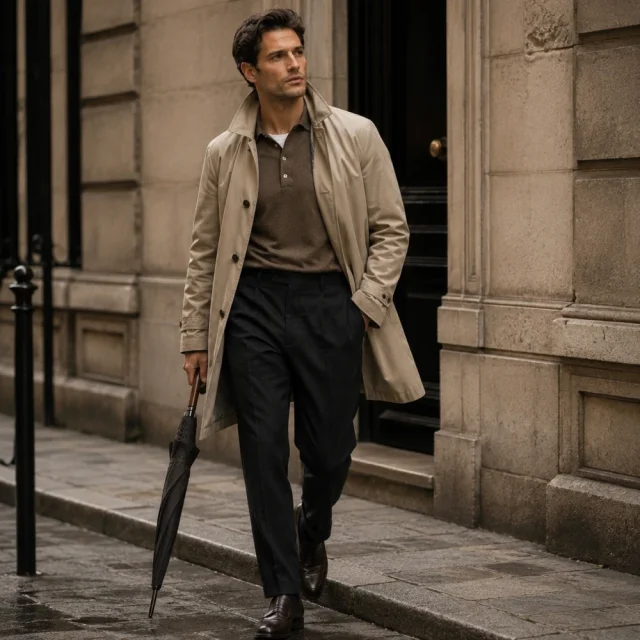
The polo’s return works because the garment already carries a point of view. Its collar is sharper than a tee but less formal than a shirt; its sporting history gives tailoring a relaxed edge. Fall 2026 styling favors texture, proportion and layering over a literal country-club uniform.
- Under a relaxed blazer: choose a fine-knit polo, leave the collar flat and add wide trousers. The contrast looks intentional without becoming formal.
- With a pleated midi skirt: tuck a fitted polo cleanly and use loafers or slim boots to continue the line.
- Over a long-sleeve tee: a striped or rugby-weight polo becomes a light jacket. Keep the underlayer plain.
- With dark denim: combine an ivory, tobacco or forest-green polo with straight jeans and a belt. This is the simplest entry point.
- Beneath a leather jacket: use the collar as a frame. A striped knit brings softness to the jacket’s harder surface.
- With a full suit: replace the shirt and tie with a close-fitting merino polo. Keep the knit fine enough to sit cleanly under the lapels.
- With a miniskirt and tall boots: balance a fitted top with a strong vertical shoe. Add an oversized coat rather than more small details.
- Loose over tailored shorts: for warm early fall, let a boxy polo fall untucked and finish with loafers or low-profile sneakers.
- Buttoned beneath a cardigan: expose just the collar and a little placket. Similar colors create depth without fuss.
- With utility trousers: a polished polo makes cargo details feel deliberate. Choose one fitted piece and one relaxed piece.
- Monochrome: combine shades of charcoal, cream or navy while varying texture — piqué, wool, leather, denim.
- As a dress layer: wear an oversized rugby polo over a slim midi dress, or belt it lightly when the proportions need definition.
The collar is the point. Let it sharpen an outfit that would otherwise feel too casual.
Luxury, mid-range or budget?
At any price, inspect the collar first. It should hold its shape without feeling stiff. Fine merino and dense cotton knits give a polished result; classic piqué is easier and more athletic. At the budget end, solid colors and minimal logos tend to look more considered. Mid-range buyers can prioritize better cotton and construction. Luxury only earns its premium when the material, cut or craft is genuinely distinctive.
Start with proportion
The most convincing polo shirt outfit begins with a decision about volume. A fitted knit looks clean under tailoring and balances full trousers or a wide skirt. A boxy rugby or oversized polo works better over a narrow base or with a hem that reveals the waist. If every piece is loose, use a shorter jacket, rolled sleeve or visible belt to restore shape.
Length changes the effect as much as width. A polo that ends near the high hip can remain untucked; a longer one may need a full tuck, partial tuck or deliberate layering. Test the garment from the side and back, not only straight on. The collar should frame the face without collapsing, and the placket should lie flat when buttoned.
Choose fabric for the job
Cotton piqué is breathable, textured and clearly sporty. Jersey is softer and easier but can look like a standard tee if the collar lacks structure. Fine merino or cotton-silk knits are strongest with trousers and jackets because they create a smooth line. Heavy rugby cotton adds volume and works as outerwear in early fall.
Check opacity, stretch recovery and seam stability. Lift the garment toward light, pull the hem gently and inspect where the collar joins the body. A dense fabric is not always better; it should match the climate and layer without bunching. For fall 2026 polo styling, texture is useful only when the garment remains comfortable.
Handle the collar deliberately
Keep it flat beneath a blazer, cardigan or coat. Allow it to sit outside a crew-neck sweater only when the points stay crisp and the proportions are clean. Popping the collar can work in a deliberately sporty look, but doing it by default often makes the outfit feel like costume.
Buttons also set the tone. One open button is relaxed; fully buttoned is graphic and modern; a deeper opening can work with a necklace or visible base layer. The choice should support the rest of the outfit rather than become its own statement.
Use color with restraint
Navy, cream, charcoal, brown and deep green integrate easily with fall wardrobes. Stripes introduce movement and can substitute for a patterned shirt under a plain coat. When the polo has a bright color or large motif, keep trousers and outerwear quieter so the collar remains the point of focus.
Monochrome dressing needs tonal variation. Pair a charcoal polo with softer gray wool and black leather, or cream knit with stone cotton and warm brown suede. Similar colors look deliberate when surfaces differ. Exact matching without texture can feel like a uniform.
Care for the shape
Follow the label, button the placket before washing and reshape the collar while damp. Fold heavy knits instead of hanging them, which can stretch the shoulders. Air between wears and use a fabric comb carefully on wool. The collar and cuffs reveal wear first, so address pilling and curling before the whole garment looks tired.
The return of the polo is useful because it offers a middle layer between tee and shirt. Choose a cut that serves several outfits, practice the proportion with clothes already owned and let the sporting reference add tension rather than dictate the whole look.
Why this matters
The polo’s return shows how fashion rehabilitates familiar categories by changing proportion and context. A collar can add structure to casual dressing without the formality of a shirt. That makes the trend economically resilient: many people can participate with something they already own.
How we got here
Polos moved between sport, school uniform, office casualwear and subculture long before the current cycle. Their recent decline reflected associations with corporate blandness and overly neat prep. Oversized, fitted and textured versions reopen the category by separating the collar’s graphic function from one prescribed social identity.
Who benefits, who loses and what critics say
Knitwear brands and secondhand sellers benefit from renewed demand, while shoppers gain a low-risk layering piece. Cheap versions may lose shape quickly at the collar, turning trend participation into waste. Critics can read the revival as nostalgia without invention; its defense lies in styling and construction, not the novelty of the garment itself.
What the comparison implies
A polo should be compared with the T-shirt or button-down it replaces. It offers more structure than the first and less maintenance than the second, but only if opacity, stretch recovery and seams hold up. Cost per wear and collar durability are more meaningful than whether a version was labeled “fall 2026.”
What happens next
Expect the strongest versions to move into knit textures, stripes and layered proportions before settling back into basics. A short-lived cycle will leave novelty collars behind; a durable one will improve fabric and fit across price points. The practical signal is whether the polo keeps appearing after outerwear season begins.
Trend source: Fall 2026’s return to oversized, fitted, striped and textured polos was documented by Grazia USA.