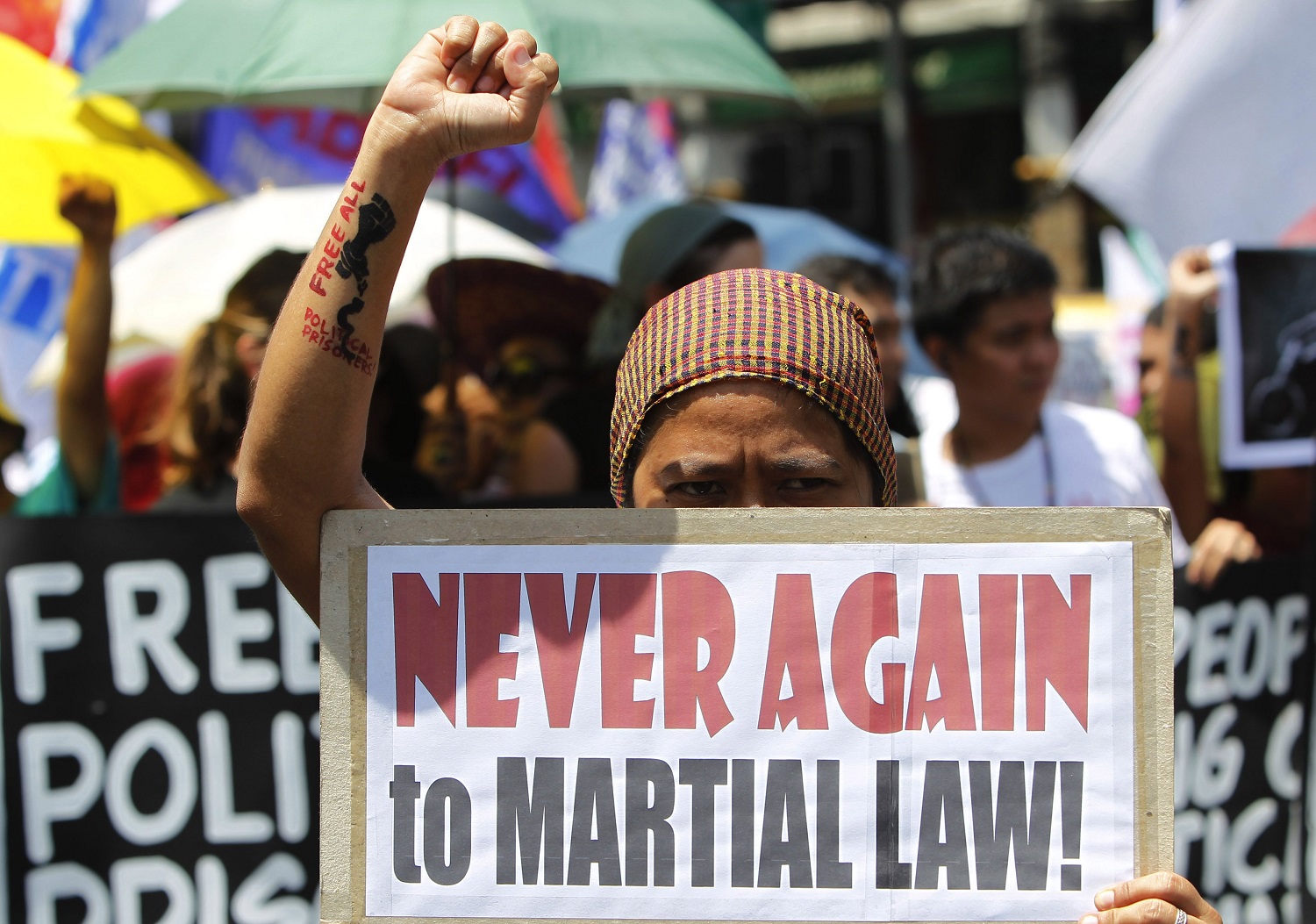
A heavily guarded anniversary
Protesters gathered nationwide on the 54th anniversary of Ferdinand Marcos Sr.’s 1972 martial-law declaration. The Malacañang complex was placed under lockdown. Police said 17,018 personnel were deployed, more than 15,700 in Metro Manila, under a full-alert posture effective since September 18. BAYAN planned a Mendiola march, Kilusang Bayan Kontra Kurakot gathered at Liwasang Bonifacio and organizers scheduled candle lighting at Bantayog ng mga Bayani.
Why this matters
The protest collapses distance between historical memory and present government. A commemoration of authoritarian abuse is now also an anti-corruption mobilization focused on the flood-control scandal. Some groups demand Marcos Jr.’s resignation. The dictator’s son holds the office whose coercive power the anniversary warns against.
Numbers and perspectives
Organizers cite roughly 70,000 illegal arrests, 34,000 torture victims and 3,240 killings under Marcos Sr. Those are advocacy estimates and remain attributed, but their scale explains why martial law is not abstract to affected families. Government officials say peaceful protest is protected and emphasize security against violence; activists see lockdown as evidence that the state still defaults to force.
Who wins and what follows
Opposition groups gain a common frame linking past repression to present allegations. Marcos Jr. gains if the day stays peaceful and the state appears restrained. Police bear operational risk. The public loses if corruption becomes only dynasty symbolism rather than evidence, procurement records and prosecutions. Watch whether investigations produce defendants, asset recovery and public-works reform—and whether police release complete arrest and injury data.
Sources: Hi-Lites; BusinessWorld.