Pentagon freezer cyberattack
Pentagon Probes Freezer Failures at Six Bases as Suspected Cyberattack
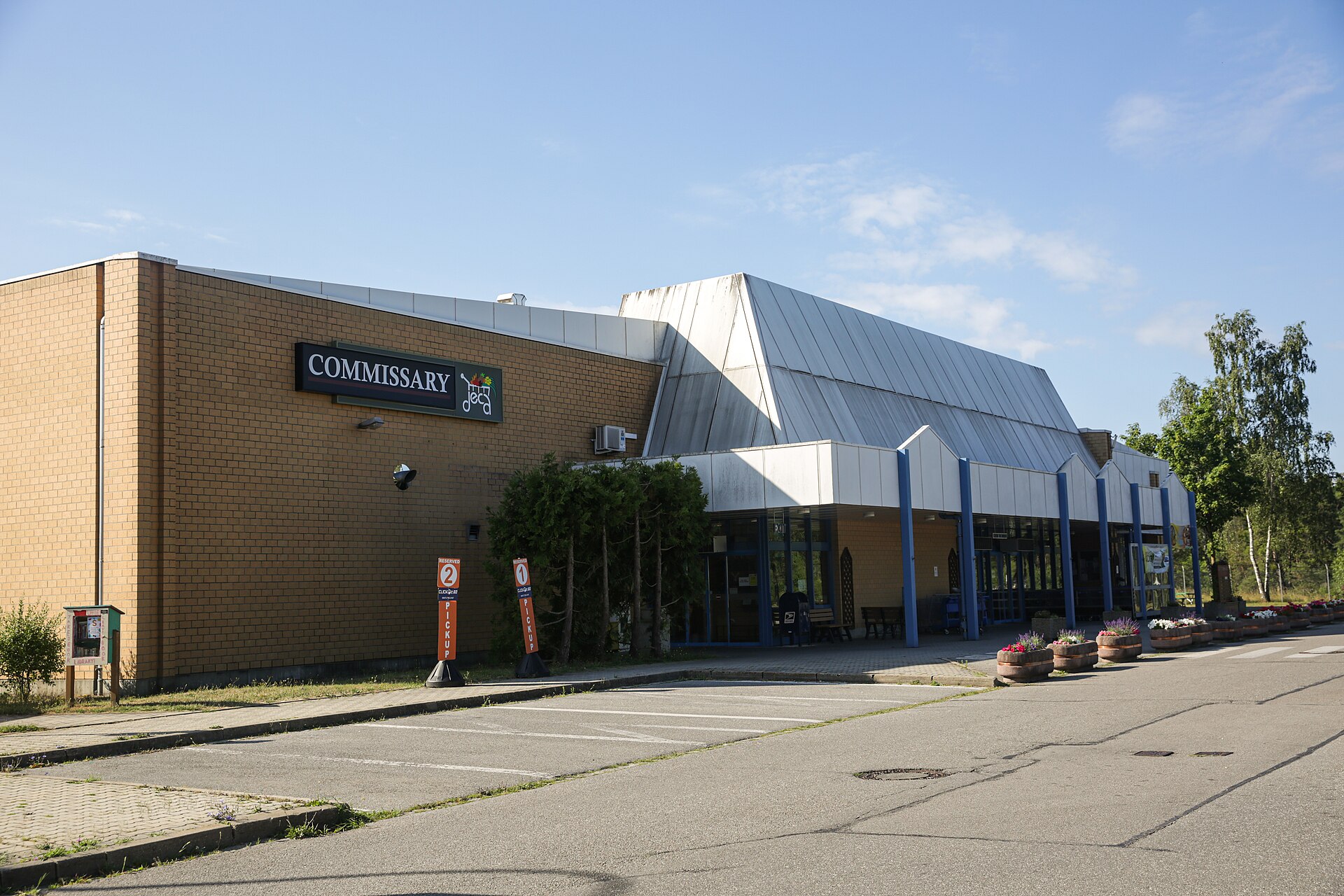
The freezers did not simply break. At Fort Huachuca in Arizona, one of them went into defrost mode in the middle of the night and heated up the food it was supposed to keep frozen. By morning, staff at the base commissary were throwing out spoiled stock. Similar malfunctions hit commissaries — the on-base grocery stores where service members and their families shop — at no fewer than six U.S. military bases in late August. Now the Pentagon is treating the episodes as a suspected cyberattack: according to four officials familiar with the matter, military cyber investigators are working the case and coordinating with French law enforcement, after hackers in France carried out a strikingly similar attack on supermarket freezers earlier this month.
Why this matters
Most cyberattacks steal data or lock it up for ransom. This one — if the suspicion is confirmed — did something else: it reached through a network and spoiled food in the physical world, on U.S. military bases, in the middle of the night, without anyone setting foot on the installation. Refrigeration sits on the same list of nightmare targets as power grids and water plants, because the cold chain is what stands between a population and its fresh food. An attacker who can turn freezers into heaters does not need to breach a weapons system to hurt a military; they only need to reach the humble controllers that keep dinner cold.
The second reason this matters is how little sophistication the method appears to require. In France, investigators found that many of the hijacked refrigeration controllers were obsolete models running outdated firmware — equipment designed to be serviced by a technician standing in front of it, later connected to the internet for convenience. If the same class of equipment sits inside U.S. base commissaries, the vulnerability is not a exotic zero-day. It is an inventory problem: nobody may know exactly which controllers, running which software, are reachable from the network across hundreds of military facilities worldwide. That is a question the Pentagon now has to answer under the pressure of an active investigation.
What happened in August
The malfunctions surfaced in late August. Reuters reviewed the affected bases' contemporaneous Facebook posts and website updates and counted at least six commissaries where freezers failed. In at least one of the cases, the freezers did not merely stop working — the cooling units' temperatures were cranked up overnight, yielding mounds of wilted or melted food in the morning. Warming, not just failing, is the detail that elevates this from an maintenance story to a security story: refrigeration equipment does not normally decide, on its own, to heat.
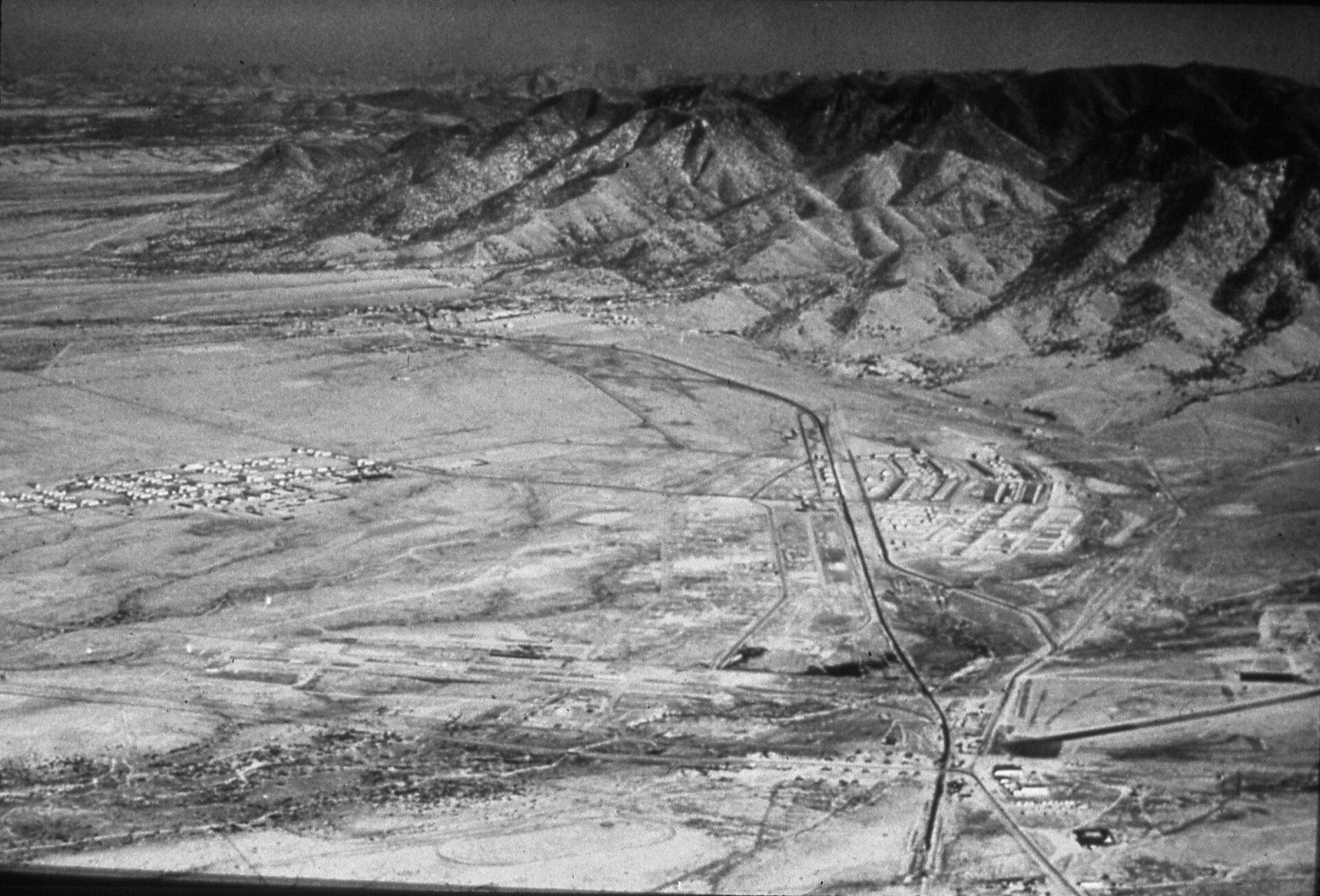
The most vivid account comes from Fort Huachuca, the Army intelligence hub in southern Arizona. On August 26, the base's Facebook account explained that its commissary freezer "went into defrost mode where it heated up all the food. Trust us when we say it was 'spoiled.'" Defrost cycles are a normal, brief feature of commercial freezers — they melt frost off the coils. A defrost cycle that runs long enough, or hot enough, to cook the contents is something else entirely.
The possibility of cybersabotage was first floated publicly on August 28 by a recently created blog called Signal and Silence, which reported the pattern of rogue freezer behavior. The military newspaper Stars and Stripes subsequently reported that investigators were involved, and Britain's Daily Telegraph reported that they were in contact with the French. What Reuters established this week — for the first time — is that investigators are treating the incidents as a suspected hack, rather than as equipment failure with an outside chance of foul play.
The official responses are terse but telling. Asked about the investigation, the Pentagon said a unit of U.S. Cyber Command — the military's cyber force — was "working in close coordination with interagency and law enforcement partners," and did not elaborate. The Army Criminal Investigation Division said its Cyber Field Office was involved and was working with French law enforcement to better understand "the refrigeration outages in Europe." Reuters was not able to establish how far the investigation has progressed, whether it has reached conclusions about what happened, or who might be responsible — and neither, publicly, has the Pentagon. The word that governs everything in this story is "suspected."
The French connection
The reason American investigators are talking to Paris is that France has just lived through the full-scale version of this attack. Earlier this month, intruders overrode the temperature controls on commercial cooling units in more than 350 establishments across France — Signal Post News reported the French supermarket attack in detail as it unfolded. As in Arizona, the attackers cranked temperatures up rather than simply shutting units down. Frozen-food aisles were cleared of spoiled merchandise; some refrigeration units were turned up so high they caught fire; and one supermarket owner estimated the nationwide bill could reach tens of millions of euros.
The French case also supplied the technical hypothesis now being tested in the United States. The Danish manufacturer Danfoss, whose controllers ran many of the stricken French units, said many of them were obsolete or running outdated firmware, which could have made them easy to break into. Experts told Reuters the French attack appeared easy to pull off. Whether any of the affected U.S. base freezers used Danfoss equipment — or any particular brand — is not known: Reuters could not establish it, and Danfoss did not return messages seeking comment. The French Embassy in Washington said it would have no comment. But the signature — heating, overnight, across many sites at once — is close enough that the two investigations are now formally connected, which is itself significant: cross-border coordination of this kind is not spent on what officials believe is a coincidence of broken appliances.
A known playbook, not a one-off
Security professionals have been warning about exactly this scenario for years. Earlier this year, the Global Food Safety Initiative, an industry body, called on food-safety and IT leaders to work together to ensure "robust cybersecurity" for refrigeration technology, noting that "a hacked cooling system is just as dangerous as a broken one." Danfoss itself has said that in 2022, hackers targeted or broke into supermarkets in Russia and Israel that were using obsolete versions of its cold-storage controllers. And last December, federal prosecutors in Los Angeles accused a Ukrainian woman of being part of a hacker group that knocked out the refrigeration at a meatpacking facility in 2024, ruining more than 2,000 pounds of meat.
The root problem, as Bill Moore, chief executive of the industrial cybersecurity firm Xona Systems, explained it, is architectural: controllers that were conceived as isolated interfaces, serviced by a technician in person, have increasingly been connected to the internet — for remote monitoring, fleet management and convenience. Every one of those connections is a door. "It can definitely disrupt the supply chain for food," Moore said. The French attack demonstrated the disruption at national scale; the August incidents suggest the same door may have been tried on the U.S. military's food supply.
The soft underbelly of base life
Commissaries are easy to overlook in discussions of military power, but they are load-bearing infrastructure. Run by the Defense Commissary Agency, they are the grocery stores of base life — a core benefit for service members and families, often the only affordable supermarket within reach of an installation, and a daily necessity for the readiness of the force. A base whose commissary freezers are emptied overnight has not lost a battle, but it has lost something real: food for thousands of people, trust in the systems that support them, and days of logistics work to restock.
The timing sharpens the point. The Pentagon has recently been pushing installations toward far greater self-sufficiency — the FORTRESS concept, under which bases are expected to sustain themselves for 90 days, as Signal Post News reported. Self-sufficiency raises the value of everything stored on base — including food — and therefore raises the stakes of the infrastructure that stores it. A fortress whose freezers can be switched to "cook" by a remote intruder has a vulnerability no stockpile fixes. If this investigation confirms hostile access to commissary refrigeration, expect refrigeration and other building systems to be pulled into the same hardening conversation as power, water and fuel.
Who loses, who gains, and what the critics say
The immediate losers are military families, who found spoiled shelves and disrupted stores in August without any public explanation of why; the commissary system, which absorbed the food losses and the restocking; and the credibility of the assumption that base support systems are too mundane to target. If a perpetrator is ever identified, they will have demonstrated an uncomfortable capability at trivial cost: no malware sophistication is implied by turning up a thermostat — the French case appears to have abused legitimate remote functions on outdated equipment.
The gainers, as after every incident of this kind, are the operational-technology security sector and the officials who have argued for inventories and segmentation of industrial controllers. There is also a harder question for the equipment industry and its customers: why were food-safety-critical controllers, in France and possibly on U.S. bases, running obsolete software and reachable remotely at all? Remote fleet management is convenient and cheap; the bill for that convenience is now being calculated in spoiled food on two continents.
The skeptics deserve a hearing too. Six freezer failures in one month could, in principle, be a coincidence of aging equipment, a shared maintenance contractor, or a faulty production batch — which is precisely why the investigation is framed as suspicion rather than conclusion, and why it matters that the Pentagon has said nothing about attribution. But investigators do not ordinarily open a Cyber Command-coordinated, cross-border inquiry over coincidence, and the French precedent gives them a concrete comparison set: same method, same season, same target class. The burden of the next phase is evidence — logs, access records, firmware images — that either connects the two campaigns or clears the air.
What happens next
The pivotal unknown is the equipment. If investigators find that the affected commissaries used the same class of outdated, internet-reachable controllers as the French stores, the U.S. case becomes part of a single story about a global fleet of vulnerable refrigeration — and the response expands from six bases to every facility, military and civilian, running similar kit. If the equipment differs, investigators face the more unsettling possibility of a second actor copying a public playbook within weeks of its debut.
Either way, expect an unglamorous but consequential scramble: an inventory of refrigeration controllers across the Defense Department, firmware patching and network segmentation for building systems, and fresh attention from civilian regulators, because the same controllers sit in American supermarkets, warehouses and hospitals. Watch for statements from Cyber Command and the Army Criminal Investigation Division, any disclosure by the Defense Commissary Agency about the affected locations beyond Fort Huachuca, and whether French investigators announce arrests or attribution in their case — the fastest route to answers in the American one may run through Paris. For now, the official story remains deliberately narrow: freezers failed at six bases in August, the food spoiled, and the United States military is investigating it as a suspected cyberattack. On the record of the last two months, that suspicion is well founded — and the investigation's outcome will say a great deal about how exposed the infrastructure of everyday life, on base and off, really is.
Sources
- Reuters — Pentagon treating military base freezer malfunctions as suspected cyberattack, officials say (October 29, 2026; Raphael Satter, A.J. Vicens and Phil Stewart)
- Stars and Stripes — reporting on the involvement of military investigators in the commissary freezer case (as reported by Reuters, October 2026)
- The Daily Telegraph — reporting on investigators' contacts with French law enforcement (as reported by Reuters, October 2026)
- Fort Huachuca official Facebook post on the commissary freezer failure (August 26, 2026; quoted by Reuters)
- Signal and Silence — first public report of the rogue freezer pattern and the cybersabotage possibility (August 28, 2026; as reported by Reuters)