War · Iran · Kuwait
Both halves of this story are true. The Defence Department has failed its financial audit for the ninth consecutive year — and, for the first time, a majority of its assets passed. What a "disclaimer of opinion" actually means, and what it does not mean, is where most coverage of this story goes wrong.
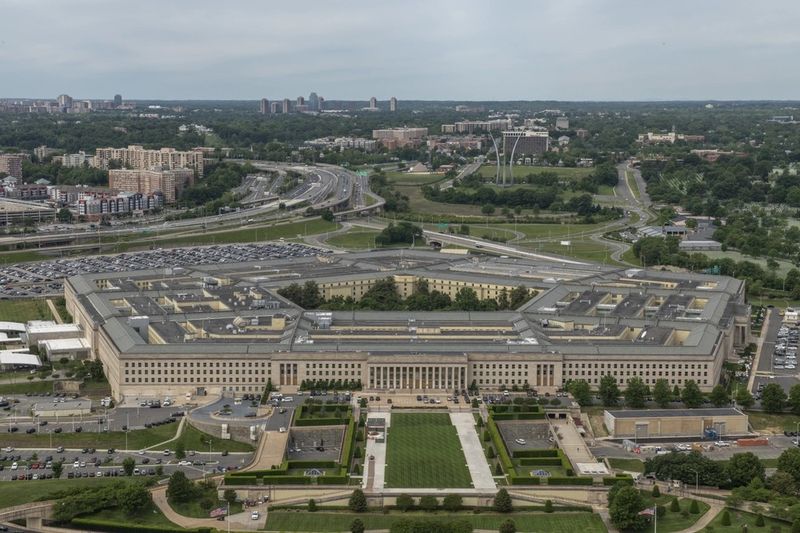
WASHINGTON — The Pentagon has failed its department-wide financial audit for the ninth consecutive year. The inspector general's report, released on Monday, again issued a disclaimer of opinion on the department's fiscal 2026 financial statements, for the year ended September 30, 2026.
The Defence Department was first audited in 2018. It remains the only one of the 24 major federal agencies covered by the Chief Financial Officers Act of 1990 that has never passed one.
What a disclaimer of opinion actually means
Start with the precision point, because it is the one most often lost. A disclaimer of opinion means the auditors could not gather enough reliable evidence to verify the financial statements. It is not a finding that money was stolen, and it is not a finding that money is "missing". The statements in question cover an asset base of more than $4.8 trillion, according to Reuters and the inspector general; Breaking Defense put the examination at $4.9 trillion in assets and $5.2 trillion in liabilities. Those are the balance sheets the auditors could not fully verify — attributed to their sources, and deliberately not merged here into a single number, because they are not the same measurement.
The progress inside the failure
This year's failure contains a first. Comptroller Jules Hurst told Reuters that 14 of the department's 25 standalone reporting entities passed their audits, up from 11 — covering 56 percent of assets and 86 percent of liabilities — with the Medicare-Eligible Retiree Health Care Fund passing for the first time. "For the first time ever, a majority of assets from the department are on clean opinions," Hurst said. Breaking Defense, counting clean opinions, put the number at 12 including that fund; the two counts use different methods and are reported here separately, as their publishers presented them. Four more entities — the Navy Working Capital Fund, the Defence Information Systems Agency's General Fund, and the classified reports of the Defence Intelligence Agency and the National Geospatial-Intelligence Agency — are projected to be clean by February 2027, which the department says would put 56 percent of assets and over 90 percent of liabilities on clean opinions.
Why it keeps failing
The machinery underneath is the problem. The department runs some 149 financial management systems, many of them inadequate and outdated, accumulated over decades of separate service bureaucracies. The Government Accountability Office has repeatedly flagged information-technology controls, incomplete transaction records, fraud-risk management and shortages of trained personnel — most recently in testimony (GAO-26-109115) in May 2026. The GAO also warned in May that the Pentagon's revised audit strategy may succeed in documenting the biggest balances without fixing the underlying control problems — and that a pass achieved in 2028 on that basis may not be sustainable. Earlier audits have surfaced emblematic failures, including the long-running problem of simply keeping reliable property records for programmes as large as the F-35.
A deadline written into law
This is no longer only an embarrassment; it is a legal clock. Section 1005 of the fiscal 2024 National Defense Authorization Act requires an unmodified — clean — opinion on the department-wide statements no later than December 31, 2028. Beginning this year, the department consolidates its 25 separate audit opinions into eight, ahead of seeking a full department-wide opinion in fiscal 2028. Hurst's case is that the trajectory now points at the deadline: a majority of assets clean, four more entities projected by February, consolidation simplifying the final climb. The GAO's case is that documenting balances is not the same as controlling them, and a deadline met by presentation rather than by systems would unravel in the audit after.
The $1.5 trillion question
The timing is the politics. The failure lands as the administration asks Congress for a record $1.5 trillion in fiscal 2027 defence spending — a request, not an enacted budget — which the GAO notes would be a 44 percent increase over fiscal 2026. Hurst framed modernisation of the financial systems as the trust argument for that request: an institution asking for a trillion and a half dollars is better placed when it can show its books improving. Appropriators are being asked to extend that trust to the one major agency that has never once proved its accounts. Both things are true at once, which is why this audit — a document almost nobody reads — now carries unusual weight in the budget fight.
What happens next
The February 2027 projections are the next test: if the four additional entities come in clean on schedule, the department's claim to be converging on 2028 gains substance; if they slip, the consolidation into eight opinions will look like rearranging the problem. After that, everything points at fiscal 2028 and the statutory deadline of December 31 that year. Congress wrote that date into law; what happens if the department misses it — hearings, conditions on funding, or a quiet extension — is a fight that will begin long before the deadline arrives. Signal Post News will follow the February results when they are published.
Sources
Reuters, November 16 — reuters.com/world/us. Breaking Defense, November 16 — breakingdefense.com. US Department of Defense Inspector General — dodig.mil. Government Accountability Office, GAO-26-109115 — gao.gov.