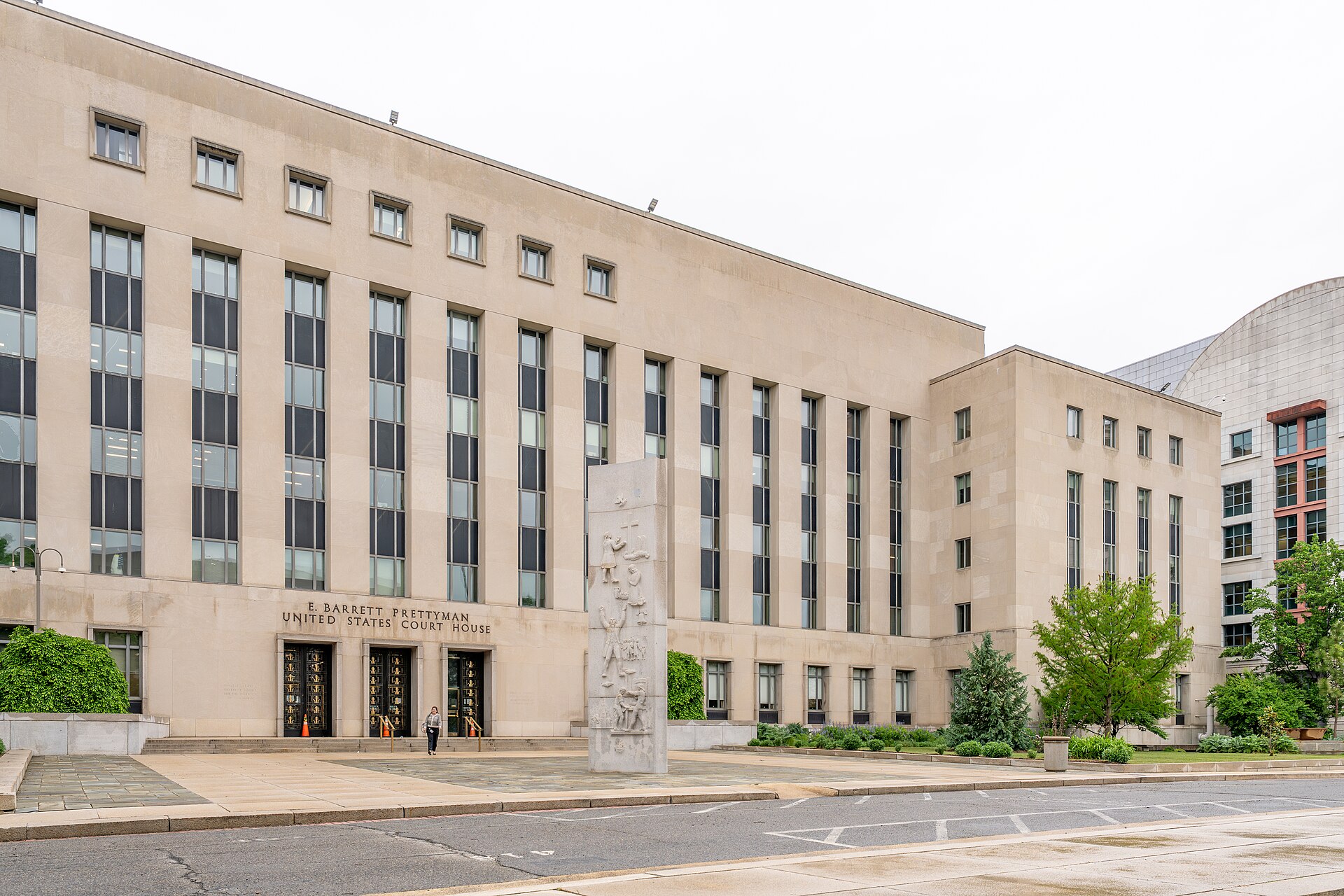
The Pentagon data breach lawsuit landed in federal court in Washington this week, when two Marines asked a judge to hold the Defense Department responsible for a breach at its Defense Manpower Data Center that left Social Security numbers and other personnel records for more than three million military-connected people exposed for months.
Technology / Cybersecurity — a nine-month intrusion into the Pentagon’s central personnel database is now a proposed class action, and the first question is not who broke in, but why the files were unencrypted

What the lawsuit actually alleges
Bloomberg Law, which read the complaint, identified the plaintiffs as Tristyn Edwards, an active-duty Marine, and Morgan Stampfli, a Marine veteran. They filed the proposed class action on behalf of themselves and all others whose personal data was exposed when unauthorized users accessed an unencrypted file-sharing server run by the Defense Manpower Data Center (DMDC), according to the complaint, filed in the U.S. District Court for the District of Columbia. Reuters reported the intruders allegedly exploited a vulnerability in a personnel-records file-sharing system, allowing access to unencrypted personal data. The case is captioned Tristyn Edwards et al v. U.S. Department of War, U.S. District Court, District of Columbia, No. 1:26-cv-03667, and the plaintiffs are represented by Jason Rathod and Nicholas Migliaccio of Migliaccio & Rathod. No lawyer has yet appeared for the government.
The complaint asserts a claim under the Privacy Act of 1974, the federal law that requires agencies to maintain appropriate safeguards for the personal records they hold, and asks the court to require stronger safeguards, extended identity-protection services and compensation for losses. Those are allegations, not findings: no judge has certified the proposed class, ruled that the department violated the law, or decided that the breach caused any individual’s losses.
Two Marines, two sets of charges
What gives the filing its human shape is that the named plaintiffs do not stop at exposure — they allege the exposure reached their bank accounts. Edwards, who enlisted in the Marine Corps in 2023, says he experienced multiple fraudulent debit-card transactions on August 20 totaling $317.91, before the Pentagon notified him on September 18 that his personal information had been compromised; he also says he received notifications that his information was available on the dark web and an increase in spam calls and emails. Stampfli, who served from 2010 to 2021, says an unauthorized $271.19 purchase appeared on his Navy Federal Credit Union debit card after he received his breach notification, reportedly using his correct name, billing address, telephone number and other identifying details; he canceled the card and later saw an influx of unwanted email subscriptions.
Both accounts come with an honest caveat that will likely become a central fight in the case: the complaint does not establish that the intruders caused either transaction. An absence of detected misuse is not proof that misuse did not occur — but an unauthorized charge after a breach is not, by itself, proof that the breach caused it. Causation, standing and damages are exactly what the government is expected to contest when it answers.

Nine months inside the file-sharing system
The underlying incident began long before any lawyer was involved. According to the DMDC notification letter first reported by Military Times on September 24 — a letter two defense officials confirmed was authentic — unauthorized users accessed files on a server holding unencrypted personal information from October 2025 until July 16, 2026, when DMDC discovered a “security vulnerability” in its file-sharing system. Upon discovery, the department said, it immediately remediated the vulnerability, patched the system and restored it. Notification letters were dated September 18 — 64 days after the flaw was found, and nearly a year after the intrusion began.
The exposed data varied from person to person. Each affected record held a Social Security number plus at least one other identifier: a name, date of birth, contact information, sex, race or military personnel information, including occupational specialty. A defense official later put the affected population at about 2.76 million living people and another 294,000 who have died — roughly 3.05 million in total. Early reporting, based on people familiar with the incident, had estimated about 4 million potentially affected; the later official figure is the one the department has stood behind. DMDC is no side office: it is one of the Pentagon’s main personnel repositories, maintaining more than 60 million records on active-duty and reserve troops, civilian employees, contractors, retirees, veterans and military families, and its records underpin readiness, benefits, pay and identity credentials across the department. The department offered affected individuals one year of free credit monitoring and identity-restoration services through IDX, and its notification said it had no indication that the accessed information had been misused. Officials have not publicly said who accessed the files, which file-sharing product was involved, or whether files were copied off the server.
The lawsuit also lands in a crowded autumn for federal data security. Reuters noted the DMDC breach was disclosed last month around the time of the recent hack of the Federal Bureau of Investigation, which compromised Social Security numbers, job information and other sensitive data belonging to thousands of employees — a case Signal Post News covered as the ShinyHunters FBI breach. And this week’s emergency patching of critical PHP flaws, covered here as PHP2Shell, underlined the same lesson from the other direction: the window between a vulnerability existing and someone using it is where the damage is done.
Why this matters
A Social Security number is not a password. It cannot be rotated, reissued on request, or made safe again with a software update — for the roughly 3.05 million people in the DMDC files, the identifier at the center of American tax, credit, benefits and banking life was left in unencrypted files, reachable for about nine months, by intruders the government still has not named. That permanence is what separates this case from the ordinary run of breach litigation against retailers and hospitals. The plaintiffs did not choose to hand DMDC their data in exchange for a service; providing it was a condition of military service, employment, retirement or family status. The federal records notice for the DMDC system describes a repository used for manpower analysis, personnel readiness, health and benefit eligibility and data matching with other agencies — and describes safeguards including access limits, multifactor authentication, disk and network encryption and intrusion detection. The complaint’s sharpest question is therefore narrow and uncomfortable: if those were the stated safeguards for the system, why was the environment the intruders actually reached holding unencrypted files, undetected, from October to July?
There is a second, quieter stake: occupational specialty. Because some exposed records included the jobs military and civilian personnel performed, the breach is not only an identity-theft risk but a potential intelligence problem — a structured picture of who does what inside the defense workforce is exactly the raw material foreign services use for targeting and recruitment approaches. The department has not said the data was taken, and there is no public evidence tying the intrusion to any state. But the lawsuit forces the question into a forum where assertions can be tested: a courtroom, with discovery.
Context: how we got here
Washington has been here before, at larger scale. In 2022, Reuters noted, the U.S. Office of Personnel Management agreed to pay $63 million to resolve a class action lawsuit filed on behalf of millions of U.S. employees after the OPM breach — for years the benchmark federal personnel-data failure. The DMDC case is smaller in headcount but similar in anatomy: a central personnel repository, sensitive identifiers, a long undetected window, notification after the fact, and credit monitoring measured in months against a risk measured in decades. The Privacy Act claim is the legal spine for a reason: unlike private-sector breach suits, which often founder on whether plaintiffs can sue a sovereign government at all and on what damages the statute allows, the Act at least supplies a text — agencies must establish appropriate administrative, technical and physical safeguards — against which the department’s own published safeguard claims can be measured.
The timeline is the part no press statement can soften. Access began in October 2025. The vulnerability was discovered on July 16, 2026. Affected people were told on September 18. The class action arrived in October. At each step after discovery, the department can point to a defensible action — patch immediately, notify, offer monitoring — and at each step the plaintiffs can point to the gap before it: nine months undetected, 64 days to notification, twelve months of monitoring for a lifetime identifier. Both readings are honestly available on the current record, which is precisely why the case, rather than the news cycle, will decide between them.
Who benefits, who loses — and what critics say
The clearest losers, if the allegations hold, are the 3.05 million affected people, who received a letter, a year of monitoring, and a risk that does not expire when the monitoring does. The plaintiffs’ argument that one year is insufficient is the complaint’s most intuitive claim: a Social Security number exposed in 2026 can be used in 2036, and the two named plaintiffs say misuse, in their cases, began within weeks. The department, for its part, has not yet made its case in public beyond the notification record — vulnerability patched on discovery, no indication of misuse at notification, monitoring offered — and it told Reuters nothing at all this week. Its lawyers will eventually argue some combination of sovereign immunity, statutory limits on Privacy Act damages, and the causation gap between exposure and any individual loss.
Critics of breach class actions make a fair counterpoint that applies here too: the “more than $5 million” figure in the complaint is a jurisdictional threshold, not a valuation of harm, and plaintiffs’ firms file these cases quickly because the first credible filing often leads the consolidated litigation. If the class is certified and the case follows the OPM arc, the realistic outcomes are a settlement fund, longer monitoring, and court-ordered security changes — meaningful, but modest per person across three million people. Supporters of the suit answer that modest per-person relief is not the point: without litigation, the only public account of how an unencrypted personnel system stayed reachable for nine months would be the department’s own letter. Discovery is the one mechanism that can compel the missing facts — the product, the flaw, the logs, the detection failure.
What the numbers actually imply
Put the figures in proportion. About 3.05 million people affected, out of more than 60 million records DMDC maintains — roughly one record in twenty in the repository, not the whole vault, which cuts both ways: the blast radius was limited, and the system it happened in was enormous. Nine months of access against 64 days between discovery and notification: the notification lag is about a quarter of the exposure window, and it is the interval in which Edwards says fraudulent charges hit his account before he had even been told. Twelve months of credit monitoring against a non-expiring identifier is the ratio the plaintiffs will put on a slide. And $63 million — the OPM settlement Reuters cited — is the comparison the court will have in the room: spread across millions of class members, headline settlements translate into small individual payments, which is why the injunctive side of this complaint, the demand for stronger safeguards and extended protection, may matter more than the damages line.
What happens next
The government will answer, move to dismiss, or both; a judge will then decide whether the Privacy Act claim survives, whether Edwards and Stampfli can represent three million people, and whether the case reaches discovery. If it does, the first detailed public account of the DMDC system’s architecture, the timeline of detection and the department’s internal security decisions will come from filings, not press releases. Watch three things: whether the department ever identifies the file-sharing product and vulnerability; whether it extends monitoring beyond one year voluntarily, as agencies under pressure sometimes do; and whether Congress, which was promised answers after the September disclosure, treats the lawsuit as a reason to wait or a reason to ask harder questions. Until then, the most consequential development is not a finding of liability — there is none — but the move from breach notification to adversarial judicial review: a court will now test whether the government’s stated privacy safeguards matched the sensitivity of one of its largest stores of military personnel information.
Sources: Reuters, October 21, 2026 (class action filed Monday in Washington, “flagrant disregard” allegation, class of more than three million, damages over $5 million, case No. 1:26-cv-03667, Migliaccio & Rathod, OPM $63 million comparison, FBI hack context); Bloomberg Law, October 21, 2026 (plaintiffs Tristyn Edwards and Morgan Stampfli identified, roughly three million servicemembers and military-affiliated individuals, cyberattack spanning nearly nine months, unencrypted DMDC file-sharing server); Top Class Actions, October 16, 2026, summarising Military Times’ September 24 first report (notification letter of September 18, vulnerability discovered July 16, access from October 2025, 2.76 million living and 294,000 deceased affected, DMDC’s more than 60 million records, one year of IDX credit monitoring); The American Quorum, October 21, 2026 (complaint detail: Privacy Act claim, Edwards’ $317.91 and Stampfli’s $271.19 alleged charges, dark-web notices, federal records-notice description of the DMDC system and its stated safeguards, causation caveats).