
A list built on exclusion and range
The New York Times released its 2026 list on September 15 after sixteen scouts visited 538 restaurants in 38 states. Prior-year entries were excluded, forcing the project to look beyond repeat winners. That rule does not produce an objective national ranking—no finite team can eat everywhere—but it does change the editorial question from “who remains famous?” to “what deserves attention now?” The result stretches from a seventy-six-year-old Phoenix steakhouse to a tightly focused Bangladeshi tasting menu.
Why this matters
National restaurant lists redirect real money. Reservations spike, staff workloads rise and cities gain culinary visibility. They also shape the canon by deciding which forms of hospitality count as excellence. Pairing Durant’s with Korai Kitchen argues that longevity, cultural specificity, price structure and atmosphere can be evaluated without forcing them into one style. The benefit is pluralism. The risk is that a fifty-seat list still turns a vast, unequal industry into a competitive spectacle that audiences mistake for completeness.
Durant’s and the power of continuity
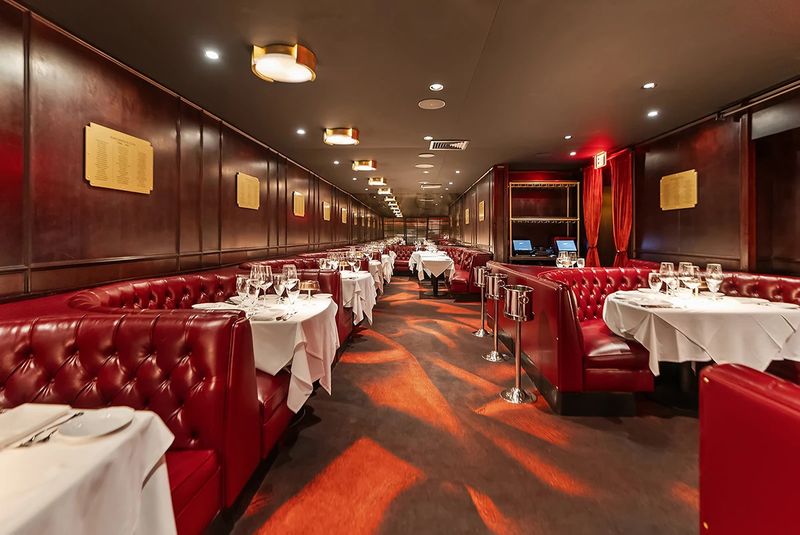
Durant’s opened in Phoenix in 1950 and remains associated with a 22-ounce prime rib and the ritual of the legacy steakhouse. Its inclusion fits a broader revival of rooms where service, lighting and repetition matter as much as novelty. The restaurant’s age is not proof of quality; survival can preserve flaws as easily as virtues. What makes longevity valuable is accumulated craft: staff knowledge, pacing and an atmosphere that cannot be manufactured quickly. The list recognizes continuity as a living achievement.
Korai Kitchen and the value of focus
Korai Kitchen in Jersey City offers a $95 eight-course Bangladeshi prix fixe. That price must be read against format: eight courses, labor, sourcing and a guided expression of a cuisine often underrepresented in American fine-dining coverage. Value is not the same as cheapness. The relevant comparison is what the meal attempts, how consistently it delivers and whether the experience expands understanding. A tasting menu can create focus, though fixed pricing may limit accessibility and spontaneity.
Detroit’s two arguments
Roses and Tacos Wuey give Detroit two entries and resist the idea that one restaurant can represent a city. One list slot often becomes a proxy for an entire region; two allow contrast in cuisine, service and audience. The recognition also shows how national dining attention has moved beyond a handful of coastal capitals. That redistribution can help local tourism, but it should not encourage cities to redesign their food cultures for visiting critics. The strongest scenes remain rooted in residents.
What 538 visits can and cannot prove
Five hundred thirty-eight restaurant visits across 38 states is substantial reporting. It is not a census. The number averages about 14 visits per state represented, but the actual distribution will be uneven. Sixteen scouts bring broader perspective and also inevitable differences in taste and timing. The no-repeat rule further means absence may indicate prior recognition rather than decline. Readers should use the list as a map of argued recommendations, not a mathematical league table.
Winners, losers and critics
Selected restaurants gain demand, recruiting power and validation. Diners gain a geographically ambitious guide. Unlisted regions, affordable neighborhood restaurants and cuisines harder to fit into destination narratives may lose attention. Staff can face overwhelming bookings and pressure. Critics of lists object to ranking hospitality and to the influence of one institution. Those critiques are strongest when lists conceal methods. Publishing scout counts, visits and exclusions at least gives readers tools to interpret the result.
Historical comparison
American restaurant prestige once centered heavily on formal service and French technique. Later waves elevated regional cooking, immigrant traditions, casual formats and chef personality. The 2026 examples suggest another synthesis: old institutions can be newly relevant, while small culturally specific dining rooms can command tasting-menu seriousness. The shift is not a straight line toward inclusivity; access to capital and media still shape who gets noticed. But the vocabulary of excellence has widened.
How to use the list—and what happens next
Do not attempt to “complete” fifty restaurants as trophies. Read the descriptions, identify the quality being praised and seek related places in your own region. If booking a selected restaurant, expect demand and respect cancellation policies. The next test is durability: whether attention improves wages and stability, whether quality survives volume and whether scouts keep looking beyond familiar markets. A good list should create curiosity larger than itself. Its value lies in the conversations and meals it makes possible, not the hierarchy alone.
The evidence test
This report separates the dated facts from the interpretation built around them. For “The New York Times Drops Its 2026 “50 Best Restaurants” List — From a 70-Year-Old Phoenix Steakhouse to a $95 Bangladeshi Feast,” the strongest evidence is specific: official decisions, published results, dated market or schedule figures, and reporting that identifies what is known. A headline can be directionally accurate while still overstating certainty. Readers should therefore distinguish a confirmed event from a forecast, and a forecast from a scenario. That discipline is especially important in food / restaurants, where a single update may change the practical outlook without changing the underlying structure.
What would change the conclusion
Good analysis should be falsifiable. The argument here would need revision if later primary records contradict the reported figures, if the timetable moves, or if the actors behave differently from the incentives described above. Pay particular attention to a list built on exclusion and range, why this matters, durant’s and the power of continuity. These are not decorative subthemes; they are the mechanisms connecting the headline to consequences. An update that changes one of those mechanisms deserves more weight than a new quotation that merely repeats an established position.
Who has agency
Events are often described as if they happen to a passive public, but institutions, firms, officials, workers, consumers and communities make choices within constraints. The powerful can set rules and timing; less powerful groups can adapt, organize, substitute or refuse. Evaluating agency prevents two errors: assuming leaders control every outcome, and assuming nobody can alter the path. In this story, the distribution of bargaining power matters as much as the most visible announcement, because implementation happens through many smaller decisions after attention moves elsewhere.
First-order and second-order effects
The first-order effect is the immediate change described in the headline. Second-order effects arrive through confidence, prices, staffing, regulation, supply chains, habits or institutional precedent. They are harder to measure and easier to exaggerate. The responsible approach is to identify the transmission channel and then look for evidence that it is operating. A plausible chain is not yet an observed result. This distinction keeps analysis useful without turning possibility into prediction, and it helps explain why some dramatic announcements fade while modest procedural changes compound.
The comparison problem
Numbers acquire meaning only against a baseline. The relevant comparison may be the previous year, a prior cycle, a peer institution, the size of the affected market or the share exposed rather than the headline total. Nominal levels can sound historic while representing a small percentage change; averages can conceal a few extreme observations. For this reason, the report uses comparisons to test scale instead of presenting figures as self-explanatory. When future updates arrive, compare like with like and preserve the original cutoff date.
What critics get right
Criticism is most useful when it identifies a missing mechanism, an excluded group or a cost shifted out of view. It is less useful when it simply predicts failure without conditions. Skeptics of the developments covered here are right to ask who verifies claims, who bears transition costs and whether short-term success can last. Supporters are right to ask what the realistic alternative would be. Holding both questions together avoids false balance: evidence can favor one conclusion while still acknowledging trade-offs and uncertainty.
Three scenarios, not one forecast
A base case assumes announced rules and schedules broadly hold. An upside case requires implementation to improve, uncertainty to fall and participants to respond constructively. A downside case begins when deadlines slip, trust weakens or a secondary shock compounds the first. Scenario thinking is not a way to avoid judgment; it clarifies which assumptions carry the conclusion. The most informative future report will identify which path is becoming more likely and why, rather than treating every new detail as a reversal.
The editorial judgment
The central conclusion is that the headline matters because it changes incentives, not because it guarantees an outcome. The facts reported today establish a new starting point. They do not erase history, settle criticism or make projections certain. Readers should keep the scale of the event in proportion, watch the actors with power to implement it and resist narratives built only from momentum. That is the difference between following a story and merely following its noise.
How to follow the next update
Return to the dated facts in this report before treating a new headline as a changed story. For “The New York Times Drops Its 2026 “50 Best Restaurants” List — From a 70-Year-Old Phoenix Steakhouse to a $95 Bangladeshi Feast,” the decisive update will be one that changes implementation, scale or the distribution of costs—not another round of commentary about the same event. Check whether later reporting uses the same definitions and time period, whether it cites a primary record, and whether a projected effect has actually appeared. That approach preserves room for surprise while preventing a fast-moving news cycle from turning uncertainty into contradiction. We will revise the assessment when evidence changes the mechanism, not simply when attention moves.
Sources: Detroit Free Press report; Arizona Republic on Durant’s; NorthJersey.com on Korai Kitchen; OpenTable overview. Figures and schedules are a fixed September 18, 2026 snapshot and do not update live.