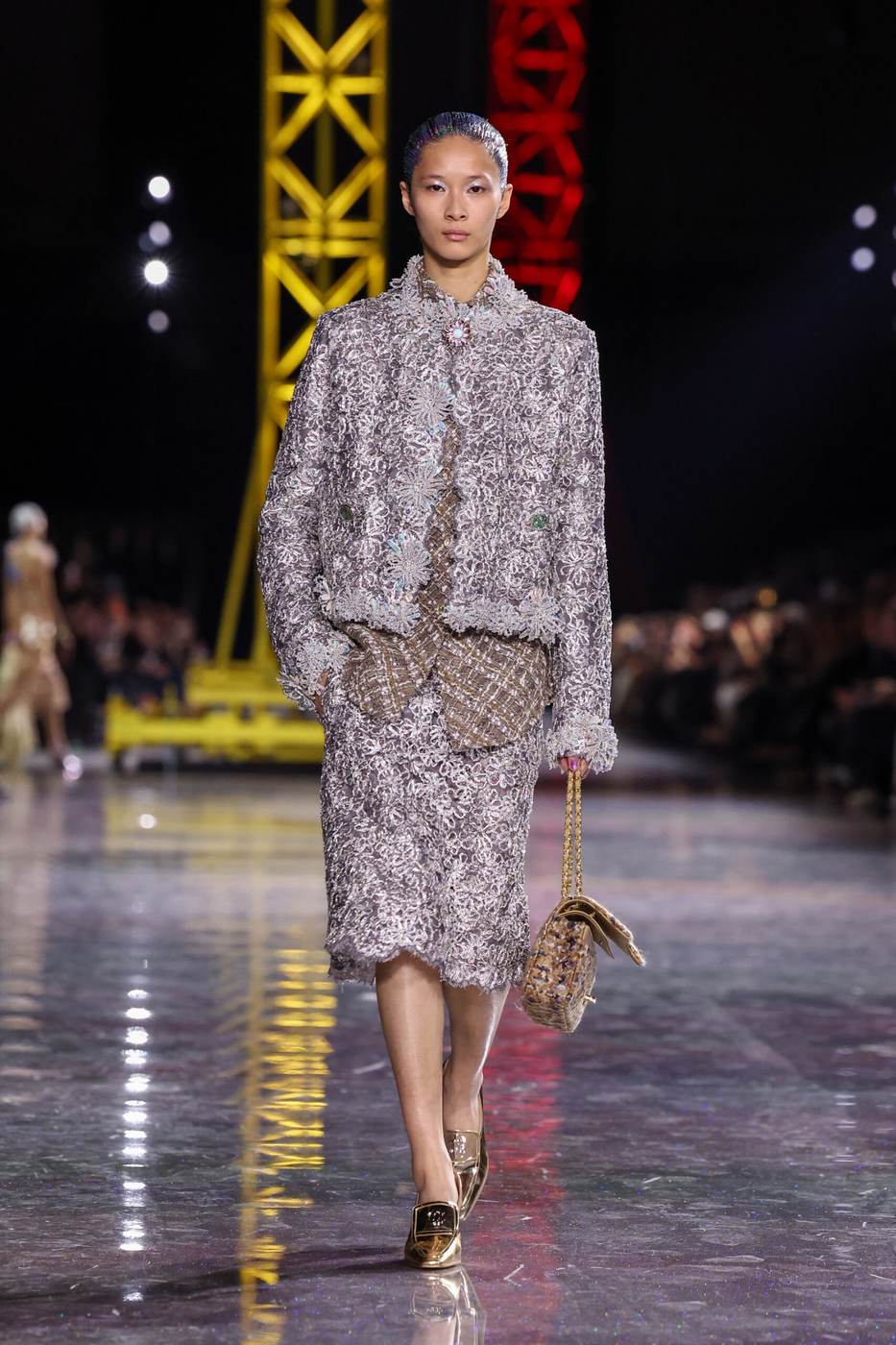
At New York Fashion Week, held September 10–15, designers made a persuasive case for clothes with a visible point of view. Associated Press coverage identified an irreverent spring mood at Tory Burch, Ralph Lauren and Eckhaus Latta. CNN’s show report found the same appetite for fun in unexpected places: Coach marked its 85th anniversary with sequin birthday hats, Rachel Comey celebrated 25 years, and Tommy Hilfiger’s finale included a Samoyed named Tilly.
Why the mood changed
Joyful dressing does not mean abandoning practicality. Tory Burch’s balance of opulence and American pragmatism is the more useful signal: familiar pieces become interesting through contrast, odd color pairings and movement. A fluid skirt against a crisp shirt, a vivid coat over restrained basics or a strange shoe under a conventional trouser can create the same tension without reproducing a runway costume.
Street style reinforced the point. Essence documented pre-fall reds, zebra-print skirts, polka dots, double belts and cowboy boots worn with sequins. These were not one uniform. They were evidence that personal styling—how pieces are combined—matters more than buying a complete seasonal look.
What is likely to travel
The most transferable ideas are saturated color, tactile surfaces and one playful interruption. They work because each can be scaled. Someone who avoids bright clothing can use a colored shoe; someone who dislikes embellishment can try a fabric with depth. The guardrail is proportion: when the color, surface and silhouette all compete, the outfit loses its focal point.
The SS27 message was not “wear more.” It was “make the choice visible.”
That distinction also makes the trend friendlier to an existing wardrobe. Recombining what is already owned—a sequined skirt with a plain knit, a patterned piece with workwear, a formal shoe with denim—can produce the friction designers used on the runway. The news from New York is ultimately less about a shopping list than permission to stop optimizing every outfit into silence.
Why this matters
The turn toward visible pleasure is a business signal as much as an aesthetic one. When consumers are cautious, a merely competent garment is easy to postpone; color, texture and wit give a familiar category an emotional reason to feel new. New York’s strongest proposition is therefore not escapism, but distinctiveness in a market crowded with safe product.
How we got here
Several seasons of pared-back luxury trained shoppers to read restraint as quality. The pendulum is moving because that language became widely copied, from luxury floors to fast fashion, weakening its power to distinguish one designer from another. The historical parallel is the familiar cycle in which austerity eventually produces ornament—not because practicality disappears, but because sameness becomes its own risk.
Winners, losers and the skeptical case
Designers with strong color instincts, textile suppliers and vintage sellers benefit when individuality returns. Brands built around anonymous basics may lose cultural attention, while shoppers can lose money if “joy” becomes permission to buy novelty that works only once. Critics are right that a cheerful runway cannot repair fashion’s labor or waste problems; the defense is that recombining an existing wardrobe can express the shift without increasing consumption.
What the evidence actually says
The evidence here is directional rather than numerical: multiple show reports identified color, sequins, playful styling and anniversary spectacle across different labels. That breadth is more persuasive than one viral look, but it is not proof of retail demand. The real test comes later—whether the ideas survive into orders, street wear and repeat use rather than remaining images from a six-day event.
What happens next
The most likely scenario is selective adoption: one saturated color, one tactile surface or one deliberately odd accessory attached to otherwise practical clothes. A stronger cycle would see retailers buy deeper into statement pieces; a weaker one would reduce the mood to inexpensive accents. The durable winners will make joy compatible with comfort, weather and repetition rather than treating it as a party-only costume.
Sources: Reporting and trend details from AP via LA Post, CNN, USA Today and Essence.