Northridge strip mall shooting
The Northridge strip mall shooting began just after 11:05 p.m. on Friday, October 2, when Los Angeles police officers — already on their way to University Plaza in response to reports of a large party — heard gunshots as they arrived at the strip mall in the 18000 block of Nordhoff Street near Reseda Boulevard. By Saturday morning, two people between the ages of 18 and 25 were dead, one person had been stabbed in the chaos that followed, and dozens of partygoers, many of them teenagers, had been detained for questioning. As of Saturday morning, no arrests had been announced, and investigators were searching for one suspect.
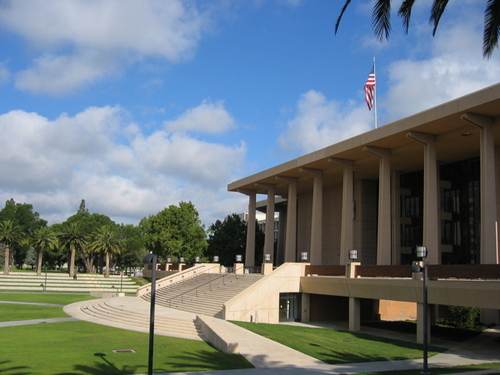
The location is what elevates this beyond another Friday-night police call. University Plaza sits roughly a block from the California State University, Northridge campus — close enough that a late-night shooting there lands directly inside the world of a major public university with more than 30,000 students. The plaza's second floor houses businesses including the Artist Lounge and Ciel Nail Spa, and it was at a large party — on that second floor — that the night turned deadly, according to reporting by FOX LA, KABC/ABC7, NBC4, KTLA and the New York Post.
What happened at University Plaza on Friday night
The sequence, as described by the Los Angeles Police Department and local outlets, is straightforward on the surface. Officers were dispatched to University Plaza after reports of a large party. They arrived to find a crowded scene — dozens of teens gathered at the complex — and heard gunfire. FOX LA reported that video from the scene showed police evacuating attendees and detaining several minors after the gunfire, with a sheet-covered body visible inside the taped-off area.
KABC reported that the shooting broke out just after 11 p.m. at University Plaza, describing it as a popular strip mall a block from the CSUN campus, and that police had been called to the plaza over reports of a large party when they heard the shots. Aerial video from KABC showed officers talking to handcuffed individuals inside a cordoned-off crime scene that spanned several businesses of the plaza, according to the New York Post's account.
Two people were killed. Authorities have not released their identities or exact ages, confirming only that the victims were between 18 and 25, FOX LA reported. NBC4 reported that one person was stabbed during the chaos — a detail that underscores how quickly the scene deteriorated after the first shots, with a crush of panicked attendees, police moving in, and at least one separate violent encounter unfolding in the confusion.
The investigation so far: one suspect sought, no arrests
As of Saturday morning, October 3, the investigation stood at an early and fragile stage. No arrests had been announced. Police had not disclosed a clear motive and had not provided a detailed physical description of the gunman. FOX LA reported that investigators are searching for one suspect.
Even the basic geography of the shooting is unresolved: it is unclear whether the shots were fired inside one of the businesses or in the common areas of the complex, according to FOX LA. That distinction matters — it determines whose cameras, whose staff, and whose responsibility the next phase of the investigation turns on. Detectives said they will continue gathering evidence from the scene, reviewing security footage from nearby businesses, and interviewing party attendees to establish the circumstances and identify the suspect.
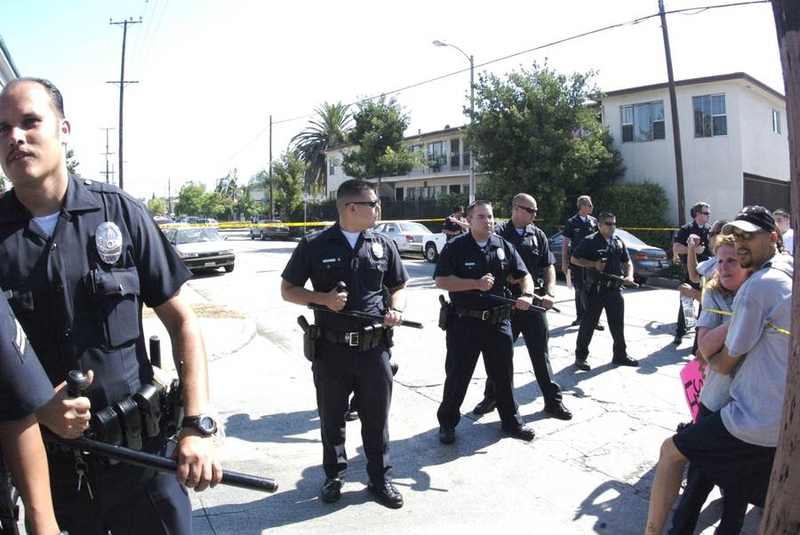
The dozens of detained attendees are both the investigation's greatest asset and its greatest complication. Dozens of witnesses were present — but many are teenagers, detained late at night, some handcuffed inside a cordoned crime scene. Sorting witnesses from suspects from bystanders in that population, while memories are fresh but fear is high, is the central challenge detectives face in the first 48 hours.
Why this matters
A campus-adjacent nightlife corridor
Strip malls like University Plaza occupy a particular place in the geography of American college towns: commercial spaces by day that convert, floor by floor, into nightlife after dark. The Artist Lounge on the plaza's second floor was hosting a large party on a Friday night in a complex that also holds a nail spa — ordinary businesses sharing walls with a late-night gathering of dozens of teenagers. That mixing is the defining feature of the setting, and it is why the shooting's proximity to CSUN matters. A university does not need a shooting on its own grounds for its students to be shaken; a block away, at a venue its students frequent, is close enough.
Campus safety officials and the university will now face the questions every institution near a shooting faces: what they knew about the venue, what they told students, and what changes — security advisories, patrol coordination with the LAPD, late-night safety messaging — follow. CSUN's response in the coming days will be watched as closely as the police investigation by the families whose children live, study, and socialize in that corridor.
When a party becomes a crime scene
There is a pattern here that keeps repeating across American cities. A large, loosely organized party — many attendees, unclear security, a venue that is not designed as a nightclub — becomes the setting for gunfire, and the aftermath is measured in detained teenagers and grieving families. Just last month, twelve teenagers were wounded when a birthday gathering in Macon, Georgia moved from a short-term rental to a public park and a confrontation erupted into roughly 30 seconds of gunfire. Different city, different venue, same structural ingredients: young crowds, firearms within reach, and no meaningful control over who is armed when a dispute starts.
The Northridge case adds its own variation: the party happened in a commercial complex, on a second floor, in a space shared with daytime businesses. That raises questions that go beyond policing — about how venues like the Artist Lounge are permitted and overseen, what occupancy and security standards apply to large late-night gatherings in strip-mall spaces, and who is responsible when a party outgrows its venue.
The vacuum at the center of the story
As of Saturday morning, the public knew the what, where, and when — but almost nothing of the who or why. No suspect description. No motive. No victim identities. No clarity on whether the shooting happened inside a business or in the open areas of the plaza. Information vacuums like this one fill quickly with speculation, and speculation after a shooting near a university campus is its own kind of harm: rumors about gang involvement, about the victims, about whether students are safe. The responsible posture — for officials, for the university, and for the press — is to say plainly what is confirmed and what is not, and to resist the pull of narrative before evidence.
The wider pattern: late-night gun violence in Los Angeles
Put the numbers in context. Two people dead, ages 18 to 25. One stabbed. Dozens detained. One suspect at large. No arrests within roughly twelve hours of the shooting. Those figures describe a single incident — but they sit inside a larger and stubbornly persistent reality: Los Angeles continues to see gun violence concentrate in late-night, crowded, lightly regulated social settings, where disputes that might end in shouting in daylight end in gunfire after dark.
California has among the strictest gun laws in the country — universal background checks, an assault-weapons ban, red-flag provisions. Yet firearms keep arriving at parties, parks, and strip malls. That is not a contradiction so much as a measure of the problem's scale: state law sets the rules of legal sale, but the guns used in shootings like this one are routinely traced to theft, straw purchases, or trafficking from states with looser regimes. The policy debate that will follow this shooting — about enforcement, about venue regulation, about youth access to firearms — will replay a familiar argument. The data point that matters most is the simplest: a gun was present at a teen-heavy party at 11 p.m. on a Friday, and two young people are dead.
There is also the question of what "dozens detained" actually signifies. Mass detention after a shooting is standard investigative practice — secure the scene, separate witnesses, prevent a suspect from walking away in the crowd. But when the detained are mostly teenagers, the practice carries a cost: a night that began as a party ends with young people in handcuffs inside police tape, some of them witnesses to a killing, all of them now part of a criminal investigation. How the LAPD handles those interviews — and what it tells parents — will shape community trust in Northridge for longer than the investigation itself lasts.
Who is affected, what officials say, and what is still unknown
The clearest victims are the two dead young people and their families, whose names have not been released. Beyond them, the circle widens: the stabbed person, whose condition officials had not disclosed; the dozens of detained attendees, many of them minors; the businesses of University Plaza, now a cordoned crime scene; and the CSUN community, for whom a Friday night out ended in a campus-wide reckoning with safety.
Officials have said what they can. The LAPD confirmed the time, place, and the basic facts of the response. Detectives outlined next steps: evidence collection, security-footage review, attendee interviews. What they have not said — motive, suspect description, victim identities, the precise location of the shots within the complex — is not evasion; at this stage of an investigation, it is normal. Premature disclosure can compromise witness accounts and tip off a suspect who is still at large.
Critics will ask, as they always do after shootings at youth-heavy venues, whether the party should have been broken up earlier, whether the venue was properly permitted, and whether a heavier police presence in the Northridge nightlife corridor could have prevented the shooting. Those are legitimate questions. They are also questions that cannot be answered with the facts currently public — and anyone offering confident answers now is speculating.
What happens next
The investigation's next milestones are predictable, and each will reshape the story. First, victim identification: once names are released, the human dimension of the shooting comes into focus — who they were, whether they were CSUN students, what brought them to University Plaza that night. Second, arrests: detectives said they are searching for one suspect, and an arrest would answer the most urgent public-safety question — whether the person who fired the shots is still in the community. Third, the footage: security cameras from the plaza's businesses may establish where the shooting happened and how it started, the two facts officials currently cannot confirm.
Beyond the criminal case, expect scrutiny of the venue. Large parties in commercial strip-mall spaces sit in a regulatory gray zone — not quite nightclubs, not quite private gatherings — and a double homicide will force city officials to examine what permits the Artist Lounge held, what occupancy limits applied, and whether the second floor of University Plaza was equipped, staffed, or secured for a crowd of dozens of teenagers. If the answers are uncomfortable, Northridge could see new enforcement attention on similar venues across the Valley.
For CSUN, the coming days will bring the practical work of campus crisis response: safety advisories, counseling resources, coordination with the LAPD, and a message to students that acknowledges fear without overstating danger. The university did not host this party and is not responsible for the shooting — but its students live in the blast radius of the story, and how the institution communicates now will define its relationship with a shaken student body.
This article will be updated as the LAPD releases more information — victim identities, any arrest, a suspect description, and findings from the security footage. What is confirmed today: two young people are dead, a suspect is at large, and a Friday night party a block from a major university became a homicide scene. Everything else is still being established.
Related coverage
- Twelve Teens Wounded in Macon Park Shooting
- Kentucky Trooper Shooting: Suspect Captured After Officer Killed on I-65
Sources: FOX LA; New York Post; KABC/ABC7 Eyewitness News; NBC Los Angeles (NBC4); KTLA.