United States · California · Criminal Justice
Newsom commutes death sentences: that was the decision California Governor Gavin Newsom announced on Thursday, November 5, commuting every death sentence in his state — all 548 of them — to life in prison without the possibility of parole. It is, by a wide margin, the largest mass commutation of death sentences in American history, covering more than a quarter of everyone on death row in the United States. It does not abolish the death penalty, it does not free a single person, and for 382 of the 548 it is not final yet: the California Supreme Court must agree first, and Newsom has asked the justices to answer by the end of the year, before he leaves office.
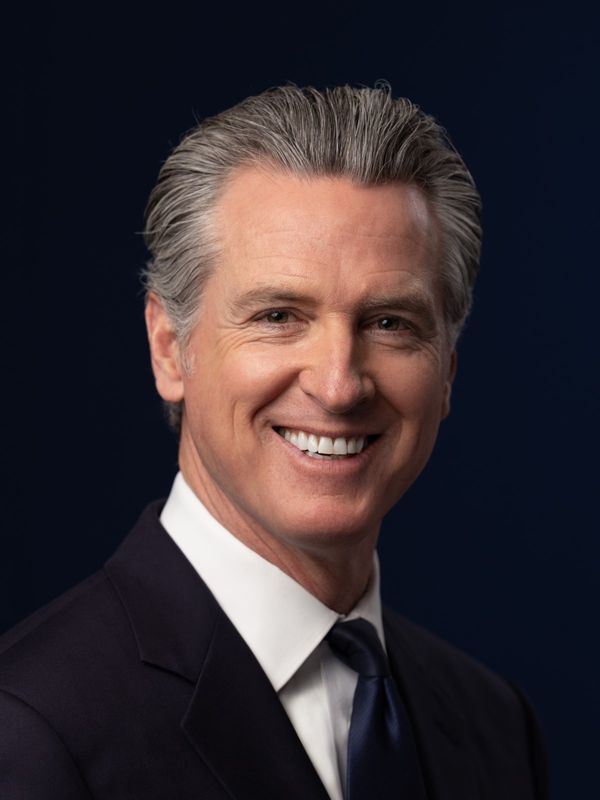
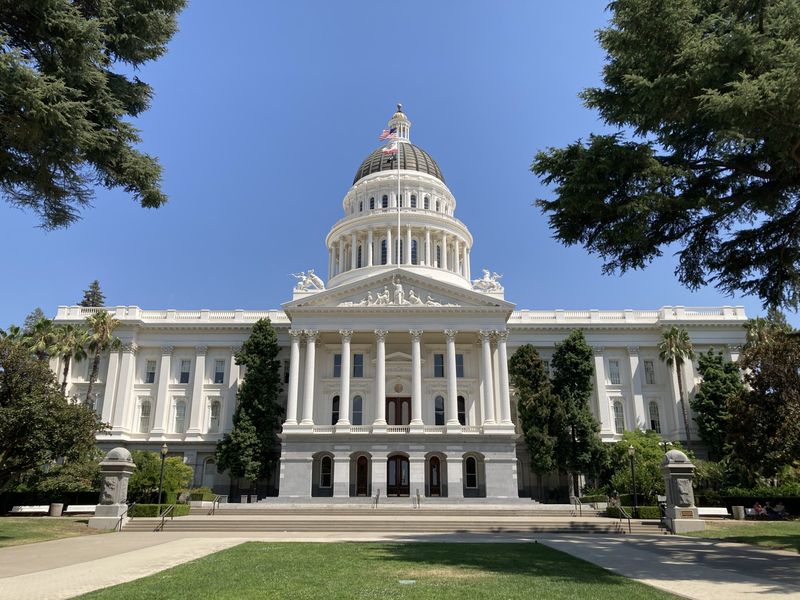
SACRAMENTO — The announcement came in a three-page open letter addressed to “all Californians.” “I take this action because I firmly believe that state-sanctioned killing is incompatible with California’s values, undermines the foundations of our legal system and diminishes each of us,” Newsom wrote, calling the decision among the most difficult of his career — not, he said, because he doubted the course, but because of the memories it would revive for victims’ families. “As Governor, I alone bear responsibility for this decision and its impact, just as I alone would bear responsibility for each execution.”
The people affected are 529 men and 19 women, according to the governor’s office — everyone currently condemned in the state with the largest death row in the Western Hemisphere. Their new sentence, if the process completes, is life without parole: they will die in prison, but the state will not execute them. Among them are some of the most notorious murderers in California history, including Randy Kraft, the “Southern California Strangler”; Charles Ng, convicted of 11 murders in the 1980s; and Richard Allen Davis, who kidnapped and murdered 12-year-old Polly Klaas in 1993.
How the commutation actually works — and why 382 cases are not done yet
A governor’s clemency power in California is broad but not unlimited. Under Article V, Section 8 of the state constitution, the governor may not grant a pardon or commutation to a person twice convicted of a felony except on the recommendation of the California Supreme Court, with four justices concurring. That single sentence splits Thursday’s announcement in two.
For 166 of the 548, Newsom’s signature is enough: after formal notice to victims’ families and district attorneys, those commutations take effect on his authority alone — the governor’s office and the Equal Justice Initiative put the notice period at ten days, after which roughly a third of the row is formally resentenced. For the other 382 — more than two-thirds, because most condemned prisoners have multiple felony convictions — the cases were submitted to the Supreme Court on Thursday, and the commutations happen only if at least four of the seven justices recommend them. Newsom asked the court to issue its recommendation by the end of this year so he can complete the act before his term ends in January.
That timetable is the story inside the story. A blanket request covering 382 individual capital cases is without precedent for the court, and there is no announced schedule for its review. If the justices move slowly, split, or decline some cases, the largest commutation in U.S. history could arrive incomplete — or be left for a successor to finish or abandon. What Newsom has done so far is irrevocable for the 166 and formally launched for the 382; what he has not yet done is finish it.
The numbers, in context
Start with the scale. California’s 548 condemned prisoners are more than a quarter of the national death-row population — the Marshall Project put the share at nearly a third of the nation’s total once the commutations are final. Florida, with 235 people on its row as of November 5, would become the largest death-row state in the country — on the same day Florida carried out an execution, a juxtaposition that captures where the American death penalty is moving in two directions at once.
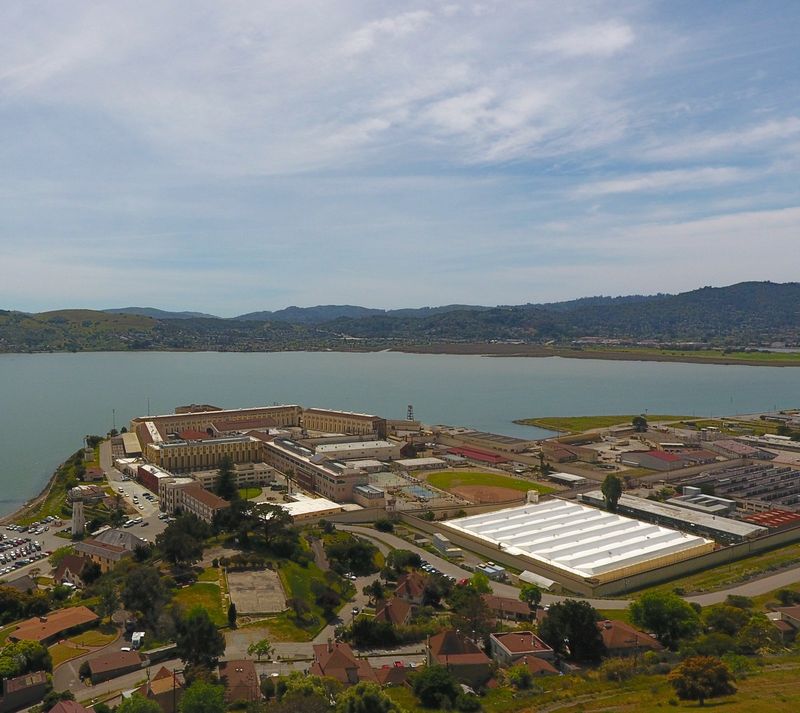
Then consider how dormant California’s death penalty already was. The state has executed 13 people since 1976. Its last execution was on January 17, 2006, when Clarence Ray Allen, 76, was put to death at San Quentin — nearly twenty years ago. Newsom imposed a moratorium on executions in 2019, two months into his first term, repealing the state’s lethal-injection protocol and closing San Quentin’s execution chamber. Juries, meanwhile, had been quietly winding the punishment down themselves: only five people received death sentences in California in 2025, down from 42 in 1999. And the row the state maintained at enormous cost was, as of April, 68 percent defendants of color, according to the Death Penalty Information Center — a figure central to Newsom’s argument that the system is not just error-prone but unequal in who it condemns.
Geography tells part of that story too. Condemned prisoners in California come overwhelmingly from a handful of Southern California counties that historically sought death most often: Los Angeles alone accounts for 119, and nearly two-thirds came from Los Angeles, Riverside, Orange, San Bernardino and San Diego counties combined, according to state corrections data reported Thursday. The commutation therefore lands hardest, politically, in the counties whose prosecutors and juries produced the sentences — and whose district attorneys are now its loudest critics.
Why this matters
Thursday’s act matters less for executions California was never going to carry out than for what it does to the American death penalty’s map and its politics. A punishment’s legitimacy rests partly on how ordinary it is. Removing more than a quarter of the nation’s condemned prisoners in one act — from its most populous state, permanently, with no mechanism for a future governor to undo a completed commutation — shrinks the institution itself, not just one state’s participation in it. Every future debate, in California and elsewhere, now starts from a smaller death row and a demonstrated precedent: a governor can do this, alone, with a letter.
It also matters because of what it does not do. The death penalty remains California law. Voters were asked to abolish it in 2012 and again in 2016 and chose, both times, to keep it — a point Los Angeles County District Attorney Nathan Hochman made within hours: commuting sentences is within the governor’s power, he said, but eliminating the punishment is still in the voters’ hands, and his office will keep evaluating death-eligible cases. Prosecutors can seek death sentences tomorrow, juries can impose them, and a future row can grow again. Newsom himself conceded the limit in his letter: “The power to repeal the death penalty rests with the Legislature and voters.” Thursday emptied death row. It did not close it.
Two reactions, one state
The response split immediately, and not neatly along the lines outsiders might expect — because victims’ families themselves split. The ACLU called the decision “a historic step towards ending the death penalty in California and across the country,” with executive director Anthony D. Romero praising an end to “a racist, error-prone, and inhumane punishment.” Death Penalty Action co-founder Abraham Bonowitz told USA Today the announcement left him “breathless.” The Rev. Jeff Hood, a spiritual adviser who has witnessed 14 executions, said he hoped more states would follow. Contra Costa District Attorney Diana Becton argued the commutations would save taxpayers hundreds of millions of dollars over time and fund policies “proven to improve public safety.” And Jess Nichol, whose sister Polly Klaas was murdered by Richard Allen Davis — one of the very men whose sentence was commuted — supported the governor: “I used to think the man who killed my sister deserved execution. But over time I’ve realized that whether he’s executed has absolutely nothing to do with my recovery or with real public safety.”
The other side spoke with equal force. The California District Attorneys Association “strongly condemned” the decision as a profound disregard for the decisions of juries and judges and the rights of victims — the association’s president, Jeannine Pacioni, had warned Newsom in writing last month that erasing every judgment “with the stroke of a pen, without considering the facts of each case or the families affected, would be a profound disservice to the administration of justice.” Crime Survivors founder Patricia Wenskunas called the move offensive and outrageous. San Luis Obispo County District Attorney Dan Dow called it a “sickening abuse of power.” Steve Herr, whose son Sam Herr was murdered alongside Julie Kibuishi by Daniel Wozniak in 2010, called Newsom “an outright coward,” said his family had not been contacted before the announcement, and said the execution of his son’s killer would have meant closure. Sandy Friend, whose 8-year-old son Michael Lyons was murdered in 1996, told the Los Angeles Times: “It’s total disrespect for the victims. It’s a slap in the face.”
Both reactions are describing the same design choice: uniformity. A case-by-case clemency review — the kind that takes years and reaches a few dozen files — would have been slower, quieter and far less sweeping; it would also have left the governor choosing whose death sentence was unjust and whose was not. Newsom chose a rule instead of a list: every sentence, because the punishment itself, in his stated view, is the problem. Supporters hear principle in that. Opponents hear exactly the erasure Pacioni named — 548 jury verdicts, each reached after an individual trial, set aside by one elected official in one afternoon. That disagreement is not a misunderstanding of Thursday’s act. It is the act.
The backdrop: an America executing more people, and one state walking away
Newsom’s letter landed at a strange moment for capital punishment nationally. Executions in the United States have risen since the start of 2025 — 11 states have put 79 people to death in that period — and Thursday itself was an execution day elsewhere, with lethal injections scheduled or carried out in Florida, Alabama and Indiana. In Tennessee, the failed execution of Christa Pike in late September, in which she survived two doses of pentobarbital, paused that state’s remaining executions and renewed scrutiny of lethal injection everywhere. Governors elsewhere have moved in Newsom’s direction, but never at this scale: governors in North Carolina, Oregon and Colorado commuted some or all of their states’ death sentences in recent years, each time in the dozens. California’s 548 is not a bigger version of those acts so much as a different category — the largest death row in the Western Hemisphere, emptied by announcement, pending a court’s concurrence.
There is also the question everyone in Sacramento asked by evening: what this does for Gavin Newsom. He is term-limited, leaves office in January, and is openly weighing a run for the Democratic presidential nomination in 2028. A career-defining clemency act in his final weeks is both a legacy document and a national introduction — to primary voters who largely oppose capital punishment, and to general-election voters among whom it remains popular. Newsom’s letter reads written for both audiences: conviction for the first, and a long, careful acknowledgment of victims’ families for the second. Which audience decides his future is a question Thursday’s act deliberately raises.
What happens next
Three clocks now run at once. The first is the ten-day notice period, after which the 166 commutations within Newsom’s sole authority take effect. The second is the California Supreme Court’s: 382 case files, four justices needed, and a governor requesting an answer by December 31 so he can act before leaving office on January 4 — when, state reporting says, he is succeeded by Governor-elect Xavier Becerra, who would inherit any unfinished portion. The third clock is political and slower: prosecutors deciding whether to keep seeking death sentences that a future governor may again commute; legislators and voters deciding whether to revisit repeal itself, twice rejected at the ballot box; and other governors watching whether the predicted backlash materializes — because if it does not, California will not be the last large state where a governor reads Article V, or its local equivalent, and reaches for a pen.
For the 548 people at the center of it, the immediate change is narrower than the headlines: a sentence that read death now reads life without parole, in a cell in the same prison system, with no release at the end of it. What changed on Thursday is who will decide how their lives end — and a governor’s judgment, delivered in three pages, that the state of California will no longer be the one to do it.
Related coverage: Newsom and the AI “kill switch” debate and Newsom reacts to Guilfoyle’s ambassador removal.
Sources
Reuters, “California governor to grant clemency to all 548 death row inmates in state” (Nov. 5, 2026); CNN, “Newsom commutes sentences of all California death row prisoners” (Nov. 5, 2026), including Death Penalty Information Center figures and statements from the ACLU, Crime Survivors, Los Angeles County District Attorney Nathan Hochman and Contra Costa District Attorney Diana Becton; USA Today, “Newsom commutes California death sentences for 548 people” (Nov. 5, 2026), including statements from Death Penalty Action, the California District Attorneys Association and victims’ family members; The Wall Street Journal, “California Gov. Newsom to Commute Sentences for 548 People on Death Row” (Nov. 5, 2026); Associated Press reporting via the Desert Sun and WPTF (Nov. 5, 2026), including California corrections county data; Office of the Governor of California, open letter to all Californians (Nov. 5, 2026); Equal Justice Initiative, “Gov. Newsom Commutes All Death Row Sentences” (Nov. 5, 2026). Photos: Wikimedia Commons, as credited in captions; the San Quentin and Capitol images are file photos.