Lead
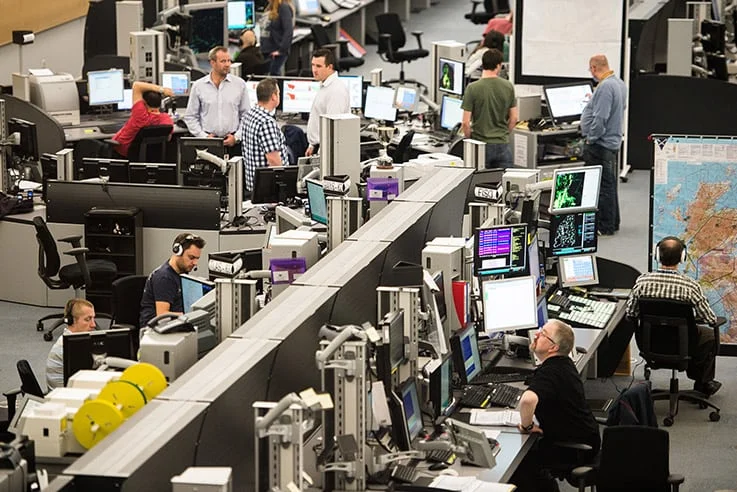
Britain's air-traffic control system has failed for the second time in a fortnight. A technical fault at National Air Traffic Services' Prestwick centre in Scotland forced controllers to throttle traffic across northern England and Scotland on Monday, cancelling more than 200 flights and disrupting tens of thousands of passengers, according to aviation analytics firm Cirium. Ryanair, which says more than 25,000 of its passengers were hit, has called for NATS chief executive Martin Rolfe to resign. Prime Minister Andy Burnham, confronting his first infrastructure crisis in office, said there were "clearly serious issues" at the company. (Sources: The Times; The Sun)
What happened on Monday
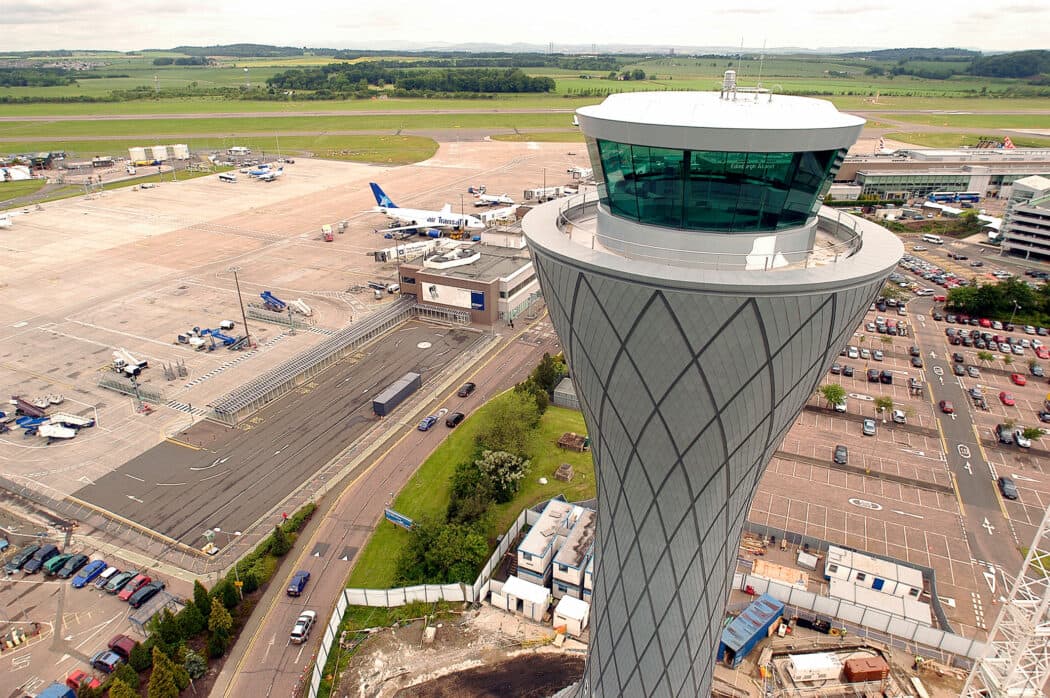
NATS said the problem was detected early on Monday morning at its Prestwick centre: a "connectivity issue" affecting part of its systems network. To maintain safety, controllers applied air-traffic regulations — industry language for flow restrictions that slow or stop movements — while engineers investigated. NATS later confirmed the fault was fixed and said it was working with airports and airlines to lift the restrictions, while insisting the failure was "unrelated" to the outage of 8 September. The airports worst affected were Edinburgh, Glasgow and Belfast; Manchester saw up to 100 flights delayed, and Aberdeen, Newcastle, Bristol, London City and Belfast City also reported disruption. Luton said domestic flights were disrupted. Cirium's analysis, reported by The Times, counted 117 UK departures and 110 arrivals cancelled on Monday. EasyJet was the worst-hit airline, cancelling 47 of its 670 scheduled UK departures — 7%. At George Best Belfast City Airport, 17.4% of flights were cancelled or delayed beyond three hours; Belfast International was at 12.5% and Glasgow at 10.3%. Edinburgh Airport chief executive Gordon Dewar called the outage "incredibly disappointing and frustrating" and warned the pain could spill into Tuesday: cancelled flights leave aircraft and crews in the wrong place, and the ripple can take days to unwind. (Sources: The Times; BBC; fact.net.in; briefly.co)
Why this matters
Read the pattern, not just the incident. One failure is a glitch; two in fourteen days is a system telling you something. Air-traffic control is the definition of critical national infrastructure: invisible when it works, catastrophic when it doesn't, and almost impossible for passengers to route around. Each outage cascades — a cancelled morning flight in Edinburgh becomes a missing aircraft in Malaga by evening and a stranded crew in Belfast by nightfall. That is why Monday's relatively modest cancellation count still matters: it lands on top of the 8 September meltdown, compounding rebooking backlogs and eroding the one asset NATS cannot buy back, public confidence. There is a political layer too. Burnham's government has just committed a Royal Air Force tanker to support Saudi Arabia's campaign against the Houthis — a first military-support decision — and now faces questions about whether it can keep Britain's own skies running. The prime minister pointedly declined, through a spokesman, to say whether Rolfe should stay, then said himself there were "clearly serious issues." In Westminster language, that is the sound of a chief executive's position becoming untenable.
A pattern, not an accident
NATS has now presided over three major failures in three years, each greeted with the same vocabulary: isolated, unrelated, fixed. On 8 September, a software defect in "a small subsection of coding" in the flight-data system caused a six-hour outage that cancelled more than 2,000 flights and affected over 330,000 passengers — 155,000 saw flights cancelled and around 180,000 were delayed, according to industry body Airlines UK — with Heathrow, one of Europe's busiest airports, hit hardest. NATS published a preliminary report on 19 September; Rolfe confirmed the fault was a software issue, "not caused by any incorrect actions by either military or civil operators," and said it was unrelated to previous incidents. Those previous incidents: a technical glitch in July 2025 that cancelled scores of flights and enraged airline bosses, and the August 2023 meltdown — Britain's worst air-systems failure in years — which affected more than 700,000 passengers. Each inquiry has treated the failure as a one-off. The emerging record suggests something structural: ageing systems, thin redundancy, or both. (Sources: Alliance News via Morningstar; The Times)
Who wins, who loses, who pays
The losers are obvious: passengers, who face rebooking queues, hotel bills and ruined plans, and who must now navigate Britain's post-Brexit passenger-rights regime, UK261, where airlines owe a duty of care but will argue about whether a NATS failure counts as "extraordinary circumstances" beyond their control. Expect that legal fight to be the slow-burn sequel to this story. The airlines are furious but also exposed: Ryanair's call for Rolfe's resignation is as much about shifting blame as accountability, since carriers — not NATS — face the compensation claims. NATS itself sits in the most uncomfortable seat: a public-private partnership with a monopoly over UK en-route air-traffic control, it cannot lose customers, only legitimacy. And then there is Rolfe's pay packet — £1.5 million last year including £871,000 in bonuses, per The Sun — which will now be set against every stranded family in every newspaper photograph. He has previously been accused of overseeing a "litany of failures." The government, finally, owns the political risk without controlling the operation — the classic trap of privatised infrastructure, where ministers get the blame and the monopoly gets the revenue.
The numbers in context
Monday's 200-plus cancellations look small beside the 2,000-plus of 8 September and the hundreds of thousands disrupted in August 2023. That comparison is exactly the wrong way to read them. The story is frequency, not scale: two system failures in fourteen days, three in three years, each officially "unrelated" to the last. For passengers the relevant number is not cancellations but disruption — Ryanair alone counts more than 25,000 of its customers affected on Monday. For the industry, the number to watch is the no-fly rate at regional airports: 17.4% at Belfast City, 12.5% at Belfast International, 10.3% at Glasgow. Those are not rounding errors; they are a regional connectivity shock on a Monday, the heaviest business-travel day of the week.
What happens next
Three things, roughly in order. First, the operational clean-up: aircraft and crews are out of position, and Dewar's warning of Tuesday knock-on effects should be taken seriously — anyone flying in the next 48 hours should check with their airline before travelling. Second, the accountability phase: expect the Commons Transport Committee to summon Rolfe, a Department for Transport review of NATS resilience, and a wave of compensation claims that will test UK261's "extraordinary circumstances" defence. Third, the structural question Burnham cannot dodge forever: whether a monopoly provider of critical national infrastructure, paid handsomely and failing repeatedly, needs tougher regulation, mandated redundancy investment, or a rethink of the ownership model entirely. NATS says Monday's fault is fixed and unrelated to the last one. After the last fortnight, few passengers will take either claim on trust.
Sources
- The Times — “Air traffic control failure delays flights for a second time in a month”
- The Sun — “Air traffic control boss told he ‘must quit’ as UK airports hit by delays & flights axed AGAIN”
- Alliance News via Morningstar — “‘Software issue’ caused UK flight chaos this month: operator”
- Travel Weekly — “Airlines criticise Nats after ‘technical issue’ leads to cancellations”