A calendar move with strategic weight
Milan Fashion Week spring-summer 2027 opens Tuesday, September 22, and runs through September 28. Prada has taken the first major runway slot on Tuesday afternoon, breaking with its customary Thursday position. That is not merely scheduling housekeeping: opening allows Miuccia Prada and Raf Simons to frame the week before social feeds, buyers and critics are saturated.
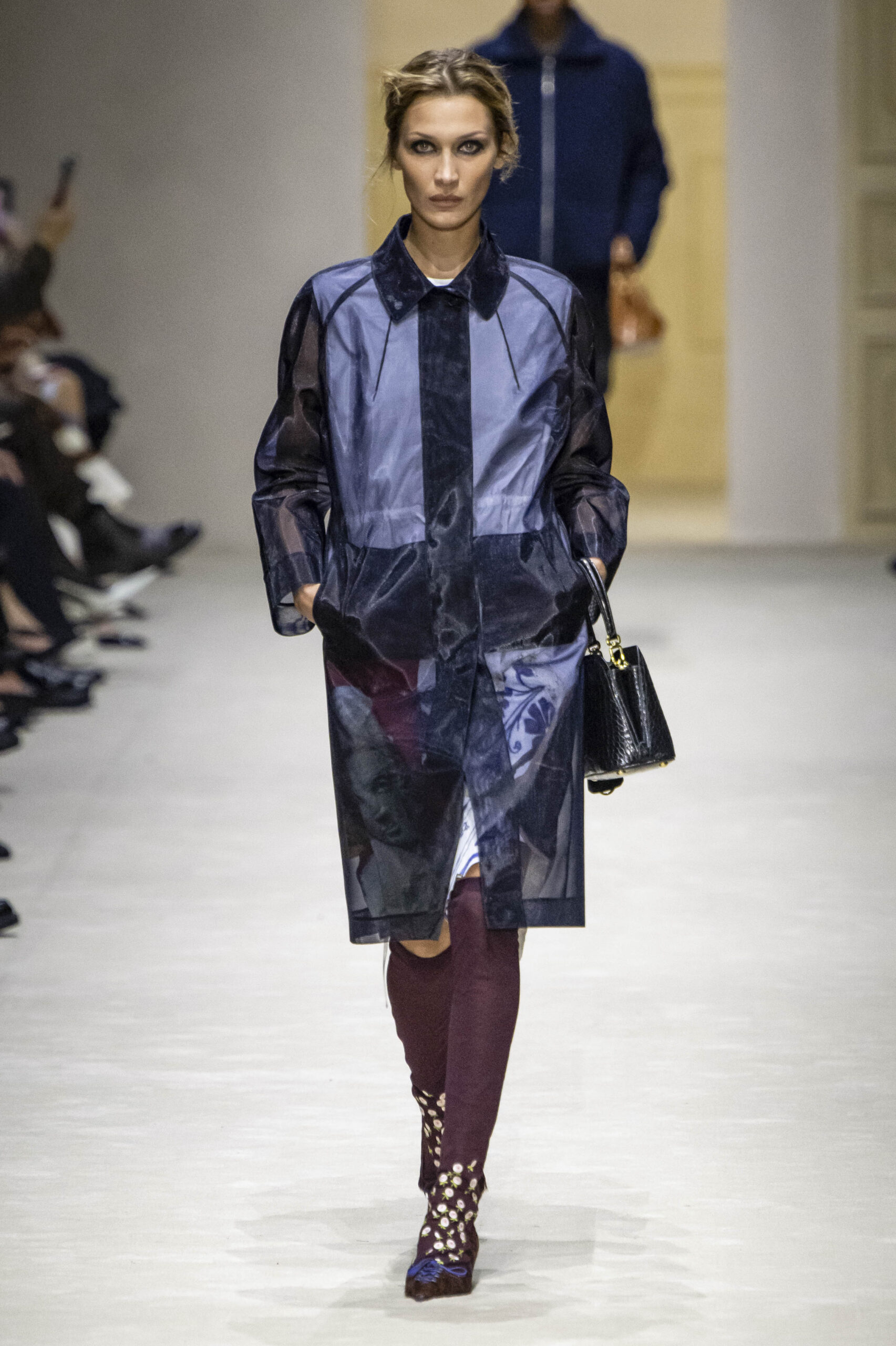
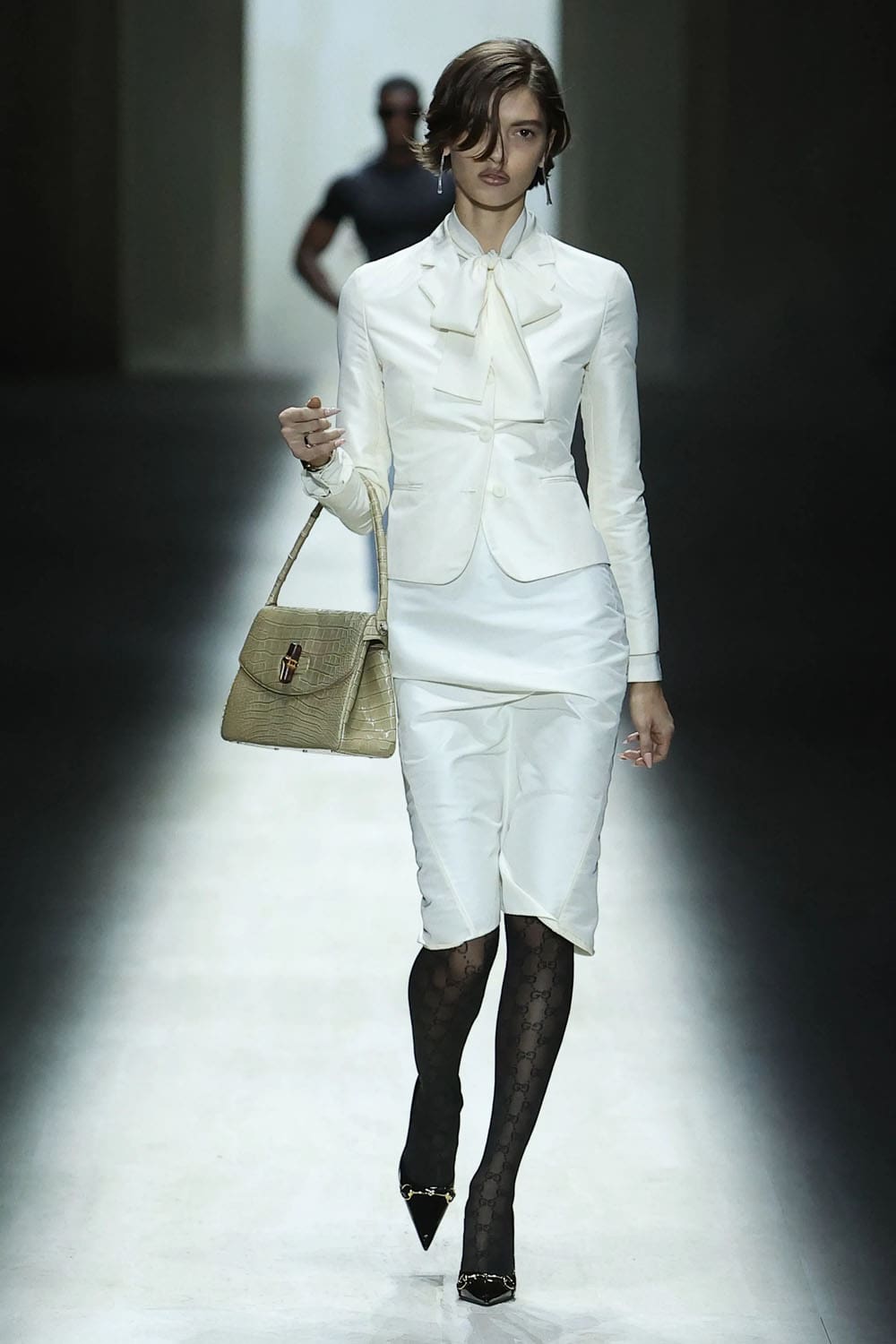
The collection has not yet been shown. Any preview imagery here is historical context, not a representation of Tuesday’s clothes. The distinction matters in fashion coverage, where anticipatory marketing can easily be mistaken for eyewitness review.
Why this matters
Milan is staging a season of second acts. Demna follows a star-heavy Gucci launch; Maria Grazia Chiuri develops her Fendi language; Meryll Rogge continues at Marni; Louise Trotter pushes further at Bottega Veneta. Debuts create attention. Second collections reveal whether a designer has built a system—silhouette, fabric, accessory, casting and price architecture—that a house can sustain.
What each house must prove
Gucci needs to translate Demna’s instantly recognizable codes into desire that feels specific to Gucci rather than imported from Balenciaga. Fendi must balance Chiuri’s Roman fluency with the house’s material craft. Marni needs to preserve eccentricity without confusing wholesale buyers. Bottega Veneta must show that Trotter’s intellectual restraint can still generate a blockbuster bag. Prada, already the week’s agenda setter, has to justify the opener by revealing a proposition bigger than novelty.
The commercial backdrop
Luxury remains split between ultra-wealthy resilience and aspirational-customer caution. That makes entry products—shoes, leather goods, eyewear and beauty—more important, even as runways sell fantasy. Winners will be houses that produce an image powerful enough to travel online and objects clear enough to buy. Losers will be brands that confuse virality with conversion or heritage citation with relevance.
What to watch
Ignore the front row first. Watch the proportion of new accessories to archive revivals, the number of looks that can translate to retail, and whether each collection develops rather than repeats its debut vocabulary. Also watch for schedule spillover: when Prada opens, smaller labels may benefit from early international attendance—or be overwhelmed by the first headline.
Sources: Camera Nazionale della Moda Italiana calendar; FashionUnited. This is a pre-show analysis; no future collection is represented as already seen.