Man City appeal 114 charges
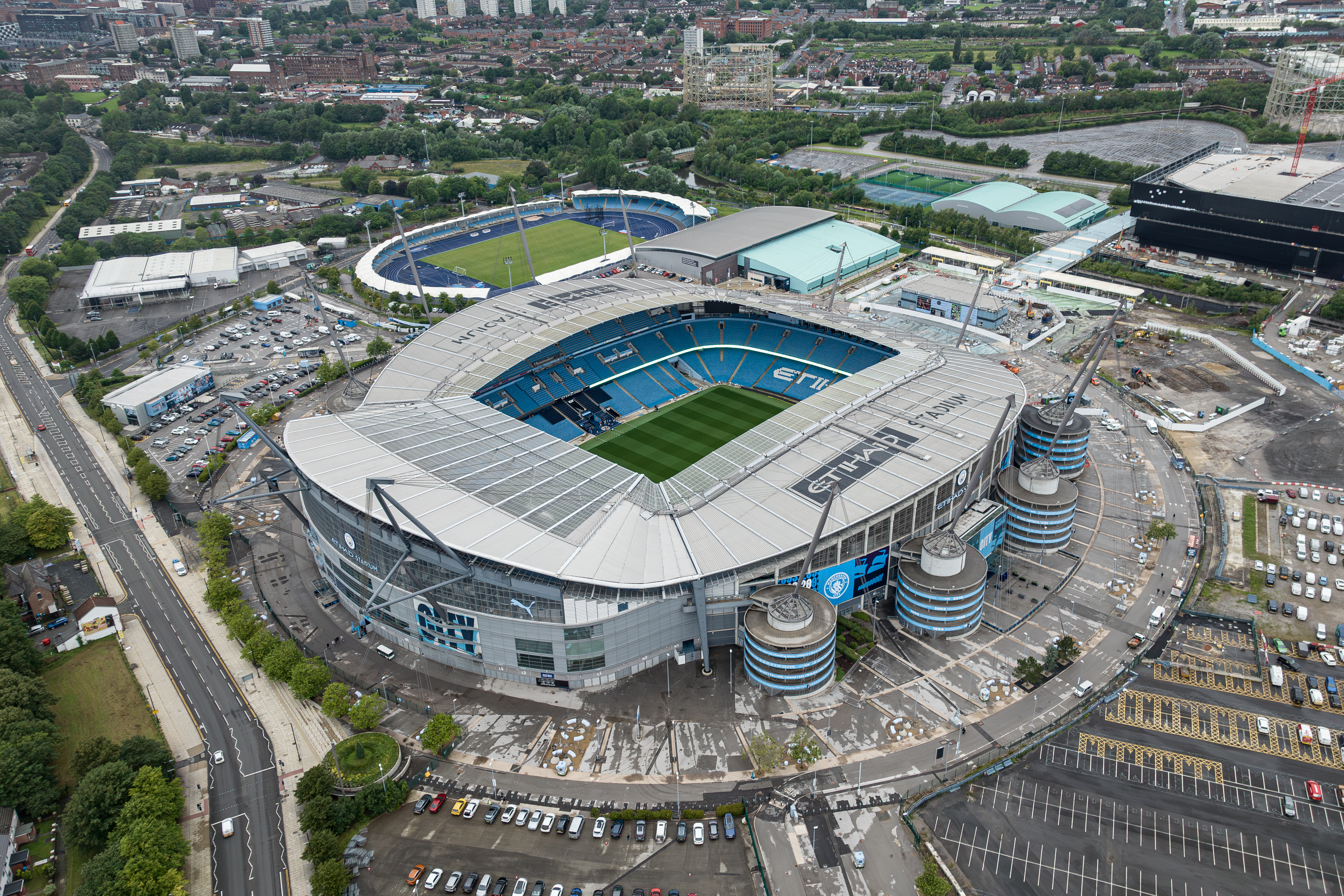
At 7pm on Thursday, October 1, 2026, Manchester City lodged its comprehensive appeal against the independent commission's verdict that found the club guilty on 114 of the 115 Premier League financial charges brought against it. The Man City appeal of 114 charges is the most consequential legal fight English football has ever seen: under the league's new fast-track rules, the appeal hearing must conclude within 12 weeks of lodging, run for no more than five days, and end with a final verdict after 30 days of deliberation — a decision, expected in early 2027, that cannot be appealed. Punishment, which could range from a record fine to a 60-point deduction to expulsion from the Premier League, will be decided only after the appeal concludes. What follows is how English football's richest club ended up fighting for its future, what the numbers actually mean, and the three ways this ends.
Why this matters
For a decade the question hung over the league — could it actually punish its richest, most successful club? On September 29 the independent commission answered: guilty on 114 of 115, a near-total verdict that accepted the prosecution's case almost in full. The appeal is City's last legal road; there is no court above the appeal board. If the verdict stands, the economics of Gulf-state football ownership are rewritten and every title won between 2009 and 2018 sits under a permanent asterisk. If it falls, the Premier League's regulatory credibility is destroyed and every rival club that stayed inside the rules will ask what the rules were for. And hanging over all of it is politics: a sitting prime minister with a Manchester past, and a Gulf state reportedly threatening to pull billions in British investment. Sport has never regulated money this big — and money this big has never fought back this hard.
How we got here
The nine-year scheme: £900m in 'sham' sponsorships
The charges were laid in February 2023 and cover nine seasons, 2009/10 to 2017/18. The league's case, accepted by the commission, was that City ran a "disguised funding scheme": sponsorship deals — most famously with Etihad Airways — whose true value was allegedly topped up by the club's Abu Dhabi ownership, hiding between £830m and £900m in owner funding as commercial revenue. The 115 charges fell into six categories: 50 counts of failing to provide accurate financial information on sponsorship revenue, related parties and operating costs; 8 on Roberto Mancini's remuneration; 12 on player remuneration; 5 on UEFA licensing and financial fair play; 25 on Premier League profitability and sustainability rules; and 30 on failing to cooperate with the investigation. On September 29, 2026, the commission found City guilty on 114 of the 115 — a 99.1% conviction rate that amounts to a near-total verdict.
The titles under a shadow: 2012, 2014, 2018
Every Premier League title City won during the charged period — 2012, 2014 and 2018 — is now contested history: 2012, won on the final day in the most dramatic finish the league has ever seen; 2014, the Pellegrini season; 2018, the centurions. Analyst Paul Quinn has proposed a retroactive five-point deduction for the 2013/14 season that would strip City of that title and hand it to Liverpool. Whether any title is formally stripped will be decided in the sanctions phase — but only if the appeal fails.
Precedent: from Juventus to Everton
Football has been here before, but never at this scale. In 2006, Calciopoli saw Juventus stripped of the 2004/05 Serie A title and relegated to Serie B with a points deduction. In England, the recent PSR era set modest benchmarks: Everton were docked 10 points (reduced to 6 on appeal) and then 8 more for further breaches in 2023/24; Nottingham Forest received 4 points. Those were single-season accounting breaches. City's case is 114 proven counts across nine years — which is why analysts like Kieran Maguire talk about 50 to 100 points, a different universe of punishment entirely.
The appeal: what City is actually arguing
City's statement was defiant: the commission's opinion, it said, was riddled with "clear material errors, of law, principle and fact and is unsafe". The club maintains its innocence and says it holds "irrefutable evidence". The appeal was lodged at 7pm on October 1 — one day before the October 2 deadline. One telling detail from October 4 coverage: City's statement called it a "Premier League commission". It is not. It is an independent commission — and the distinction matters, because City's case now rests on convincing a new, independent appeal board that the first independent panel got it wrong. Under the league's new fast-track procedure, the hearing must conclude no later than 12 weeks after lodging — December 25 at the latest — with a maximum five-day sitting (December 14–18 has been floated in reporting), followed by 30 days of deliberation. The outcome is final. There is no appeal from the appeal.
Who wins, who loses, and what the critics say
Who benefits from a harsh punishment
Rival clubs first: a compensation cascade estimated between £100m and £330m — with some reporting putting total rival claims as high as £1bn — would flow to the clubs that lost titles, European places and prize money during the charged years, chiefly Arsenal, Liverpool and Manchester United. Second, the league itself: a severe, upheld punishment is the only way the Premier League's rulebook survives this decade. Third, the lawyers: with £50m–£60m in legal costs already in the frame (Maguire's estimate, reported by TeamTalk from his talkSPORT appearance), this case is the most lucrative in sports-law history. And fourth, every supporter who wants the sport's integrity to mean something.
Who loses if the hammer falls
City, obviously — but the damage radiates. Players reportedly fear they could rip up contracts and walk away free if the club is expelled or relegated. The league loses its most successful club of the modern era and a global brand. And then there is Abu Dhabi: Manchester City is the flagship of a sporting empire spanning four continents. A humiliation of the flagship is a humiliation of the owner — which is where this story leaves sport and enters geopolitics.
The Burnham problem: a prime minister caught in the middle
Few subplots are as uncomfortable as Andy Burnham's. The prime minister is the former mayor of Greater Manchester, a city where City is civic identity. The Telegraph reported that the United Arab Emirates warned Burnham it would pull billions of pounds in UK investment if the verdict is upheld. Burnham said he would be "really concerned to lose" City's owners. Critics call it a textbook conflict of interest: the head of government, lobbied by a foreign state, while an independent judicial process decides the fate of that state's football club. Burnham's defenders say he has no power over the commission — which is true, and beside the point. The perception of pressure is itself corrosive.
October 4: clubs split on punishment
The politics inside the league are no simpler. Sky Sports' Rob Dorsett reported on October 4 that senior executives at two leading clubs would be "amazed" if 15 clubs could be found to vote for City's expulsion — the threshold such a nuclear sanction would require. The Guardian, meanwhile, reported that several clubs believe even a single-season relegation to the Championship would be "insufficient", and the BBC's Dan Roan reported senior figures want the punishment decided before the end of the season, quoting one club official: "It benefits everyone for this to be resolved as quickly as possible." Between "amazed anyone would vote to expel" and "relegation isn't enough" lies the full spectrum of a league at war with itself.
The numbers, in context
Start with the headline figure: £830m to £900m in disguised funding over nine years. That is not an accounting error; it is, by the commission's finding, a systematic scheme averaging roughly £100m a year in hidden owner subsidy — the difference between competing and dominating. Next, 114 of 115: a 99.1% conviction rate. Commissions do not hand down near-total verdicts lightly; the figure tells you how completely the panel accepted the league's evidence. Then the punishment arithmetic. Kieran Maguire's framework: start from the Everton/Forest precedents (deductions in the single digits to low teens for single-season PSR breaches), multiply across nine years of proven, deliberate breaches, add an aggravating factor for non-cooperation — and you land at 50 to 100 points. At 70-plus points, Maguire notes, a club is effectively relegated. Set against that, Paul Quinn's alternative proposal: no points deduction at all, but a £300m compensation payment (£108m to directly affected clubs, £115m as an "integrity dividend", £77m to the football pyramid), a retroactive five-point deduction stripping the 2013/14 title, five years of squad-cost restrictions cutting roughly £150m a year from City's budget, and individual bans for the executives involved — potentially including forcing a sale. Two serious analysts, two radically different philosophies: destroy the season, or tax the empire.
What happens next: the timeline and the three scenarios
Timeline from reporting: appeal lodged October 1, 2026 → hearing concluded by December 25 (12 weeks) → possible five-day sitting December 14–18 → the commission's final verdict within 30 days of the hearing → final, unappealable decision by late January 2027 → only then, a separate sanctions hearing → punishment decided before the end of the 2026/27 season.
Scenario 1 — the verdict stands (the base case): given a 99.1% conviction rate, overturning on appeal is a steep climb. The sanctions phase then chooses between a 50–100-point deduction, a record fine, compensation orders, possible title-stripping, and the nuclear option of expulsion — which would need 15 clubs to vote for it, a threshold senior executives privately doubt is achievable.
Scenario 2 — the appeal succeeds: City is cleared, the commission's reasoning found "unsafe" after all. The league's regulatory project collapses; rival clubs' compensation claims die; and the question "what were the rules for?" echoes for a decade.
Scenario 3 — the verdict is amended: some charges fall, the headline figure shrinks, punishment softens to a fine plus a survivable points deduction. Both sides claim vindication; the litigation grinds on through the compensation claims. Whichever scenario lands, the 2026/27 season will be played under its shadow: City's players, recruited for a superclub, may find themselves in a relegation fight or a new league entirely.
The wider sporting week
Off the pitch, the story dominated the weekend's football conversation — but on it, the season goes on. The split among clubs over punishment, reported by Sky Sports' Rob Dorsett on October 4, sets the tone for a shareholder battle that will run all season. And in a reminder that football's calendar waits for no courtroom, Norway's camp delivered unwelcome news on October 4: Erling Haaland picked up an injury on Nations League duty, a worry for club and country alike while City's season — and its future — hang in the balance. Sporting-week context as reported; the legal fight remains the story. Earlier in the season, City's 5–3 game against Sunderland showed how quickly the football itself can be overwhelmed by what waits off the pitch.
Sources
- TeamTalk: Kieran Maguire's punishment prediction
- SPORTbible: appeal and punishment update
- Football Today: what punishment rival clubs want
- Daily Cannon: rival clubs want more than relegation
- The Scottish Sun: Paul Quinn's proposed punishments
- The Sun: City's deadline-day appeal