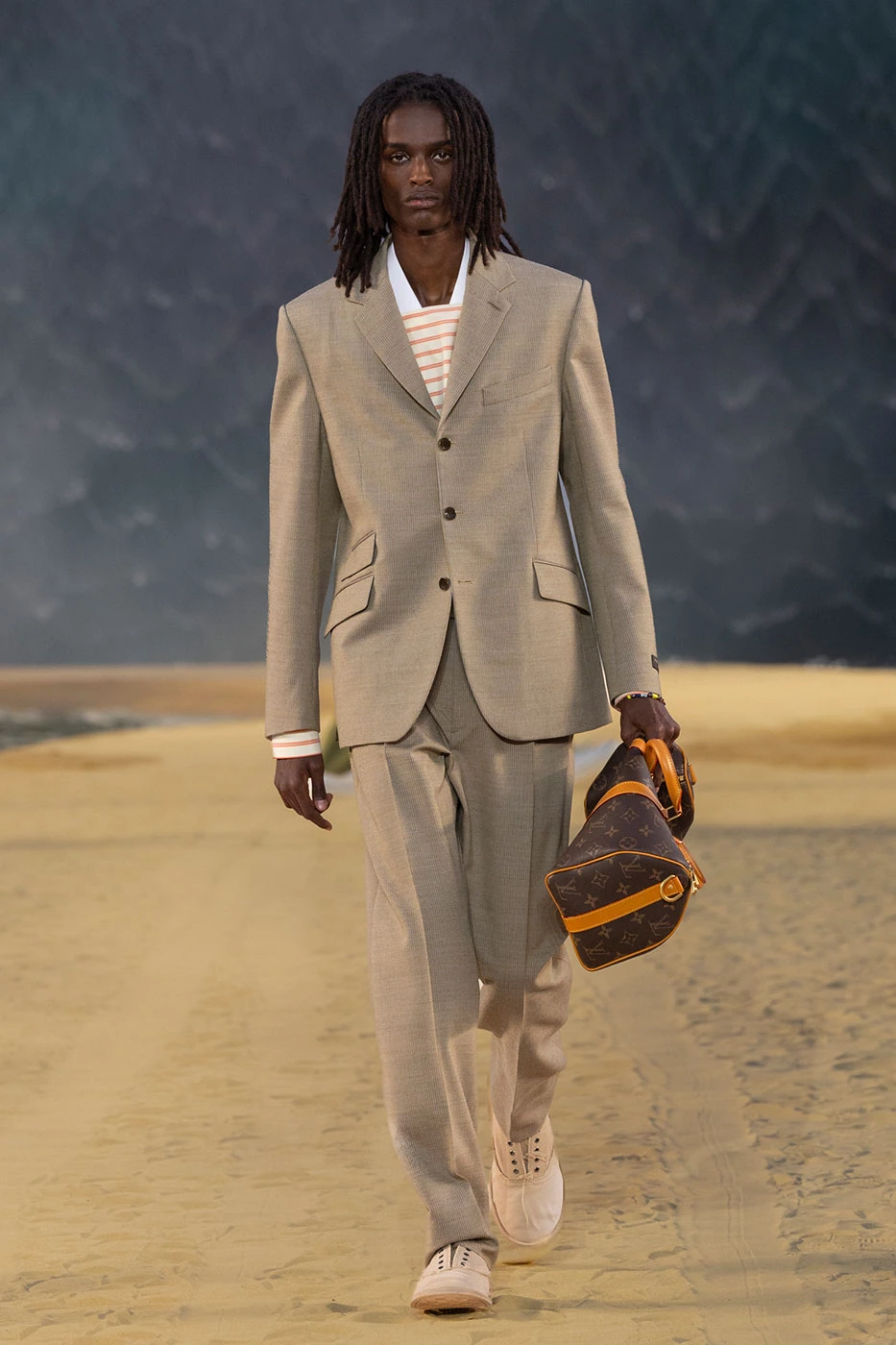
Pharrell Williams presented spring-summer 2027 menswear in Paris on June 24, using global surf culture as a route into relaxed tailoring. The important shift was not simply a beach reference. It was the confidence to make formal clothes feel mobile: softer lines, travel-minded layers and an ease that could survive outside a show set.
That matters because Louis Vuitton has two major creative tracks. Williams directs menswear; Nicolas Ghesquière remains responsible for womenswear. Treating the house as one undifferentiated runway story misses how separately those systems build momentum.
Why Flight Mode is the commercial clue
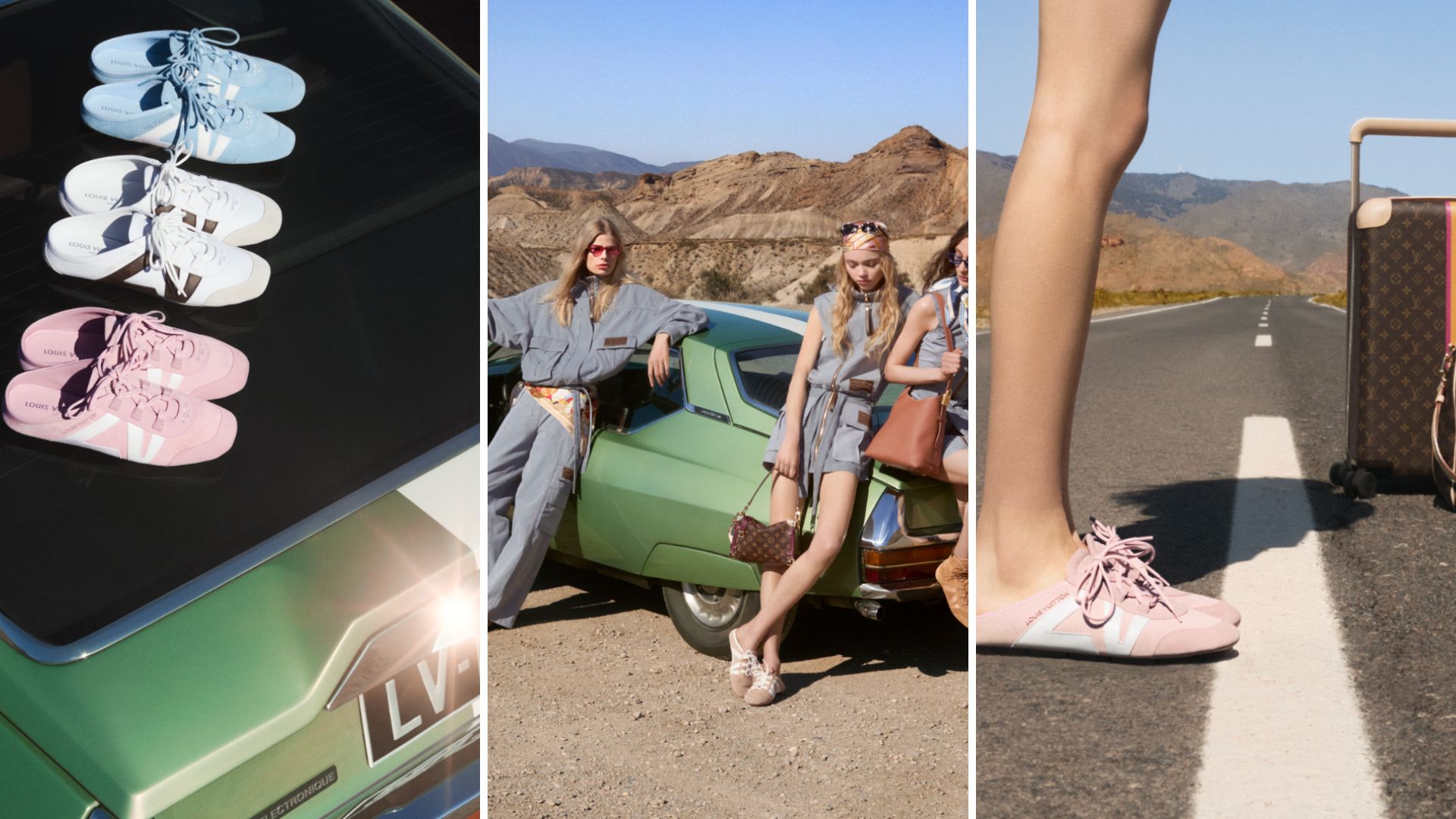
Flight Mode translates the larger travel idea into pieces meant to circulate beyond the runway. The collection’s imagery leans into movement and destination rather than the static symbolism of a trunk. It is a smart bridge between Vuitton’s heritage and the daily wardrobe business every luxury house now needs.
The clickable spectacle is the show. The durable strategy is making travel feel like a way of dressing.
Why this matters
Louis Vuitton is not simply selling a travel fantasy; it is trying to turn movement into a complete wardrobe logic. That matters because luggage is purchased infrequently, while clothing and accessories create more frequent contact with the house. If travel can organize tailoring, knitwear and bags at once, heritage becomes a growth platform rather than a museum label.
How we got here
Vuitton began as a trunk maker, so mobility is foundational rather than invented for a campaign. The modern challenge is that air travel is less glamorous and luxury consumers no longer need a trunk to recognize the monogram. Pharrell’s relaxed tailoring follows a longer industry shift from rigid occasion dressing toward clothes that move across work, leisure and transit.
Winners, losers and the skeptical case
The strategy benefits clients who want luxury to perform across settings and a house capable of selling the same idea from runway to small leather goods. Traditional formalwear loses authority when ease becomes the premium signal. Skeptics can fairly call the travel language aspirational marketing; the test is whether construction, weight and layering genuinely improve mobility rather than merely photographing well beside an airplane.
What the evidence actually says
The evidence connects a June runway to a later commercial line, showing continuity across two releases rather than a one-show theme. It does not include sell-through or repeat-purchase data, so commercial success cannot be declared. The meaningful comparison is structural: trunks made travel possible for possessions; the current offer tries to make the wardrobe itself behave like adaptable luggage.
What happens next
A successful next phase would carry the idea into lightweight outerwear, packable layers and serviceable travel accessories without diluting craft. The risk is endless destination imagery with little product innovation. Watch whether future collections keep the relaxed proportion and material practicality once the surf reference disappears; that will reveal whether Vuitton has found a system or only a season.
Sources and photo credits: SS27 reporting and runway image via Hypebeast; Flight Mode image via DaVinci Magazine.