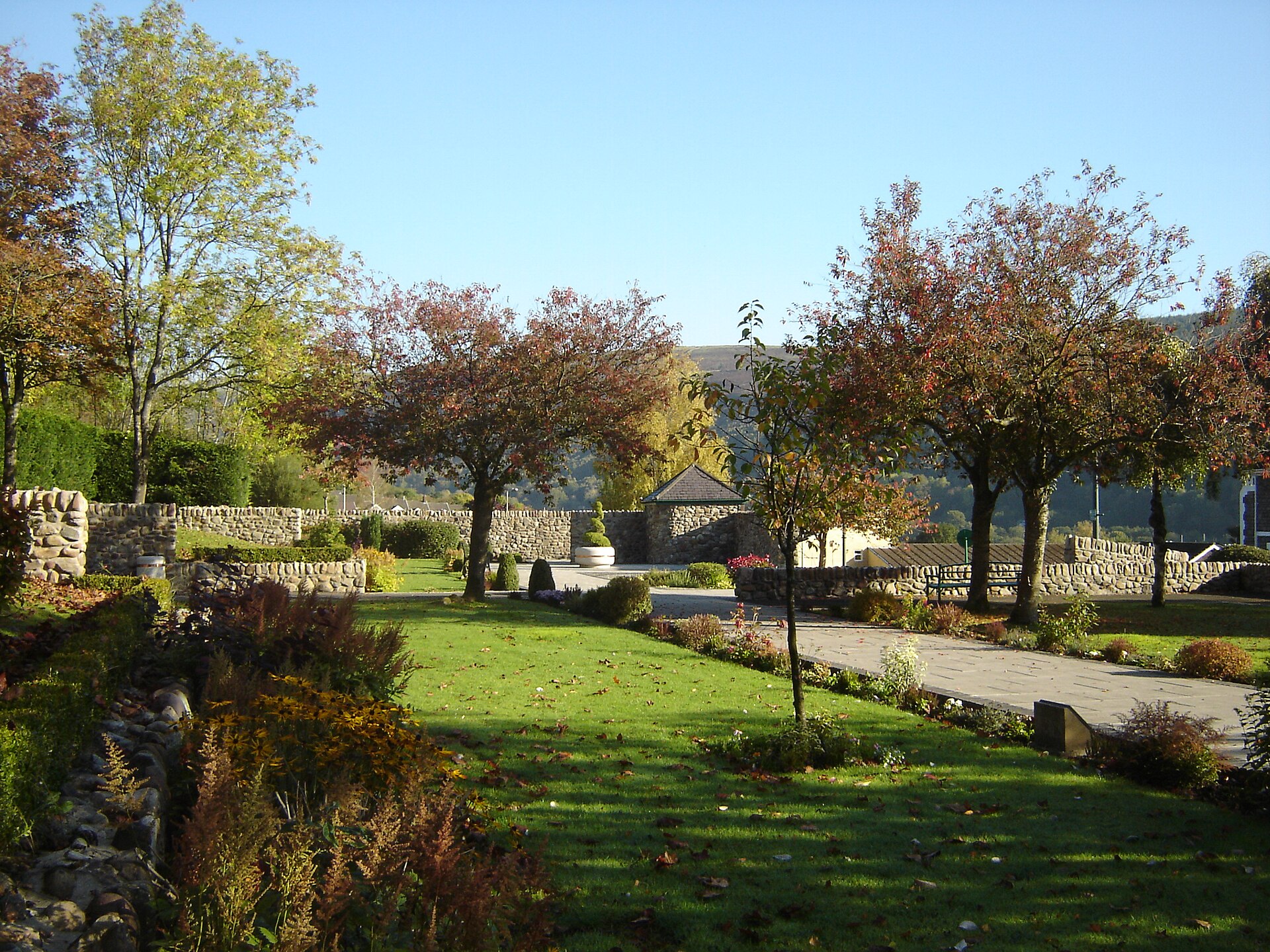
King Charles, Queen Camilla and Prince William visited Aberfan in south Wales on Wednesday to mark the Aberfan disaster 60th anniversary — laying wreaths at the memorial garden built where Pantglas Junior School stood, sixty years after a colliery tip buried the school and killed 144 people, 116 of them children.
Royals / Remembrance — three generations stood in the garden where a school once was, sixty years to the day after the tip came down
What happened on Wednesday
Prince William arrived at the memorial garden first. People reported that the Prince of Wales, 44, talked with dignitaries while he waited for the King, 77, and Queen Camilla, 79, whose convoy arrived about seven minutes later. The separate arrivals followed the long-standing protocol under which sovereign and direct heir are discouraged from travelling together, to protect the line of succession — and William also stayed on after his father and stepmother departed, meeting more local people.
Inside the garden, the three were led in a short service of prayers and reflection, People reported, while several hundred people waited on the road outside. The official Court Circular, published in The Times, records that they were received by the Lord-Lieutenant of Mid Glamorgan, Professor Peter Vaughan, and by survivors, and proceeded to the garden’s central point, where the King and the Prince of Wales laid wreaths and the Queen laid a posy. People described Camilla’s tribute as a bouquet of flowers; William’s wreath, People reported, was signed by him and Catherine, Princess of Wales, and read: “In our memory and in our hearts forever.” The service lasted about ten minutes.
From the garden the party walked along Moy Road to the Aberfan & Merthyr Vale Community Centre, greeting well-wishers along the route, and there the day gave way to its real purpose: time with the people who carry 1966 with them. People reported that the royals met survivors, bereaved parents, former pupils and siblings of the children who died, and heard from the Aberfan Wives, the support group formed by mothers who lost children. They met retired emergency workers, among them a 96-year-old former policewoman from the first hours after the collapse, and representatives of the police, fire service, St John Ambulance and British Red Cross. The Ynysowen Male Voice Choir, founded after the disaster, sang at the reception. Jeff Edwards, who survived aged eight and has become one of the community’s best-known voices, spoke before inviting the King to address the gathering, People reported; the Court Circular likewise records that the King addressed the reception.
After the joint visit, William went on to Ynysowen Community Primary School to unveil a new sculpture, the Aberfan Memorial Tree, created for the anniversary, People reported. Reuters had previewed the three royals unveiling a sculpture together; the accounts differ on that sequencing, and both are recorded in Sources below rather than merged.
The morning that changed a village forever
Pantglas Junior School had just begun its day. The tip that came down — Tip No. 7, built up over years on the slope above Aberfan, partly over ground threaded with springs — had been saturated by heavy rain. When it moved, some 150,000 tons of mud and slurry, by the figure in People’s account, travelled so fast there was almost no warning and almost no escape. It struck a farm first, then the school, then the houses along Moy Road.
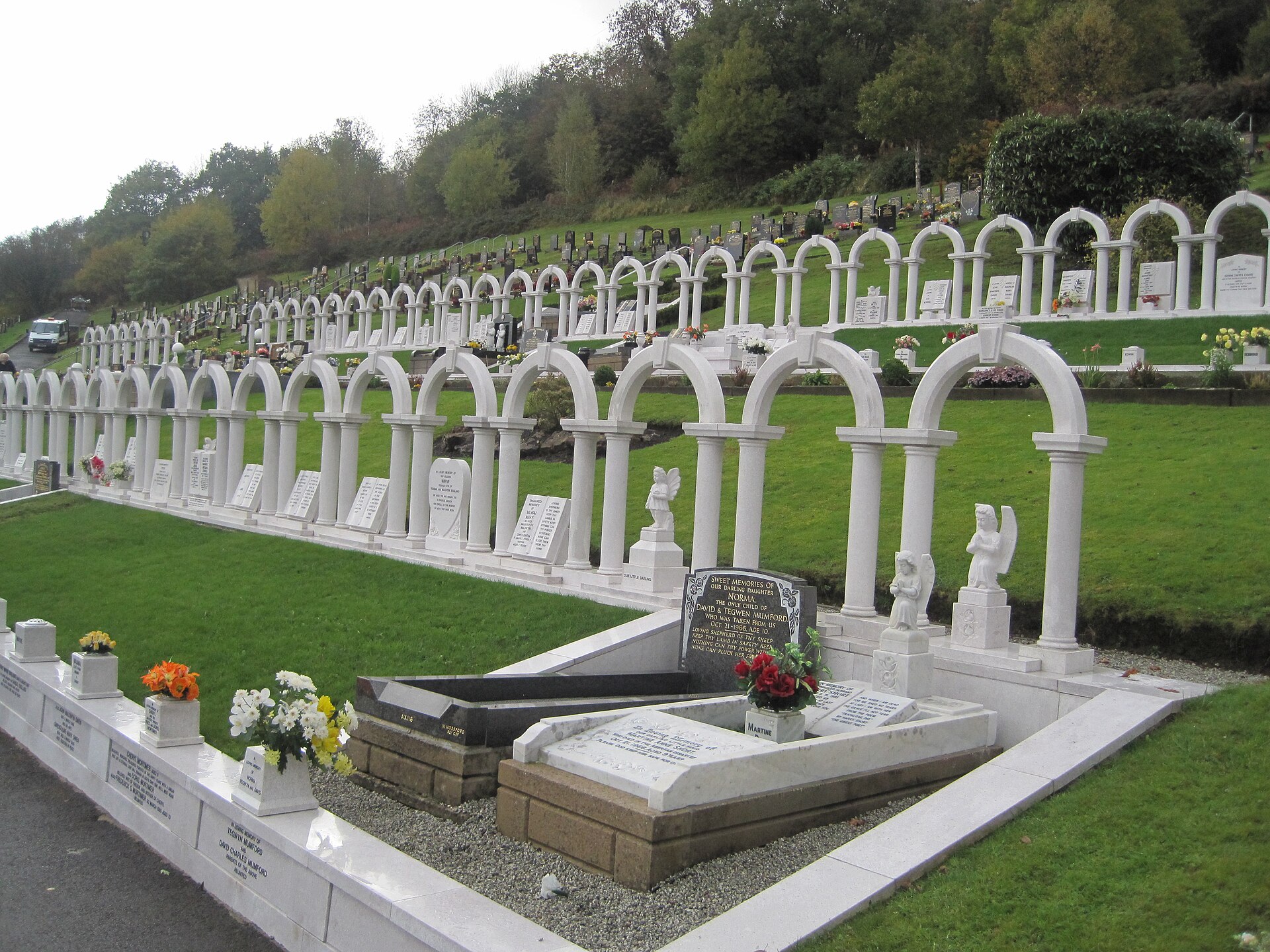
Of the 144 dead, 116 were children, most aged seven to ten — close to half the school’s pupils. Five of the adults killed were teachers. Rescuers, many of them miners and parents of the children inside, dug with shovels and bare hands, as USA Today recalled. Paul Harries, who was six and among the youngest survivors, told People he had been shielded by the school’s dinner lady, Nansi Williams, who covered the children around her with her own body and died doing so. “She was a proper hero,” Harries said. “She was a superhero without a cape.” The sounds of that morning, he added, have stayed with him every day for sixty years. Edwards, the eight-year-old who spoke on Wednesday, was pulled out alive from a classroom in which most of his schoolmates died.
Blame, the Davies inquiry, and what changed afterwards
Aberfan was not treated afterwards as an act of God, and the official record is unusually blunt about that. A tribunal of inquiry chaired by Lord Justice Edmund Davies reported in 1967 and concluded, in words that have been quoted ever since, that the disaster “could and should have been prevented”. The inquiry placed responsibility on the National Coal Board, the state body that ran the colliery and its tips: warnings about the tip’s condition and about building waste over springs had not been acted on, and the board’s systems for inspecting tips were found wanting. USA Today, in its anniversary reporting, summarised the outcome plainly: after the official inquiry the National Coal Board was deemed responsible for the fatal collapse — and no one was ever prosecuted. The legal legacy was real even so: Parliament followed with the Mines and Quarries (Tips) Act 1969, bringing colliery tips under proper regulation for the first time, the remaining tips above Aberfan were eventually removed, and the cemetery, garden and landscaped slide area are now together listed on Wales’s register of historic parks and gardens.
There is a harder strand to the aftermath. The disaster fund raised from public donations became, for many in the village, a second grievance: money given for the bereaved was argued over for years, including an episode in which part of it went towards removing the remaining tips — work many felt the Coal Board should have paid for itself. Some of that money was repaid decades later, without interest. That history explains why Aberfan has always judged institutions, including the Crown, by whether they came, whether they listened, and whether they came back.
Why this matters
Most disaster anniversaries pass as ceremonies. This one carries more weight than most, for three reasons.
First, Aberfan is a defining case of an industrial disaster that was foreseeable. The Davies verdict set a template later inquiries would echo: the danger was known, the warnings existed, the system for acting on them did not. The anniversary also falls while the safety of the coal tips still scattered across the Welsh valleys remains a live public question after years of storms and flooding — remembrance here is attached to an unfinished argument about who watches the hillsides now.
Second, the visit closes a sixty-year arc in the monarchy’s own history. No episode shadowed Elizabeth II’s judgement of her own reign in quite the same way, and Aberfan became a place where the Crown had to rebuild trust slowly, in person, over decades. That the day was marked by three royals together — a rare joint engagement, as Reuters and People both emphasised — reads as a statement that the relationship is now held by the whole institution and handed to its next generation, rather than resting on one woman’s memory.
Third, the day was built around the community rather than the visitors: a ten-minute service, then a walk, then a long reception with survivors, bereaved parents, siblings, the Aberfan Wives and retired responders, a survivor introducing the King’s speech, and a survivor’s testimony — Harries on Nansi Williams — at the emotional centre of the coverage. In a village that has spent sixty years resisting being treated as a backdrop, that ordering is the substance, not the detail.
The Queen who waited eight days
Prince Philip went to Aberfan the day after the disaster. Queen Elizabeth did not arrive until eight days later, on October 29, 1966 — a delay that became one of the most criticised decisions of her seventy-year reign, as USA Today put it. The reasoning at the time, as People reported it, was advice from her private secretary, Lord Charteris, that her presence might distract from the rescue effort; Philip, and Lord Snowdon, were sent in the first days instead. When she did come she was visibly moved — moved to tears, USA Today noted, a rare display for a monarch known for her composure — and met the parents of children who had died.
Elizabeth is widely reported to have regarded the delay as one of the greatest regrets, even the biggest mistake, of her reign; Parade described it in those terms, and People reported the same assessment. What she did next is the other half of the record. She returned several times over the following decades, opened the memorial garden in 1974, and kept a personal connection with survivors — she knew Edwards as “the little boy with the blond hair”, Reuters reported. On the 50th anniversary she recalled, in words Reuters quoted on Wednesday: “I well remember my own visit with Prince Philip after the disaster and the posy I was given by a young girl which bore the heartbreaking inscription ‘from the remaining children of Aberfan’.”
The community’s own judgement has been more forgiving. Reporting of a letter by Gloria Davies, one of the Aberfan Wives, recorded her view that an earlier visit “would have been unwise” given the rescue work still going on; other Aberfan Wives have said the Queen came at the right time, and “as a mother too”. Both things can be held at once: the delay was a mistake the Queen acknowledged, and the relationship that followed was genuine. Historians often trace a line from Aberfan to how royal disaster response works now — go early, in person, stay long, and return on anniversaries. Wednesday, with the heir arriving first and staying longest, fitted that pattern almost point for point.
Three generations in one garden
Charles has his own long thread to this village. Before his accession he represented the nation at the 50th anniversary in 2016, when he said, in words People recalled on Wednesday: “Anyone who is old enough can remember where they were when they heard the appalling news about the Aberfan disaster… Aberfan showed the world the darkest sorrow, but also the most shining selflessness: a spirit which endured not just for the time of crisis, but for a lifetime.”
William’s connection is newer and, by local accounts, personal. He visited with Catherine in April 2023, shortly after they became Prince and Princess of Wales; Edwards took them around the cemetery and later told People the Princess had been deeply struck that the dead children were aged seven to ten, close to her own children’s ages at the time. Edwards also recalled William saying of his grandmother: “My grandmother always spoke about Aberfan.” On Wednesday the wreath William laid carried both his and Catherine’s names. Taken together, the visit was less a single engagement than the visible transfer of a duty of remembrance to the generations that will mark the 75th and 100th anniversaries.
What happens next
The Memorial Tree sculpture William unveiled at Ynysowen Community Primary now joins the garden, the cemetery arches and the listed hillside as the village’s newest point of remembrance — placed, significantly, in a working school, among children the same age as those who died. Each anniversary also renews a practical question: how a country with thousands of legacy coal tips, in a climate of heavier rainfall, keeps faith with the standard Davies set in 1967 — that a known risk, left unwatched, is a choice. Tip inspection and funding have been debated in Wales for years, and that debate, not the wreath-laying, is where the anniversary’s forward-looking test lies.
For the village, what happens next is quieter. The survivors who were children in 1966 are now in their sixties and seventies; the bereaved parents who remain are elderly. Anniversaries from here will increasingly be carried by siblings, descendants, and the institutions built to hold the memory when its first-hand witnesses cannot. “It’s lovely that they are here,” Harries told People. “I’m really glad that they’re down here to show their respects.” Sixty years on, that was the measure the village itself applied: they came, and the garden was full.
Sources
Reporting based on Reuters, syndicated via DevDiscourse (October 21, 2026) — wreaths at the memorial garden in a rare joint outing; 144 killed including 116 children mostly aged seven to ten; the Queen’s visit eight days after the disaster, her returns and her 50th-anniversary posy recollection; Prime Minister Andy Burnham’s thoughts with the village; Jeff Edwards, who survived aged eight; Charles to speak and a commemoration sculpture to be unveiled at the village’s new school. People (October 21, 2026, two articles) — William arriving first, the King and Queen about seven minutes later; the service; the King’s wreath, Queen Camilla’s bouquet of flowers, and William’s wreath signed by him and Catherine (“In our memory and in our hearts forever”); the Community Centre meetings with survivors, bereaved parents, former pupils, siblings, the Aberfan Wives, a 96-year-old retired policewoman and responder representatives; the Ynysowen Male Voice Choir; Edwards inviting the King to speak; Paul Harries on Nansi Williams; heir-protocol separate travel, William staying longer and going on to Ynysowen Community Primary to unveil the Aberfan Memorial Tree; the garden opened by Queen Elizabeth in 1974; the delayed 1966 visit, Lord Charteris’s advice and the Queen’s regret; the 2023 visit; Charles’s 2016 words. USA Today (October 21, 2026) — the collapse and rescue; Philip’s next-day visit against the Queen’s arrival eight days later and the criticism; the inquiry deeming the National Coal Board responsible, with no prosecutions. Parade (October 21, 2026) — the delayed visit as reportedly the late Queen’s biggest regret. The Times, Court Circular (October 21, 2026) — the official record: reception by the Lord-Lieutenant of Mid Glamorgan and survivors; the King and the Prince of Wales laying wreaths and the Queen laying a posy; the walk to the Community Centre; the reception for bereaved families and local groups, addressed by the King. ATTRIBUTION NOTES (differing details kept separate, never merged): the Court Circular records a posy, People a bouquet of flowers; Reuters previewed the three royals unveiling a sculpture together, while People’s post-visit account has William going on alone to unveil the Aberfan Memorial Tree. The Davies inquiry (1967; “could and should have been prevented”) and the Mines and Quarries (Tips) Act 1969 are matters of public historical record; the Aberfan Wives’ view on the Queen’s timing is drawn from published reporting of Gloria Davies’s letter and members’ public comments. No tracker link applies: the Live Global Trackers do not cover royal or remembrance events.
Related coverage: King Charles and the AI summit at Dumfries House · William and Kate visit the Isle of Bute · Harry, Meghan and the delayed reunion with King Charles