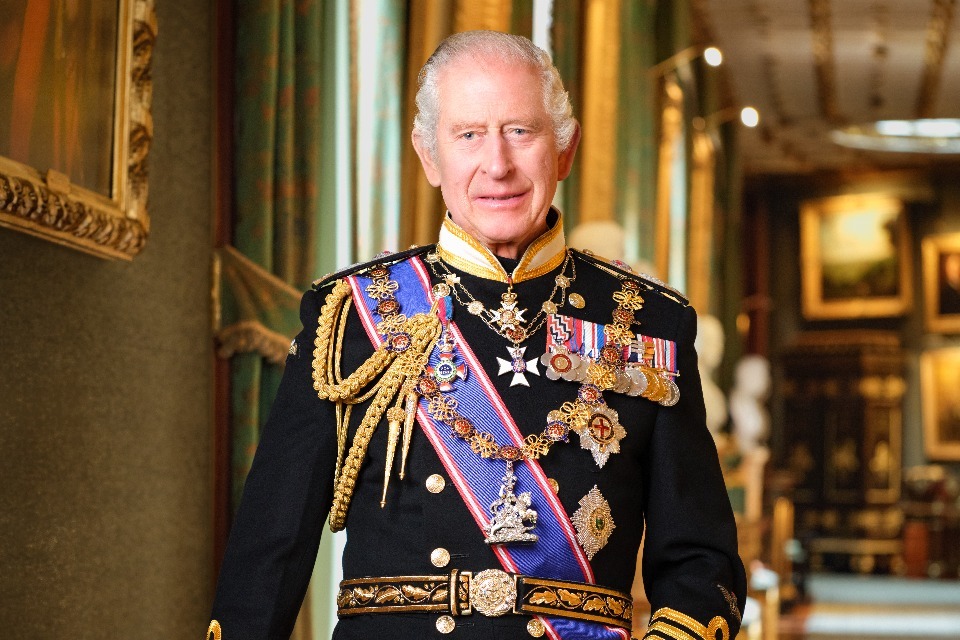
The United Kingdom is a constitutional monarchy. The Crown is woven into the legal machinery of the state, but democratic political authority belongs to ministers accountable to Parliament and to elected legislatures. The monarch is Head of State; the prime minister leads the government.
This arrangement can sound contradictory because many official acts are carried out in the King’s name. Laws receive Royal Assent. Ministers are appointed by the monarch. Parliament is opened by the King. Yet constitutional convention determines how those powers are used. In ordinary circumstances, the sovereign acts on the advice of responsible ministers rather than making a personal political choice.
Royal Assent makes bills into law
After a bill has passed the relevant stages in Parliament, Royal Assent is the final formal step before it becomes an Act. The role is constitutionally important but not a second political vote. The modern sovereign does not rewrite a bill or campaign against it. The elected Parliament debates and passes legislation; the Crown completes the legal process.
The same distinction applies to many prerogative or statutory functions. The King approves Orders in Council, makes certain appointments and authorizes formal instruments such as Letters Patent. These acts preserve continuity in the state, while ministerial responsibility preserves democratic accountability.
Appointing a prime minister is guided by confidence
The monarch formally appoints the prime minister. In practice, political parties and election results establish who can command the confidence of the House of Commons. When the answer is clear, the King’s role is not to choose among policies or personalities but to invite that person to form a government.
A hung Parliament can make the process look less automatic, but the principle remains: political actors must determine who can sustain Commons confidence. The Palace is expected to avoid being drawn into negotiations. The constitutional value of the office lies partly in providing an orderly transfer without becoming a competing political center.
The Crown supplies continuity; elected institutions supply political authority.
The weekly audience with the prime minister
The King receives government papers and holds regular private audiences with the prime minister. The conversations are confidential. The sovereign may be informed, may ask questions and may offer experience, but ministers remain responsible for decisions. Privacy allows the exchange to be candid without turning the monarch into a public commentator on policy.
The State Opening of Parliament makes the same separation visible. The King delivers the government’s program in the King’s Speech, but the elected government writes the content. The ceremony belongs to the Crown; the policies belong to ministers who must defend them in Parliament.
Representation at home and abroad
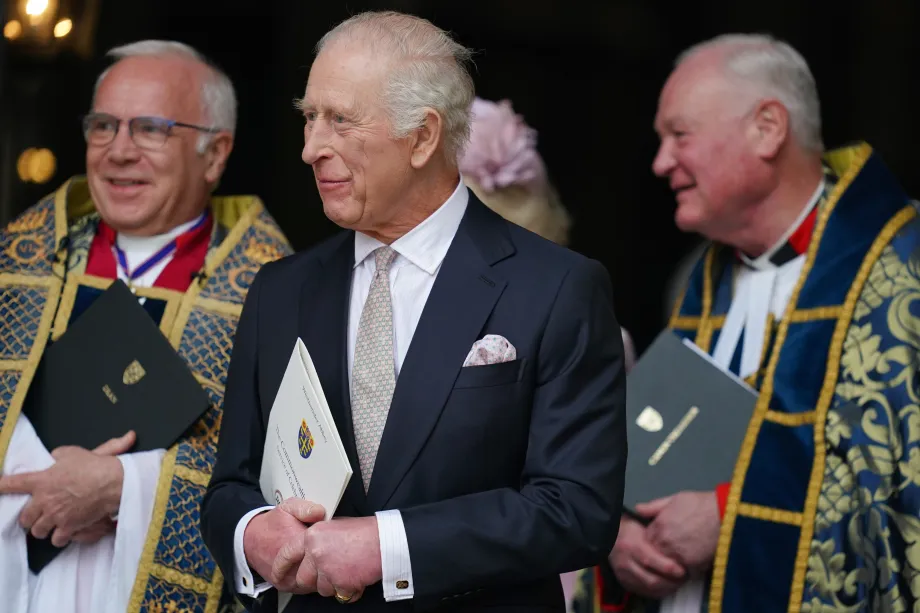
Much of the public diary is representational. The King hosts and attends state visits, receives diplomats, leads national commemorations, presents honors, visits communities and supports organizations through patronage. These engagements can recognize work that would otherwise receive less attention and can express continuity at moments of celebration or loss.
Overseas visits are normally made on government advice and form part of the United Kingdom’s diplomatic relationships. The King also has distinct roles in other realms where he is separately sovereign. Those constitutional arrangements differ, so “King of the United Kingdom” should not be treated as a description of every country in the Commonwealth.
What the King cannot do
The monarch does not vote in elections, stand for office or publicly campaign for a party. He does not set tax rates, write the budget, control interest rates or direct day-to-day government. Formal powers exist, but convention is not decorative: it is the operating system that keeps the Crown politically impartial.
This is why royal speeches are read closely. A phrase that sounded normal from an activist prince may carry a different weight from a sovereign. King Charles’s longstanding environmental interests have not disappeared, but the constitutional role requires them to be expressed without instructing voters or challenging ministerial authority.
What happens if the King is unavailable?
British law provides mechanisms for continuity. Counsellors of State can carry out specified royal functions when the sovereign is ill or abroad, subject to legal limits and formal authorization. A regency is a different and more extensive arrangement for incapacity. The existence of these systems reflects a practical principle: the machinery of government should not depend on one person being physically available every day.
Why a largely ceremonial office still matters
“Ceremonial” does not mean empty. Ceremony can mark the transfer of power, recognize service and provide a shared national frame. The constitutional case for monarchy emphasizes continuity, political neutrality and a Head of State separate from the government of the day. Critics question heredity, cost, transparency and the symbolism of inherited authority.
Understanding King Charles’s constitutional role does not require settling that debate. It requires accuracy about where power sits. The King performs essential formal and representational acts, but elected leaders make policy and answer for it. The monarchy’s modern legitimacy depends heavily on maintaining that boundary.
Why this matters
The monarch’s power is significant precisely because it is mostly constrained. Formal acts—appointing a prime minister, opening Parliament, granting assent—give continuity to the state, while convention transfers political choice to elected institutions. Misunderstanding that balance either exaggerates royal control or understates the institution’s constitutional weight.
How we got here
British monarchy evolved through conflict and settlement from personal rule toward parliamentary government. Powers once exercised directly became conventions performed on ministerial advice. The result is not a written separation in one document but an accumulated constitutional practice whose stability depends on restraint by every participant.
Who benefits, who loses and what critics say
Governments benefit from a nonpartisan mechanism for continuity and ceremony. Citizens may value a head of state outside party competition, while republicans object that heredity is an indefensible qualification for public office. Defenders answer with stability; critics answer that stability can be designed democratically. The debate is about legitimacy as much as day-to-day function.
What the comparison implies
The gap between legal power and normal practice is the key comparison. Royal assent is formally necessary but conventionally automatic; weekly audiences are regular but politically private. Counting ceremonies would overstate influence, while ignoring access would understate it. The honest measure is whether the monarch stays within advice and avoids directing policy.
What happens next
Pressure for disclosure around finances, lobbying and advice will continue even if formal powers remain unchanged. A constitutional crisis would test conventions rarely examined in ordinary times. The institution’s strongest defense is predictable restraint and transparent rules, not mystique about what the monarch could theoretically do.
Official sources: The division between Head of State and elected Parliament is explained by The Royal Family’s constitutional overview. Functions including Royal Assent, appointments and action on ministerial advice are detailed in the House of Commons Library briefing on the first year of the reign.