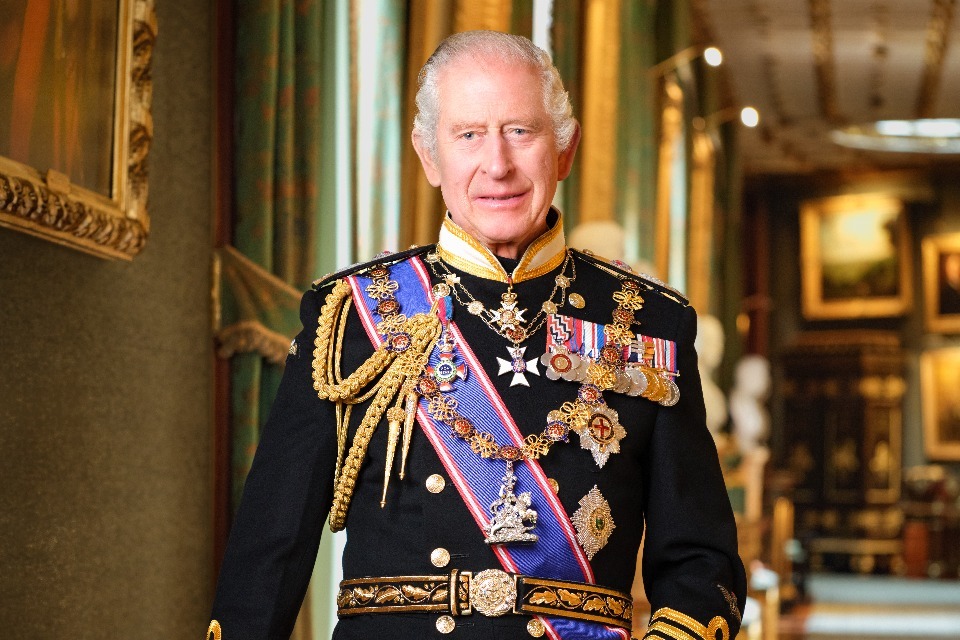
Charles Philip Arthur George was born at Buckingham Palace on November 14, 1948, the first child of Princess Elizabeth and Prince Philip. When his mother became Queen Elizabeth II on February 6, 1952, the three-year-old Charles became heir apparent. That early change defined the central fact of his life: he would spend seven decades preparing for an office whose timing he could not choose.
His path differed from that of many earlier heirs. Rather than being educated entirely by private tutors, he attended school, including Gordonstoun in Scotland. He entered Trinity College, Cambridge, in 1967, first studying archaeology and anthropology before changing to history. The Royal Family’s official biography records that he graduated in 1970. He also spent a term in Wales learning Welsh before his 1969 investiture as Prince of Wales at Caernarfon Castle.
Military service before full-time royal work
After university, Charles trained as a Royal Air Force pilot and then followed a naval career. He served aboard several ships, qualified as a helicopter pilot in 1974 and later commanded the coastal minehunter HMS Bronington. The experience gave him a direct connection to the armed services that continued through ceremonial appointments and support for service personnel and veterans.
Military service was one part of a wider apprenticeship. As Prince of Wales, he represented Queen Elizabeth II in the United Kingdom and overseas, undertook ceremonial duties and developed a portfolio of causes that did not fit neatly within traditional royal engagements. The environment, architecture, rural life, education, health and the arts became recurring themes.
Marriage, children and the public record
Charles married Lady Diana Spencer at St Paul’s Cathedral in 1981. Their sons, Prince William and Prince Harry, were born in 1982 and 1984. The marriage ended in divorce in 1996; Diana died in Paris the following year. Charles married Camilla Parker Bowles in a civil ceremony at Windsor in 2005. She became Queen Consort on his accession and was crowned with him in 2023.
These events are central to any King Charles III biography because they shaped public perceptions across several generations. A responsible account distinguishes the established chronology from interpretation. The family’s private relationships have often been narrated through anonymous claims and retrospective judgments; dates, official records and attributable reporting provide the firmer ground.
Charities, causes and a long apprenticeship
The Royal Family says Charles helped establish more than 20 charities over 40 years. The best known began as The Prince’s Trust, created to support young people facing barriers to education and employment. His wider public work included rural communities, the built environment, traditional crafts, interfaith understanding and sustainability.
That work made him an unusually visible heir. It also raised a constitutional question: how could a future monarch advocate on public issues while remaining above party politics? As King, the boundary is tighter. The sovereign’s constitutional role is politically impartial, so long-held interests are more often expressed through convening, patronage and visits than through arguments about specific government policy.
Charles waited longer than any previous British heir apparent before becoming sovereign.
When did King Charles become King?
Charles became King immediately upon Queen Elizabeth II’s death on September 8, 2022. Accession and coronation are different events: the first is the legal transfer of the Crown, while the second is a religious and ceremonial service. The Accession Council formally proclaimed him King Charles III, but it did not create the reign. That had already begun.
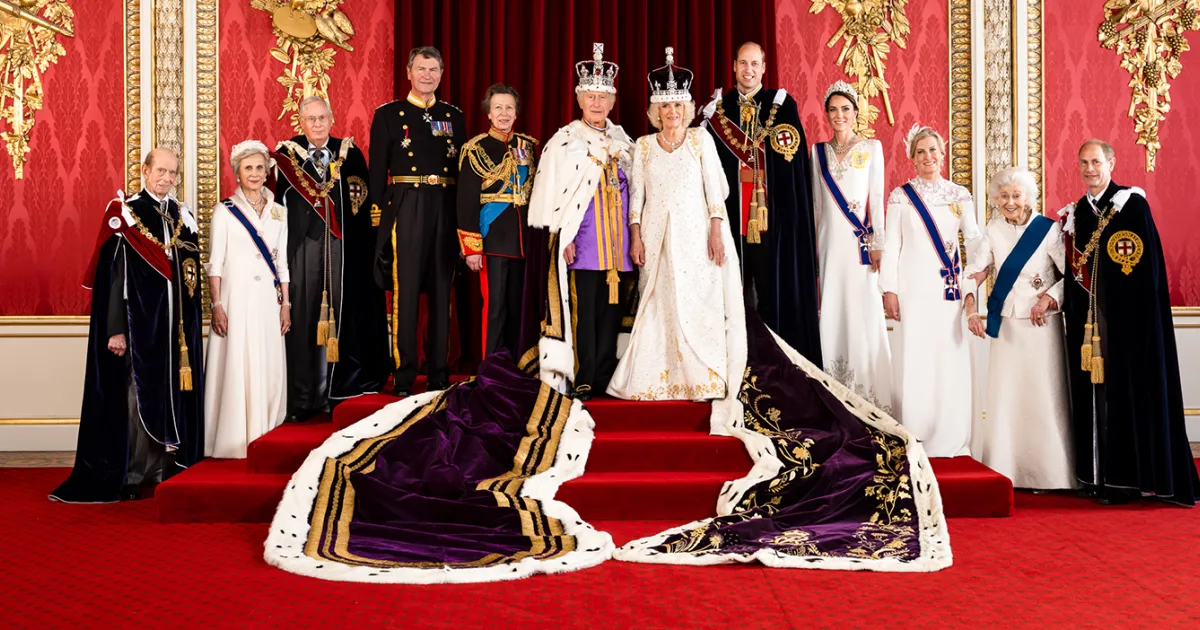
His coronation took place at Westminster Abbey on May 6, 2023. The service connected the new reign to centuries of ritual while presenting service as its central theme. The official portraits made afterward showed the King in full regalia and with members of the working Royal Family, visual statements of both continuity and the smaller group carrying out public duties.
What defines the reign so far
The early reign has combined familiar constitutional work with the causes Charles developed before becoming King. He receives government papers, meets the prime minister, carries out state occasions, recognizes public service and represents the country at home and abroad. He has also continued to highlight community organizations and environmental action within the limits of a nonpartisan office.
In February 2024, Buckingham Palace disclosed that the King had been diagnosed with cancer and was beginning treatment. The Palace did not identify the type or stage. He temporarily reduced public-facing engagements while continuing state business, then returned to public duties in April 2024. Those are the confirmed facts; predictions about prognosis or succession go beyond what the Palace made public.
How to understand King Charles III’s place in history
His reign cannot be separated from the length of his preparation. He entered the role with a developed public record, established institutions and recognizable views on stewardship, architecture and the natural world. At the same time, becoming sovereign required a change in method: the monarch reigns within a constitutional system in which elected institutions make policy.
The durable question is not whether Charles can reproduce his mother’s style. It is how a monarch formed by a different generation, family history and set of public concerns interprets the same constitutional duty of service. That answer emerges through actions over time, not through a single ceremony or headline.
Why this matters
Charles’s unusually long apprenticeship makes his reign a test of whether preparation translates into adaptation. He inherited not only a crown but expectations formed under a monarch whose longevity defined stability. His biography matters because decades of public advocacy now meet the constraints of constitutional neutrality.
How we got here
Charles spent most of his adult life as heir while the monarchy modernized through television, scandal and changing Commonwealth relationships. Earlier heirs often had shorter public apprenticeships or less constant media exposure. That long record gives the public more evidence of his interests, but it also leaves less room to reinvent himself once sovereign.
Who benefits, who loses and what critics say
Charities and causes associated with his earlier work benefit from long attention, while the institution gains an experienced head of state. Critics argue privilege insulates the monarchy from accountability; supporters point to continuity and nonpartisan service. The unresolved tension is whether inherited office can remain socially useful without pretending its legitimacy is beyond debate.
What the comparison implies
A 70-year wait as heir created a depth of preparation no short transition can match. Yet long tenure in one role can make restraint in the next harder, because views expressed as prince cannot always be advanced as king. Past activity should therefore be compared with current constitutional conduct, not assumed to continue unchanged.
What happens next
The reign will be judged on disciplined visibility, family stability and how the crown responds to demands for transparency and historical reckoning. A successful scenario makes continuity feel adaptive; a weaker one lets personal causes or family disputes blur institutional boundaries. The most telling evidence will accumulate over years, not ceremonies.
Primary sources: Biographical dates, education, military service, charitable work and accession were checked against The Royal Family’s official biography. The portrait and its context come from the UK Government’s 2024 release.