Justin Verlander retires
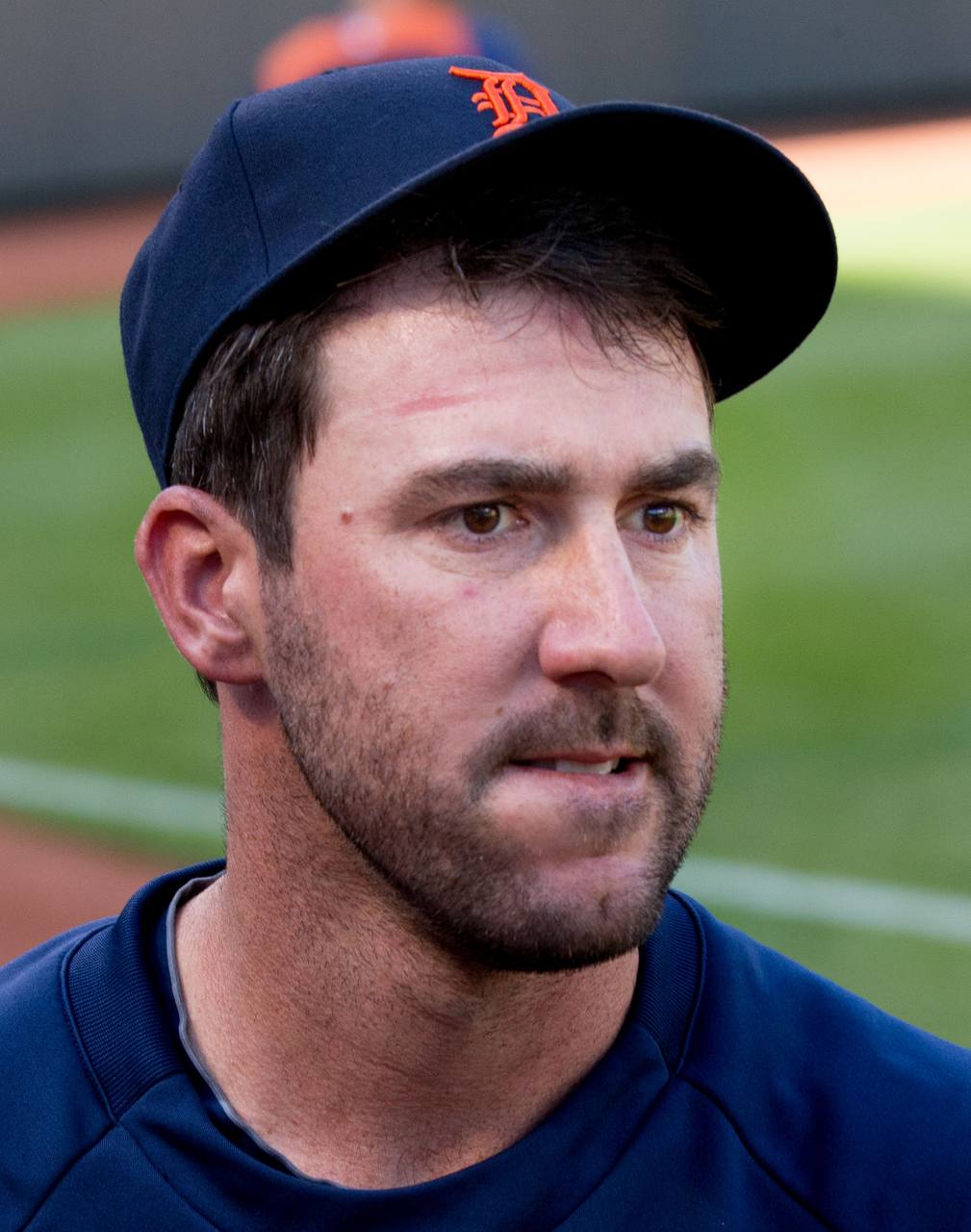
DETROIT — There is a version of Saturday that everyone at Comerica Park had quietly rehearsed: the ovation, the tip of the cap, the slow walk to the dugout one final time. But nobody scripted what actually happened, because nobody could have. In the sixth inning of the 557th start of his career, with the Pirates leading 2–0 and Justin Verlander having just retired the first batter he faced, Tigers manager A.J. Hinch emerged from the dugout — and beside him, trotting in from the stands, came Verlander's seven-year-old daughter, Genevieve, to take the ball from her father's hand.
The 43-year-old right-hander, who confirmed this summer that the 2026 season would be his last, was blindsided. "I had no clue," he said afterward. "It hit me like a ton of bricks. That was amazing. I was sobbing … Walking off the field with my family — we talked a lot about how my life has changed and what my family means to me, what I'm looking forward to most in retirement — I can't think of a better ending."
And then the ending got better. Trailing 3–1 in the ninth, the Tigers rallied, and rookie Eduardo Valencia — with two outs — launched a two-run walk-off home run to left field for a 4–3 victory over Pittsburgh. "Oh yeah, there's no way Justin Verlander gets a loss in his last game," Hinch said afterward. Valencia, the first Tigers rookie to hit a walk-off homer since Lou Whitaker in 1978, put it simply: "It was the last game for JV."
The farewell, inning by inning
The numbers from Saturday were, in their way, a miniature of the entire career: 5 1/3 innings, 91 pitches, six strikeouts, five hits, two runs — both on solo home runs. It was only Verlander's second start of the season and his first since March 30, after a year spent rehabbing hip and hamstring injuries. He had hoped for five innings. He got five and a third, and a moment no box score will ever capture.
Detroit SportsNet play-by-play man Jason Benetti, whose calls on the day drew their own wave of praise online, framed the scene from the first pitch: "When Justin Verlander first took this mound in 2005, all he wanted was for his dream to become reality. And now for one day, he simply wants reality to be something of a dream." As Genevieve ran to the mound, Benetti added: "Of all the pitches he threw from 60 feet, 6 inches … the speed at which she ran out to the mound might be the most important thing we've seen today. It can't be goodbye if you still have so many memories that you're never gonna lose, right?"
It was a day of farewells beyond Verlander, too. Home plate umpire Laz Diaz was working his final major-league game and shared a warm moment with the pitcher after the first inning. Pirates reliever Kirby Yates, a 12-year veteran, made his first career start — and his last appearance — in the same game. But the afternoon belonged, unmistakably, to the man who debuted for Detroit on July 4, 2005.
Why this matters: the last of the 200-inning titans
Verlander's retirement is not just the end of a career; it is the closing of a statistical epoch. Consider what he represents. He debuted in 2005, pitched in six different presidential administrations' worth of baseball, and leaves as one of the last starters whose résumé was built the old way: take the ball every fifth day, go deep, miss bats.
The 3,560 strikeouts — roughly ninth all-time, in the company of names that live on plaques — were compiled across eras that kept changing the rules of engagement. He dominated before and after the crackdown on foreign substances, before and after the deadened baseball, across the analytics revolution that devalued the very things he was best at: length, durability, the complete game. In 2011, his MVP season, he threw 251 innings. In recent years, teams celebrated pitchers who reached 180. His 266 wins were banked in a sport that no longer believes in the win — which makes them harder, not easier, to contextualize.
The three Cy Young Awards (2011, 2019, 2022) span 11 years — an absurdity. Most great pitchers get one peak. Verlander had two: the Detroit ace who won the 2011 MVP with a 24–5 record, and the remade Houston version who returned from Tommy John surgery at 39 to win the 2022 Cy Young with a league-leading 1.75 ERA. Add three no-hitters, 10 All-Star selections, and two World Series rings, and the Hall of Fame case is not a case at all. It is a coronation waiting for the 2031 ballot.
How we got here: Detroit to Houston and all the way back
The arc has a symmetry that fiction would be accused of overdoing. Drafted second overall in 2004, Verlander became the face of the Tigers' renaissance, the flamethrower who anchored the 2006 and 2012 pennant runs and threw his first two no-hitters (2007, 2011) in the Old English D. In August 2017, with Detroit rebuilding, he was traded to Houston — and won the World Series two months later, going 5–0 down the stretch with a 1.06 ERA and taking ALCS MVP honors.
The Astros chapter, seven seasons in total, brought a second title in 2022, two more Cy Youngs (2019, 2022), and the third no-hitter, a 14-strikeout masterpiece against Toronto in September 2019 that made him the sixth pitcher ever with three. There was also the shadow: the 2017 title was later tainted by the Astros' sign-stealing scandal, a fact that will follow Verlander into Cooperstown debates whether or not his own role is ever clarified. His defenders note he arrived mid-season and pitched; his critics note the ring. The record, for now, carries both.
Then the wandering years: one season with the Mets in 2023, a return to Houston, a year with the Giants in 2025 — and finally, this past February, the homecoming. He signed a one-year deal to finish where he started, telling reporters he never wanted to retire because of a milestone or a date on the calendar. "I wanted the game to tell me when it was time," he said this summer. "Over the last several months, I've realized that time has come."
The numbers in context
Strip the romance away and the ledger is staggering. The 557 starts, the 266–159 record, the 3.33 ERA and 1.14 WHIP across 3,400-plus innings. He led his league in strikeouts five times, in wins four times, in ERA twice. The 2011 season — 24 wins, 250 strikeouts, a 2.40 ERA — remains the last time a starting pitcher won the AL MVP, a feat that may never be repeated in an age of openers and six-man rotations.
Context cuts the other way, too. The Tigers finished 76–85, missing the playoffs in a season that began with hope and ended in a roster reckoning. Verlander made two starts all year. The farewell, for all its beauty, was a coda to a campaign the franchise would rather forget — and it raises the question Detroit now faces: what does a rebuild look like without its last link to the glory years? The answer begins this winter, with a young core — Valencia, Max Clark, Kevin McGonigle, Hao-Yu Lee — that just authored the old man's perfect ending.
Who wins, who loses — and the cap question
Every retirement of this magnitude creates an instant secondary debate, and this one already has its litmus test: which cap goes on the Cooperstown plaque? ESPN's Jeff Passan reported in February that Verlander would go in wearing a Tigers hat, and the sentiment is understandable — 13 of his 21 seasons, both no-hitters in Detroit, the MVP, the franchise records. But the Astros years hold the rings and two of the three Cy Youngs. It is the rare Hall of Fame hat debate with a genuinely good answer on both sides, and it will be argued in bars from Detroit to Houston for the next five years.
The winners are obvious: baseball itself, which got a storybook final chapter at a moment when the sport craves them; the Tigers' young players, who will tell the story of Valencia's homer for the rest of their lives; and the Hall of Fame, which gains a first-ballot lock. The losers? Perhaps only the romantics who wanted one more October start — and the opposing hitters who, for 21 years, never got a comfortable at-bat against him.
There is also the family ledger, and Verlander put it in the starkest terms himself. He broke down talking about the time missed with his family over two decades of springs and summers. His wife, Kate Upton, called it an emotional day that brought what matters most together. "Given everything" was his phrase for what he left on the field — and the arithmetic of a 21-year career is that the field got most of it. Retirement, for Verlander, reads less as a ending than as a trade: the mound for the mornings.
What happens next
Verlander becomes eligible for the Hall of Fame on the 2031 ballot, five years after his final appearance, and the only suspense is the size of the first-ballot percentage. Between now and then: the Tigers' offseason reset after a 76–85 finish, the search for rotation answers, and the slow work of deciding what the next contending Detroit team looks like.
For the man himself, the immediate future is the one he described walking off the field with his daughter's hand in his — time, at last, on his own terms. "I revved my engine one more time," he said Saturday. "Overall, I felt I left it all out on the field." Twenty-one seasons, three Cy Youngs, two rings, 3,560 strikeouts, and one walk-off. The engine earned its rest.
Sources
- Reuters: Tigers, Pirates finish season one day after Justin Verlander’s emotional final game — September 27 game account: 5 1/3 innings, two solo homers, 557th career start, Genevieve removing him in the sixth, Valencia’s walk-off in the 4–3 win.
- talkSPORT: Fans in love with NBC veteran’s ‘beautiful’ send off for Hall-of-Fame lock Justin Verlander — Benetti’s on-air calls, the father-daughter mound moment, and the career ledger.
- Times Now World: Justin Verlander Retires Following Emotional Final Start for Detroit Tigers — 91 pitches, first start since March 30, the 2005 debut and Detroit tenure.
- WDC News 6: Justin Verlander bids farewell to Hall of Fame career with final Tigers start — the sixth-inning removal and Verlander’s quotes.
- ClutchPoints: Watch Justin Verlander get massive ovation while leaving mound after final MLB start — the Comerica Park ovation and career honors.
- Beliefnet: Justin Verlander Announces Retirement After 21 Seasons — the July retirement announcement.