Japan PM Takaichi approval rating: support for Prime Minister Sanae Takaichi's administration fell to 49.1% in a Kyodo News poll conducted October 17-18, 2026 — below 50% for the first time and the lowest level since she took office in October 2025 — after voters judged her response to farm minister Kazuo Yana's resignation too slow, with 57.7% saying her decision to replace him came "too late" and 81.5% saying it was natural for Yana to resign.
Japan / A year after making history, Takaichi slips below 50% — and voters say the fall was self-inflicted
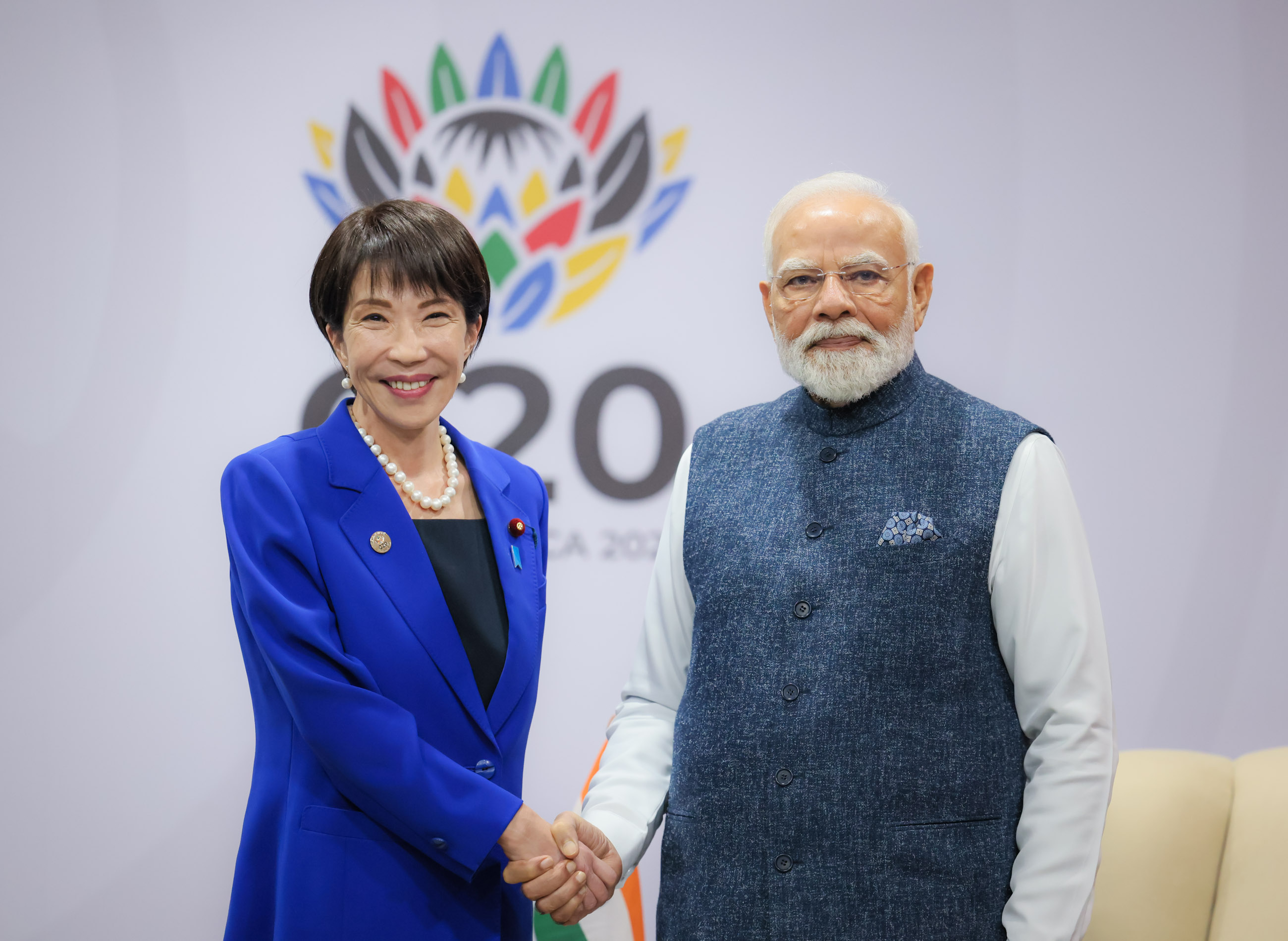
TOKYO — The approval rating for Japanese Prime Minister Sanae Takaichi's administration has fallen below 50% to its lowest level since she took office in October last year, Kyodo News Agency reported on Sunday, October 18. In Kyodo's poll, conducted between October 17 and 18, support stood at 49.1%.
Reuters, reporting Kyodo's findings, said the decline may have been affected by Takaichi's slow response surrounding the resignation of Kazuo Yana as the nation's farm minister. Yana stepped down on Wednesday after coming under fire for remarks about cutting road funding for municipalities that did not support him — comments first reported by local media earlier this month.
The detail in the poll is what makes it sting. Some 57.7% of respondents said Takaichi's decision to replace Yana came "too late," Kyodo said, while 81.5% said it was natural for Yana to resign. In other words, voters were not divided about what should happen — they thought the outcome was obvious, and they thought their prime minister took too long to reach it.
Takaichi had appointed Yana in a cabinet reshuffle last month, and had openly chided him in parliament for the road-funding remarks. That public rebuke, followed by a slower removal, is the sequence Kyodo links to the fall in support.
What Happened: A Minister, A Threat About Roads, And A Slow Goodbye
The sequence, as reported by Reuters via Kyodo, is compact. Yana, appointed farm minister in last month's reshuffle, was reported to have spoken about cutting road funding for municipalities that did not support him. Takaichi rebuked him openly in parliament. The criticism continued, and on Wednesday Yana resigned.
Road funding is not a trivial portfolio detail in Japan. Municipal road budgets are the kind of tangible, local spending that connects national politicians to mayors, prefectural assemblies and rural voters — the Liberal Democratic Party's traditional base. A suggestion that funding could be used as leverage over political support cuts against basic expectations of fair allocation, which helps explain why 81.5% of respondents treated the resignation as natural rather than harsh.
No part of the Kyodo reporting attributes the poll fall to Takaichi's foreign policy, her economic programme or her historic status as Japan's first female prime minister. The story voters appear to be telling pollsters is narrower: judge us, they are saying, on how quickly and cleanly you deal with a problem inside your own cabinet.
Why This Matters
Crossing below 50% matters in Japanese politics less as a cliff edge than as a signal. Governments can govern for long stretches in the 40s — Japanese cabinets often do — but the first sub-50 reading of a premiership changes the conversation inside the ruling party. Backbenchers who were quiet while the leader looked strong start calculating. Opposition parties, who need a vulnerability to organise around, are handed one that is easy to explain on television: even the prime minister's own voters thought she moved too late.
It also matters because of where the damage came from. A fall driven by an external crisis can be recovered when the crisis passes. A fall driven by perceived indecision is stickier, because it attaches to the leader's personal reputation for judgement. Takaichi built her rise on an image of decisiveness — a conservative standard-bearer who presented herself as clear-eyed about China, defence and economic security. A poll in which 57.7% say she acted "too late" on a straightforward personnel call cuts directly against that brand.
There is a second layer. Yana was Takaichi's own pick, installed only last month in her reshuffle. Voters are therefore judging two decisions, not one: the appointment itself, and the pace of the correction. Japanese prime ministers survive ministerial scandals routinely — resignations are the system's pressure valve — but the valve only works if it opens quickly. This time, by the public's account, it did not.
Context: A Historic Premiership Meets An Old Problem
Takaichi took office in October 2025 as Japan's first female prime minister, a landmark in a country that ranks poorly among developed democracies on women's political representation. Her ascent was covered by this site at the time, including her meetings with world leaders at the United Nations General Assembly and her warnings on Taiwan.
Ministerial gaffes over money and favouritism, by contrast, are one of the oldest stories in post-war Japanese politics. Farm ministers in particular have a long history of politically costly remarks — the agriculture portfolio sits at the intersection of rural constituencies, subsidies and food prices, and its holders speak to audiences who listen closely. The pattern in past cases is consistent: the remark itself does damage for a day or two; the leader's handling of it determines whether it does damage for a month.
Kyodo's telephone polling is one of Japan's standard political barometers, conducted regularly and tracked closely by party headquarters precisely because movements in it tend to be discussed in the Diet within days. A single poll is a snapshot, not a verdict — but a "lowest since taking office" snapshot, on a first anniversary, is the kind party strategists underline.
Who Gains, Who Loses — And What Critics And Supporters Say
For the opposition, the poll is an opening that requires no invention: they can quote the 57.7% figure and ask why a prime minister who rebuked her minister in parliament still left him in post long enough for the story to grow. For LDP rivals who stood aside during Takaichi's ascent, it is the first data point suggesting the leadership question could one day reopen — though nothing in Kyodo's reporting suggests any immediate challenge.
Supporters of the administration can make a fair counter-argument, and a balanced reading should include it. First, 49.1% is a fall below a symbolic line, not a collapse — it remains, by the standards of recent Japanese cabinets, a workable rating. Second, the proximate cause is a single ministerial episode that has now been resolved with a resignation; the irritant has been removed. Third, the poll does not report a surge to any alternative — dissatisfaction with handling is not the same as a desire for a different government.
Critics answer that this defence misses the poll's own internal evidence: voters were not punishing Takaichi for Yana's remarks alone, they were grading her response time. That is a charge about the prime minister herself, and it cannot be resigned away with the minister.
What The Numbers Actually Imply
Read the three figures together. Support: 49.1%. "Too late": 57.7% — a number larger than the disapproval implied by the headline, meaning even some remaining supporters thought the Yana decision dragged. "Natural to resign": 81.5% — near-consensus that the minister had to go. The gap between 81.5% and 57.7% is interesting: roughly a quarter of voters thought the resignation was right but did not blame the timing, which suggests the core complaint is concentrated, not universal.
That concentration cuts both ways. It means the fall is explainable and potentially reversible — there is no evidence here of a broad rejection of the government's direction. But it also means the recovery depends on behaviour, not messaging: the next personnel or crisis decision will be watched specifically for speed, because that is now the tested weakness.

What Happens Next
Three things will decide whether 49.1% is a blip or a new level. First, the replacement at the farm ministry and whether the appointment is received as safe and competent — a second troubled pick would compound the original error. Second, the next Kyodo and rival polls: a stabilisation in the high 40s would let the government argue the episode is closed; another fall would invite the word "trend." Third, the Diet calendar — opposition questioning will keep the "too late" figure in circulation as long as it is useful, and the government should expect it in every exchange about cabinet management.
Internationally, little changes overnight. Takaichi's foreign-policy positions — on the U.S. alliance, Taiwan and defence spending — do not depend on one domestic poll. But foreign counterparts read approval ratings as a proxy for a leader's room to manoeuvre, and a prime minister below 50% negotiates with slightly less assumed durability than one above it. For a leader whose first year was defined by summitry, that is the quiet cost of a noisy week at home.
For now, the fairest summary is Kyodo's own: a historic prime minister, a year in, has recorded her weakest public standing yet — not over war, money or scandal at the top, but over the oldest failure in cabinet politics, waiting too long to let a minister go.
Sources
Reuters (October 18, 2026), reporting Kyodo News Agency polling conducted October 17-18: approval 49.1%, lowest since Takaichi took office in October 2025; 57.7% said the decision to replace farm minister Kazuo Yana came "too late"; 81.5% said it was natural for Yana to resign; Yana stepped down Wednesday after remarks about cutting road funding for municipalities that did not support him; Takaichi appointed Yana in last month's reshuffle and had openly chided him in parliament. Reuters copy syndicated via multiple U.S. outlets October 18 with identical figures. Related Signal Post News coverage: Japan building its own intelligence agency; Takaichi at the UN General Assembly.