Itaipu dam spillway
Itaipú Dam Opens Its Spillway as the Paraná River Surges
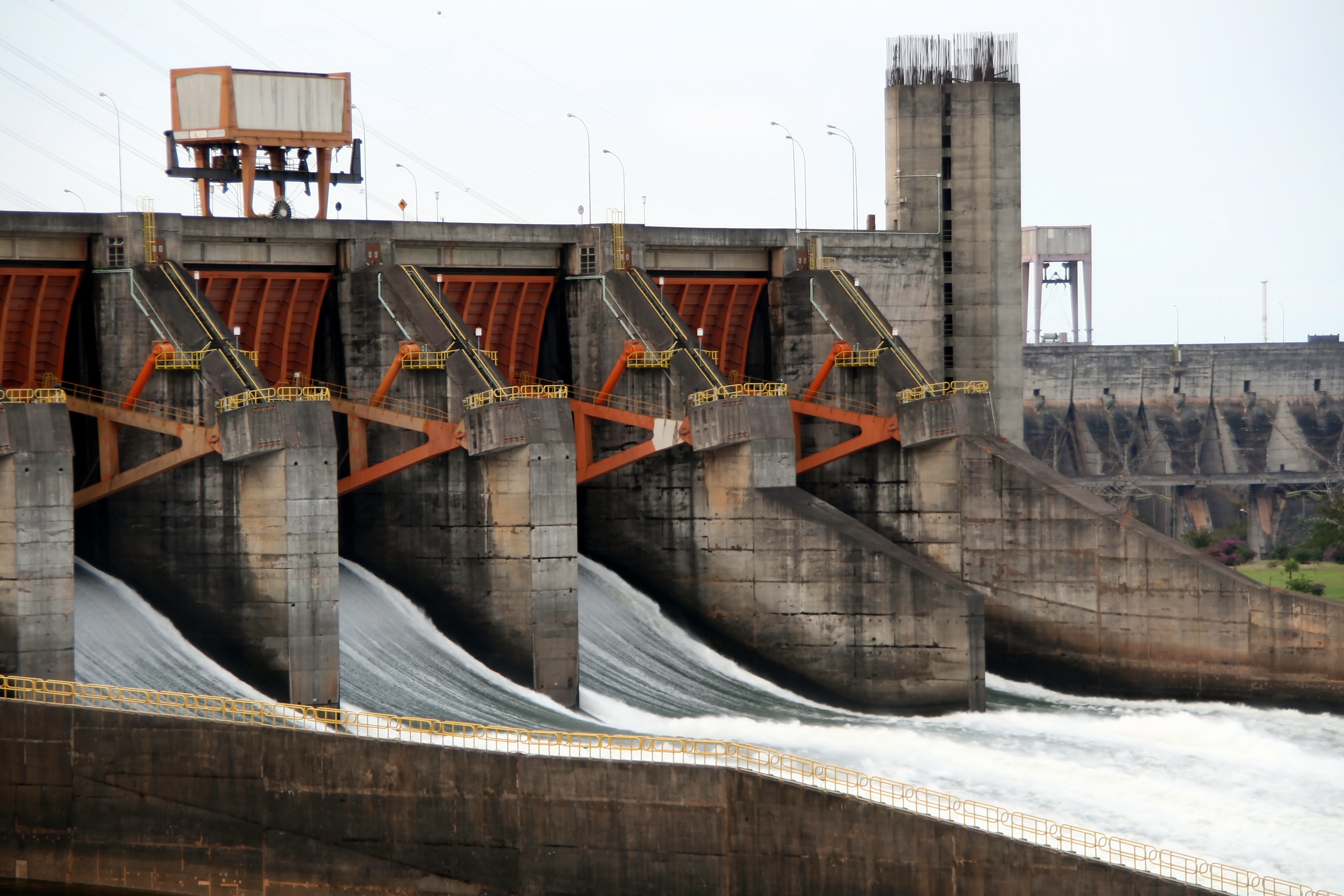
The Itaipú hydroelectric dam, the giant binational power plant Paraguay and Brazil share on the Paraná River, has held its spillway open continuously since October 3 as El Niño rains over southern Brazil sent the river into an extraordinary rise. By Monday, the plant was handling a total flow of between 18,000 and 19,000 cubic meters of water every second, its operations chief warned the reservoir had reached its maximum safety levels, and some 66 families — roughly 200 people — had been evacuated from low-lying neighborhoods in Ciudad del Este, Paraguay. Downstream, the surge forced the Yacyretá dam, shared by Paraguay and Argentina, to open its main spillway gates on Monday afternoon.
What the numbers say
Itaipú's operations superintendent, Silver Guerrero, told Paraguayan media the river's flow rose by 6,000 to 7,000 cubic meters per second in a single week before settling at 18,000 to 19,000 m³/s over the weekend — roughly triple the plant's long-term average inflow in dry years. An operations report on October 9 put the discharge through the spillway itself at about 4,800 m³/s, with the rest of the water passing through the turbines. Guerrero said the dam had reached its maximum safety levels and the gates would stay open all week: the opening is a regulation maneuver to protect the structure, releasing water the reservoir cannot hold.
At the Puente de la Amistad gauge between Ciudad del Este and Foz do Iguaçu, Brazil, the river stood at 109.17 meters above sea level, with Itaipú's hydrology division projecting between 109 and 112.5 meters in the coming days. On the Brazilian side, riverside flooding in Foz do Iguaçu's Porto Meira district begins around 119 meters — a level forecasters do not currently expect to be reached.
Evacuations on three borders
The human cost is concentrated in Ciudad del Este's riverside neighborhoods of San Rafael and San Roque, where at least 66 families were moved to safety by Monday and officials estimated around 100 homes could be affected as the water advances. Itaipú's own teams, Paraguay's National Emergency Secretariat, the navy and community volunteers have been helping residents carry belongings out of the flood zone, and evacuations intensified over the weekend.
Across the river in Argentina, authorities in Puerto Iguazú closed the port and evacuated riverside shops and restaurants as a precaution, and about ten families were assisted on Isla Apipé Grande in Corrientes province. The same rains tripled the flow of the Iguazú River in under 48 hours: on Monday morning more than 12,000 m³/s was pouring over Iguazú Falls — nearly nine times its average — and park authorities suspended visitor access to the falls' circuits.
Downstream, Yacyretá opens too
The water Itaipú releases does not disappear; it travels down the Paraná to Yacyretá, the Paraguay–Argentina dam some 300 kilometers downstream. The Entidad Binacional Yacyretá (EBY) said inflows there reached about 28,000 m³/s on Monday — 40 percent above the seasonal average — combining Itaipú's roughly 19,000 m³/s with an Iguazú River contribution that jumped from 1,500 to 9,000 m³/s after rains fell at five times the forecast amount. After first opening only its secondary Aña Cuá spillway, Yacyretá opened its main spillway gates on Monday, with inflows forecast to climb to between 29,000 and 32,000 m³/s in the coming days. The river at Ituzaingó, Argentina, reached 3.10 meters on Monday against an alert level of 3.50.
Yacyretá's technical chief on the Paraguayan bank, engineer Ronnie Ayala, stressed a point dam operators repeat in every flood: the gate openings do not cause the flooding — the same volume of water would arrive downstream with or without the dams, and the spillways exist to pass it in a controlled way rather than all at once.
Why this matters
Itaipú is not an ordinary dam. At 14,000 megawatts from 20 turbines, it is one of the largest power stations ever built, supplying the great majority of Paraguay's electricity and a major share of Brazil's. Its spillway is rated for 62,200 m³/s — more than the average flow of most of the world's great rivers — yet it is used rarely, only when the Paraná delivers more water than the turbines and reservoir can absorb. A continuous opening of more than a week, with both of the river's binational giants spilling at once, marks one of the basin's most significant flood events of the El Niño cycle. For the riverside cities of three countries, the next week depends on rain that has not fallen yet: forecasts call for more precipitation across the upper basin through Wednesday.
The viral video, checked
A dramatic video of the releases — watermarked by Paraguay's Monumental AM 1080 and shared widely on Monday, including by the X account Mario Nawfal — is genuinely spectacular, but it is a compilation, and not all of it is Itaipú. The roadside shots of a mist plume towering over a highway and the long, low gated barrage discharging in the rain match Yacyretá, the downstream dam that opened its main gates on Monday; only the closing shot, filmed from the platform above a three-channel chute, shows Itaipú's spillway. That closing angle also circulated during Itaipú's widely filmed 2023 spillway opening, and its date cannot be confirmed from the clip itself. What is confirmed — by both dam operators, on the record — is the event underneath the video: as of Monday, both Itaipú and Yacyretá are spilling, and the Paraná is still rising.
What happens next
Itaipú expects to keep its spillway open through the week, adjusting the discharge to rainfall in the Brazilian upper basin, and its hydrologists publish updated level forecasts daily. Yacyretá has warned riverside communities in Paraguay and Argentina to expect rising water even as its gates moderate the peak. Civil defense agencies in all three countries are telling low-lying residents to prepare to leave early rather than wait for the water. Signal Post News will update this story as new flow figures and evacuation counts are released.