A Night of Rain Istanbul Couldn't Drain: Cars Underwater, 1,277 Flood Calls
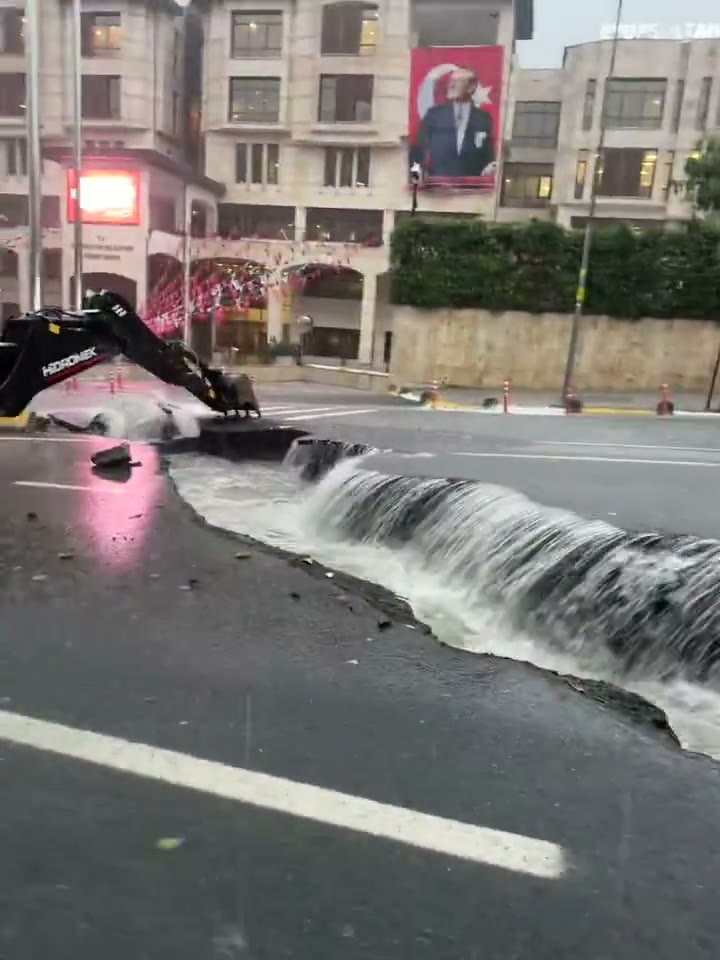
Istanbul woke up underwater on Wednesday. A storm system that settled over the city overnight delivered roughly 100 millimetres of rain in 12 hours — about 100 litres of water on every square metre — and by dawn, streets in district after district had become channels, ground-floor homes and basement apartments were taking in water, and cars stood submerged to their roofs with drivers climbing out through windows and onto the tops of their vehicles to wait for help.
The Istanbul Governor's Office counted 1,277 flooding incidents and 15 landslides across the city. The reports that flowed into emergency lines involved 808 homes, 280 businesses and 76 vehicles. Forty-seven people were left stranded by the water. Around 8,000 personnel and 2,000 vehicles from AFAD, the Istanbul Metropolitan Municipality and district teams were deployed through the night and into the day.
Acting mayor Nuri Aslan, speaking at the AKOM disaster coordination centre, put the citywide rainfall at about 100 millimetres in 12 hours — and the gauges showed how unevenly that water fell. The heaviest total was recorded in Beykoz's Ömerli area at 193.84 kg/m², nearly double the citywide figure. Arnavutköy recorded 125.9 and Sarıyer's Maslak district 124.72. Aslan urged residents not to leave home unless necessary as the rain shifted toward the Bosphorus and the Asian side of the city, with the downpour expected to continue into the following morning and gusts forecast at 75 to 80 kilometres per hour.
Rescues across nine districts
The flooding was not confined to one corner of the city. Esenyurt, Başakşehir's İkitelli area, Sultangazi, Büyükçekmece, Küçükçekmece, Sarıyer, Beykoz, Eyüpsultan and Avcılar all reported serious inundation — a list that spans both the European and Asian shores of a metropolitan area of some 16 million people.
In Esenyurt, a woman was swept away by floodwater and pulled to safety by residents. In Küçükçekmece, rescue teams reached occupants of a basement apartment as water rose around them — the housing type that flood researchers consistently identify as the deadliest in a flash flood, because a basement flat can fill in minutes and its windows are often barred or too small to escape through. In Sarıyer, water leaked and pooled inside the Hacıosman Metro station, a reminder that in a city built on hills running down to the sea, even the underground network sits in the water's path.
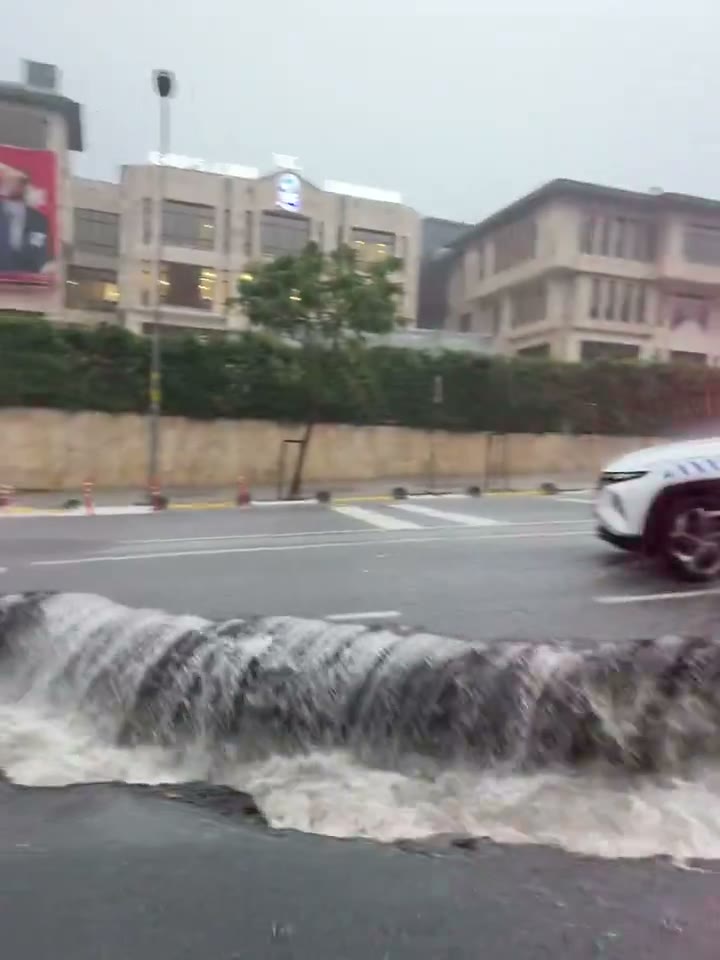
Traffic density reached about 90 percent across the city — effectively a standstill on the road network — as flooded underpasses, stalled vehicles and debris turned the morning commute into a second emergency layered on top of the first. No deaths had been reported in Istanbul in the official accounts as of the latest updates, a outcome officials credited to the overnight timing of the worst rain and to the scale of the deployment, even as the stranded-person rescues continued.
Why this matters
Istanbul's flood problem is, at its core, an arithmetic problem. The city has spent two decades building over the stream beds and valley floors that once carried storm water to the sea, replacing permeable ground with concrete across whole districts. Rain that would once have soaked in or run off through open channels now hits sealed surfaces and has only the storm drains to go to — and drains sized for ordinary autumn rain cannot move 100 millimetres in 12 hours, let alone the near-200 millimetres that fell on Beykoz. When the drains surcharge, the water follows the old stream beds anyway, through the streets and buildings that replaced them.
The geography compounds it. Istanbul is a city of steep hills. Water that falls on high ground in Sarıyer or Beykoz arrives downhill fast and concentrated, which is why the damage map of a single night's storm reads like a tour of the city's low points: the İkitelli basin in Başakşehir, the flat sprawl of Esenyurt, the shore districts of Büyükçekmece and Avcılar. Urban planners call these "blue corridors" — the paths water insists on taking regardless of what has been built on them. Wednesday's flood map and the city's stream-bed map are, in large part, the same map.
There is also a climate signal that officials in the region increasingly state out loud. The Mediterranean basin is warming faster than the global average, and warmer air holds more moisture — roughly 7 percent more for every degree Celsius — which loads storms with more rain to drop in the same number of hours. Cities around the northern Mediterranean have been hit in sequence this autumn; deadly floods in Catalonia earlier this month followed the same pattern of a slow-moving system wringing itself out over a coastal urban area. Istanbul's overnight deluge fits the pattern uncomfortably well.
How a night's rain becomes a city's emergency
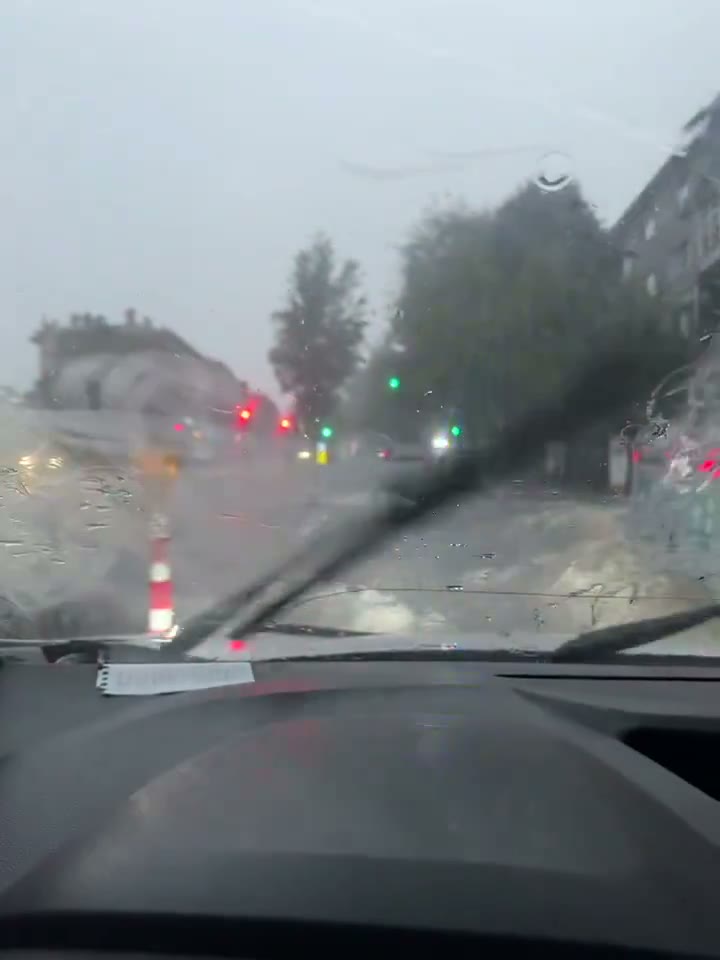
The sequence on Tuesday night into Wednesday followed the classic flash-flood script. Rain began and intensified overnight, when drainage failures are hardest to see and respond to. The first calls concerned underpasses and low streets; then, as water ponded faster than it could drain, ground floors and basements began to fill. Vehicles that entered flooded sections stalled as water reached engine intakes — the submerged cars that dominate the footage from the night, including a yellow taxi under water to its roof and residents standing on top of a car to stay above the current. By the time the morning commute began, the transport network was already compromised, and the 90 percent traffic density figure reflected a city trying to move through water it could not route around.
What distinguishes Istanbul's response from smaller cities hit by similar rain is scale and rehearsal. The AKOM coordination centre exists precisely for nights like this, and the deployment numbers — some 8,000 personnel and 2,000 vehicles across AFAD, the metropolitan municipality and district teams — reflect a system that has been exercised by floods, earthquakes and the February 2023 disaster response in the country's south-east. The 47 stranded-person incidents were resolved without a reported fatality in the city, which, given basement rescues in Küçükçekmece and a pedestrian swept off her feet in Esenyurt, was not a foregone conclusion.
What the numbers actually say
Put the headline figure in context. One hundred millimetres in 12 hours is roughly a month's typical October rain for Istanbul delivered in half a day. Beykoz's 193.84 kg/m² — a kilogram of water per square metre being a millimetre of rain — is closer to two months' worth. Across a built-up area the size of Istanbul's, that volume translates into hundreds of millions of tonnes of water arriving faster than any drainage network in the city was designed to carry it away.
The incident count tells its own story about where the water went. Of the reports logged, homes outnumbered businesses nearly three to one, and the 808 affected homes point to residential ground floors and basements — the city's most vulnerable housing — rather than the commercial districts that dominate flood imagery. Fifteen landslides on saturated hillsides round out a damage profile that is less about a single catastrophic breach and more about a whole urban fabric absorbing more water than it could shed. Similar saturation arithmetic has been behind this season's other urban flood disasters, from record rain in Las Vegas to the Mediterranean storms — different continents, same equation of sealed ground, intense rain and insufficient drainage.
What happens next
The immediate risk runs into Thursday. With soils saturated and drains already surcharged, even moderate additional rain on the Asian side and along the Bosphorus — where the system was forecast to move — can produce new flooding faster than the first round, because there is nowhere left for the water to go. The wind forecast of 75 to 80 km/h adds falling-tree and debris hazards to the flood risk, and officials' stay-home advice remained the operative guidance.
Beyond the cleanup comes the recurring argument. Each major Istanbul flood revives the same debate: how much of the damage is weather and how much is the two decades of construction on stream beds, valley floors and green space that once absorbed exactly this kind of night. The metropolitan municipality has channel-improvement and stream-rehabilitation programmes; critics in the opposition and in the engineering chambers argue the pace of development in districts like Esenyurt outran them long ago. Wednesday's damage figures — 808 homes, 280 businesses, 1,277 incidents — will now be entered as the latest evidence on both sides of that argument. The next storm, whenever it parks over the city for twelve hours, will grade the answers.
Sources: Istanbul Governor's Office incident figures; acting mayor Nuri Aslan's briefing at the AKOM coordination centre; Turkish and international reporting on the October 14 floods. Figures are as officially reported and may be updated as assessments continue.