Track it live: Wars tracker
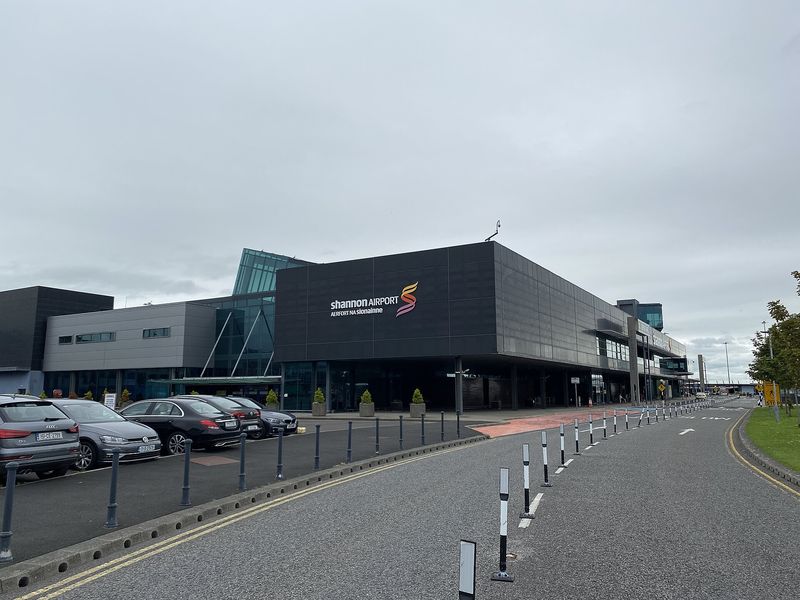
NEW YORK, November 17, 2026 — A federal grand jury has indicted an Irish national accused of breaking into Shannon Airport last April and destroying a U.S. military plane from the inside — a C-130H Hercules worth about $60 million that the Justice Department says will never fly again. The indictment of Daithi O’Corrain, also known as David Curran, 48, was announced on Tuesday by the U.S. Attorney for the Southern District of New York, Jamie McDonald, and FBI New York Assistant Director in Charge James C. Barnacle Jr.
O’Corrain is charged in a single count with destruction of government property, which carries a maximum sentence of 10 years in prison. The charges in the indictment are allegations only: he is presumed innocent unless and until he is proven guilty in a court of law. He is not in U.S. custody; he was arrested by Irish law enforcement at the scene in April, according to the Justice Department, and CNN reported that he was arrested by Irish authorities and is not in American hands. The Justice Department’s announcement does not state any motive for the alleged attack, and it does not say whether extradition has been requested.
What the indictment alleges happened on April 11
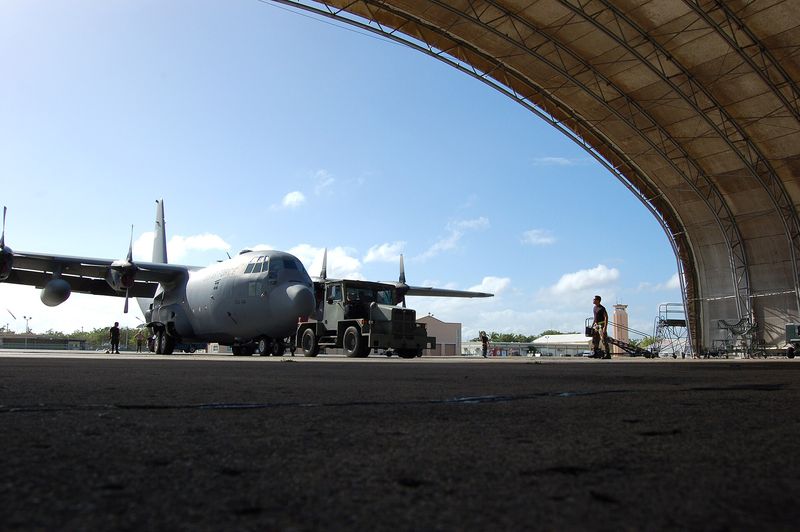
According to the indictment, as described by the Justice Department, the attack took place on the morning of April 11, 2026, at Shannon Airport in County Clare, Ireland — a major transatlantic hub long used by the U.S. military to move troops and equipment. Prosecutors allege that O’Corrain breached the airport perimeter and reached a parked U.S. Air National Guard C-130H Hercules that was en route onward on a U.S. assignment. He allegedly broke the lock on the rear crew door and barricaded himself inside the aircraft.
What he is accused of doing inside is the heart of the case. The Justice Department alleges that he cut wire bundles and hydraulic lines, crimped a liquid oxygen line, destroyed every gauge in the cockpit and punctured air ducts. He had allegedly brought with him capsules of gallium — a liquid metal that is corrosive to aluminium, the material of the aircraft’s structure. Prosecutors say that had he cut the liquid oxygen line rather than crimping it, there was a high chance of a massive explosion.
The flight crew’s return interrupted the alleged attack. Crew members saw him through the cockpit window, the Justice Department said; he allegedly escaped through a roof hatch, struck the aircraft’s exterior with an axe, and poured unknown substances and placed ball bearings into the fuel tanks before Irish law enforcement apprehended him at the scene. The result, prosecutors say, was an aircraft effectively destroyed: inoperable, worth approximately $60 million, and not to return to active flight status. The $60 million figure is the value of the aircraft, according to the Justice Department and Reuters — not a repair estimate.
Months of alleged planning
The indictment, as described by prosecutors, does not portray an impulsive act. The Justice Department alleges that O’Corrain spent months preparing: researching the construction of the C-130 online, ordering gallium on the same day as some of that research, acquiring tools, searching for the coordinates of a breach point, subscribing to a flight-tracking application, researching prior attacks on U.S. aircraft at Shannon, and attempting to contact a person involved in one of those prior attacks.
Each element of that alleged preparation matters to the legal case. A destruction-of-government-property charge turns on conduct, and evidence of research, procurement and reconnaissance is the kind of evidence prosecutors use to establish intent and premeditation — and to rebut any suggestion of accident or confusion. It is also, notably, all the indictment offers by way of explanation. The Justice Department states no motive, and this article will not invent one: the defendant has not been labeled by prosecutors as an activist or a terrorist, and the single charge he faces is a property-destruction charge, not a terrorism charge.
The fourth breach in a year
The April incident did not occur in isolation, and the Justice Department’s own account places it in a sequence. In the preceding year, prosecutors noted, Shannon saw a series of unauthorized-access incidents aimed at U.S. military aircraft: on May 1, 2025, a van was driven through the perimeter fence and three people were arrested; on May 17, 2025, intruders breached the runway and sprayed a U.S. aircraft with paint, with three arrested; and on November 22, 2025, a van breached the perimeter to reach a parked U.S. C-40, with three people detained. CNN reported that the O’Corrain case was the fourth unauthorized-access incident at the airport since May 2025.
That pattern is the security story inside the legal one. An airport perimeter is a system of fences, patrols, sensors and response times, and it is judged by its failures. Four breaches in roughly a year — three of them reaching parked U.S. military aircraft — raise questions that an indictment cannot answer: how the intruders got in, how long they had unobserved, and what has changed since. The April case is categorically more serious than paint or a detained van, because the alleged intruder got inside an aircraft and had time to work. The difference between vandalism and the destruction of a $60 million airframe was, on the Justice Department’s account, a matter of access and minutes.
Shannon and the American military
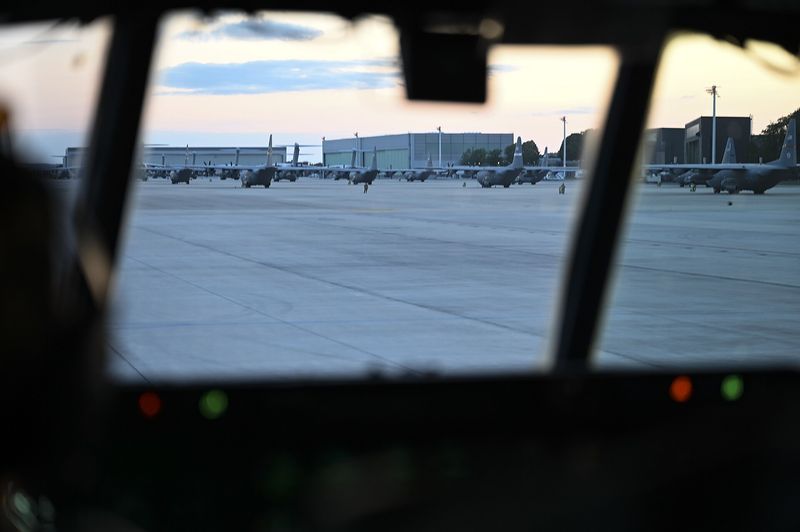
Shannon Airport’s role in American military logistics is decades old. Sitting on Ireland’s west coast at the edge of the Atlantic crossing, it has served for generations as a refueling and transit stop for U.S. military flights, and U.S. troops passing through Shannon are a familiar sight in the terminal. That role has always sat inside Irish politics: Ireland is a neutral country, and the use of a civilian Irish airport by a foreign military has drawn protest for as long as it has existed. The airport has a long history of protest incidents directed at U.S. aircraft, including an axe attack on a U.S. Navy aircraft by the activist Mary Kelly in 2003 — a case that remains the reference point for Shannon’s protest history.
Context is not motive, and it is important to keep the two separate. The Justice Department has offered no account of why O’Corrain allegedly did what he is accused of doing, and the history of protest at Shannon does not supply one for him. What that history does supply is the setting in which Irish and American authorities have had to think about the airport’s security: a civilian facility, in a neutral state, hosting the aircraft of a foreign power, with a documented record of people trying to reach those aircraft. April’s breach is the most destructive incident in that record by an enormous margin.
Why New York prosecutors?
An alleged crime committed in County Clare might seem an odd fit for the U.S. Attorney’s Office for the Southern District of New York. But the case announced on Tuesday is an American federal case about American government property, and it is being run by the office’s National Security and International Narcotics Unit, with Assistant U.S. Attorneys Jonathan L. Bodansky and Adam Z. Margulies prosecuting. The investigation was led by the FBI’s New York Joint Terrorism Task Force, with assistance from the Missouri Air National Guard, the U.S. Air Force Office of Special Investigations, the Justice Department’s National Security Division Counterterrorism Section and Office of International Affairs, and the Government of Ireland.
That lineup is itself a message. A U.S. indictment, unsealed with named prosecutors and a task-force pedigree, tells anyone contemplating a copycat breach that the response will not end with local charges in the country where the breach occurs. O’Corrain was, CNN reported, arrested by Irish authorities in April and charged in Ireland — TheJournal.ie, via Defence Blog, reported charges of criminal damage and trespass in Limerick District Court and a refusal of bail. The American case now exists alongside the Irish one. What the Justice Department has not said is how it intends to get him in front of an American court: the announcement does not state that extradition has been requested, and no claim to that effect should be made. He remains, as of Tuesday, not in U.S. custody.
The gallium question
Of all the details in the indictment, the gallium is the one that has drawn the most attention, and it deserves a careful explanation rather than a sensational one. Gallium is a metal that is liquid near room temperature and that attacks aluminium: when it comes into contact with aluminium alloys, it penetrates the metal’s grain structure and embrittles it — a process engineers call liquid-metal embrittlement. Aircraft are built overwhelmingly of aluminium alloys. A contaminant that silently weakens an airframe from within is therefore a particularly insidious thing to introduce into an aircraft, because the damage is not a hole you can see; it is strength you can no longer trust.
That is the technical background to the Justice Department’s conclusion that the aircraft will not return to flight status. Airworthiness is a standard of verified integrity: an aircraft flies when every load-bearing part of it can be certified. An airframe whose structure may have been exposed to a corrosive agent, whose wiring and hydraulics were cut, whose cockpit instruments were destroyed and whose fuel system was contaminated with unknown substances and ball bearings, is an aircraft whose integrity can no longer be certified without effectively rebuilding it. “Effectively destroyed” is, in that sense, a precise term, and the $60 million figure attached to it is the value of the aircraft that has been lost.
Why this matters
The case matters on three levels. The first is material: the United States has, on the prosecution’s account, lost a $60 million military transport aircraft — not in combat, not in an accident, but on the ground at a friendly civilian airport, to a single intruder with hand tools and capsules of liquid metal. Air forces plan against missiles and drones; this indictment describes a threat that walked through a fence.
The second level is security policy. Four unauthorized-access incidents at one airport in a year, three reaching U.S. aircraft, describe a perimeter problem that predates this defendant and will outlast his case. Whatever the verdict in a courtroom, the operational questions — fencing, surveillance, patrol patterns, the protection of parked foreign military aircraft at civilian fields — are now unavoidable for Irish airport authorities and for the U.S. military that relies on Shannon. The indictment’s deterrent message, delivered by senior officials in New York, is aimed at the next would-be intruder; the fence has to be aimed there too.
The third level is legal and diplomatic. The United States has chosen to indict a foreign national, held by a friendly country, for an act committed on that country’s soil against U.S. property — while saying nothing publicly about motive and nothing about extradition. How Dublin and Washington handle the space between an Irish prosecution and an American one will be watched well beyond this case, because the precedent governs every future incident at every allied airport the U.S. military uses.
What happens next
For now, the case proceeds on paper. The indictment is an accusation, and O’Corrain is presumed innocent of it unless prosecutors prove it beyond a reasonable doubt. The open questions are procedural as much as factual: the relationship between the Irish proceedings arising from his April arrest and the new American indictment; whether and when any extradition process begins — a step the Justice Department has not announced; and whether further charges follow. The destruction-of-government-property count carries a maximum of 10 years, a ceiling that frames, but does not determine, whatever sentence a conviction could bring.
What is not in question is the aircraft. On the Justice Department’s account, a C-130H that arrived at Shannon in April as a working military transport is a total loss, and the April morning that produced that loss has now produced a federal case in New York. Signal Post News will follow the proceedings as they develop.
Reporting based on the U.S. Department of Justice, U.S. Attorney’s Office for the Southern District of New York, with reporting by Reuters and CNN. The charges are allegations; the defendant is presumed innocent unless proven guilty. The Justice Department has stated no motive and has not announced any extradition request.
Sources
Sources: U.S. Department of Justice, U.S. Attorney’s Office for the Southern District of New York, press release (Nov. 17, 2026); Reuters (Nov. 17, 2026); CNN (Nov. 17, 2026).