Intuitive Surgical earnings season delivered a paradox on Tuesday: the robotic-surgery leader beat Wall Street on revenue and adjusted profit, placed a record number of da Vinci systems — and still saw its shares plunge after hours, because a $450 million antitrust settlement swallowed the quarter’s GAAP profit.
Technology / Markets — the robots are selling faster than ever; what investors are really pricing now is how much of that franchise Intuitive has to share
Track it live: live markets tracker
What Intuitive actually reported
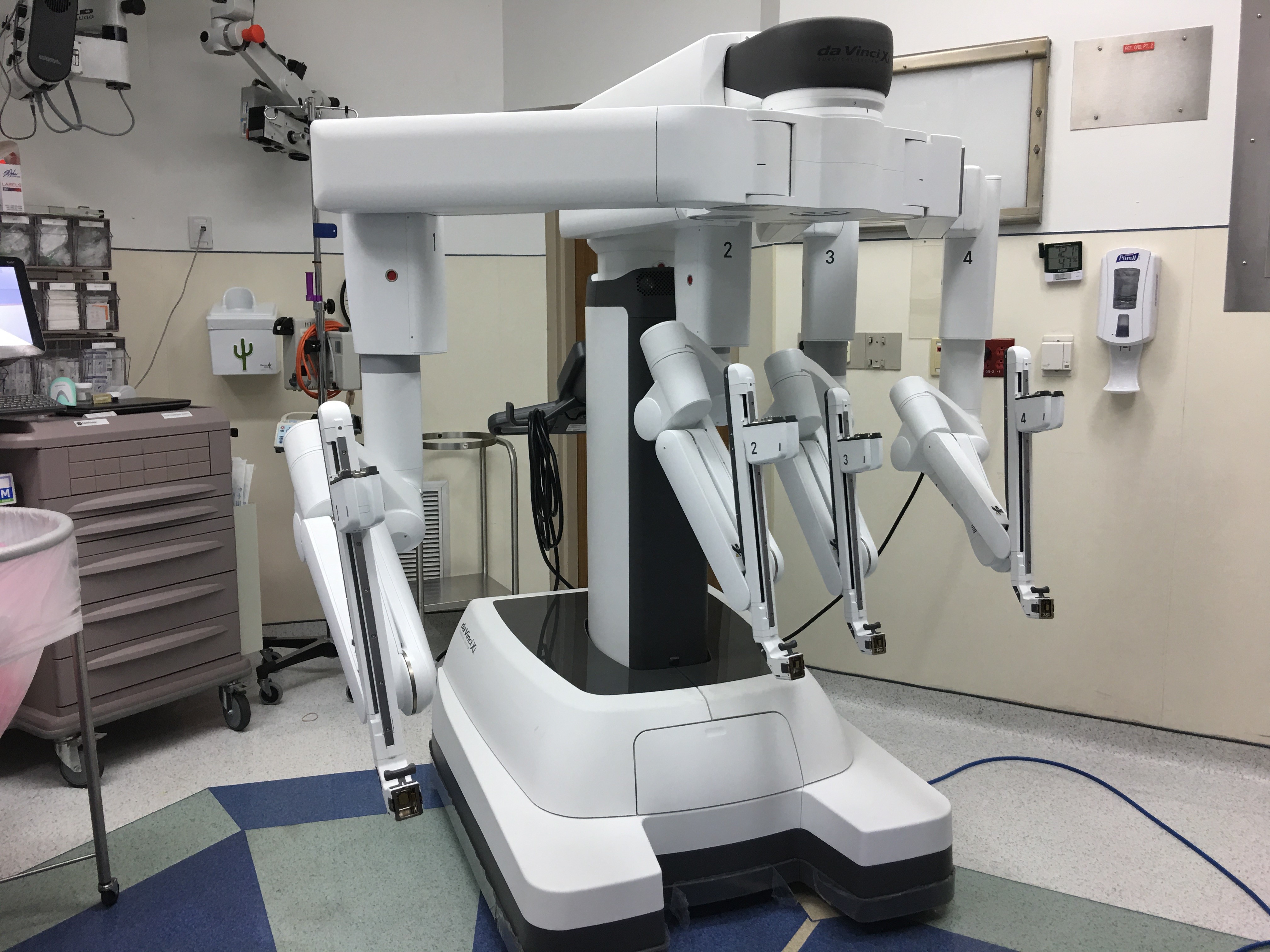
Strip out the legal charge and the operating quarter was the strongest in the company’s history by several measures. Worldwide procedures performed on Intuitive’s da Vinci and Ion platforms grew about 15 percent year over year — da Vinci procedures up about 14 percent and Ion lung-biopsy procedures up about 31 percent. Hospitals placed 546 new da Vinci systems in the quarter, including 315 of the newest da Vinci 5 model, against 427 placements a year earlier, lifting the installed base to 12,094 systems, up 12 percent. Ion placements were 56, taking that installed base to 1,152 systems, up 21 percent. GAAP gross margin was 68.4 percent and non-GAAP gross margin 69.9 percent. The company ended the quarter with $6.80 billion in cash, cash equivalents and investments — after repurchasing 7.8 million of its own shares for $2.94 billion during the quarter alone.
The settlement charge explains the entire gap between the two profit stories. GAAP income from operations fell to $593 million from $760 million a year earlier, while non-GAAP operating income rose to $1.27 billion from $976 million. Both GAAP and non-GAAP results also included a $22 million net-of-tax benefit from refunds of tariffs paid in prior periods under IEEPA. In other words: the business earned more than ever; the legal bill is what made the headline profit fall 26 percent.
The lawsuit behind the $450 million
The case — In re: da Vinci Surgical Robot Antitrust Litigation, in the Northern District of California — dates to 2021, when hospital systems sued over how Intuitive restricts third-party service, repair and remanufacturing of the EndoWrist instruments its robots consume. The instruments are the razor blades in Intuitive’s razor-and-blades model: each has a limited number of permitted uses, and hospitals argued the restrictions locked them into Intuitive’s own pricing. The court certified the class in March 2025 and trial had been set for September 2027. Following an October mediation, the company agreed in writing to pay $450 million once, accept mutually agreed injunctive relief, and admit no liability or wrongdoing. The settlement still needs preliminary and final court approval, and class members could object — a caveat the release states plainly.
Why this matters
The money is manageable; the conduct terms are the story. A $450 million payment is roughly 15 percent of one quarter’s revenue for a company holding $6.8 billion in cash — painful, not existential. What matters for the next decade is the injunctive relief agreed alongside it, which has not been published in full: if hospitals win wider rights to use third-party servicing and remanufactured instruments, the most profitable, most recurring slice of Intuitive’s model — instruments and accessories sold for every procedure, forever — gets its first real price competition. Management simultaneously told investors it will deliberately cut da Vinci instrument and accessory revenue per procedure by 3 to 5 percent, phased through 2027, to expand access to high-volume benign procedures, according to earnings-call reporting. Read together, the two moves point the same way: Intuitive is trading a little per-procedure pricing power for volume, installed base and legal peace — before regulators, courts or rivals force a worse trade.
The timing is not coincidental. Barron’s notes Johnson & Johnson’s Ottava soft-tissue robotic system won regulatory approval in July, and Medtronic’s Hugo system was cleared for urological procedures in December 2025. Intuitive has dominated soft-tissue robotic surgery for two decades; it now faces the first credible, deep-pocketed rivals at exactly the moment its aftermarket practices are being renegotiated in court. A settled lawsuit and cheaper instruments make a hospital’s decision to stay with da Vinci much easier to defend internally.
Why the stock fell anyway
Three things weighed on the shares beyond the charge. First, the guidance: Intuitive narrowed its full-year 2026 da Vinci procedure-growth outlook to 14 to 15 percent — the same midpoint as before — rather than raising it after a beat quarter, and call reporting flagged U.S. da Vinci procedure growth of about 10 percent, described as the slowest since COVID. Second, valuation: even after falling about 23 percent in 2026 before Tuesday — on pace for its worst year since 2022, per Dow Jones Market Data via Barron’s — the stock still trades at a premium multiple that leaves little room for merely-good news. Third, the settlement’s unfinished business: until a court approves it and the injunctive terms are public, investors cannot fully price what was given up. After-hours snapshots differed by window — Barron’s reported a plunge of about 11 percent, a Dow Jones wire report put the shares down 10.6 percent at $391.40, and an earlier Dow Jones summary showed a smaller decline — but every snapshot pointed the same direction.
What happens next
Watch three dates and documents. The court’s preliminary-approval process will reveal the injunctive terms — the single most important unknown for the stock. The phased instrument price cut through 2027 will show up in revenue-per-procedure figures each quarter; if procedure growth re-accelerates toward the high teens as benign-procedure volume opens up, the strategy is working. And the competitive clock is running: J&J’s Ottava launch cadence and Medtronic’s Hugo expansion will test whether 12,094 installed systems and a generation of surgeon training amount to a moat, or merely a head start. Intuitive also raised its non-GAAP gross-margin outlook to about 68.7 to 69.3 percent, per call reporting — confidence, at least, that the core economics survive the concessions.
Related coverage: Nvidia’s Vera CPU and the agentic AI push · Meta’s Prometheus supercluster · Pope Leo’s first Angelus since lung-cancer surgery
Sources
Intuitive Surgical third-quarter 2026 earnings release (GlobeNewswire, via Morningstar and TradingView, Oct 20, 2026); Barron’s, “Intuitive Surgical Stock Slides Despite Earnings Beat as Company Discloses Settlement” (Oct 20, 2026); Dow Jones Newswires via TradingView and Morningstar, “Stocks to Watch” (Oct 20, 2026, 19:33 ET); Investor’s Business Daily earnings coverage (Oct 20, 2026); Seeking Alpha news summary (Oct 20, 2026). Share-price moves are after-hours snapshots that differ by measurement window, as noted in the text.