The founder of transport giant PIMK and president of one of Bulgaria's oldest football clubs was killed overnight, confronting Plovdiv with a homicide whose reach crosses business, sport and civic life.
Iliyan Filipov was shot dead at about 1 a.m. local time on Wednesday, September 30, at a property he owned in Plovdiv, Bulgaria, according to Reuters and Bulgarian National Radio. BNR reported that he was shot in the head and that his death was established at the scene. Filipov was the founder and manager of PIMK, one of Bulgaria's largest transport and logistics companies, and the president and majority shareholder of top-flight football club Botev Plovdiv.
The killing immediately became more than a local crime story. One man sat at the center of two large, visible institutions: a freight business plugged into European commerce and a football club woven into the identity of Bulgaria's second city. His death creates an investigative emergency for the state, a governance crisis for the club and a succession question for the company — while leaving the central questions unanswered. Authorities have announced no motive, and no suspect has been publicly identified.
What happened: Plovdiv shooting September 2026 timeline
The first confirmed sequence is short. Around 1 a.m., Filipov was attacked at a property he owned in Plovdiv. BNR, citing the Interior Ministry, said he was shot in the head. Emergency responders established his death at the scene. The location's ownership matters as an investigative fact because it raises questions about access, surveillance and whether the attacker knew Filipov's movements, but it does not by itself establish planning or motive.
Bulgaria's Interior Ministry opened a serious-crime investigation. Police blocked Plovdiv's main entry and exit points, a response designed to constrict the movement of a possible assailant and preserve the first hours of the inquiry. Plovdiv lies about 90 miles, or 145 kilometers, southeast of Sofia. Closing routes around a major city carries a substantial cost, which underlines the urgency authorities attached to the case.
What investigators have not said is just as important. There has been no public account of a weapon, getaway vehicle, number of attackers or witness description. No motive has been announced. Reporting that a Bulgarian businessman was murdered is a statement of the confirmed event; labeling the crime a settled contract killing would go beyond the evidence now available.
Who Iliyan Filipov was: PIMK transport company Bulgaria and Botev Plovdiv
Filipov built his public profile through PIMK, which became one of Bulgaria's largest transport and logistics companies. The company's scale made him a significant figure in a sector that moves goods across borders and depends on fleets, depots, drivers, financing and contracts operating in sequence. In logistics, leadership shocks do not stay in the executive suite: lenders, customers and suppliers watch closely for signs that operations and payment chains remain steady.
His second sphere was football. As president and majority shareholder of Botev Plovdiv, Filipov led a club that competes in Bulgaria's top flight and carries more than a century of history. Founded in 1912, Botev is among the country's emblematic clubs, with a support base that treats it as a civic institution rather than simply a weekend team. The phrase Botev Plovdiv owner killed therefore describes a disruption felt by players, employees, supporters and the wider city.
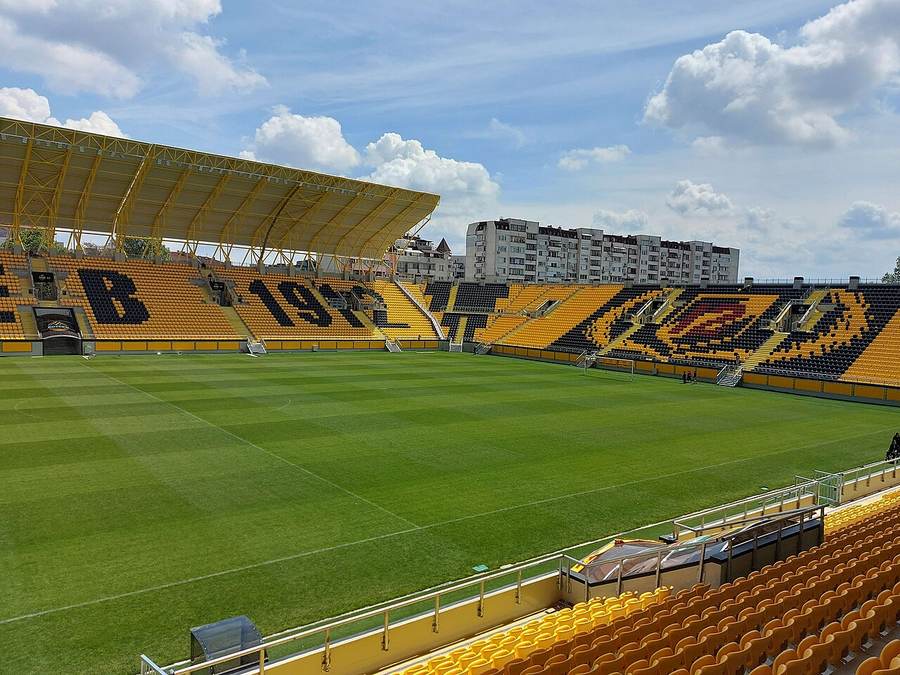
Filipov was also associated with the construction and reconstruction of Hristo Botev Stadium, the yellow-and-black ground shown above. Stadium projects bind private money, municipal interests, contractors and fan expectations together. They are physical symbols of continuity. His death will bring immediate scrutiny to which commitments were personal, which were corporate and which are secured by contracts that survive a change in leadership.
The Vanya Hristeva investigation: all leads, few public answers
Plovdiv District Prosecutor Vanya Hristeva gave the clearest official description of the investigation's scope: “We are actively pursuing all possible leads.” That is appropriately broad at the opening stage. Detectives will need to reconstruct Filipov's final movements, secure camera footage, examine communications and financial relationships, and determine who knew he would be at the property at that hour.
The phrase Vanya Hristeva investigation should not be read as evidence for any one theory. Business disputes, personal conflicts and links to football may all be examined because they form part of Filipov's life, not because officials have publicly connected any of them to the killing. A disciplined inquiry has to test competing explanations without allowing the victim's prominence to turn speculation into fact.
Police roadblocks can help in the immediate pursuit phase, but the case is likely to turn on evidence that travels more slowly: ballistic analysis, digital records, vehicle movements and corroborated witness testimony. The faster public pressure grows, the more important it becomes for prosecutors to protect the chain of evidence rather than satisfy demands for an instant theory.
Why this matters: a transport mogul and club president killed
The killing is unusual because it strikes two systems at once. PIMK is part of Bulgaria's commercial bloodstream; Botev Plovdiv is part of its cultural one. When an executive who controls both is removed violently, the uncertainty compounds. Corporate succession can affect freight contracts and jobs. Club succession can affect budgets, recruitment and confidence. The investigation itself becomes a test of whether Bulgarian institutions can provide answers in a case watched far beyond Plovdiv.
Searches for Iliyan Filipov assassination and Bulgaria contract killing reflect an understandable public fear, rooted in the country's history of high-profile gangland and business killings during the post-communist period. But history is context, not proof. The manner of the attack may cause investigators to examine whether it was planned and targeted; only evidence can establish who ordered it, if anyone, and why.
The distinction matters for Bulgaria's reputation inside the European Union. A premature narrative can damage legitimate businesses and institutions, while a slow or opaque inquiry can revive doubts about organized crime and accountability. The state's task is therefore twofold: solve the killing and communicate enough verified information to prevent rumor from filling the vacuum.
Context: PIMK, European logistics and a club founded in 1912
PIMK's importance comes from the networked nature of road freight. A large carrier is not merely a collection of trucks; it is a web of drivers, dispatchers, warehouses, insurers, fuel suppliers and customers across Bulgaria and Europe. Leadership continuity matters because counterparties price uncertainty quickly. If management can show that authority, liquidity and contracts remain intact, the commercial shock may be contained. If ownership or control becomes contested, uncertainty can spread through the chain.
Botev Plovdiv presents a different governance challenge. Clubs are emotional public institutions but often depend on concentrated private ownership. That structure can move quickly when an owner is committed, yet it becomes fragile when financing and decision-making are concentrated in one person. Botev's 1912 founding and top-flight status amplify the stakes: supporters will want sporting continuity, employees will need operational clarity and football authorities will expect the club to meet its obligations.
Across European football, ownership questions are increasingly inseparable from competitive results. Signal Post News has examined that broader environment in its coverage of the Champions League's new season and the politics surrounding Ireland's Nations League decision. Botev's immediate problem is more fundamental: stabilize governance after a violent loss while avoiding decisions that prejudge the criminal case.
Who wins and loses after the Botev Plovdiv president is killed
The clearest answer is that the losses are immediate and the supposed winners are unknowable. Filipov's family and colleagues bear the human loss. PIMK's employees and commercial partners inherit uncertainty. Botev's players, staff and supporters lose the president who represented the ownership project, while the stadium work associated with him faces questions about oversight and continuity.
It would be irresponsible to nominate a beneficiary without evidence. Business competitors may see an opening, club rivals may see sporting weakness and internal factions may seek influence, but none of those possibilities says anything about responsibility for the killing. Investigators, not market or football gossip, must determine whether any party gained in a way that is relevant to motive.
Institutionally, the potential winner is the rule of law — but only if the case is handled transparently and successfully. A credible investigation would demonstrate that status and complexity do not place a homicide beyond reach. A stalled case would impose a second cost by weakening public confidence in policing, prosecution and the safety of business life.
What happens next in the PIMK owner shot dead Bulgaria case
The first track is criminal. Authorities will seek witnesses and recordings, establish a precise timeline and test whether the attack involved advance knowledge. The public should watch for concrete developments — a verified suspect description, arrests, forensic matches or a prosecutor's account of motive — rather than anonymous theories. Until one of those appears, “all possible leads” remains the most accurate official description.
The second track is corporate. PIMK will need to identify who has authority to make operational and financial decisions and reassure employees and counterparties that freight continues moving. The third track is sporting. Botev Plovdiv must clarify interim leadership, funding and the status of commitments connected to Hristo Botev Stadium. Decisions taken quickly may be necessary, but durable governance will require a lawful resolution of ownership and succession.
Three scenarios frame the coming days. In the most favorable, evidence produces a quick identification and both institutions activate clear succession plans. In a more difficult case, the investigation remains open while PIMK and Botev operate under temporary leadership. The most damaging scenario would combine an unresolved homicide with contested control over one or both organizations. None can yet be assigned a probability from the public record.
For now, the essential facts are stark: the Botev Plovdiv president was killed in the city he helped shape through business and football; police responded on a citywide scale; and the reason remains unknown. Resisting unsupported certainty is not evasiveness. It is the only responsible way to report a case whose consequences are already visible while its cause is not.
Related coverage
Sources
- Reuters — “Bulgarian football club owner Iliyan Filipov shot dead, BNR reports” (September 30, 2026)
- Bulgarian National Radio / Radio Bulgaria — “Bulgarian businessman Iliyan Filipov shot dead in Plovdiv” (September 30, 2026)