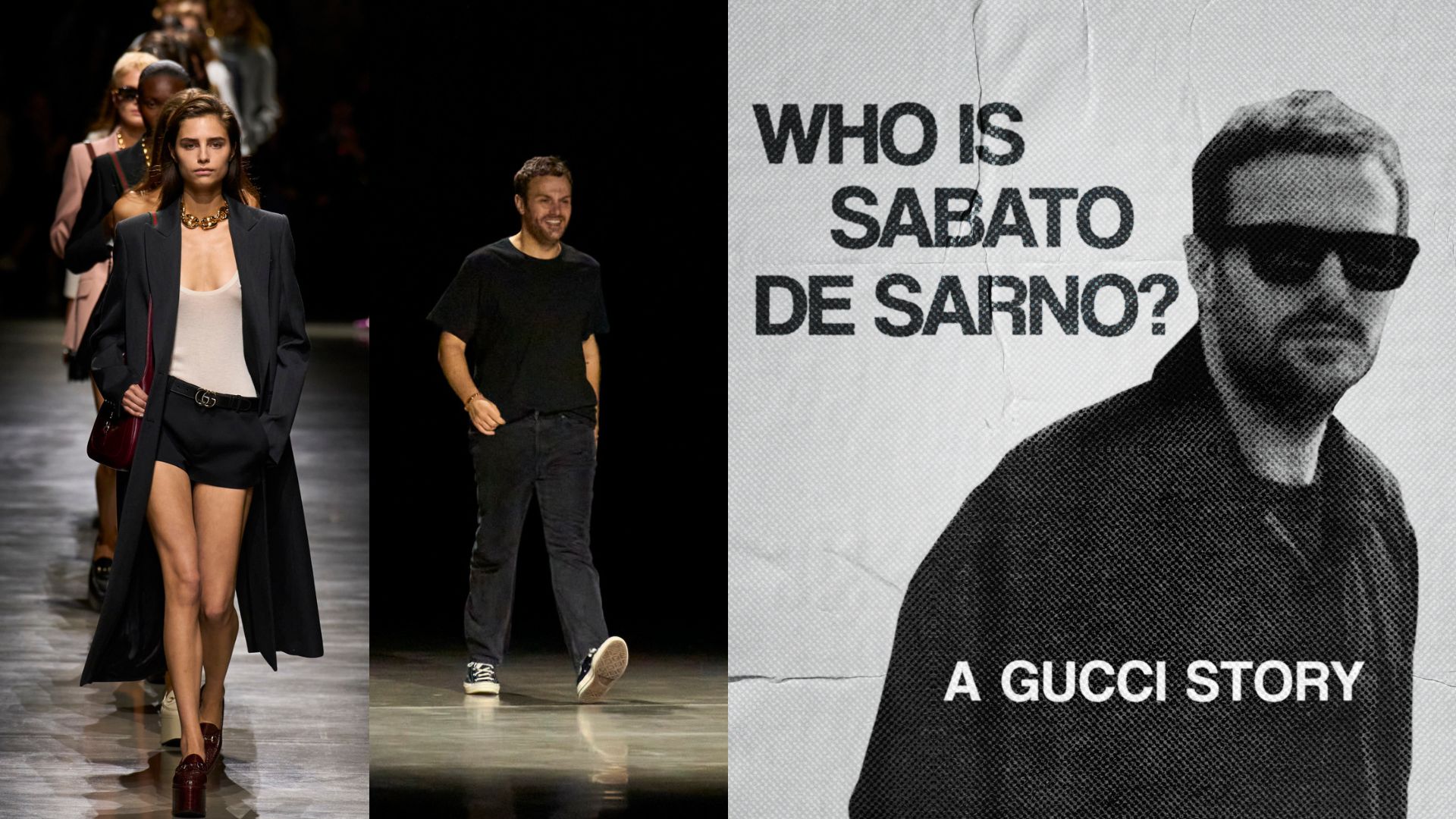
The appointment
Icicle confirmed on September 7 that Sabato De Sarno will become its creative director, overseeing women's and men's ready-to-wear, accessories and eyewear. His first full statement for the house is scheduled for autumn/winter 2027–28, giving him time to absorb a label whose language has been built around natural fabrics, restraint and a quieter idea of luxury.
The hire follows Kering's April 16 minority investment in Icicle's parent company, ICCF, under the group's “House of Wonders” initiative. Icicle was founded in Shanghai in 1997 and operates through a Paris–Shanghai structure. Its Paris studio, led by Bénédicte Laloux since 2013, will report to De Sarno. The company has more than 240 stores in mainland China and five outlets across Paris and Ireland; management has signaled expansion toward London, Milan and the United States, along with a larger push into handbags and footwear.
Why this matters
The appointment is the clearest sign yet that a Chinese luxury company wants to build a global house rather than remain a successful domestic label. Homegrown brands have gained share as Chinese shoppers become more selective about European names, but domestic scale does not automatically create international desirability. Icicle is paying for a designer whose résumé can open editorial, wholesale and talent doors in Paris and Milan.
ICCF executive Louise Xu said Kering's backing “will make us accelerate the next phase of development” and that the group would continue its international expansion, according to reporting cited by Metapress. For Kering, the investment is defensive and opportunistic: it offers a relatively low-cost position in Chinese luxury growth while chief executive Luca de Meo restructures a portfolio still burdened by Gucci's difficulties.
The De Sarno question
De Sarno spent much of his career at Valentino, rising as a trusted lieutenant to Pierpaolo Piccioli before Gucci chose him for its top creative job in 2023. His departure was announced in February 2025 after nineteen months and roughly half a dozen collections. Reviews often saw the work as inconsistent: polished and commercially legible, but without a sufficiently distinct answer to the question of what Gucci should become after Alessandro Michele.
Icicle may fit him better. Its proposition is deliberately understated — material, proportion and wearability matter more than viral runway theater. At a smaller house with a clearer identity, De Sarno will not have to reinvent a century-old global icon while satisfying every customer segment at once. Fashion history is full of designers who struggled inside one brief and flourished in another; the test is whether he can turn restraint into a recognizable point of view rather than anonymity.
Background: China's designer-import strategy
Icicle is part of a wider pattern. Bosideng hired Kim Jones in 2025, while Hermès-backed Shang Xia brought in Yang Li in 2021. The sequence is familiar: establish domestic scale, recruit internationally legible creative authority, then use stores and accessories to move from apparel company to luxury house. The strategy borrows prestige and know-how while trying to keep the brand's Chinese identity intact.
Results have been mixed because the customer proposition changes at the border. Icicle's domestic buyer may prize understated cashmere and natural-fiber tailoring at accessible-luxury prices. An international buyer encountering an unfamiliar name in London or New York expects a sharper reason to choose it over dozens of established houses. A famous creative director can attract the first look; only products with a durable house code earn the second purchase.
Winners, losers and skeptics
De Sarno wins a genuine second act. He receives a broad remit across ready-to-wear and accessories without carrying Gucci's scale or post-Michele expectations. ICCF gains a door-opening name as it negotiates retail locations, press attention and senior hires. Kering gains an option on a Chinese luxury platform without yet assuming the costs and risks of full control.
The skeptics have fair questions. Can De Sarno define Icicle after critics said he did not define Gucci? Will Chinese customers welcome a more runway-led direction, or see it as the dilution of a trusted local proposition? Does Kering's minority stake remain a partnership, or become a path toward control? And can any new luxury expansion succeed while demand is soft and consumers are questioning prices across the sector?
What the numbers mean
Icicle's 240-plus mainland stores give the company a revenue base and distribution network most emerging labels lack. Its five European outlets, however, underline how early the international project remains. The gap is both the opportunity and the risk: Europe and the United States could meaningfully broaden the business, but every new flagship brings high fixed costs before demand is proven.
Accessories matter because handbags, small leather goods and footwear generally offer luxury houses repeat purchases, higher margins and more visible brand symbols than clothing alone. If De Sarno's first collection earns attention but the accessories fail to create desire, the global plan will remain an apparel story. If the accessories work, Icicle can begin to behave like the house Kering is betting it may become.
What happens next
Three milestones will determine whether the appointment changes the business. The first is the autumn/winter 2027–28 debut, expected early next year. The second is the promised store rollout in London, Milan and the United States. The third is the accessories push, where luxury margins and brand recognition are usually built.
The competitive signal may travel beyond Icicle. A successful debut would encourage more Chinese groups to hire European creative directors and more European conglomerates to invest directly in Chinese labels. Even a mixed result would confirm that luxury's center of gravity is moving east: capital, customers and increasingly the ambition to create global houses are no longer flowing in only one direction.
Sources
Metapress, “Gucci owner Kering is backing Chinese fashion brand Icicle. Can it become a global luxury name?”, September 16, 2026: Read the report
Retail News Asia, “China Luxury Label Icicle Hires Former Gucci Head Sabato De Sarno,” September 2026: Read the report
NSS Magazine, “Sabato De Sarno appointed Creative Director of ICICLE and the Kering Partnership,” September 2026: Read the report
Le Monde, “Mode : Sabato de Sarno nommé directeur artistique d'Icicle,” September 7, 2026: Read the report
Reuters, “Moda, cinese Icicle nomina Sabato De Sarno, ex Gucci, come direttore creativo,” September 7, 2026: Read the report