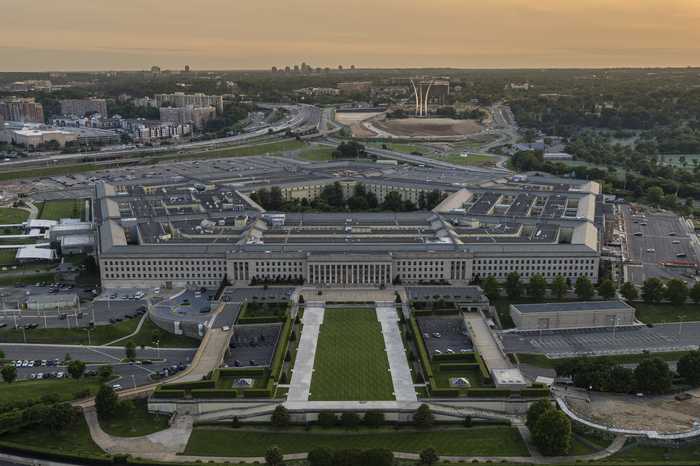
WASHINGTON — The Hegseth Pentagon religious affairs office is not merely another staff shop with a religious label. Defense Secretary Pete Hegseth announced in his September 30 “State of the Force” address that the Pentagon Office of Religious Affairs will deliver “first-class religious support” and report directly to him. That reporting line is the central fact. It elevates questions of faith from the service-level chaplain corps into the secretary's immediate policy orbit.
Hegseth framed the decision in explicitly spiritual terms. “Our department is, you might say, putting on the full armor of God, because while we wage physical war, we all know the real battle is spiritual,” he said. Some reports also quoted his next line: “God is good. Evil is not. America's military must understand the difference.” To chaplains, he offered a charge: “Live your calling. Stand firm. Preach truth. Minister to the flock.” He invoked Psalm 118:6 — “The Lord is on my side; I will not fear. What can man do unto me?” — and, according to The Christian Post, closed with “Fear no man.”
The Pentagon says the office will advocate for chaplains and religious support “at the highest level of the Department.” It also says the office will not “compel religious participation, favor one faith, or diminish the rights of personnel of any faith or lack thereof.” The underlying memo states: “Nothing in this memorandum shall be construed to compel religious participation or to diminish the free exercise rights of any Service member, civilian employee, or family member of any faith or no faith.”
Those assurances matter, but they do not settle the argument. In a civilian institution, an employee can often walk away from a supervisor's religious message. In the military, rank, orders, evaluation and unit culture shape how every message is received. A promise of neutrality must therefore be measured not only by formal wording but by what a junior enlisted member, minority-faith officer or nonreligious civilian reasonably understands when the secretary invokes spiritual warfare and creates a faith office answering directly to him.
Why the Hegseth Pentagon religious affairs office matters
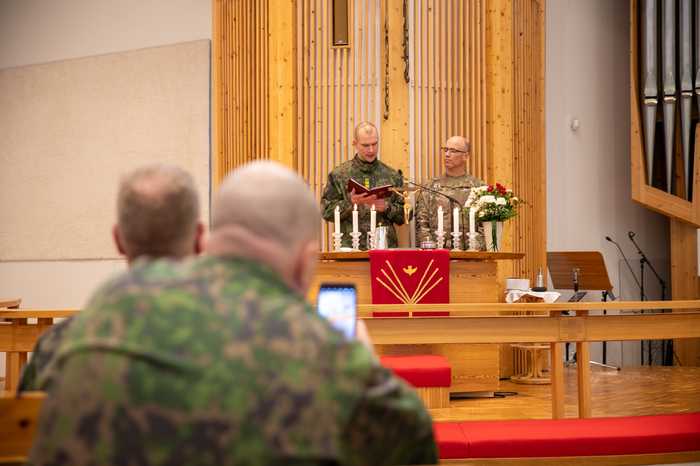
The military chaplaincy already exists throughout the armed services. Chaplains are commissioned officers embedded in units and commands, serving troops where they train, deploy and live. Their work is deliberately pluralistic: a chaplain can conduct rites within the chaplain's tradition while also helping any servicemember obtain support consistent with that member's faith or nonbelief. The system is imperfect, but its service-level and command-level distribution gives religious support many operational entry points rather than one political center.
A Pentagon Office of Religious Affairs that reports directly to the secretary changes the institutional geometry. It can give chaplains a stronger voice in department-wide decisions, cut through service bureaucracy and identify common problems across the force. It can also concentrate interpretive power. Whoever staffs the office may influence which religious-support concerns reach the secretary, how “spiritual readiness” is defined and whether policy disputes are framed as operational issues, free-exercise issues or moral contests.
Analysis: Direct access is not inherently improper. Secretaries routinely use specialized offices to elevate priorities that otherwise get diluted. The constitutional risk comes from the combination of access, mission and rhetoric. If “spiritual readiness” means ensuring every member can practice — or decline to practice — according to conscience, it can reinforce readiness and equal service. If it becomes a policy channel through which one theological worldview defines military virtue, it begins to turn command influence into religious preference.
The distinction is practical, not academic. Chaplains advise commanders on morale, ethics, family strain, grief and the religious dimensions of deployments. A secretary-level office could bring those insights into personnel and readiness decisions. But the military also asks people of many beliefs to trust one chain of command. The office's legitimacy will depend on whether its advocacy extends with equal seriousness to Christians, Jews, Muslims, Hindus, Buddhists, Sikhs, adherents of smaller traditions, atheists, agnostics and people who decline any label.
Background: Pete Hegseth's faith-infused Pentagon
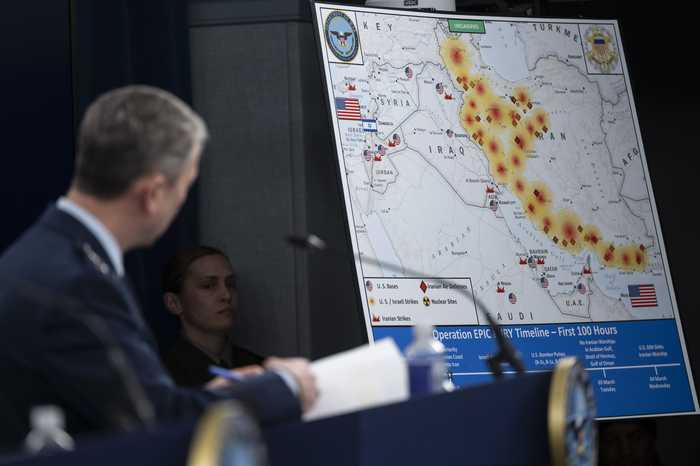
The office arrives after months in which Hegseth has made evangelical Christianity unusually visible in Pentagon leadership. The Associated Press reported that he has hosted Christian worship services for employees and often spoken of the United States as a Christian nation. Those choices give the new office a context that a neutral bureaucratic title cannot erase. Supporters see a leader ending what they regard as official discomfort with faith. Critics see a secretary using the authority of the department to normalize his own religious commitments.
The Pentagon is already in court over transparency surrounding those services. Americans United for Separation of Church and State sued the department under the Freedom of Information Act after, the organization says, the administration refused to fulfill requests for records concerning Hegseth's monthly, predominantly Christian prayer services. The lawsuit is about access to public records; it is not a lawsuit seeking to stop the services. That distinction matters because the case's immediate legal question is whether the government improperly withheld documents, not whether a court should prohibit worship inside the Pentagon.
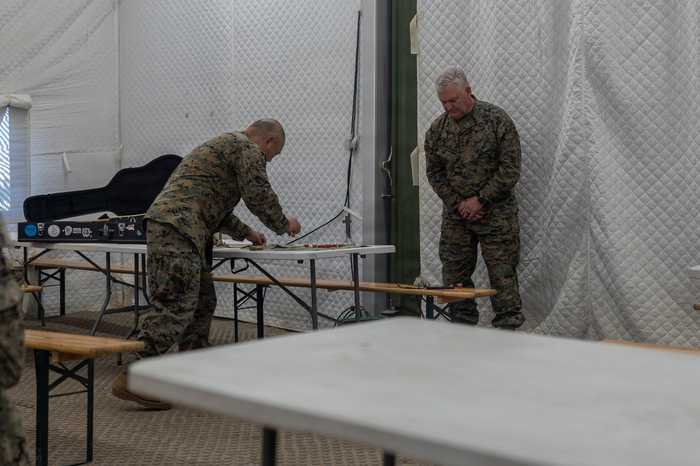
Hegseth also announced in March 2026 that military chaplains — who are commissioned officers — would stop displaying rank on their uniforms and instead be identified by religious insignia. The military chaplains rank uniforms order is symbolically potent. Removing rank can emphasize a chaplain's pastoral role and make a distressed servicemember less conscious of hierarchy. Yet chaplains remain officers inside the chain of command, with military authority, evaluations and institutional responsibilities. A uniform change cannot dissolve those facts.
The broader idea of a faith-focused office is not without federal precedent. Faith-based or religious-engagement offices have existed across administrations since George W. Bush and continued under Barack Obama and Joe Biden. Donald Trump established a White House Faith Office and pursued a similar effort in his first term. Under Obama, Shaun Casey led the State Department's Office of Religion and Global Affairs, an example of religion treated as a subject of diplomacy and policy rather than a government endorsement of belief.
Analysis: Precedent answers only the first question: can government maintain an office that deals with faith? Yes, it has. It does not answer the harder questions about purpose, safeguards or command power. A liaison office that helps agencies understand religious communities is different from an office inside the armed forces defining spiritual readiness for personnel who are legally obligated to follow orders. The institutional setting changes the constitutional stakes.
Supporters' case: chaplains at the top table
The strongest argument for the Pentagon Office of Religious Affairs is institutional neglect. More than 3,000 chaplains serve across the military, according to Pentagon figures cited by the National Guard Association of the United States. Their work touches service members and families during deployments, deaths, moral injury, marital stress, isolation and crisis. Yet issues that chaplains see firsthand can compete with acquisition, operations and personnel systems for senior attention.
A direct line to the secretary could make religious accommodation more consistent across services and installations. It could help resolve recurring problems involving worship space, dietary practice, religious attire, holy-day schedules and access to clergy. For chaplains themselves, a central advocate may strengthen professional standards and defend resources. Supporters can reasonably argue that a workforce responsible for the spiritual and emotional care of millions of service members and relatives deserves a voice in department-wide policy.
The memo also promises “faith-based homeschool support for military families” and “faith-based initiatives supporting Department-wide suicide reduction.” Both address recognizable pressures. Military families move often, navigate uneven school options and may use homeschooling for continuity. Suicide prevention remains a grave readiness and human problem. Faith communities can provide belonging, purpose and practical support that some families find essential.
Analysis: The benefit depends on design. Homeschool support should not become a privilege limited to families with approved religious motivations; practical education help should be available on equal terms. Suicide-reduction partnerships may add trusted channels, but they cannot substitute for clinical care, evidence-based prevention or crisis services. Faith can be one resource among several. It should never become the condition for receiving help.
Critics' case: neutrality, the Establishment Clause and the affiliation cut
Critics are not objecting to chaplains serving religious troops. The core objection is that the government may be favoring one tradition through policy, language and access. Rachel Laser, president of Americans United, told the Associated Press that the Pentagon “owes it to the nation's service members to defend religious freedom.” She said: “Hegseth's latest announcement violates that promise by elevating Christianity to an even higher role in shaping U.S. military policy.”
The Establishment Clause concern is sharpened by the secretary's rhetoric. “Full armor of God” is a recognizable Christian biblical reference, and the surrounding statements describe military purpose in a moral binary. A secretary is entitled to personal faith and public expression. The government, however, must protect both free exercise and freedom from state religious coercion. In a hierarchical institution, even optional participation can feel less than optional when senior leaders repeatedly associate professional virtue with a particular faith.
The Pentagon's handling of recognized religious affiliations deepens that concern. The department cut a list of more than 200 affiliations to 31, according to the Associated Press; atheists, Unitarian Universalists, pagans and Wiccans were no longer included. Religion News Service reported in June 2026 that the list was later narrowed again to 30 after backlash. The number may have been revised further since, so 31 should not be treated as a permanent current count.
Administrative lists can look technical, but they carry a message. They affect how people identify in personnel systems and whether a tradition appears visible to the institution. A smaller list may simplify data management, yet removing minority traditions and nonbelief categories tells affected personnel that their identities are either inconvenient or unseen. That signal is especially consequential when the same department is creating a senior religious office and using explicitly Christian language.
Who benefits: chaplains may gain institutional standing, senior access and a clearer route for department-wide concerns. Faith-based family programs may gain sponsorship and resources. Service members whose beliefs align with the office's priorities may feel newly recognized.
Who risks losing: minority-faith and nonreligious personnel may doubt whether the office represents them, particularly after the affiliation cut. Commanders may receive ambiguous signals about where legitimate spiritual support ends and preferred belief begins. The department itself may lose trust if stated neutrality is not matched by staffing, guidance and measurable equal treatment.
What the Pentagon's religious data can — and cannot — prove
Debate over the new office quickly turns to numbers, but the available data is dated and incomplete. The Pentagon's last official religious-makeup report is from 2019. It listed about 70 percent of personnel as Christian, 2 percent as atheist or agnostic, and 24 percent as unclassified or unknown. Those figures describe the reporting system seven years ago, not a precise 2026 census of belief.
Hegseth said in his September 30 speech that “less than 5%” of the joint force identifies as nonreligious and that 95 percent recognize “an Almighty God.” The Washington Examiner noted that he had previously cited a different figure: 82 percent of troops identified as religious. Outlets examining the latest claim said he appears to be counting the unknown or unclassified category as religious.
That move would be analytically unsound. “Unknown” does not mean religious, just as it does not mean atheist. It can include people who declined to answer, were never classified, used a category later removed or had records that did not map cleanly. Folding nearly one-quarter of the force into a religious majority converts missing information into a conclusion.
Analysis: The 2019 data supports a modest claim: Christianity was the largest identified religious category in the force, while a substantial share was unclassified or unknown. It does not support certainty that 95 percent recognize God. Nor does the 2 percent atheist-or-agnostic figure capture everyone who may be nonreligious, because the unclassified group is so large. A credible Office of Religious Affairs should commission transparent, methodologically clear data rather than use ambiguity to validate a preferred narrative.
The corps size matters too. More than 3,000 chaplains represent a major professional network, but headcount alone does not establish whether its religious representation matches the force or whether every installation has appropriate support. The useful questions are distributional: which faith groups are served, where shortages exist, how accommodation requests are resolved, and whether people without a faith receive equally respectful care.
What happens next for the Pentagon Office of Religious Affairs
The first test is transparency. The pending Americans United FOIA suit can reveal how Hegseth's monthly worship services were organized, who participated in official capacities and what government resources were used. Because the suit concerns records rather than an injunction against the services, its immediate effect will be informational. But the resulting documents could shape the broader constitutional and political debate around the new office.
Congress has several oversight paths. Lawmakers can ask who will lead the office, how staff are selected, what budget and authorities it receives, and whether its guidance will be binding. They can seek written standards for neutrality, accommodation and data collection. Appropriators can require reporting on programs, while defense committees can question whether “spiritual readiness” has an operational definition and how it will be kept separate from religious tests for service.
Staffing will be an early signal. A genuinely pluralistic office would include advisers with experience across multiple faith traditions and with nonreligious personnel, and it would publish mechanisms for complaints and appeals. A narrow staff drawn from one theological network would reinforce critics' fears even if formal documents repeat neutral language. Representation is not proof of fairness, but absence can expose whose concerns were not considered.
Policy output will matter more than ceremony. Watch whether the office issues guidance on military chaplains' rank uniforms, reshapes religious-affiliation categories, funds family programs, influences suicide-prevention initiatives or intervenes in accommodation disputes. Also watch whether service-level chaplain leadership retains professional autonomy. A secretary-level office can coordinate; it can also pressure existing institutions to align with the secretary's religious and political vision.
Recruiting and retention provide another measure. Many recruits come from religious communities and may welcome visible support. Others may avoid or leave an institution they perceive as equating military identity with Christianity. The armed forces compete for talent across a pluralistic country. An office intended to strengthen morale could undermine it if members conclude that conscience is respected only when it matches leadership.
Analysis: The decisive evidence will be ordinary administrative behavior. Are accommodations granted consistently? Are minority traditions restored to personnel systems? Can an atheist seek counseling from a chaplain without being proselytized? Can a Christian officer attend worship without suspicion that career advancement depends on it? Can commanders explain the office's mission without implying that belief is a readiness requirement? Those answers will reveal more than any inaugural speech.
Conclusion: faith now has a direct line to the secretary
Hegseth's “full armor of God” announcement gives religious affairs unusual visibility at the Pentagon. The best case is a stronger advocate for chaplains, military families and the free exercise rights of every person in uniform. The worst case is a command-level channel that privileges one faith while using readiness language to make dissent feel disloyal.
The Pentagon's own memo promises no compelled participation, no favored faith and no diminished rights for people of any faith or no faith. That is the correct standard. The challenge is that Hegseth's rhetoric, worship services, affiliation cuts and chaplain-uniform policy have already made neutrality a contested claim rather than an assumption.
Analysis: The office should be judged neither by the sincerity of Hegseth's beliefs nor by hostility to religion. It should be judged by power: who gets access, whose conscience is protected, what policies change and whether troops can say no without consequence. In the military, faith meets the chain of command under conditions unlike any other workplace. That makes the office's direct reporting line both its promise and its danger.
Sources
- Associated Press, via Akron News-Reporter (October 2, 2026) — office announcement, speech, policy and reactions
- USA Today (September 30, 2026) — Office of Religious Affairs and chaplain-insignia order
- The National News Desk / WUTV (September 30, 2026) — State of the Force speech and “full armor of God” remarks
- Americans United for Separation of Church and State — FOIA lawsuit context and response
- National Guard Association of the United States — chaplain rank change and corps size
- Religion News Service (June 8, 2026) — revision of recognized religious affiliations
Image sources: Public-domain U.S. military photographs were sourced through Wikimedia Commons and are credited under each image.