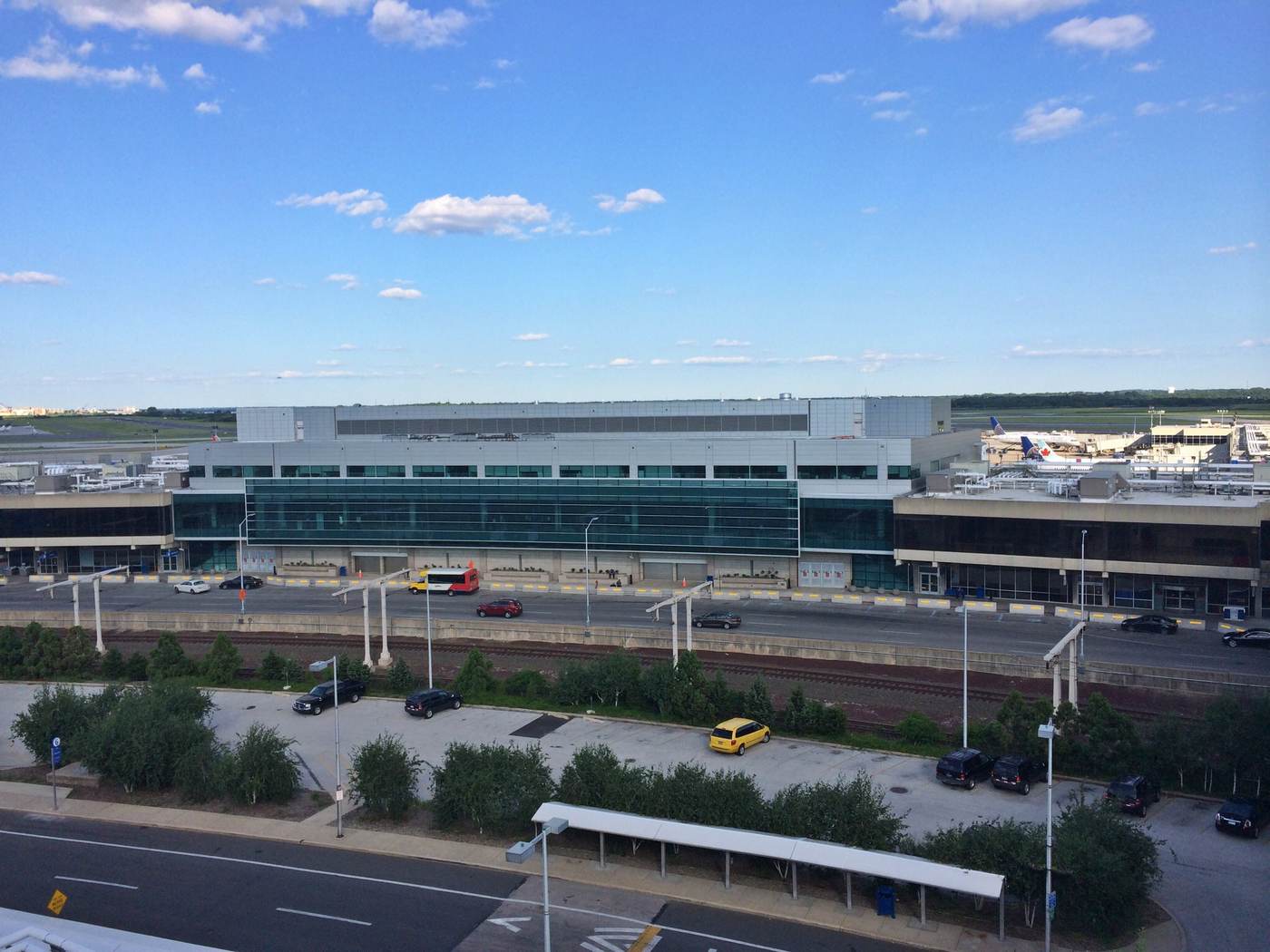
Federal Aviation Administration ground stops and delay programs rippled across the northeastern United States on Monday, September 21, after the primary communications circuit serving Philadelphia Terminal Radar Approach Control failed and the backup fiber route was found severed at a New Jersey construction site.
The disruption began around 9:30 to 10:00 a.m. Eastern Time at Philadelphia International Airport, Newark Liberty International Airport and Teterboro Airport. By early afternoon, restrictions had extended to John F. Kennedy International Airport and LaGuardia Airport; Westchester County Airport was also listed. Boston Logan International Airport moved into ground delays as diverted traffic accumulated.
The immediate story is a transport failure. The larger one is a resilience failure: a primary circuit went down, and the system expected to carry traffic when that happened was already physically damaged. That combination forced safety restrictions across some of the country’s busiest and most interconnected airspace at an unusually sensitive moment, with foreign leaders and diplomatic delegations arriving in New York for the United Nations General Assembly.
What failed at Philadelphia TRACON
A TRACON, or Terminal Radar Approach Control facility, guides aircraft as they transition between an airport and the higher-altitude airspace used during the cruise portion of a flight. Controllers sequence arrivals, separate departing aircraft and coordinate traffic across multiple nearby airports. The Philadelphia facility supports traffic associated with Philadelphia, Newark and Teterboro, so a communications problem there can reach far beyond one runway or terminal.
FAA Administrator Bryan Bedford said the primary circuit serving the facility failed Monday morning. When controllers attempted to switch to the backup, officials discovered that the fiber-optic line had been severed at a construction site in New Jersey. Bedford said repairing the damaged fiber could take about 13 hours; the agency was also installing a replacement circuit rather than waiting only for the physical repair.
The FAA’s ground stops were a safety response, not evidence that aircraft had lost separation in the air. A ground stop holds flights at their departure airports so controllers do not receive more traffic than the available communications system can handle safely. That protects the airspace while concentrating the cost on passengers, airlines, crews and airports elsewhere in the network.
Responsibility for the cable cut remains disputed
The existence of the severed fiber line is established in the reporting. Responsibility is not yet described consistently by the agencies involved. Transportation Secretary Sean Duffy wrote that an Amtrak construction crew cut the line. NJ Transit said one of its contractors severed the cable while working at an unrelated site. Those accounts may ultimately refer to the same contractor, work zone or chain of responsibility, but the public statements available Monday afternoon do not prove that.
That distinction matters. Identifying the employer, contracting authority, marked utility route and excavation safeguards will determine accountability and reveal whether the incident was a contractor error, a coordination failure among infrastructure owners or a weakness in how critical aviation circuits are routed and protected. Until an incident report reconciles the accounts, attributing the cut definitively to Amtrak or NJ Transit would go beyond the evidence.
By about 5:00 p.m. Eastern Time, NJ Transit said its contractor had repaired 36 of 56 fiber cables and expected the remainder back “shortly.” That was a progress report, not confirmation that every aviation communications function or airline schedule had returned to normal.
Hundreds of delays and a national ripple effect
Flight-tracking data cited in afternoon reports counted more than 600 delayed flights at Newark and Philadelphia, affecting more than one-fifth of the day’s schedule at each airport. Newark recorded about 92 cancellations and roughly 70 diversions, including long-haul arrivals from Europe and the Middle East rerouted to Detroit and Washington Dulles. Average delays exceeded two hours at Newark and Philadelphia; Teterboro reported waits of more than four hours.
United Airlines, whose largest hub is Newark, reported 161 cancellations and 343 delayed flights across its operation and waived change fees for affected customers. The airline said flights bound for Newark were being held at their origin or diverted to alternate airports and that it would work to reposition passengers after the FAA restrictions were resolved.
The network effects did not stop at the coast. Cincinnati/Northern Kentucky International Airport recorded 50 delayed flights and nine cancellations Monday afternoon, with canceled departures to Newark, Boston and Philadelphia among those listed. Boston’s delays reflected the same system pressure from another direction: when aircraft divert, the receiving airport must absorb additional gates, fuel stops, crews and airspace demand.
The figures are time-stamped snapshots, not final daily totals. A flight can move from delayed to canceled, and a diversion can produce a second disruption when an aircraft and crew end the day in the wrong city. The eventual passenger impact will therefore be larger than any single afternoon count.
Why the U.N. General Assembly timing matters
The stops arrived as heads of government, diplomats and security teams were traveling to New York for the U.N. General Assembly. That does not make the infrastructure failure a diplomatic incident, and there is no evidence in the cited reporting of deliberate interference. It does raise the consequences of an ordinary construction accident: international arrivals, official schedules and the city’s security planning all depend on an aviation system with little tolerance for a regional bottleneck.
Newark and JFK handle long-haul arrivals as well as dense domestic connections. Teterboro serves substantial business and private aviation traffic. Disruption across all three can scatter passengers and aircraft over distant alternates at the moment New York’s transport and security systems are already under unusual demand. The political importance lies in exposure, not motive—the outage demonstrated how a damaged terrestrial cable can become a constraint on national and international mobility.
A redundancy problem with recent precedent
This was not the first communications problem connected to Philadelphia TRACON. In May 2026, Area C experienced a roughly two-second radio outage days after a separate failure prompted a ground stop for Newark-bound flights. The brief duration of that radio interruption did not make it trivial; aviation safety depends on reliable communications precisely because controllers cannot assume a lost channel will return before a conflict develops.
Monday’s event is more revealing because the primary and backup paths failed for different reasons. Redundancy works only when backup equipment does not share a vulnerable physical route, maintenance dependency or construction corridor with the primary system. The necessary review is therefore not limited to how quickly technicians repaired the cable. It should ask where both circuits ran, who knew about work nearby, what automatic alarms were available and whether another independent path could have carried essential frequencies.
Infrastructure modernization is often discussed as a question of new radar, software and controller staffing. Fiber routes, leases, trench maps and construction coordination are less visible but equally operational. A modern control facility can still be constrained by a cut cable if the communications architecture around it has a single point of physical failure.
Who carries the cost
Passengers bear the most visible losses: missed connections, extra hotel nights, uncertainty and the difficulty of retrieving baggage after a diversion. Airline crews can run out of legal duty time, extending disruption into the next day. United bears particular exposure because of Newark’s role in its network, but competitors and regional airports also inherit aircraft and passengers displaced by the same restrictions.
The FAA’s decision to reduce demand protects controllers and travelers from a risk that cannot be priced against convenience. The relevant policy question is not whether the agency should have kept more aircraft moving with degraded communications. It is why the backup path was unavailable and how quickly an independent replacement can be made genuinely operational.
Construction contractors and rail agencies face a different test: whether required utility-location and notification procedures were followed. Public confidence will depend on documented findings rather than competing statements issued during the disruption.
Late-afternoon status and what happens next
By late Monday afternoon, Duffy said flights had resumed at LaGuardia and Philadelphia. Newark, JFK and Teterboro were still paused at that reporting point, while LaGuardia had shifted from a stop to ground delays. Partial reopening matters, but it does not erase queues already built into the system; airlines need time to move aircraft and crews back into position.
The next evidence to watch is specific: FAA confirmation that the replacement circuit is operational; removal of each airport advisory; restoration of all 56 damaged fiber cables; final cancellation, diversion and delay totals; and a written account reconciling the Amtrak and NJ Transit descriptions. A credible review should also publish whether the primary and backup communications paths were physically independent and what changes will prevent one construction site from disabling both layers.
For travelers, the practical instruction is narrow: check the airline’s own flight status before leaving for the airport and confirm any waiver directly with the carrier. For officials, the obligation is broader. Restoring traffic solves Monday’s queue. Explaining why the backup was cut before the primary failed is what determines whether the next outage becomes another regional shutdown.
Sources
- USA Today: FAA advisories, Duffy statement, FlightAware and United operational figures
- NorthJersey.com: Bedford briefing, NJ Transit statement, diversions and repair status
- Cincinnati Enquirer: CVG delays and cancellations
- CNN: Philadelphia TRACON context, earlier outages and U.N. General Assembly timing
- Wikimedia Commons: Philadelphia International Airport file photography
Dated reporting snapshot: This article reflects official statements and tracking data available through about 5:00 PM Eastern Time (2:00 PM Pacific Time) on September 21, 2026. Flight restrictions, counts and repair progress may change; this static page does not update automatically.