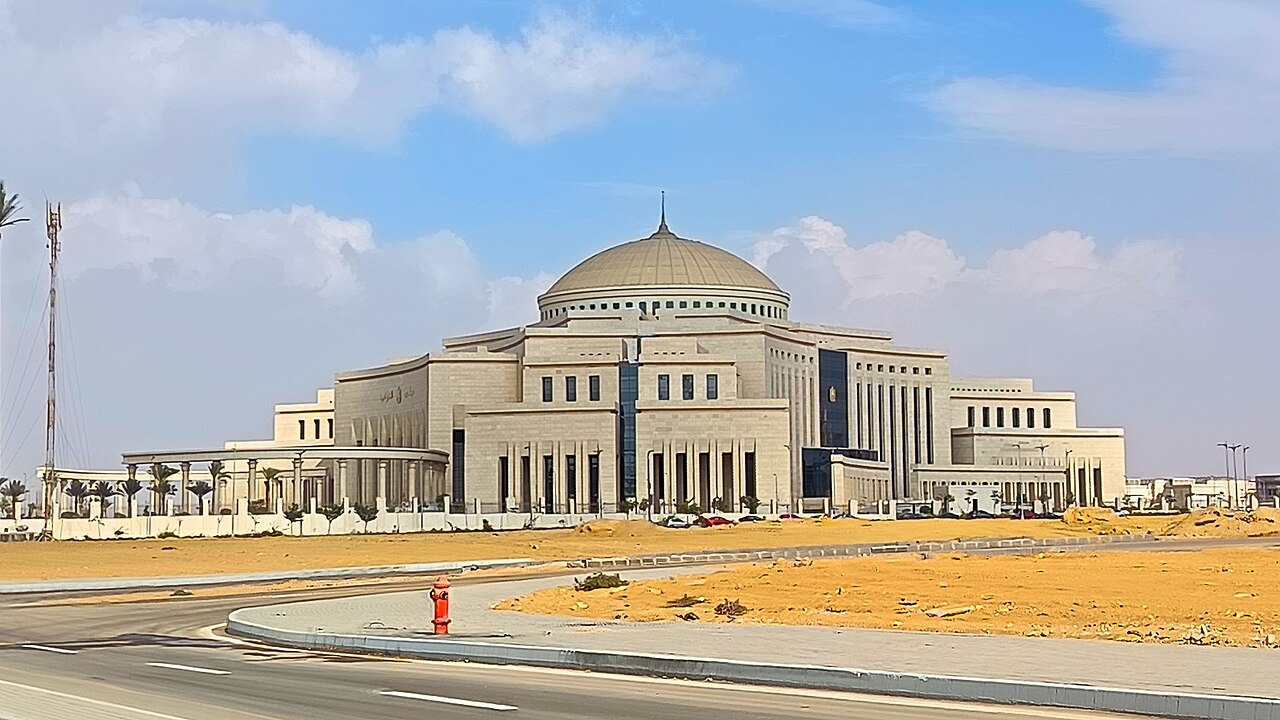
Egypt parliament Saudi Arabia vote: Egypt's House of Representatives voted on Monday to authorise the armed forces to provide defensive support to Saudi Arabia if Riyadh requests it, Reuters and the Associated Press reported, ending a week of closed-door deliberations that twice put off the decision. Reuters reported that parliament authorised the military to provide support to help defend Saudi Arabia, citing parliamentarians and local media; AP reported that the vote gives President Abdel Fattah el-Sissi authorisation to take necessary measures to back Saudi Arabia in defence of its territory and sovereignty against external "aggression." No breakdown of the closed-door vote has been published. The authorisation is not a deployment: no formal Saudi request has been announced, and no movement of Egyptian forces has been reported.
The Vote Cairo Delayed Twice: Parliament Hands Sisi a Defensive Mandate for Saudi Arabia — If Riyadh Asks
Track it live: Live war tracker · Middle East war map
What parliament decided on Monday
CAIRO, Egypt — Egypt's parliament on Monday authorised the country's military to provide support to help defend Saudi Arabia, Reuters reported, citing parliamentarians and local media — a move that could push Cairo directly into the regional conflict expanded by intensified Houthi attacks on the kingdom. The Associated Press, reporting the same outcome, said the vote gives President Abdel-Fattah el-Sissi authorisation to take necessary measures to back Saudi Arabia in defence of its territory and sovereignty against external "aggression," in the wording of parliament's statement. AP noted that no breakdown of the closed-door vote was published, and that the chamber is overwhelmingly pro-government. Sisi had asked parliament the previous week to approve defending Saudi Arabia if Riyadh requests help against the Houthis, whose advances also threaten the Bab el-Mandeb strait — the gateway to the Suez Canal.
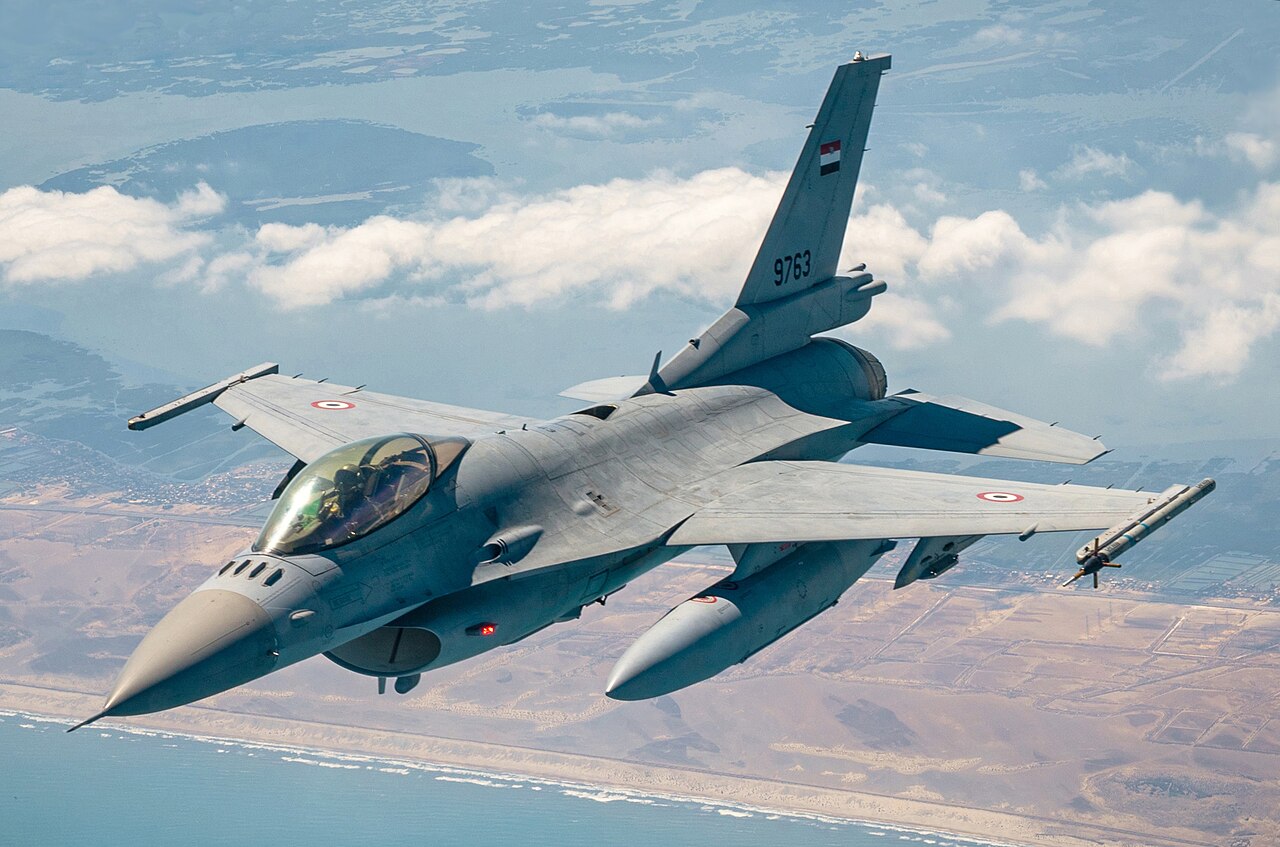
The mandate, as framed in Sisi's request, is defensive only. Support is limited to defending Saudi territory and borders, not attacking Yemen, and Cairo has continued to advocate exploring every opportunity to resolve the Yemen conflict diplomatically, as Foreign Minister Badr Abdelatty put it during last week's Riyadh diplomacy. What the support would look like in practice has not been announced, but AP reported, citing a regional official who was briefed on the matter and spoke on condition of anonymity, that Egypt will deploy air defence systems and aircraft to help repel missiles and drones fired at Saudi Arabia — support that is defensive in nature and will not include ground troops in Yemen. Three limits remain explicit. First, authorisation is not deployment: no formal Saudi request for Egyptian help has been announced, and no movement of Egyptian forces has been reported. Second, Egypt has not joined the Mecca mutual-defence pact signed in August by Saudi Arabia, Pakistan and Turkey; Foreign Minister Abdelatty said this month that Egyptian membership remains "under serious consideration," and Monday's vote does not change that. Third, no vote count or two-thirds tally has been published, and none should be assumed.
How the vote was delayed twice
Monday's result closed a week in which the question was asked twice and answered neither time. On Sunday, October 18, Egypt's National Defense Council, chaired by Sisi, declared its readiness to provide Saudi Arabia with "all necessary and possible forms of support to defend its security and stability, protect its resources, territorial integrity and Islamic holy sites," as Reuters reported; the council's statement did not mention sending troops or specify the form of support, and said Egypt would keep pursuing diplomatic efforts to reduce tensions. The House then convened an emergency session in the New Administrative Capital, chaired by Speaker Hisham Badawy — and adjourned without voting, two lawmakers told Agence France-Presse, so deliberations could continue and more members could speak. Separately, lawmaker and television presenter Mostafa Bakry, who is close to the authorities, wrote on X that the council had approved sending forces to Saudi Arabia on a defensive mission — a claim that goes beyond the council's published text and that Signal Post News carries as Bakry's account, not as the council's decision.
On Monday, October 19, a second closed-door session also adjourned without a vote, and parliament delayed the decision a full week, to October 26, Reuters reported. The constitutional bar explains part of the caution: under Article 152, the president may not send the armed forces on a combat mission abroad without consulting the National Defense Council and winning approval from two-thirds of the House. Dissent was on the record. The Egyptian Social Democratic Party said it had instructed its lawmakers to abstain, saying parliament had not received sufficient information about the proposed mission's objectives, scope, duration, cost or risks to Egyptian troops; while affirming support for Saudi security, it said Egypt should avoid an open-ended military commitment and preserve room for diplomacy, citing the country's economic pressures and the risks to Red Sea shipping and Suez Canal revenue. Al-Azhar's Grand Imam also called for an urgent mediation effort by Arab and Muslim leaders to contain the conflict and avert further bloodshed. The session resumed on Monday, October 26 — and this time the House voted. As we reported when Sisi made the request, in Egypt's pledge to defend Saudi Arabia, the offer was always conditional: Cairo would act only if Riyadh asked, and only in defence. Monday's vote satisfies the first of Sisi's two conditions. The second is still Riyadh's to give.
The warning from Sanaa
The delay was not the only message sent to the chamber that first Sunday. Yahya al-Raei, speaker of the Houthi-controlled House of Representatives in Sanaa — a body that is not internationally recognised — wrote to Badawy urging Egypt not to become militarily involved alongside Saudi Arabia. Al-Raei said he rejected Egypt being drawn into "the same trench as the takfiri forces and the Israeli occupation entity," warned that such a course would pose a grave danger to Egypt's national security, and urged Cairo to stay out of the confrontation and work toward a political solution instead. The letter was, in effect, the other side's lobbying: the Houthis cannot vote in Cairo, but they can raise the perceived cost of a yes vote in the hours before it is taken, and they chose to do so publicly and in writing. AP reported that the vote had originally been scheduled the previous week and was delayed after two days of deliberations amid growing wariness among Egyptians about intervention in Yemen — the wariness al-Raei's letter was written to feed.
Why this matters
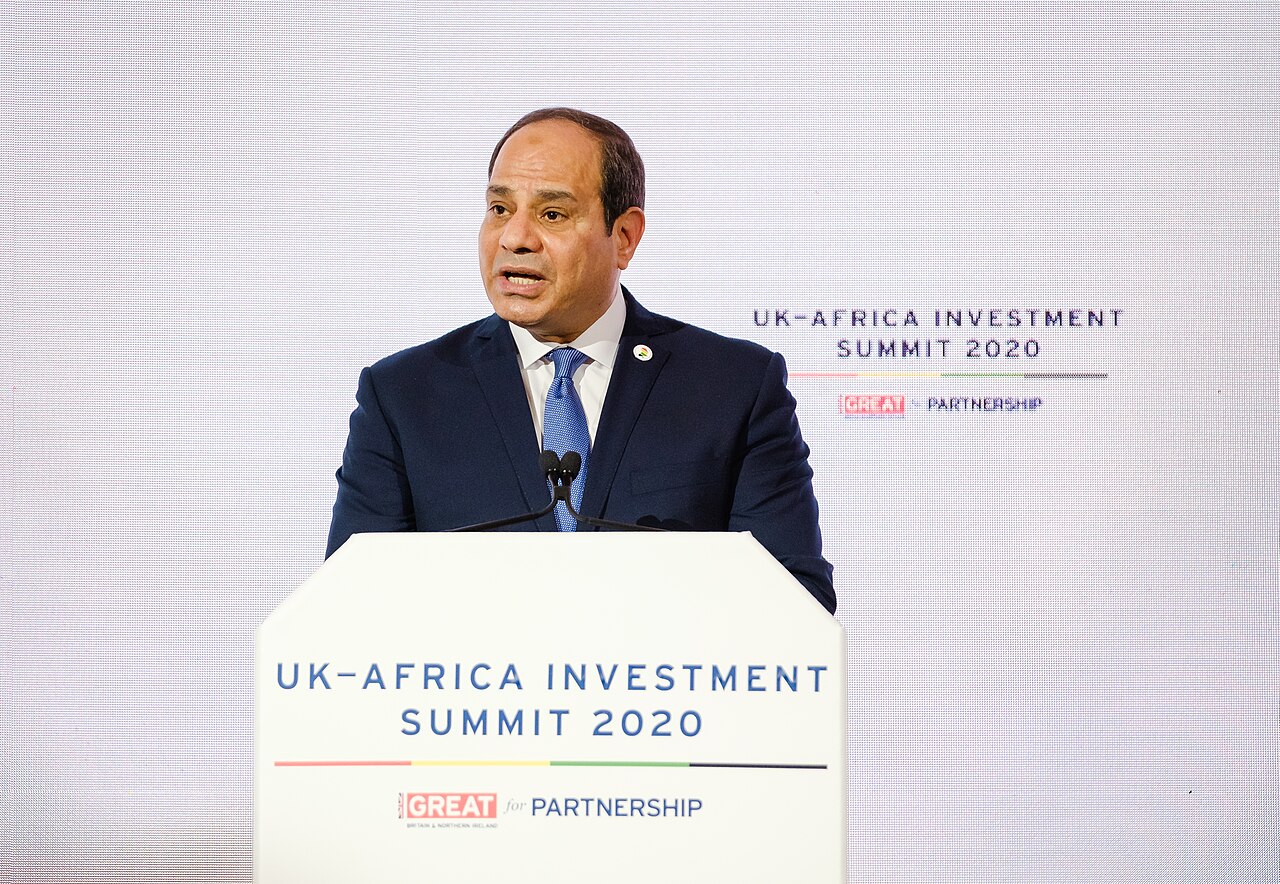
An authorisation in Cairo might look like procedure. In this war it is strategy, for three reasons. First, the legal gate is now cleared: two-thirds of a 596-seat House is a supermajority, and the week's two adjournments showed a leadership unwilling to take the vote until it had counted, persuaded and read the reaction from Sanaa, Riyadh and Yemen's internationally recognised government, whose Presidential Leadership Council chairman, Rashad al-Alimi, praised Egypt's position as a joint response to shared threats. Because no tally has been published, the margin — and with it the size of the abstention the Social Democrats instructed — is unknown. Second, the question is now Saudi Arabia's. Sisi set two conditions, a parliamentary mandate and a Saudi request; the mandate exists, the request has not been announced, and until it is, nothing changes on the ground. Third, the form is narrower than the rhetoric. The National Defense Council's "all necessary and possible forms of support" could in principle have meant air defence, naval presence in the Red Sea, logistics, intelligence or troops; the briefed official's account to AP — air defence systems and aircraft, defensive in nature, no ground troops in Yemen — is the first indication of what "defend Saudi Arabia" is actually expected to mean, and it matches the defensive limit in Sisi's own letter.
The economic stakes
Cairo's security ties with Riyadh are matched by financial ones, and both were in play all week. Saudi Arabia has a $5.3 billion deposit at Egypt's central bank due this month, plus $267.39 million in interest, Reuters reported, citing central bank data — part of the billions in aid, deposits and investment with which Gulf states have backed Egypt since 2013. Markets priced the uncertainty in real time. The Egyptian pound hit a record low of 56 per U.S. dollar on Monday, according to LSEG data reported by Reuters, ahead of the parliamentary vote; the pound had crossed 55 at major local banks on October 22. Egypt's blue-chip EGX30 index fell about 2% in early trade on Monday before inching up, and the Egyptian Exchange had suspended Sunday's session — the first trading day of the Egyptian week — for half an hour after a 10% fall in the EGX 100 EWI. A week earlier, on October 19, the EGX30 had fallen early in the session amid concern over possible military involvement, then recovered to close 0.4% higher; Nematallah Choucri, head of research at HC Securities, said geopolitical developments had become the main factor behind recent market losses. Central Bank Governor Hassan Abdalla said last week that a flexible exchange rate can serve as the "first line of defense" against external shocks, and that unifying the exchange rate matters more than the rate itself — a defence that was being tested, at a record low, on the morning of the vote.
The war that forced the question
The vote exists because the Yemen war's second front — the Houthi campaign against Saudi Arabia itself — has intensified sharply this month. The Saudi-led coalition's military spokesperson, Turki al-Maliki, said Saudi air defences had intercepted two ballistic missiles fired toward Khamis Mushait and three drones over Riyadh and the Eastern Province, and that the Houthis had launched 20 attacks on King Khalid International Airport since October 1, with attacks on Saudi airports killing 19 people and injuring 364, according to the coalition. Those figures are the coalition's account and have not been independently verified in full; what is not in dispute is the pattern, documented across this month's reporting, of repeated missile and drone attacks on the capital's airport and on Saudi Aramco facilities after the collapse of the truce between the Houthis and the Saudi-backed government. It is that campaign that produced Sisi's graduation-speech pledge, the council meeting and emergency session, and the government forces' operation at the Bab al-Mandeb, where Yemeni government forces retook Dhubab — a reminder that the war is widening on several axes at once. Egypt's history here is long and cautious: Cairo joined the Saudi-led coalition that intervened in Yemen in March 2015, mainly as a naval partner guarding Red Sea lanes with a limited combat role and around 800 ground troops, and it has carried the memory of its costly 1960s Yemen intervention ever since; it has not mounted a large-scale foreign ground deployment since the 1991 Gulf War, and Egyptian officials have consistently framed any new involvement as defensive only.
Both sides of the argument in Cairo
The case for authorisation, as its supporters state it, is that Saudi Arabia's security is inseparable from Egypt's and from Arab national security; that the kingdom's airports, oil infrastructure and holy sites are under repeated attack; and that Gulf states have stood behind Egypt economically since 2013 with billions in aid, central-bank deposits and investment — a partnership Cairo cannot honourably decline to defend. The case for caution, visible in the two adjournments, in the Social Democrats' abstention instruction and in the Houthi letter's intended audience, is that Egypt's armed forces have not fought a major foreign war in decades, that a deployment whose form was undefined could draw Egypt into Yemen's war rather than Saudi Arabia's defence, and that the Red Sea — where Houthi attacks have already cost Egypt heavily in lost Suez Canal revenue — is precisely where escalation would hurt Cairo most. The National Defense Council tried to hold both positions at once, pledging full support while affirming continued diplomacy. Monday's vote resolves the legal question between them; the political one — how much of the mandate Sisi ever uses — remains open.
What happens next
Four things to watch. First, Riyadh: without a formal Saudi request, the authorisation changes nothing on the ground, so the first Saudi statement after the vote matters more than the vote itself. Second, the form: if support begins, its first visible shape — air-defence units and aircraft, as the briefed official described to AP, a naval deployment, or nothing visible at all — will define what the mandate meant; any report of Egyptian ground forces bound for Yemen would contradict the defensive framing and should be treated with scepticism until independently confirmed. Third, Sanaa: the Houthis addressed Cairo directly once, before the vote; a second message, or an attack timed to the decision, would signal they intend to make Egypt pay a price for the debate itself. Fourth, the Mecca Pact: membership remains, in Abdelatty's words, "under serious consideration" — a step from consideration to signature would be a separate decision, and a bigger one. Until Riyadh speaks, the accurate summary is the narrow one: Egypt has pledged, its council has endorsed, its parliament has now authorised — and no Egyptian force has been reported to move.
Sources: Reuters, Oct. 26, 2026 (parliament authorised the military to provide support to help defend Saudi Arabia, per parliamentarians and local media; Sisi's request and its defensive scope; Mecca Pact membership "under serious consideration"; 2015 coalition history); Associated Press, Oct. 26, 2026 (parliament statement authorising el-Sissi to take necessary measures against external "aggression"; no breakdown of the closed-door vote published; briefed regional official on air defence systems and aircraft, defensive in nature, not ground troops in Yemen; vote delayed after two days of deliberations); Reuters, Oct. 19, 2026 (vote delayed to October 26 after a second closed session; Article 152 two-thirds rule; Egyptian Social Democratic Party abstention instruction; Al-Azhar mediation call; $5.3 billion Saudi deposit and $267.39 million interest due this month; EGX30 reaction); Reuters, Oct. 26, 2026 (Egyptian pound record low of 56 per U.S. dollar, LSEG data; EGX30 down about 2% in early trade; Sunday session suspended after a 10% fall in the EGX 100 EWI; Governor Hassan Abdalla comments); Reuters, Oct. 18, 2026 (presidency and National Defense Council statement; Sisi request); Agence France-Presse, Oct. 18, 2026, via South24 Center (two lawmakers on the first postponement; Article 152 procedure; al-Raei letter; al-Maliki interception figures; al-Alimi praise). Related on Signal Post News: Egypt pledges to defend Saudi Arabia · Yemeni government forces retake Dhubab.