The priest killed by a falling crucifix in Ecuador on Saturday, October 17, 2026, was Father Patricio Alfredo Sánchez Molinari, the parish priest of Nuestra Señora del Perpetuo Socorro — Our Lady of Perpetual Help — in Guayaquil. About 27 minutes into a Mass he was livestreaming on his own social media, the large wooden crucifix mounted on the wall behind the altar came loose and fell on him, striking him in the head. The Archdiocese of Guayaquil confirmed his death on Sunday. No official explanation for how the crucifix came down has been given.
Father Patricio Sánchez Molinari died at the altar of his own parish, in front of his congregation — and the hardest question is also the simplest: how was the crucifix held up?
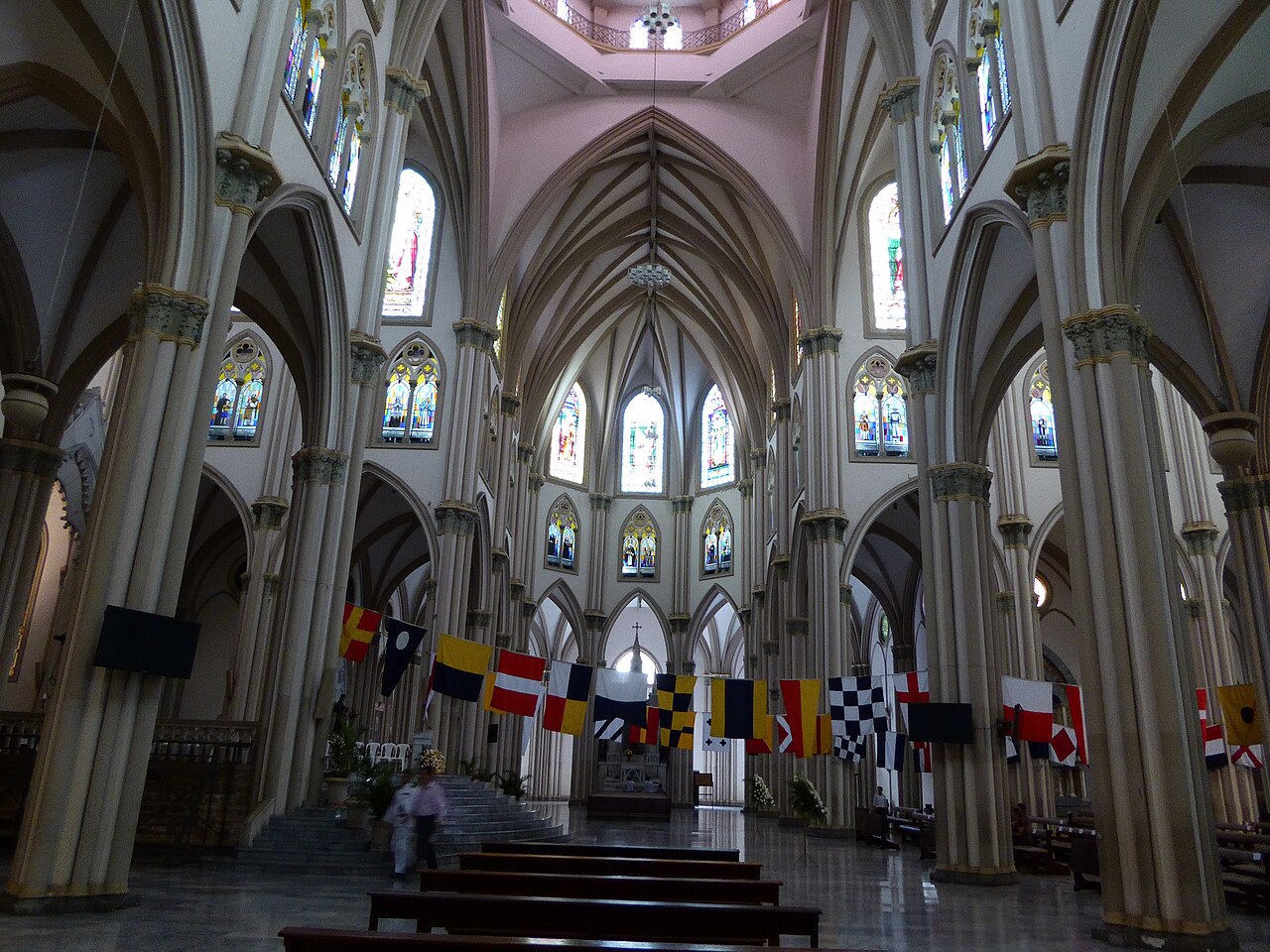
GUAYAQUIL — Father Patricio Alfredo Sánchez Molinari was doing what he did every week: celebrating Mass at Nuestra Señora del Perpetuo Socorro, the parish he served in Guayaquil's Central Vicariate, and streaming it live so that parishioners who could not be there in person could follow along. About 27 minutes into Saturday's service, according to Newsweek's account carried by the Daily Caller, the large wooden crucifix mounted on the wall behind the altar broke loose and fell onto him, striking him in the head.
What happened next was heard as much as seen by those following the broadcast: worshippers rushed toward the altar to help him, and a woman's voice can be heard crying out for someone to call an ambulance, the New York Post reported. Congregants tried to aid the priest where he fell. He died from his injuries; the Post reported he was declared dead later the same day. Signal Post News is not publishing footage of the accident itself. What matters is not the recording — it is that a man serving his parish died in front of the people he served, and that the moment was witnessed far beyond the church walls because the Mass was being shared live.
The archdiocese confirms his death
On Sunday, October 18, the Archdiocese of Guayaquil confirmed the death in a statement signed by Cardinal Archbishop Luis Gerardo Cabrera Herrera. Father Sánchez Molinari, the statement said, "has departed to the Father's House to enjoy His presence and His glory." The archdiocese expressed its condolences to his family and to his Redemptorist community, and asked the faithful to pray for the eternal rest of his soul.
The confirmation settled the fact of his death beyond doubt — reports of it had circulated on social media from Saturday evening, driven by the livestream — but it addressed only the loss, not the cause. The statement did not say how the crucifix was mounted, when it had last been inspected, or what brought it down. On the question of why a fixture that hung above the altar gave way in the middle of a service, there has so far been no official explanation at all.
Who Father Sánchez Molinari was
Father Sánchez Molinari belonged to the Congregation of the Most Holy Redeemer — the Redemptorists, the missionary congregation founded by St. Alphonsus Liguori in 1732 and now present in more than 80 countries. As parish priest of Perpetuo Socorro, he was a familiar face in the Central Vicariate of Ecuador's largest city. Before Guayaquil, he had served for years as a parish priest in Vinces, in Los Ríos Province, according to La Voz del Sur's account of his ministry. He streamed his Masses regularly through his own social media accounts, building a small congregation online alongside the one in the pews.
One detail, reported by the Ecuadorian outlet Primicias and carried by Fox News, gives the loss a particular weight for those who knew him: the archdiocese had publicly congratulated Father Sánchez Molinari on the anniversary of his ordination just one day before he died. A priest marking another year of ministry on Friday was gone by Saturday evening, in the middle of the act at the centre of that ministry.
A sermon about the brevity of life
Ecuadorian and regional reports of the service describe what Father Sánchez Molinari preached in the minutes before the accident: the brevity of life, and how much of it people give to God. "One day, all of us here are going to die too," he told the congregation, according to those reports, asking them: "How much time are we giving to God?" Signal Post News carries those words as they have been reported, because they are how his parishioners will remember his last homily — a priest urging his flock to reckon with mortality, moments before his own death made the reckoning unavoidable for everyone watching.
It would be easy, and wrong, to treat that timing as anything more than a sorrowful coincidence. Priests preach on the shortness of life constantly; it is among the oldest themes of the Catholic pulpit. What gives the reported words their force is simply that they were his last, spoken to people who then watched him die. The congregation at Perpetuo Socorro did not hear an abstraction on Saturday. They heard their priest's final sermon, and then they ran to help him.
Why the story spread so far, so fast
Within hours, a parish accident in Guayaquil was being reported by Newsweek, the New York Post, Fox News and TMZ, and viewed around the world. The reason is the livestream. Streaming Masses became ordinary during the pandemic years and never went away: for the elderly, the housebound and the diaspora, a parish broadcast is now a normal way to worship. Father Sánchez Molinari's own ministry ran partly through a phone screen. The unintended consequence of that openness is that when something goes terribly wrong in a streamed service, it is witnessed — and recorded, and shared — by people far beyond the room.
That raises questions parishes everywhere will now quietly ask themselves, because the same features that make a livestream a lifeline also make it a permanent record. There is no suggestion the Perpetuo Socorro stream was anything other than an act of pastoral care. But churches that broadcast are, in effect, public venues with an audience they cannot see, and Saturday's tragedy is a reminder of everything that follows from that: the grief of a congregation, replayed; a family's worst moment, clipped and circulated by strangers. The archdiocese's statement asked for prayers. It could not ask for the recording back.
What no one can yet explain
The unanswered questions are concrete, and they are not complicated. How was the crucifix fixed to the wall — into what material, with what fittings, and when were they last checked? How much did it weigh? Had there been any sign of movement, cracking or water damage around the mount? And who, if anyone, is responsible for answering: the parish, the archdiocese, or a public authority? On every one of those points, the public record so far is silence. Whether any official investigation is under way is itself unclear from the reporting available — no source has confirmed one, and it would be wrong to invent one. What can be said is that a heavy object hung for years above a place where a priest stood daily, and on Saturday it fell, and nobody has yet explained how that was possible.
Churches are rarely inspected like theatres, stadiums or schools, though they gather crowds beneath old ceilings, old fixtures and old wiring all the same. Sacred objects in particular often predate everyone responsible for them: a crucifix may have been mounted decades ago, by hands no longer living, to standards no one recorded. None of that is an accusation against this parish — it is a description of thousands of parishes, in Ecuador and everywhere else, whose most familiar objects have never been treated as the physical loads they are. Father Sánchez Molinari's death is, among everything else it is, an argument for treating them that way.
Why this matters
Strip away the terrible singularity of the event and what remains is a story about trust in familiar places. A congregation gathers under a roof it assumes is safe, beneath objects it has looked at a thousand times, in a building maintained by devotion more often than by engineers. That trust is the foundation of parish life — and it is almost never tested until the day it fails. The second thread is the livestream, which turned a local tragedy into a global one within hours and which no parish that streams can now think about the same way again. And the third is the man himself: a Redemptorist who spent years in Vinces and Guayaquil, who marked an ordination anniversary on Friday, who preached on Saturday about giving God one's time — and who, by every account, was doing exactly that when he died.
What happens next
The archdiocese has asked the faithful for prayers for Father Sánchez Molinari's eternal rest, and funeral arrangements for a parish priest mourned by two communities — Guayaquil and Vinces — will be a matter for the archdiocese and the Redemptorist congregation to announce. The harder follow-up concerns the building itself: whether the parish and archdiocese commission an account of how the crucifix was mounted and why it failed, and whether dioceses elsewhere take Saturday's lesson and audit the heavy fixtures above their own altars before, rather than after, a service. Until someone answers the first question — how the cross was held up, and why it stopped being held — this story will remain what it is today: a death fully confirmed, and a cause still unexplained.
Related coverage: Pope Leo leads the Angelus in his first public appearance since lung cancer surgery.
Sources
- Archdiocese of Guayaquil (Oct 18, 2026): statement signed by Cardinal Archbishop Luis Gerardo Cabrera Herrera confirming the death of Father Patricio Alfredo Sánchez Molinari, parish priest of Perpetuo Socorro in the Central Vicariate; he "has departed to the Father's House to enjoy His presence and His glory"; condolences to his family and the Redemptorist community; prayers requested for his eternal rest.
- Newsweek, via Daily Caller (Oct 18, 2026): Father Sánchez Molinari was leading a service on Saturday, October 17, at Our Lady of Perpetual Help Church in Guayaquil when the heavy wooden cross tore loose from the wall behind the altar about 27 minutes into the online broadcast and fell on him; congregants rushed to help; he died from his injuries; cause of the collapse unknown; he served in the Central Vicariate, belonged to the Redemptorists, streamed his Masses on his own accounts, and had previously worked in Vinces, Los Ríos Province.
- New York Post (Oct 18, 2026): the crucifix toppled onto the priest as he addressed worshippers in the church and on the livestream; a congregant heard crying "Padre, call an ambulance"; emergency services attended Perpetuo Socorro; the priest was declared dead later the same day; the archdiocese's confirmation statement.
- Fox News (Oct 18, 2026): the crucifix struck him as he prepared Communion; screams in the church as worshippers ran to his side; the archdiocese confirmed his death on Facebook; per Primicias, the archdiocese had congratulated him on the anniversary of his ordination the day before.
- Primicias (Ecuador, Oct 18, 2026): Ecuadorian reporting on the accident and the ordination-anniversary detail.
- La Voz del Sur (Oct 18, 2026): Father Sánchez Molinari's Redemptorist ministry, his years as parish priest in Vinces, and Ecuadorian reports of his final homily on the brevity of life — "one day, all of us here are going to die too" and "how much time are we giving to God?"