Djerba travel warning October 2026
The embassy cited heightened threats around the anniversary without naming a plot, target or actor. The island-specific, date-specific warning is more limited than Tunisia's national advisory — and more unusual because Djerba is outside the country's standing do-not-travel zones.
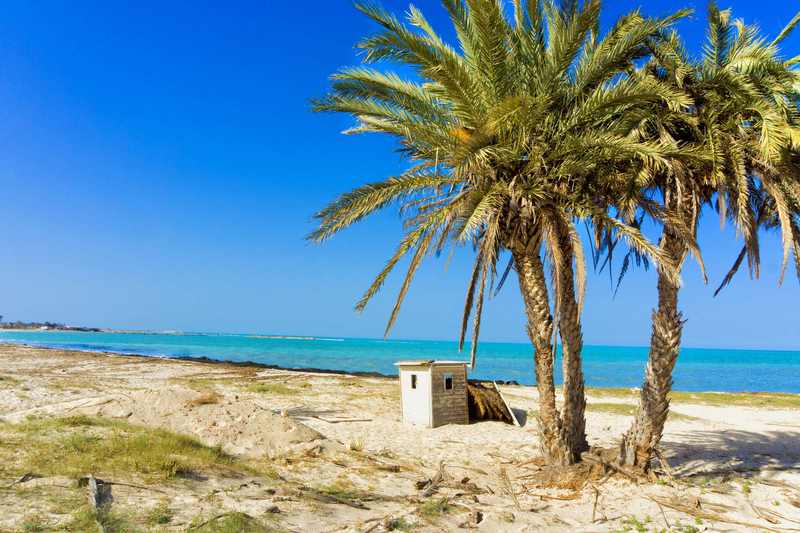
The Djerba travel warning October 2026 asks Americans to avoid the Tunisian resort island on or around Wednesday, October 7, because of what the U.S. Embassy in Tunis described as increased threats tied to regional tensions and the anniversary of the October 7, 2023 attacks. The embassy issued the alert on October 4. It did not identify a specific plot, intended target or responsible group, leaving travelers with an unusually direct instruction but little public detail about the intelligence behind it.
The advice is narrow in both place and time. It does not amount to a new nationwide ban on travel to Tunisia, and the embassy did not announce an airport closure, a suspension of commercial service or an evacuation. But a targeted warning for Djerba matters precisely because the island is not one of the border and mountain areas already covered by the State Department's highest-risk restrictions.
What the US embassy Tunisia security alert says
The U.S. Embassy's October 4 security alert tells U.S. citizens to avoid travel to Djerba on or around October 7. It links the warning to elevated regional tension and the anniversary of the Hamas-led attacks in Israel three years earlier, describing the concern only as “increased threats.” No further threat description was made public in the alert.
For anyone already in Tunisia, the embassy's requested actions are practical rather than dramatic: stay alert, avoid crowds, avoid areas with a heavy police presence, monitor local media and keep a low profile. Americans can also enroll in the State Department's Smart Traveler Enrollment Program, or STEP, so the embassy can send security updates and more readily contact them during an emergency.
Assistance is available from the U.S. Embassy in Tunis at +216 71 107 000. The State Department's Bureau of Consular Affairs can be reached at 888-407-4747 from the United States and Canada, or 202-501-4444 from overseas. Travelers should treat those as assistance lines, not substitutes for local emergency services.
What “US citizens avoid Djerba” means in practice
For a traveler with a booking during the warning window, “avoid” should be read plainly: do not make a nonessential trip to the island while the alert is in effect. Contact the airline, hotel and tour operator before traveling; ask what changes or credits are available; verify travel-insurance conditions in writing; and keep copies of identification, reservations and emergency contacts accessible offline.
Someone already on Djerba should not improvise a risky overnight journey merely to satisfy the wording of an alert. The safer decision depends on present location, transport availability and local conditions. Staying away from demonstrations, religious gatherings, checkpoints and congested public spaces while seeking current guidance from the embassy, hotel management and reputable operators is more useful than assuming one universal route is safest.
Why this matters
Embassies often issue narrow-window security alerts when the available information is serious enough to change behavior but too sensitive, incomplete or fast-moving to describe in detail. Such notices do not prove that an attack is imminent. They do show that officials believe the combination of timing, location and threat reporting warrants a precaution beyond the standing country advisory.
The October 7 anniversary is a recurring period of heightened sensitivity across the region and beyond. Authorities must weigh memorial gatherings, protests, symbolic sites and the risk that an actor might seek attention on a date already freighted with political meaning. Signal Post News has separately reported on Israel's high-alert posture for the anniversary and Israel's closure of Gaza and West Bank crossings. Those measures are not evidence of the same threat, but they show the wider security atmosphere in which the Djerba notice was issued.
The unusual feature is geography. Tunisia's highest-risk areas are normally concentrated around remote borders and western mountains. Djerba, by contrast, is an established tourism hub. Singling it out for one anniversary date suggests a localized assessment, not a general judgment that every part of Tunisia has suddenly become equally dangerous. That distinction protects travelers from complacency without turning a temporary alert into a sweeping verdict on the country.

Djerba's tourism and Jewish history
Djerba sits off Tunisia's southern coast, an island known internationally for white-sand beaches, Mediterranean resorts and low-rise villages shaped by a long history of trade and migration. UNESCO added Djerba to the World Heritage List in 2023, recognizing a settlement pattern adapted over centuries to the island's water constraints, social structure and religious diversity.
That tourism identity is why the warning lands differently from a notice about an isolated frontier district. A resort island depends on confidence: airlines, package operators, hotels, restaurants, guides and seasonal workers all feel the effect when a government tells its citizens to stay away, even for a short period. Precaution is the embassy's responsibility; avoiding unnecessary damage to the broader destination requires keeping the scope of that precaution clear.
Ghriba synagogue Djerba: a living community, not just a landmark
Djerba is also home to one of the world's oldest continuous Jewish communities, with a tradition of settlement reaching back roughly 2,000 years. El Ghriba synagogue is its best-known institution and the center of an annual Lag B'Omer pilgrimage that has drawn thousands of visitors. The site carries religious significance far beyond the island and has previously required intense security.
Tunisia's Jewish population is now estimated at roughly 1,000, most of them on Djerba, after more than 100,000 Jews left the country over the last century. Those figures make the community both resilient and vulnerable. The embassy did not publicly say that El Ghriba was a target in this alert, and it would be irresponsible to infer one. The synagogue's history explains why Djerba has symbolic weight; it does not supply the missing specifics.
Tunisia travel advisory 2026 in context
Tunisia remains at the State Department's Level 2 category, “Exercise Increased Caution.” The standing Level 4 “Do Not Travel” areas are limited to specified zones along the Algerian and Libyan borders and parts of the western mountains, where terrorism and military operations are enduring concerns. Djerba lies outside those areas.
That difference matters when people ask, is Tunisia safe to visit in 2026? A national level is a broad risk framework, not a prediction about every hotel, road or date. A security alert is more tactical. The correct reading is not that the Level 2 advisory has become irrelevant, nor that the island is ordinarily a Level 4 destination. It is that the embassy saw a temporary reason for Americans to avoid one otherwise permitted destination around a specific date.
Independent travel coverage, including Carthage Magazine's safety context, can help explain ordinary conditions and common precautions. Government alerts should carry more weight for immediate security decisions, while local reporting can help travelers understand disruptions on the ground.
Who is affected — and what is not
Travelers booked for the October 7 window
People due to arrive, depart or transfer through Djerba around October 7 face the most immediate decisions. They should preserve written records of airline or hotel advice, avoid assuming that a security warning automatically triggers insurance coverage, and confirm any rebooking before abandoning a ticket. Families should agree on a check-in plan and a meeting point in case mobile service becomes congested.
Tunisia's tourism economy
For Tunisia, even a brief alert can produce cancellations that reach far beyond the security window. The industry's strongest argument is that Djerba should not be treated as permanently closed by implication. The embassy's strongest argument is that travelers cannot wait for certainty when a credible threat assessment points to a narrow period of elevated concern. Both positions can be true: the economic cost is real, and the purpose of an alert is to reduce exposure before danger becomes visible.
What the Djerba October 7 warning does not say
The notice does not identify an organization, announce an arrest, confirm a planned attack or declare all of Tunisia off-limits. It does not say the country's Level 2 status has been replaced by Level 4 nationwide. It also does not settle conditions after the anniversary window. Reporting from the New York Post and Fox News amplified the warning, but the embassy alert remains the controlling public document for what U.S. officials actually advised.
What happens next
Narrow anniversary alerts often lapse in practical relevance once the specified window passes, but travelers should not assume this one has ended until they check for an embassy update. The first things to watch are a revised security alert, any change to the nationwide travel advisory, guidance from airlines and tour operators, and whether other governments issue comparable notices for Djerba.
Authorities may increase visible patrols or restrict access to selected areas. A heavy police presence can be reassuring, but the embassy specifically told Americans to avoid such concentrations, because they may signal an incident or become a focal point themselves. Travelers should resist the urge to visit a checkpoint or gathering merely to see what is happening.
The region's politics will remain relevant after October 7. In New York, Mayor Zohran Mamdani's anniversary statement drew attention to the competing claims of remembrance and Palestinian suffering; Signal Post News explains how leaders navigated that anniversary debate. Djerba's alert is different in kind — it is operational security advice — but it was issued against the same charged calendar.
The soundest conclusion is restrained. The embassy made a serious recommendation and travelers should follow it. At the same time, the public alert does not reveal enough to claim a specific plot, and its narrow wording should not be inflated into a permanent judgment about Djerba or Tunisia. Good security reporting must preserve both halves of that sentence.
Djerba travel warning FAQ
Is Djerba safe for tourists?
Djerba is a major tourist destination outside Tunisia's standing Level 4 zones, but the U.S. Embassy advised Americans to avoid the island on or around October 7, 2026, because of increased threats. Travelers should follow that date-specific warning, check for updates after the window and make decisions based on current official guidance rather than a blanket assumption of safety or danger.
What is the current US travel advisory for Tunisia?
Tunisia is at Level 2, “Exercise Increased Caution.” Separate Level 4 restrictions apply to specified Algerian- and Libyan-border areas and parts of the western mountains. The Djerba notice is a narrower security alert for a particular place and date, not a nationwide Level 4 designation.
Why did the US Embassy warn about Djerba?
The embassy cited increased threats associated with regional tensions and the October 7, 2023 anniversary. It did not publicly identify a plot, target or actor. The lack of detail means the exact intelligence basis is unknown, while the instruction to avoid Djerba remains confirmed.