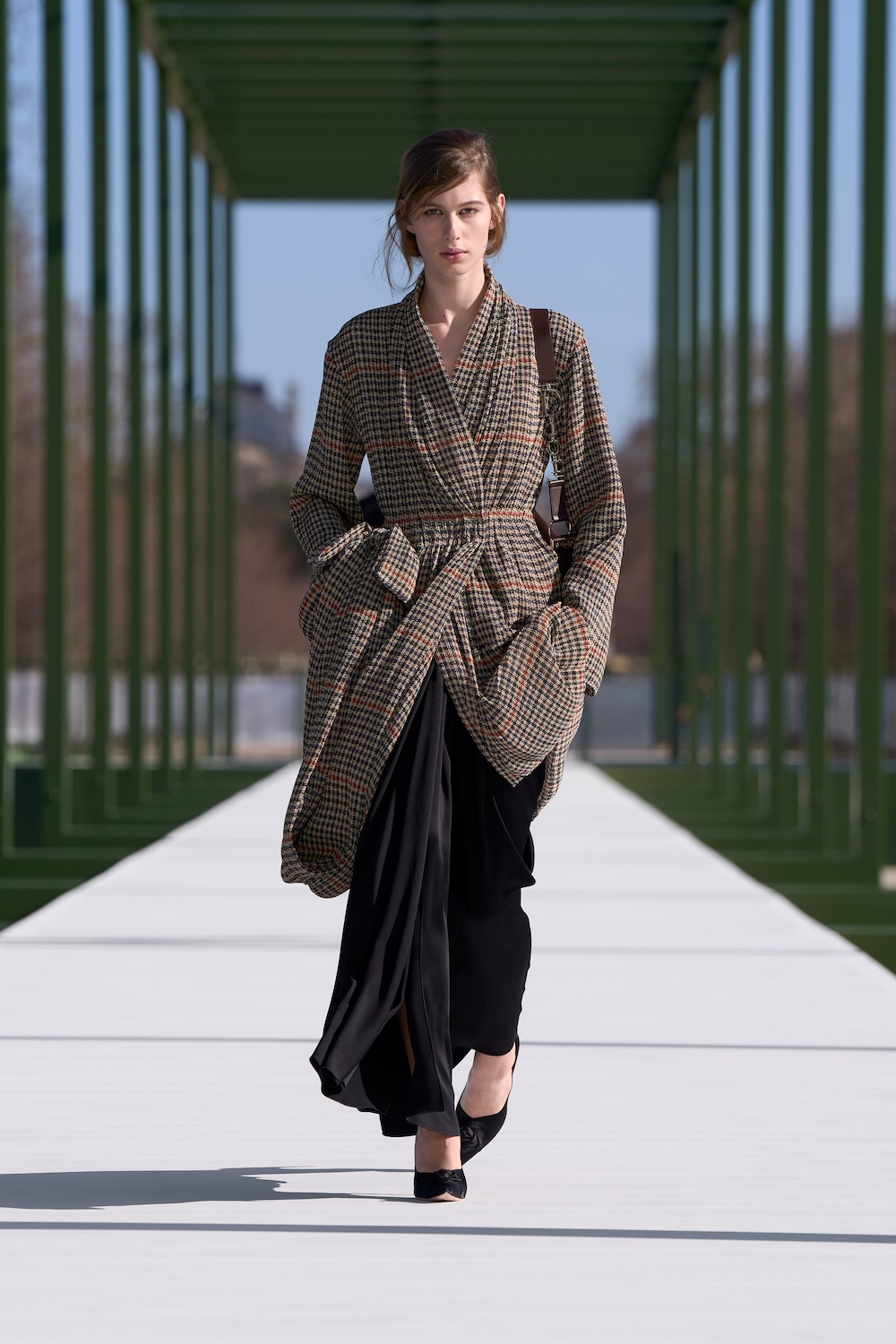
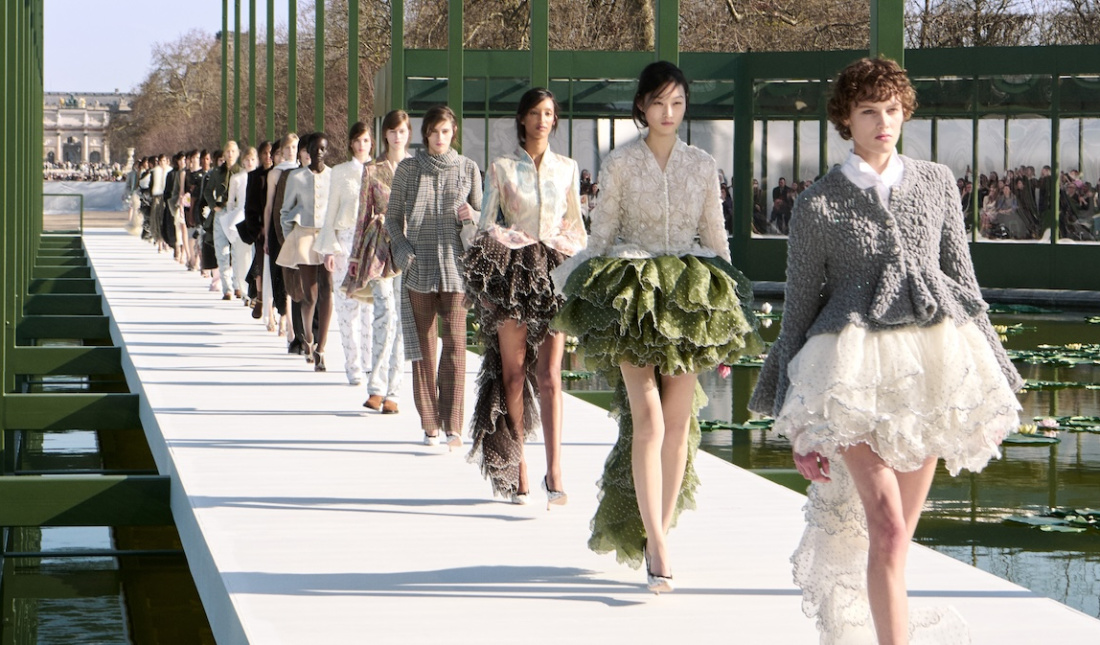
Anderson is the sole creative director across Dior’s principal fashion categories. That structure is rare leverage. It can create a conversation across wardrobes rather than a sequence of disconnected product launches—but it also leaves one author responsible for an enormous volume of symbols.
Fall 2026 is persuasive when historical reference behaves like material, not homework. Proportion, surface and the friction between ceremony and ordinary clothing matter more than a list of archive quotations. The collection reads best when the house’s history is felt before it is decoded.
The wider cultural frame
A two-year partnership with A24 centered on New York’s Cherry Lane Theatre, plus the Dior Alps offer, stretches the same authorship across performance and outerwear. Those projects are different from a runway, but they show how Dior is building one cultural system around Anderson rather than isolating each category.
The question is no longer whether Anderson can design for Dior. It is whether he can make Dior’s many worlds speak to one another.
Why this matters
Putting menswear, womenswear and couture under one author is an attempt to make scale feel coherent. Dior’s categories serve different customers and calendars, but they all spend the same historical capital. If Anderson can create exchange among them, the house gains more than consistency: it gains a recognizable intellectual position.
How we got here
Large houses often divide creative authority because the workload is immense and specialist markets demand different rhythms. Dior’s unified structure recalls an older idea of the couturier as total author, now applied to a global product machine. The tension is modern: singular vision must coexist with constant output, collaborations and commercial breadth.
Winners, losers and the skeptical case
Editorial storytelling and cross-category clients benefit from a common language. Independent category teams may lose autonomy, and one creative bottleneck can spread fatigue across the entire house. Critics may call cultural partnerships an attempt to borrow relevance, but the stronger reading asks whether theater, outerwear and couture illuminate the same themes rather than merely sharing a logo.
What the evidence actually says
The current evidence shows organizational concentration and thematic links, not yet durable commercial proof. A two-year theater partnership is longer than a one-night activation, which suggests institutional intent; a seasonal outerwear offer shows breadth. Neither establishes that customers perceive one conversation, so future collections and category performance remain the real test.
What happens next
The optimistic scenario is productive cross-pollination: couture technique affects ready-to-wear, menswear proportion influences womenswear and cultural projects deepen both. The downside is overextension, where every category carries an abbreviated version of the same idea. The next year should be judged by difference within coherence—whether each line has a purpose without sounding like a separate company.
Sources and photo credits: Collection photographs and analysis via Whitewall; Dior Alps reporting via FashionUnited.