Economy · Markets · Wall Street
The largest cache of internal bank documents ever leaked to journalists was published on Tuesday, and Frankfurt’s verdict was immediate. What the reports allege, what the bank answers, and what Reuters could not verify are three different things — this article keeps them separate.
Track it live: Markets tracker · Wars tracker
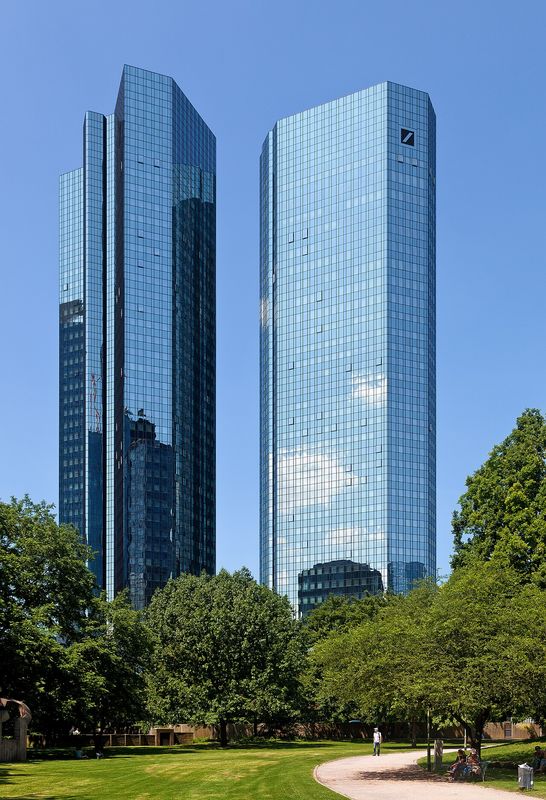
FRANKFURT — Deutsche Bank shares fell more than 6 percent on Tuesday, their biggest one-day drop since April 2025, as an international reporting consortium published the first stories from a leak of more than 15 million internal bank records. Reuters reported the fall; early trade was down 5.2 percent and the intraday maximum was 6.2 percent, according to finews. By about 1 p.m. in Frankfurt the shares had partly recovered to €31.68, down 3.75 percent, on Yahoo Finance data as calculated by SourceFirst.
What was leaked, and how
The consortium, publishing under the name “Inside Deutsche Bank”, worked from more than 15 million internal records — 15.6 million files by Le Monde’s count, including more than 9 million emails by Der Spiegel’s — spanning emails, meeting minutes, compliance files and chat logs from the early 2010s onward. Le Monde and the Investigative Journalism Bureau describe it as the largest known leak of banking data. Two whistleblowers passed the material to journalists Josy Joseph in India and Khadija Sharife in South Africa; the project was coordinated by Barracuda Media, a South African nonprofit, and involved more than 200 journalists at more than 50 outlets. According to the IJB, the whistleblowers’ lawyer said they also provided material to the US Department of Justice, FinCEN and the UK’s HMRC, and the Financial Times reported they acted in the public interest, moved in particular by the bank’s oligarch and Russian-money ties.
The verification line
Two cautions frame everything that follows. Reuters stated it was not able to verify the consortium’s reports immediately. And the bank, while not disputing the records’ authenticity, called them “purported internal documents”, in AFP’s account via France 24. Every allegation below is therefore attributed to the outlet that reported it.
The Russia file
The New York Times reports that the bank’s risk managers warned for years about clients such as Oleg Deripaska and Viktor Vekselberg, but that profits won; a 2014 reputational-risk ranking, the Times reports, put Deripaska first among oligarch clients. When the United States sanctioned seven industrialists close to Vladimir Putin in 2018, five were Deutsche Bank clients personally or through affiliations, the records reported by the Times indicate. In April 2021, the Times reports, every management-board member backed cautious expansion in Moscow. After the February 2022 invasion of Ukraine, CEO Christian Sewing wrote in a March 10, 2022 email that leaving Russia completely would “go against our values”; JPMorgan and Goldman Sachs said the same day they would leave, and Deutsche reversed itself the next day and said it was winding down. France 24 reports the exit as incomplete: last year the bank still had 162 employees in Russia and its local subsidiary made a €61 million pretax profit. The bank’s position is that it acted lawfully, never helped clients evade sanctions, and applied sanctions promptly after the invasion.
The Epstein file
The reported total of Epstein-linked suspicious payments differs by outlet and is not merged here: the Financial Times puts it at almost $600 million; finews puts it at $582 million, sourced to suspicious activity reports the bank itself filed with US authorities in 2019; the IJB puts it at more than US$600 million, “more than twice the amount previously publicly known”. What is established record is the history around it: Deutsche Bank took Jeffrey Epstein as a client in 2013, after his 2008 conviction; in July 2020 the New York Department of Financial Services fined the bank $150 million over Epstein-related compliance failures, the first regulator action against a bank over Epstein; and in 2023 the bank agreed a $75 million settlement of a lawsuit accusing it of benefiting from Epstein’s sex-trafficking business.
The Trump file
The Financial Times reports that while Donald Trump was in his first term — finews dates it to 2017 — the bank inadvertently exposed his tax statements, hid the mistake from the White House and kept Sewing informed. That account is FT-reported and is presented as such. France 24 reports the bank cut ties with Trump in 2021, after the January 6 Capitol riot.
Two versions of Christian Sewing
Sewing, chief executive since 2018, is publicly credited with the turnaround that took the bank to record profits. The Financial Times describes a private counterpart: a CEO who pushed for more risk-taking, railed at compliance and withheld some difficulties from shareholders, with files reported to show accounting tricks and disclosures bordering on deception. France 24’s reporting adds tax-optimization schemes for wealthy clients, arms deals involving problematic states, donation accounts for Germany’s AfD despite internal opposition, and criminal networks moving money through the bank. The FT says it will publish more this week, including reported secret payments to a Qatari royal and gaps in anti-money-laundering controls — forthcoming reporting, not yet published fact.
The bank’s defence
The bank says the matters in the reports “date back many years”, in some cases as much as two decades; that where relevant they were reviewed at the time and discussed with regulators; and that it has invested €7 billion in controls between 2019 and 2025. “We are a different bank today,” it said, adding: “Given the legacy nature of these matters, any potential financial impact is not expected to be meaningful, if there is any impact at all.”
Why this matters
The context explains why reports about old conduct still wiped billions off the bank’s value intraday (a €2.3 billion fall on a €58.7 billion market value, on the SourceFirst calculation of Yahoo data). Sanctions credibility is now a priced asset, and the reports land while the bank’s compliance is under live orders: BaFin imposed new anti-money-laundering monitoring deadlines on September 15, updating orders from April 2021 and November 2023; German authorities have raided the bank three times this year; the bank operates under a 2021 deferred prosecution agreement with the US Justice Department; and the FT counts €18.6 billion paid since 2012 to settle alleged conduct violations and litigation — a ledger that includes the 2017 NYDFS mirror-trading fine of $425 million over $10 billion moved out of Russia. The comparison with the Panama Papers is instructive and cuts both ways: that leak held 11.5 million documents from one law firm; this one holds more, from inside a single bank.
What happens next
The consortium promises further instalments this week, and the bank’s “no meaningful impact” line will be tested against each one. Regulators already hold some of the material — the whistleblowers’ disclosures to the DOJ, FinCEN and HMRC mean the official response may matter more than the headlines. Signal Post News will follow the further reports as they are published.
Sources
Reuters, November 17 — https://www.reuters.com/business/finance/. Le Monde, November 17 — https://www.lemonde.fr. Financial Times — https://www.ft.com. AFP via France 24 — https://www.france24.com. Investigative Journalism Bureau — https://ijb.utoronto.ca.