dante moore
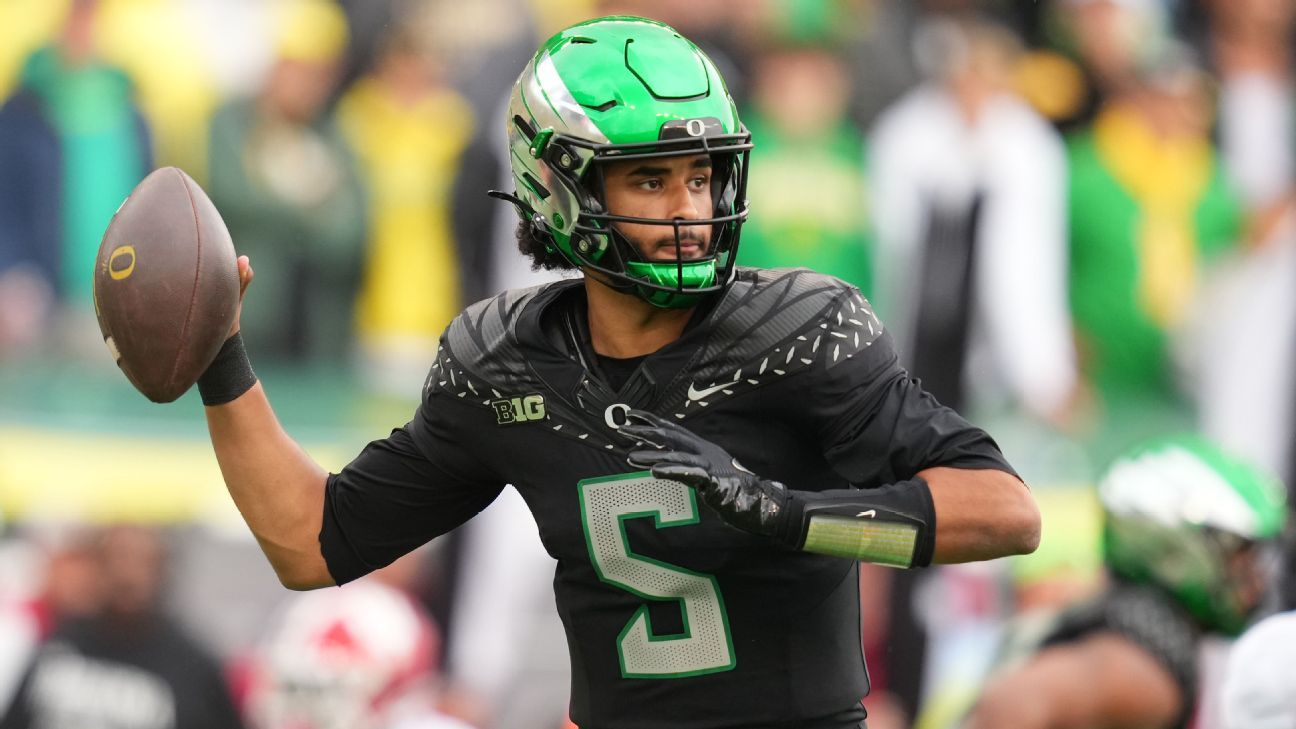
Dante Moore was knocked out and stretchered from Oregon's September 26 game at USC after Trojans defender Desman Stephens II struck him in the head as he completed a feet-first slide. Medical staff immobilized Moore's neck, placed him on a stretcher and moved him to an ambulance during a delay of roughly 15 minutes at the Los Angeles Memorial Coliseum. Reports from the stadium said he moved his extremities before being transported to Los Angeles General. Oregon had not announced a diagnosis, and none should be inferred from the broadcast images.
The play and the targeting decision
Moore gained about 10 to 11 yards on a second-quarter scramble and began his slide with his knee already down. Stephens arrived late and made forceful contact to Moore's head. Officials called targeting, upheld the ejection and assessed offsetting unsportsmanlike-conduct penalties after Oregon players confronted Stephens and a brief scuffle formed. The sequence illustrated why the slide rule and targeting standard exist: a quarterback who gives himself up loses the ability to protect himself, while the defender retains responsibility for avoiding forcible head contact.
Replay can remove a player and impose yardage, but it cannot undo the hit. Enforcement therefore depends on coaching as much as officiating. Defenders are asked to close space at full speed, yet the rule deliberately assigns the risk of a late launch to the tackler rather than the sliding player. Stephens loses immediate playing time and faces scrutiny for the decision; the sport's credibility loses when the penalty looks like a price paid after avoidable harm rather than a deterrent.
What Moore's numbers meant before the injury
Moore entered the USC game completing 68.5% of his passes for 849 yards, nine touchdowns and no interceptions. The completion rate points to repeatable accuracy, while 9-to-0 shows that aggression had not required reckless turnover risk. Those numbers supported his status among the leading 2027 quarterback prospects and gave Oregon an efficient down-to-down offense rather than one dependent on isolated explosive plays.
That context is why the injury immediately became a draft story, even though medical care must come first. Moore had been eligible for the 2026 draft and was discussed as a possible top-five pick. CBS Sports reporting put the potential rookie-contract value he passed up at roughly $55 million. He returned to develop and chase a title, effectively wagering that another season would improve his readiness and long-term ceiling. An injury does not retroactively make that choice wrong; it does expose the uncompensated physical risk attached to staying in college.
Prior scares sharpen the player-safety debate
Moore had absorbed concerning punishment before. He left Oregon's 2025 Wisconsin game after a hard hit, though coach Dan Lanning said he could have returned if needed. Against Indiana he took six sacks, was seen limping and remained in the game. Those episodes did not establish a diagnosis, but they matter because quarterback evaluation often rewards toughness while health protocols require the opposite impulse: remove the athlete from competitive pressure and let clinicians decide.
Oregon's next steps should be procedural, not speculative: complete the relevant neurological and orthopedic evaluations, progress only through medical clearance, and separate Moore's draft status from the timetable. Scouts will ultimately study the medical record and his recovery, but no responsible projection can be made from a single television sequence.
Raiola, Mendoza, Oregon and Stephens: who gains and who loses
Dylan Raiola entered and threw a touchdown to Evan Stewart on his second snap. Raiola and Stewart then raised Moore's No. 5, a gesture that centered their injured teammate even as the game continued. Raiola gains an opportunity to show he can operate a contender's offense; Oregon gains some protection from having an experienced transfer in the quarterback room. Neither is a substitute for Moore's command or chemistry.
In draft terms, any missed time could create evaluation space for other quarterbacks, including Fernando Mendoza, while Raiola can strengthen his own future case. That is a market consequence, not a reason to rush Moore. USC and Stephens lose reputationally from a play that became the game's defining image. Oregon's staff now has to prepare as if Raiola may start while refusing to turn an uncertain medical situation into a public countdown.
What happens next
The decisive updates will come from Oregon and treating clinicians: Moore's status, his entry into the required return-to-play process and whether he is cleared for football activity. The Big Ten may review the confrontation and the targeting sequence, but the on-field ejection already applied the sport's principal penalty. Longer term, this play will return to the policy argument over whether targeting sanctions deter enough, whether repeat or especially late violations need stronger consequences, and whether quarterbacks can slide without inviting a judgment call at full speed.