CFTC crypto regulation rules
CFTC crypto regulation rules is the central development in this report. Michael Selig says the agency will move through rulemaking after Senate cloture failed, with two proposals at White House review and Bitcoin near $84,500. The event is important not only because of the immediate headline, but because it changes the choices facing institutions, companies and people who must act before the final outcome is known.
This analysis separates verified events from judgment. The facts below come from the reporting sources named at the end. Interpretive sections explain why those facts matter, who gains or loses leverage, what the headline numbers can and cannot establish, and which future signals would confirm or weaken the initial reading.
What happened
Verified point 1. CFTC Chair Michael Selig said 'It's go time' in a CNBC interview published September 23.
Verified point 2. The CFTC filed two proposals, Regulation Crypto Asset Transactions and Regulation Crypto Asset Markets, with the White House Office of Information and Regulatory Affairs on September 17.
Verified point 3. The market proposal would create an exchange category allowing currently unregistered crypto venues to offer leveraged trading under CFTC supervision.
Verified point 4. The CLARITY Act failed a Senate cloture vote on September 15 after ethics and conflict-of-interest provisions were added and the measure fell short of 60 votes.
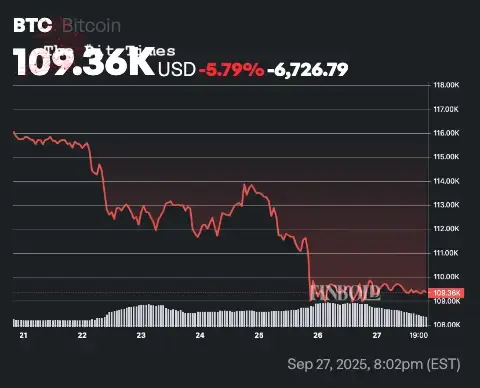
Verified point 5. Bitcoin rose above $86,000 on September 21, an eight-month high, before easing about 2% to roughly $84,500.
Verified point 6. Market reports counted $238 million in Bitcoin short liquidations, $470 million across the crypto market and $159.5 million in spot ETF inflows around the move.
Why it matters
The agency is testing how far existing statutory authority can reach when Congress cannot agree on a market-structure law. That could provide a supervised route for trading, but it also invites challenges over whether a regulator can create the architecture lawmakers declined to enact.
The practical significance lies in changed incentives. A decision, announcement or result becomes consequential when another actor must alter a plan because of it. That may mean repricing risk, changing a timetable, revising a budget, protecting a supply chain or preparing for a response. The strongest interpretation is therefore not the most dramatic one; it is the one that best explains what participants are likely to do differently after the verified facts became known.
Readers should also distinguish immediate relief or pressure from structural resolution. A temporary extension, a single policy move, a casting announcement, a game result or one unusual observation can create real effects while leaving the larger system unchanged. This report treats the development as evidence in an unfolding process, not as proof that every related argument has been settled.
Context and the mechanism underneath the headline
The CLARITY Act was designed to draw firmer lines between securities and commodities oversight. Its defeat did not erase existing law; it preserved a fragmented system in which enforcement, agency interpretation and state rules continue to shape the market.
The mechanism matters because headlines often compress several stages into one. An announcement has to be implemented; a price signal has to transmit; a creative idea has to reach audiences or buyers; a scientific observation has to be repeated; and a sporting advantage has to survive the next contest. Tracking those stages prevents an early signal from being mistaken for a completed transformation.
History is useful here as a baseline rather than a script. The earlier pattern explains why the latest move drew attention, but it does not guarantee repetition. Institutions learn, competitors adapt and external conditions change. The relevant question is which parts of the old pattern remain binding and which have been altered by the new evidence.
What the numbers mean
The failed cloture vote matters more than a simple majority because 60 votes were needed to advance. Bitcoin's $86,000 spike shows how quickly traders price regulatory signals, while the liquidation figures show leverage amplified the move. None of those market figures proves the rules will survive review.
Numbers provide scale, timing and comparison, but they do not interpret themselves. A large percentage can start from a small base; a modest rate change can matter because it alters direction; a count of two can be historic if the prior verified count was zero; and a market price can move on expectations before policy changes in practice. Each figure in this article is presented with its date and source context for that reason.
The disciplined test is to ask what would look different if the number were materially higher or lower. That counterfactual reveals whether the figure describes intensity, breadth, probability or merely attention. It also keeps a snapshot from being presented as a live value or a forecast. None of the dated figures on this page updates after publication.
Who wins and who loses
Compliant U.S. exchanges and institutional products gain if the process creates a clearer supervised lane. Offshore platforms and decentralized projects may face competitive or compliance pressure. The CFTC gains influence, while Congress risks ceding initiative to agencies and courts.
Benefits and costs are not always symmetrical or immediate. One side may gain time while another gains money; one institution may reduce uncertainty while households keep carrying the cost; a brand may win attention before learning whether products sell. Distribution therefore matters as much as the aggregate outcome. Asking who receives the first benefit and who bears the first risk is often more revealing than declaring the event simply positive or negative.
There are second-order effects as well. Competitors can change strategy, regulators can demand evidence, investors can revise assumptions and audiences can resist the intended framing. Those reactions are not side notes; they determine whether the initial winner keeps the advantage. The losers may also respond fastest, turning today's setback into tomorrow's pressure for a different policy or plan.
What remains uncertain
OIRA review is only an early procedural stage. A commission vote, Federal Register publication and public comment remain ahead, and final binding rules are unlikely before late 2027. Litigation could then test whether the CFTC exceeded its authority.
Uncertainty is not a reason to ignore verified facts, but it changes how strongly conclusions should be stated. Claims by interested parties remain claims until independently established. Forecasts remain conditional. Early market or audience reactions can reverse. Where the research record does not settle a question, this article leaves it open rather than filling the gap with an invented answer.
The most useful distinction is between an unknown that time will answer and an unknowable claim unsupported by evidence. Publication schedules, next meetings, official reviews and observable results can resolve the first category. The second requires new documentation or corroboration. Readers should expect the story to change only when one of those evidentiary thresholds is crossed.
What happens next
1. OIRA review was expected to close around October 1, after which the commission can decide whether to publish proposals.
2. Industry comment letters will show which exchange category, leverage and custody provisions draw the strongest resistance.
3. Congress can still revisit market structure, especially if agency rulemaking or litigation creates pressure for a statutory answer.
Those checkpoints turn a broad narrative into a testable one. If the expected follow-through appears, confidence in the initial analysis should rise. If implementation stalls, the relevant numbers reverse or officials narrow their claims, the interpretation should change with the evidence. That is more useful than treating every new statement as a separate breaking-news cycle.
The broader test
The lasting importance of CFTC crypto regulation rules will be measured by consequence rather than attention. The story becomes durable if it changes rules, behavior, capital, safety, creative direction or competitive position after the first news cycle. If it produces only temporary visibility, the headline will have outrun the outcome.
For now, the verified record supports a clear but bounded conclusion: The agency is testing how far existing statutory authority can reach when Congress cannot agree on a market-structure law. That could provide a supervised route for trading, but it also invites challenges over whether a regulator can create the architecture lawmakers declined to enact. The next phase is not about repeating the announcement. It is about observing whether institutions and people act in ways consistent with that interpretation, and whether the costs and benefits described above appear where the evidence says they should.
Related reporting: Wall Street’s rate-driven decline · the FBI breach claim and its limits
Reporting basis: Selig remarks reported from CNBC by Stocktwits; OIRA filing details reported by Stocktwits and CoinDCX; market figures from the cited market coverage. Analysis is Signal Post News's own. Facts and figures are fixed to the September 24, 2026 reporting cutoff and do not update at page open.