Cerebras has published the arithmetic for running Moonshot AI's roughly 3-trillion-parameter Kimi K3 across 59 of its dinner-plate-sized chips — weights parked still, activations doing all the travelling. The claim is elegant. The caveats are real.
Track it live: Live markets tracker
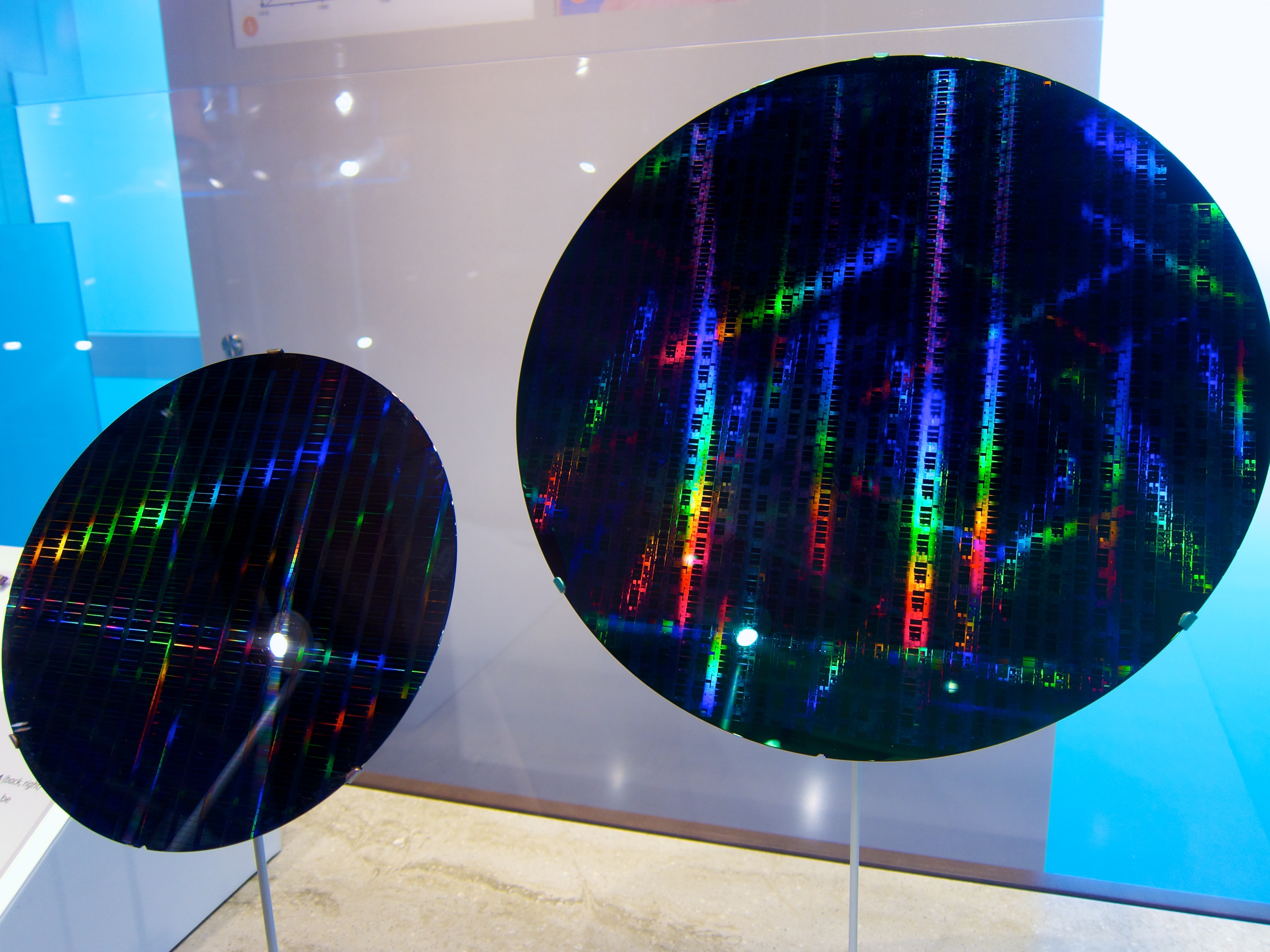
The Cerebras 59 wafers Kimi K3 proposal sounds, at first hearing, like a parlour trick: take a model of about three trillion parameters — far too large for any single conventional accelerator — and serve it not from a warehouse of graphics processors but from 59 chips, each one an entire silicon wafer. Yet the arithmetic Cerebras laid out in its technical post of October 22, 2026, "How we deploy trillion-parameter frontier models on Cerebras," is disarmingly simple, and it was being debated across the industry by October 25. The worked example is Moonshot AI's Kimi K3, at roughly three trillion parameters across 93 layers: 69 linear-attention layers and 24 dense layers. Understanding why the answer comes out at exactly 59 wafers requires understanding what makes the Cerebras architecture different — and where its published case still rests on assumptions rather than measurements.
The arithmetic: 35 plus 24 equals 59
Start with the hardware. Each Cerebras WSE-3T wafer carries 44 gigabytes of SRAM built directly into the chip — memory that sits millimetres from the compute rather than in separate high-bandwidth memory stacks. Quantise Kimi K3's weights to 4 bits, and the raw parameter payload is about 1.5 terabytes. Divide by 93 layers and each layer's weights occupy roughly 16 gigabytes — comfortably inside one wafer's 44 gigabytes, with room to spare. What the layers do with that spare room differs. The 24 dense layers must also hold a key-value cache, the stored attention history that grows with every token of context; the post assumes an 8-bit KV cache, and that requirement means each dense layer gets a wafer entirely to itself: 24 layers, 24 wafers. The 69 linear-attention layers are thriftier. Linear attention keeps only a small, fixed-size state per request rather than an ever-growing cache, so two linear layers can share a single wafer. Sixty-nine layers, halved and rounded up, need 35 wafers. Thirty-five plus 24 is 59. There is the headline number — not a marketing rounding, but a direct consequence of the model's own layer recipe meeting the wafer's memory budget.
A pipeline where the weights never move
The deeper idea is what does not happen in this design. In conventional GPU-cluster inference, a model's weights are sharded across many devices' memory, and serving a request involves constant, heavy traffic between chips as activations and partial results shuttle around the cluster; the interconnect becomes the bottleneck and the tax on every token. Cerebras inverts the arrangement. The 59 wafers form a pipeline: each wafer permanently holds its layer or two of weights, parked on-chip in SRAM, and the weights never move at all. Only activations — the comparatively tiny data representing the current request's progress through the network — pass from stage to stage, travelling over RDMA over Ethernet at roughly two microseconds per hop. Two microseconds is an eyeblink even by computing standards: across 59 stages, the accumulated hop latency is a small fraction of the time spent on the mathematics itself. Cerebras advertises throughput of 1,000 to 2,000-plus tokens per second for models of this class, figures that, if sustained in production, would place a single 59-wafer system in rare company for interactive frontier-model serving. The company also credits Kimi K3 with scores of 88.3 percent on Terminal-Bench 2.1 and 91.2 percent on BrowseComp — benchmarks it cites in the post, which readers should treat as Cerebras's cited figures rather than independently verified results.
Wafer-scale versus the GPU orthodoxy
It is worth pausing on how radical the underlying bet remains. A conventional accelerator is cut from a wafer alongside hundreds of identical siblings; a defect ruins one small die and the rest ship. Cerebras instead keeps the wafer whole — a single chip with a surface area thousands of times larger — and engineers around defects by routing past them, harvesting the yield through redundancy rather than through the saw. The reward is that 44 gigabytes of SRAM and the compute it feeds become one fabric with effectively no off-chip journey for the data that matters most. The cost is everything the sceptics point to: a bespoke supply chain, a programming model the broader software ecosystem does not natively speak, and a customer conversation that begins with power and cooling rather than with price per chip. That the industry is even entertaining the trade tells its own story about how completely inference economics now dominate the agenda. Five years ago a post like this would have been a curiosity. In October 2026 it is a procurement argument, and procurement arguments are where architectural revolutions either happen or quietly expire.
The sceptics' case, stated fairly
None of this has gone unchallenged, and the strongest challenges come from the post's own fine print. Cerebras itself describes K3 as an "illustrative example," built on an assumed average request length of 256,000 tokens — a very long context that flatters some parts of the design and strains others, and which may not resemble typical production traffic. The post provides no measured tokens-per-megawatt figure at matched speed for this specific layout, which is precisely the metric that would let buyers compare the 59-wafer rig against a GPU cluster on efficiency rather than elegance. Nor is it established that this exact 59-wafer configuration was run as described; the post is a deployment blueprint, not a benchmark report. The gap between blueprint and catalogue is visible in Cerebras's own service: the publicly accessible models running on Cerebras today remain much smaller — GPT-OSS at 120 billion parameters and Qwen 3.8 at 27 billion — an order of magnitude below K3. And the power question has not gone away. One commenter on Hacker News, doing back-of-envelope maths, estimated the 59-wafer rig at roughly 1.18 megawatts of total draw, or about 4.1 joules per token. That is a commenter's estimate, not a measurement, but it frames the right question: wafer-scale systems concentrate enormous power and cooling demands in very few cabinets, and elegance at the layer level does not repeal physics at the facility level.
Context: how Moonshot got to K3
The model at the centre of this is itself a sign of where the frontier has moved. Moonshot AI's Kimi line has progressed from capable open-weight releases to a three-trillion-parameter system whose architecture — a deliberate mix of 69 linear-attention layers against 24 dense ones — is plainly designed with serving economics in mind, not just training benchmarks. We recently covered the previous step in that journey in our report on how Moonshot's Kimi K3.1 Pro curbed hacking claims while keeping open weights, and the hardware side of the same race in our analysis of China's push to double AI compute by 2027. K3's layer mix is the tell: linear-attention layers with their fixed-size state are, in effect, a model architect designing around the memory wall — the same wall Cerebras's wafer was built to sidestep. When model designers and chip designers start optimising for each other's constraints, the industry's centre of gravity shifts from raw training scale toward the cost of every generated token.
Why this matters
This matters because frontier AI is quietly becoming a plumbing problem. For three years the industry's story was training: bigger clusters, bigger models, bigger cheques. But a trained model earns its keep in inference, served millions of times, and there the governing question is brutally physical — how much data must move, how far, and how often, to produce one token? The Cerebras layout is the purest available statement of one answer: move almost nothing. Keep the weights frozen in the fastest memory that exists, on the same silicon as the compute, and let only the lightweight activations travel. GPU clusters embody the opposite philosophy — general-purpose parts, weights sharded across separate memory, performance bought with interconnect bandwidth — and they retain decisive advantages in flexibility, availability and ecosystem. The honest comparison is not which philosophy is "right" but which workloads each serves best: a stable, enormous, heavily queried model is the wafer's ideal case; a churn of different models and fine-tunes is the cluster's. If even part of the 59-wafer claim survives contact with production, the pressure on every inference provider's cost per token intensifies — and cost per token, ultimately, is what decides which AI products are economically possible.
What happens next
Watch for three proofs. First, a measured demonstration: Cerebras publishing tokens per second and tokens per megawatt for a trillion-parameter-class model on a named, running configuration, at a stated context length. Second, the catalogue gap closing — a publicly accessible model on Cerebras materially larger than today's 120-billion-parameter ceiling would signal that the blueprint is becoming a service. Third, Moonshot's own serving choices for K3 will speak volumes: model builders vote with their deployments. Until those proofs arrive, the 59-wafer figure should be read as what Cerebras honestly labels it — an illustrative, internally consistent and genuinely instructive piece of arithmetic that shows where inference architecture is heading, whether or not the first rig to get there has exactly 59 wafers in it. Signal Post News will update this story as measured figures are published.